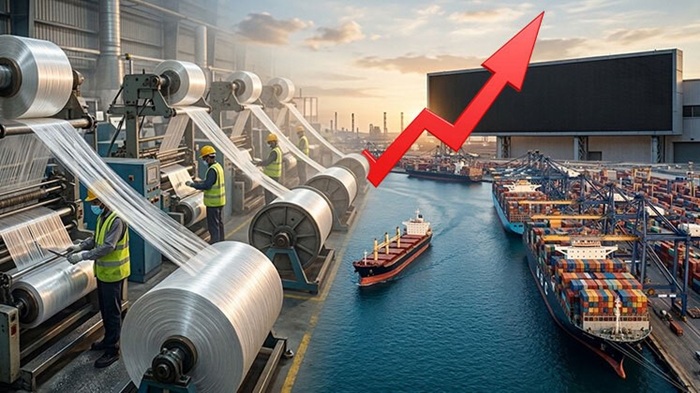
Following a volatile second half of 2025, Bangladesh’s ready-made garment (RMG) sector initiated a critical recovery in January 2026, posting an 11.7 per cent M-o-M increase in export earnings. Total merchandise exports for the month increased to $4.41 billion, a sharp ascent from December’s $3.96 billion. This momentum is largely attributed to the clearance of shipment backlogs caused by previous domestic unrest and the stabilization of the ‘crawling peg’ exchange rate system, which has improved the working capital cycle for exporters. While the July–January period of FY26 still reflects a marginal 2.43 per cent Y-o-Y contraction due to global price compression, the January uptick signals a resilient return of buyer confidence as lead times normalize across the Dhaka-Chittagong industrial corridor.
LDC graduation and ‘Cotton-for-Garments’ trade diplomacy
The recovery coincides with high-stakes trade maneuvers as Bangladesh nears its November 2026 graduation from Least Developed Country (LDC) status. To mitigate the looming ‘tariff wall’ - which threatens to impose 12 per cent duties in the EU - Dhaka recently fast-tracked a landmark ‘Cotton-for-Garments’ agreement with the United States. Under this framework, Bangladesh secures reduced reciprocal tariffs in exchange for sourcing US raw cotton and man-made fibers. This strategic alignment is essential as the industry shifts toward synthetic and technical textiles, which now command nearly 37 per cent of the domestic manufacturing share. BGMEA representatives emphasize that while volume is returning, sustaining margins remains the primary challenge amidst a 65 per cent cumulative wage hike and rising energy costs that have sidelined nearly 400 smaller factories over the past year.
Bangladesh is the world's second-largest garment exporter, with the RMG sector accounting for 84 per cent of national export earnings and 10 per cent of GDP. Employing over 4 million workers, the industry is transitioning into a high-tech hub specializing in LEED-certified green manufacturing and man-made fiber (MMF) products. The sector aims for a $100 billion export target by 2030 through aggressive diversification into activewear and premium outerwear.