FW
The €2,150 Question: Can Europe afford circular fashion at scale?
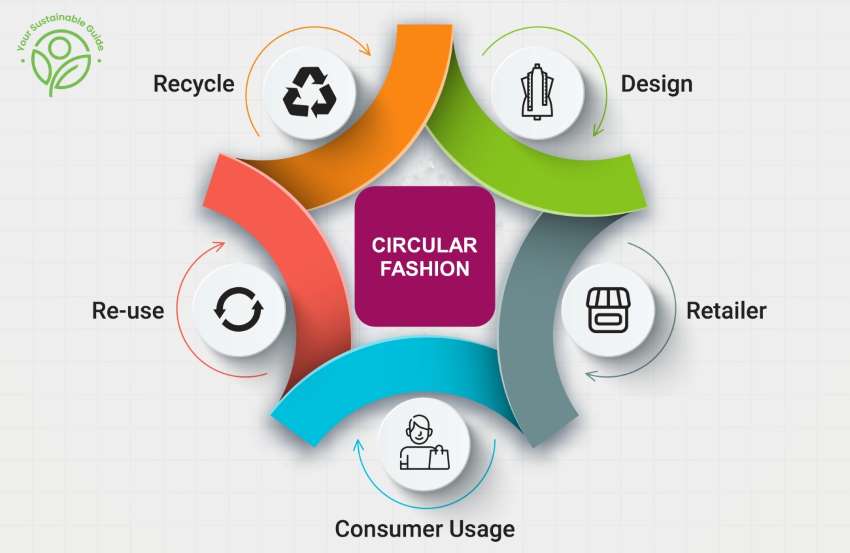
Europe's push to build a circular textile economy is facing an uncomfortable commercial truth. The technology capable of producing virgin-quality recycled polyester exists, but its economics remain far from competitive with conventional petrochemical production. As regulators tighten sustainability mandates under the European Union's Ecodesign for Sustainable Products Regulation (ESPR), fashion brands are discovering that compliance may come with a substantial cost premium that neither manufacturers nor consumers are yet prepared to absorb.
A comprehensive assessment by the European Commission's Joint Research Centre (JRC) highlights the scale of the challenge. Chemically recycled polyethylene terephthalate (PET) produced through solvolysis currently costs an average of €2,150 per tonne, while operational costs range from €1,650 to €2,650 per tonne. For textile-grade polyester recycled through fiber-to-fiber processes, production costs rise further to approximately €2,200 per tonne.
These figures stand in sharp contrast to today's virgin polymer market. Following the energy crisis of 2021-22, virgin PET prices have retreated significantly, trading largely between €1,000 and €1,700 per tonne during 2023-24 as excess petrochemical capacity, particularly in Asia, has pushed prices to multi-year lows.
The result is a cost disadvantage for chemically recycled polyester precisely when regulators want brands to use more of it.
Table: Cost comparison: virgin vs chemically recycled polyester
|
Polymeric raw material stream |
Average production cost range (€/tonne) |
Price spread vs virgin base |
|
Virgin PET / Mechanical Flake (2023–24) |
€1,000 – €1,700 |
Baseline Reference Market |
|
Solvolysis-Derived PET (EU Average) |
€2,150 (Range: €1,650 – €2,650) |
Up to +115% Cost Premium |
|
Fiber-to-Fiber Polyester Solvolysis |
€2,200 |
Up to +120% Cost Premium |
|
Pyrolysis Polyolefin Equivalents |
€2,551 – €2,968 |
Up to +170% Cost Premium |
Source: European Commission Joint Research Centre (JRC).
Why costs stay high
The economics of chemical recycling are driven less by chemistry than by infrastructure. Unlike conventional polyester production, depolymerisation plants must process highly inconsistent textile waste containing elastane blends, dyes, coatings, zippers, buttons and other contaminants. Before any polymer can be recovered, the feedstock requires extensive sorting, cleaning and pre-treatment.
Industry data compiled by the JRC indicates that operating costs alone average €1,840 per tonne of output. Capital expenditure is equally demanding, with new facilities requiring investments exceeding €5,000 per annual tonne of production capacity.
These plants therefore resemble both waste-management facilities and sophisticated chemical refineries, carrying the costs of each.
The economics become even more challenging because virgin polyester producers benefit from massive global production capacity and decades of optimisation. Chemical recyclers, by contrast, are still operating at relatively small commercial scales, preventing them from achieving comparable economies of scale.
For investors, this creates a familiar dilemma. Capital-intensive facilities require predictable returns over many years, while virgin polymer prices remain volatile and often decline during periods of petrochemical oversupply.
Technology has limits
Lower-cost mechanical recycling has often been presented as the obvious solution, but its technical limitations become apparent in high-performance textiles. Mechanical recycling repeatedly melts and reshapes polyester, gradually shortening polymer chains. The result is weaker fibers with lower intrinsic viscosity, making them unsuitable for fine-denier yarns required in premium apparel, sportswear and performance fabrics.
Instead, much of mechanically recycled polyester is diverted into lower-value applications such as insulation materials, automotive components and industrial padding.
Chemical depolymerisation offers a different pathway. By breaking polyester back into its molecular building blocks before rebuilding it, manufacturers can produce fibers with characteristics almost identical to virgin polyester, including strength, dye consistency and moisture-management performance.
For brands targeting premium sportswear, technical outerwear and high-performance fashion, chemical recycling remains the only commercially viable route to genuine fiber-to-fiber circularity.
That technical necessity, however, does not eliminate the economic challenge.
Policy vs economics
Europe's sustainability regulations are pushing up demand for recycled content even as market economics remain misaligned.
Mandatory separate textile collection across EU member states, combined with ESPR requirements, will steadily increase the availability of textile waste. Yet greater waste volumes alone will not guarantee financially viable recycling. Recognising this gap, advanced recyclers are increasingly abandoning spot-market sales in favour of long-term commercial partnerships with global apparel companies.
Multi-year off-take agreements provide guaranteed purchase volumes that reduce financing risk for recycling plants while giving fashion brands greater certainty over future recycled material supplies.
Such contracts are becoming a cornerstone of Europe's emerging circular textile economy, helping bridge the gap between today's production costs and anticipated future scale. However, industry participants acknowledge that private-sector agreements alone are unlikely to close the competitiveness gap with virgin polyester.
Trade associations continue to advocate for Extended Producer Responsibility (EPR) mechanisms that reward garments containing recycled fibers while imposing higher compliance costs on products made entirely from virgin synthetics. Eco-modulated EPR fees could effectively redirect industry funding towards expanding fiber-to-fiber recycling capacity until larger production volumes reduce unit costs.
The long-term bet
Companies are nevertheless investing heavily in advanced recycling technologies despite today's challenging economics. Among the industry's pioneers is Carbios, which has developed enzymatic depolymerisation technology capable of converting mixed polyester textile waste back into virgin-quality raw materials. Through licensing agreements and long-term partnerships with apparel brands, the company is positioning itself for a market expected to expand as regulatory requirements tighten.
Whether these investments ultimately deliver commercial success will depend less on scientific breakthroughs than on policy consistency, financing mechanisms and industry-wide demand commitments.
Europe's circular textile strategy has moved beyond proving that chemical recycling works. The next challenge is proving that it can compete economically. Until production costs fall closer to those of virgin polyester or policy narrows the price gap through incentives the ambition of achieving large-scale textile circularity will remain constrained by basic industrial economics rather than technological capability.
Macroeconomic headwinds depress British apparel exports in mid-2026
The United Kingdom’s clothing export momentum faced a sharp pullback as outbound apparel shipments declined 9.8 per cent Y-o-Y in June 2026. The slump highlights structural headwinds facing British garment manufacturers across traditional European and transatlantic retail corridors. Soft consumer demand, persistent operational overheads, and shifting trade preferences have squeezed domestic brands seeking global market share. While finished apparel exports registered a contraction, upstream segments exhibited distinct trajectories, underscoring a growing split between raw textile processing and high-end fashion manufacturing across the UK supply chain.
Regional diversification offers strategic buffer
Industrial trade data indicates, whil0e finished garments experienced single-digit contractions, intermediate fabric and raw fiber exports maintained relative stability. Trade experts point to high domestic production costs and non-tariff trade barriers as central challenges constraining UK fashion houses. British exporters must leverage high-value technical textiles and sustainable fabric innovations to offset declining volume in mass-market apparel, observed a senior trade analyst at global logistics firm TexLogistics. A case in point is mid-tier apparel brand ModernWeave, which sustained double-digit growth by reorienting focus from EU high-street apparel toward technical sportswear exports in South Asian markets. Moving forward, UK manufacturers face both the challenge of navigating volatile European demand and the opportunity to capitalize on growing appetite for traceable, high-margin textile innovations globally.
UK apparel manufacturing ecosystem
Established historically as a global textile powerhouse, the UK apparel and textile industry specializes in luxury heritage fabrics, technical textiles, and designer apparel. Serving major retail markets across Europe, North America, and East Asia, the sector focuses strategic growth on sustainable textile innovations. Supported by expanding premium exports, UK textile manufacturers continue targeting high-margin global niches.
Data-driven energy framework transmutes apparel manufacturing margins
Rising thermal power tariffs, natural gas supply constraints, and stringent decarbonization mandates from international retail buyers are compounding operational pressures across Asian apparel manufacturing hubs. In Bangladesh, where energy expenditures account for up to 10 per cent of total garment production costs, manufacturers are adopting systemic efficiency audits to protect operating margins.
A nationwide industrial initiative supported by the Danish Embassy’s SDG Opportunity Window and executed alongside the BRAC Institute of Governance and Development (BIGD) completed comprehensive energy audits across 339 apparel manufacturing facilities. Executed in collaboration with trade bodies BGMEA and BKMEA, the first-of-its-kind project establishes a data baseline aimed at lowering factory overheads while aligning supplier performance with European Union sustainability benchmarks.
Leveraging open-source visualizations for competitive benchmarking
A key deliverable of the project is an open-source digital analytics platform that benchmarks real-time energy usage across participating textile plants. By standardizing operational energy metrics, factory management teams can pinpoint specific line inefficiencies, optimize HVAC loads, and accelerate clean power adoption. Decarbonization is no longer a peripheral compliance requirement; it is a baseline financial strategy to protect unit margins against rising utility tariffs, notes a senior supply chain strategy director. This open-data framework allows tier-one and tier-two textile vendors to demonstrate verifiable carbon reductions directly to global apparel buyers.
Program framework: Danish Embassy SDG Initiative
The initiative operates as a bilateral development framework supporting industrial decarbonization, energy efficiency assessments, and clean technology adoption across major manufacturing sectors. Functioning primarily within South Asia, key target areas focus on ready-made garment and textile processing hubs. Strategic expansion plans prioritize open-access data integration to reinforce green trade competitiveness and long-term supply chain resilience.
Global secondhand apparel market transitions away from traditional shipment models
The global secondhand apparel market, projected to reach $350 billion by 2028, is experiencing a structural shift driven by micro-entrepreneurs across emerging markets. In response to rising upfront inventory costs, specialized export suppliers are moving away from traditional multi-ton shipment models. Guangzhou-based supplier Yikao is accelerating this transition by opening direct access to 20kg trial shipments, targeted specifically at boutique retailers in South America and Southeast Asia. By lowering entry thresholds, the firm enables small-scale vendors to test localized consumer preferences without incurring steep capital risks or inventory overhead.
Mitigating margin pressure in circular supply chains
While circular fashion reduces environmental impact, global exporters face logistical bottlenecks, fluctuating quality grade ratios, and rising shipping freight tariffs. Providing small-batch access allows suppliers to build consistent re-order channels while maintaining a 90 per cent target sorting precision across premium grades. Micro-sourcing eliminates the friction point for tier-two and tier-three retailers who need agile inventory replenishment rather than bulk risk, noted an industry supply chain strategist. This operational agility offers a stable hedge against inventory write-downs, strengthening circular economy integration across developing retail networks.
Capturing global re-commerce demand with small-batch logistics
YIKAO operates as an international circular textile exporter, specializing in sorted secondhand garments, shoes, and accessories. Based in China, the company serves key distribution hubs across Africa, Southeast Asia, and Latin America. Strategic expansions focus on digitized quality assurance and flexible, small-batch logistics to capture growing global re-commerce demand.
Harvey Nichols acquisition reshapes luxury retail matrix for Frasers Group
Frasers Group’s pre-pack administration takeover of Harvey Nichols in an estimated £40 million deal marks a pivotal shift in luxury retail, prioritizing operational efficiency over footprint expansion. Outbidding competitors like Next, the UK retail giant absorbed six domestic regional doors, the digital flagship, and over 1,000 employees, while carving out non-core assets such as the OXO Tower restaurant.
Restructuring strategic footprints
Faced with five consecutive years of post-pandemic losses and fierce competition from Harrods and Selfridges, the nearly 200-year-old retailer enters a rigorous rationalization phase. Frasers aims to streamline central operational models while consolidating back-end logistics alongside existing premium banners Flannels and The Webster.
The turnaround will require tough choices, and the group is prepared to make those decisions, even if that means a smaller business in the near term, states Michael Murray, CEO, Frasers Group.
Institutional positioning
Julia Goddard, CEO, Harvey Nichols, highlights, integrating into Frasers' ecosystem provides a strong platform for the next phase of evolution through enhanced supply chain scale. The move underscores a broader retail reality: survival in high-end commerce increasingly relies on aggressive corporate integration and shared distribution power.
Founded in 1831, London-based Harvey Nichols operates as a premier multi-brand luxury destination across high fashion, beauty, and fine dining. Running six UK stores, online operations, and international franchises, the brand leverages shared commercial infrastructure under Frasers Group to restore profitability after multi-year financial headwinds.
London High Court dismisses copyright lawsuit against Temu
London’s High Court has dismissed Shein’s high-stakes copyright lawsuit against rival cross-border marketplace Temu, delivering a verdict that redefines intellectual property enforcement across digital fast-fashion supply chains. Justice Bacon ruled. Temu holds no secondary liability for third-party sellers uploading Shein’s product photography, affirming, digital platforms operating as neutral hosting services maintain legal protection under statutory safe-harbor provisions. Beyond the liability dismissal, the court upheld Temu’s counterclaim, exposing Shein to financial damages stemming from aggressive interim injunctions that previously forced the removal of thousands of valid merchant listings.
Supply chain realities and ownership gaps
The trial illuminated systemic vulnerabilities within ultra-fast-fashion sourcing models, where shared manufacturing hubs blur copyright boundaries. Court proceedings revealed, when Shein delisted underperforming garments - such as its ‘Strawberry Nightdress’ - contract manufacturers often sold remaining inventory to Temu merchants, frequently transferring accompanying marketing images. Shein struggled to verify chain-of-title documentation for freelance photography across its thousands of disputed URLs. Owning a consumer brand does not automatically equate to possessing enforceable copyright documentation across fragmented supplier bases, noted legal analysts following the judgment.
Strategic impact ahead of capital markets entry
The decision creates strategic headwinds for Shein as it prepares for its impending initial public offering in Hong Kong. By validating Temu’s platform model, the ruling hampers Shein’s ability to use copyright litigation as an offensive entry barrier in key Western markets. While Shein criticized the verdict as a narrow interpretation of complex digital law, the precedent shifts the financial burden of seller oversight back onto brand owners, fundamentally altering platform economics across the international e-commerce landscape.
Eyeing sustained international expansion ahead of Hong Kong listing
Shein is a Singapore-headquartered ultra-fast-fashion e-commerce platform specializing in apparel, beauty, and lifestyle categories. Leveraging data-driven on-demand manufacturing across global consumer markets, the company targets sustained international expansion ahead of its planned Hong Kong listing, maintaining a multi-billion dollar valuation despite increasing regulatory scrutiny.
European textile trade deficit compresses as production shrinks
The European Union’s textile and apparel trade deficit narrowed by 19.1 per cent Y-o-Y. However, economic analysts caution, the contraction stems from severe trade compression rather than structural recovery. Extra-EU textile and clothing imports fell substantially faster than outbound shipments, reflecting soft consumer demand across major European consumer markets rather than a domestic manufacturing revival.
Domestic industrial output contracts further
While the deficit improvement offers superficial relief to regional balance sheets, domestic production metrics reveal ongoing operational pressure. Textile output dropped by 5.1 per cent, alongside a corresponding decline in apparel manufacturing output. High energy costs, regulatory compliance burdens, and persistent inflation continue to weigh heavily on mill margins and operational utilization rates.
Sector re-aligns supply chains
In response to industrial slowdowns, European manufacturers are reallocating capital toward nearshoring and high-spec technical textiles. We are witnessing a structural transition where European mills must focus on specialized, high-margin functional fabrics rather than competing on volume, noted a senior trade economist at a leading European industrial association. Navigating low consumer sentiment while adhering to stringent sustainability mandates remains the primary operational hurdle for European textile producers through the fiscal year.
European textile ecosystem
Euratex represents the European textile and apparel industry, an industrial ecosystem generating €166 billion in annual turnover across 200,000 enterprises. Operating primarily in high-value, specialized technical textiles and fashion, the sector prioritizes sustainable production technology, aiming to maintain global competitiveness despite persistent domestic cost pressures.
From cotton peaks to polyester pressures, textile supply chains face a reset
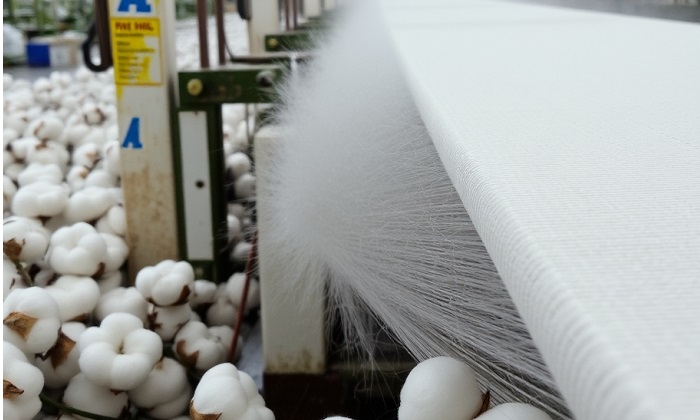
The assumption that textile supply chains can absorb periodic swings in cotton prices has become untenable. During the first seven months of 2026, the global yarn and textile industry experienced a sharp reminder that raw material risk is no longer confined to cotton alone. Simultaneous increases in cotton and synthetic fibre costs have altered sourcing strategies, procurement models and export competitiveness across the world's largest manufacturing hubs.
What emerged was not merely another commodity cycle but a recalibration of how mills, brands and exporters manage risk. Traditional hedging strategies built around switching between cotton and polyester proved far less effective because rising crude oil prices simultaneously pushed up synthetic fibre costs. As a result, textile manufacturers found themselves handling inflationary pressures across both natural and man-made fibres.
A three-phase market cycle
Global cotton prices followed three distinct phases between January and July 2026, Highlighting how quickly market sentiment shifted from oversupply to scarcity before returning to cautious equilibrium.
Table: Global cotton price phases & benchmark overview (Jan-Jul 2026)
|
Time Phase |
Price range ($/lb) |
Market drivers |
Sector impact |
|
Phase 1 (Jan–Feb) |
$0.74 – $0.75 |
Surplus inventory overhang, sluggish mill demand |
Low operating rates, conservative yarn inventory build |
|
Phase 2 (Mar–May) |
$0.85 – $0.93 (Peak) |
Weather shocks (El Niño/monsoon), active restocking |
Rapid yarn price hikes, margin compression for spinners |
|
Phase 3 (Jun–Jul) |
$0.79 – $0.85 |
New crop arrival, USDA output revisions, market stabilization |
Cautious spot buying, strategic blending shift toward synthetics |
The cotton rally coincided with strengthening crude oil prices, raising costs for purified terephthalic acid (PTA) and monoethylene glycol (MEG), the principal feedstocks for polyester production. Consequently, polyester staple fibre and filament yarn prices climbed alongside cotton, eliminating the cost advantage that manufacturers typically rely upon during cotton rallies.
This dual inflation forced textile companies to rethink procurement. Instead of simply shifting fibre mixes, purchasing teams increasingly diversified supplier bases, staggered buying schedules and expanded price-risk management across multiple raw materials.
Countries respond differently
The volatility also exposed differences in national preparedness.
China continued to use its integrated textile market, controlling roughly 70 per cent of global polyester production while maintaining substantial state cotton reserves. Domestic weaving activity strengthened considerably, with cotton yarn imports surging 66.2 per cent year-on-year in April as mills replenished inventories.
India displayed greater resilience through its diversified fibre base. Textile exports reached Rs 3.16 lakh crore in FY26, while exports of man-made yarns and fabrics grew 3.6 per cent. Cotton yarn, fabrics and handloom exports crossed Rs 1.02 lakh crore, supported by continued upstream integration. The government's decision to extend customs duty exemptions on raw cotton imports until October 2026 also helped processors manage cost pressures without disrupting production.
Elsewhere, the US increased acreage for the 2026-27 crop, with exports projected at 12.3 million bales, while Brazil reinforced its leadership as the world's largest cotton exporter with shipments expected to touch 15 million bales. Vietnam continued strengthening its position as a manufacturing hub, raising cotton imports to a record eight million bales to support expanding garment exports and diversified sourcing away from China.
|
Country /region |
Key export performance |
Raw material/Import dynamics |
Primary focus |
|
China |
Retail cotton yarn exports hit $3.06M in May 2026 (+23.2% MoM) |
Cotton yarn imports surged 66.2% YoY to 178kt in April; Blended yarn imports reached 5-yr high (22.4kt) |
Maintaining MMF market dominance, overseas yarn sourcing for weaving |
|
India |
Total textile exports grew 2.1% to Rs 3,16,334.9 Cr; MMF yarn/fabric up 3.6% |
Cotton yarn/fabric exports reached Rs 1,02,399.7 Cr; 11% cotton duty waived till Oct 2026 |
FTA market access, integrated synthetic and natural fiber expansion |
|
Pakistan |
Total exports $17.93B (+0.26%); Yarn exports +12.40% |
Raw cotton imports down 43.26%; Synthetic fiber imports up 7.25% |
Cotton-synthetic blending, export market diversification |
|
United States |
Cotton exports projected at 12.30M bales |
Planted area up 6% to 9.85 million acres |
Fiber export growth, industrial textile investment |
|
Brazil |
Record cotton export forecast of 15.0M bales |
Expanding output to meet global deficit |
Large-scale sustainable farm output, trade expansion |
|
Vietnam |
Garment & footwear exports up 6.2% in H1 2026 |
Record import projection of 8.0M cotton bales; Premier yarn exporter to China (78.5kt in Apr) |
High-capacity yarn spinning and apparel conversion |
Pakistan's cost challenge
Pakistan offers perhaps the clearest example of how commodity volatility can quickly erode manufacturing competitiveness. Although textile exports edged up marginally to $17.93 billion in FY26, growth was uneven. Readymade garment exports rose nearly 4 per cent and cotton yarn exports increased 12.4 per cent, yet cotton fabric exports contracted more than 7.5 per cent. Even more striking was the 43.3 per cent decline in raw cotton imports, reflecting elevated global prices and tighter financing conditions.
At the farm level, producers shifted acreage from cotton towards more profitable crops such as sugarcane, rice and maize. Reduced domestic availability forced mills to increase synthetic fibre imports by over 7 per cent simply to maintain capacity utilisation. Experts argue that conventional fibre blending no longer offers adequate protection when both cotton and polyester prices rise simultaneously. Procurement decisions are therefore becoming more data-driven, incorporating continuous monitoring of commodity prices, freight costs and inventory risks.
The next competitive edge
The second half of 2026 is unlikely to offer significant relief. Cotton consumption is expected to approach a six-year high of nearly 122 million bales while global ending stocks continue to tighten. Freight costs remain uncertain, geopolitical tensions continue to influence trade flows, and sustainability regulations in Europe and North America are adding new compliance costs through traceability requirements.
This changing environment suggests that future competitiveness will depend less on access to inexpensive labour and more on supply chain resilience.
Manufacturers with integrated operations spanning spinning, weaving and processing will enjoy greater flexibility to absorb raw material shocks. Equally important will be sophisticated risk management capabilities that combine diversified sourcing, inventory optimisation, commodity hedging and transparent fibre traceability.
For the global textile industry, 2026 has underscored a fundamental reality: managing volatility is no longer a procurement function alone. It has become a capability that will determine which manufacturing hubs attract global sourcing orders and which are left behind.
Global sourcing reset exposes India’s apparel competitiveness gap

The assumption that global apparel sourcing would naturally shift from China to India is proving increasingly misplaced. Fresh trade data suggests that while brands are actively diversifying their supplier base, they are rewarding execution capability rather than simply moving production to the next-largest manufacturing nation.
The Office of Textiles and Apparel (OTEXA) for January-May 2026 show that US apparel imports declined 9.3 per cent amid weaker consumer demand and persistent inflation. China experienced the sharpest correction, with exports to the US falling 42.75 per cent to $2.80 billion. Yet India did not emerge as the principal beneficiary. Instead, its shipments declined an even steeper 26.37 per cent to $1.80 billion, while Southeast Asian suppliers captured a larger share of new business.
|
Sourcing Region |
Jan–May 2025 Value ($ bn) |
Jan–May 2026 Value ($ bn) |
Year-on-Year Growth (%) |
|
Vietnam |
$6.30 |
$6.39 |
+1.46% |
|
Bangladesh |
$3.53 |
$3.25 |
−8.08% |
|
China |
$4.90 |
$2.80 |
−42.75% |
|
Indonesia |
$1.87 |
$1.97 |
+5.49% |
|
India |
$2.44 |
$1.80 |
−26.37% |
|
Cambodia |
$1.51 |
$1.74 |
+14.90% |
Vietnam remained the largest apparel supplier to the US, increasing shipments to $6.39 billion despite the broader market slowdown. Indonesia increased exports by 5.49 per cent, while Cambodia recorded the strongest growth at 14.9 per cent. Bangladesh, despite an 8.08 per cent decline, continued to outperform India in absolute shipment value. The figures underscore that sourcing diversification is no longer a simple China Plus One exercise. Global retailers are building broader supplier portfolios centred on operational efficiency, production flexibility and supply-chain resilience.
Reliability matters more than price
The data also challenges the long-standing assumption that pricing remains the decisive factor in sourcing decisions. OTEXA's unit-value tracking shows India's average export price at $3.41 per sq. mt. equivalent (SME), only two cents higher than Vietnam's $3.39 per SME. Such a marginal difference is insufficient to explain the significant divergence in export performance.
Instead, procurement priorities have shifted towards manufacturing scale, lead-time consistency, logistics efficiency and compliance readiness.
According to Sanjay Anand, Senior Vice President of Global Sourcing at Retail Trade Insights, international buyers evaluate suppliers on their ability to deliver resilient supply chains rather than merely offering the lowest labour costs. Manufacturers capable of handling synthetic apparel production, executing shorter production cycles and maintaining consistent quality standards are securing larger sourcing commitments. The shift reflects how sourcing strategies have evolved beyond cost competitiveness to encompass end-to-end operational performance.
A structural divide
Monthly export trends further indicate that India's slowdown extends beyond temporary market weakness. Data compiled by Wazir Advisors shows India's apparel exports declined 15 per cent year-on-year in May 2026 to $1.3 billion, leaving cumulative exports down 12 per cent for the year. Vietnam, in contrast, exported $3.2 billion during the same month, recording a 25 per cent increase and lifting year-to-date growth to 13 per cent.
|
Country & Indicator |
May 2026 Export Value |
May YoY Growth |
2026 YTD Export Growth |
|
Vietnam Apparel Exports |
$3.2 bn |
+25.0% |
+13.0% |
|
India Apparel Exports |
$1.3 bn |
−15.0% |
−12.0% |
The difference is not a recent development. India's apparel exports peaked at approximately $16.7 billion in 2022 and have remained largely stagnant since, at a minimal compound annual growth over the past several years. By May 2026, cumulative exports stood at $6.7 billion.
Vietnam, meanwhile, has steadily grown its global market share despite facing the same macroeconomic headwinds, including slowing consumer demand, freight volatility and inflationary pressures. Analysts attribute this sustained performance to years of investment in man-made fibre (MMF) processing, vertically integrated manufacturing facilities, large-scale factories designed for activewear and performance apparel, and an extensive network of free trade agreements that provide preferential market access.
Building the next growth engine
Experts argue that India's challenge is no longer one of raw material availability but of manufacturing alignment with changing global demand. While India remains one of the world's largest cotton producers, international apparel consumption has shifted towards synthetic performance fabrics, technical knits, outerwear and athleisure categories that require different production capabilities.
Several exporters have already begun repositioning themselves. Pearl Global Industries has expanded synthetic garment manufacturing across multiple production locations, enabling it to execute growing international order books despite broader export pressures. Gokaldas Exports has similarly strengthened its presence in specialised knitwear while reporting 13 per cent revenue growth through scale expansion and product diversification.
These examples show that competitive advantage depends on investments in modern manufacturing, diversified fibre capabilities and specialised product categories rather than traditional cotton-based production strengths.
For the broader industry, narrowing the competitiveness gap will require higher investment in MMF processing, more synthetic textile capacity, stronger compliance standards and faster progress on bilateral trade agreements with major Western markets.
As global sourcing strategies continue to evolve, the next phase of export growth will be determined less by cost arbitrage and more by operational agility. The latest trade data suggests that global buyers are rewarding manufacturers capable of delivering speed, flexibility and reliability—areas where Vietnam has established a clear lead and where India must accelerate reforms if it hopes to capture the next wave of global apparel sourcing.
US tariff headwinds cut $1.25 billion from Indian textile exports
Indian textile and apparel exporters recorded a $1.25 billion decline in shipments to the United States during H1, FY26, driven by order reallocations and lingering trade policy uncertainties. Sourcing data indicates, American imports of Indian garments declined by 23.3 per cent Y-o-Y to $4.10 billion, contracting at nearly three times the rate of total US apparel imports.
Consequently, India's share of the US market slipped from 10.4 per cent to 8.6 per cent, as American retailers transferred seasonal orders toward ASEAN suppliers and Bangladesh. Tariff ambiguity during the key order-placement window forced global buyers to hedge risks by diverting long-lead apparel contracts, stated a senior official from the Apparel Export Promotion Council.
Domestic upgrades target diversified growth
To mitigate US market volatility, Indian manufacturers are accelerating supply chain adjustments and entering new geographic markets. The government temporarily lifted import duties on raw cotton and launched a targeted productivity initiative to lower input costs and support mill margins. Additionally, an export promotion strategy focused on 40 priority nations aims to capture growing demand across Europe and East Asia. A case in point is Tiruppur's knitwear cluster, where leading exporters have reallocated 15 per cent of production lines from US basic wear to functional synthetic garments for European buyers, stabilizing overall plant utilization.
India’s textile and garment manufacturing ecosystem accounts for 2 per cent of national GDP and generates over $33.5 billion in annual merchandise exports across yarn, technical fabrics, and apparel. Expanding into synthetic fibers and leveraging new free trade agreements support long-term plans to reach $350 billion in market output by 2030.