FW
Global Fashion Group prioritizes margin quality over volume in H1, FY26
Global Fashion Group (GFG) posted a milestone financial performance for the second quarter of 2026, delivering its first-ever profitable first half at an Adjusted EBITDA level. Net Merchandise Value (NMV) held steady at €263 million - a minor 0.6 per cent decline on a constant-currency basis - while Adjusted EBITDA doubled Y-o-Y to €6.1 million, expanding margins to 3.6 per cent.
Management achieved this expansion by streamlining operational overhead, expanding third-party marketplace services, and prioritizing higher-value transactions. Average order value increased by 5.3 per cent to €68.70, offsetting a 5.6 per cent contraction in overall order volumes and a 5.5 per cent decline in active users to 7.0 million. This achievement in a softer demand environment validates the Group’s focus on stronger unit economics, scaling Marketplace and Platform Services, and embedding AI across our operations, states Christoph Barchewitz, CEO.
Regional divergence and FY2026 guidance
Regional performance reflected uneven macroeconomic conditions across emerging markets. The Australia and New Zealand (ANZ) division demonstrated resilience with a 3.0 per cent NMV increase, supported by targeted engagement campaigns. Conversely, Latin America declined by 0.6 per cent amid elevated household indebtedness, while Southeast Asia contracted 10.3 per cent due to sustained top-line pressures. In response, GFG narrowed its full-year 2026 NMV guidance to between €1,050 million and €1,090 million while raising the lower bound of its Adjusted EBITDA target to €18–25 million. The strategic focus highlights a broader trend across digital fashion retail, where operators prioritize inventory discipline and cash generation over raw customer growth.
Operational profile and market footprint
Founded in 2011 as an e-commerce platform incubator, Global Fashion Group operates online apparel and lifestyle destinations across Australia, New Zealand, Latin America, and Southeast Asia. The retailer drives expansion by expanding its marketplace services, targeting an Adjusted EBITDA range of €18–25 million for full-year 2026.
Global textile suppliers convene in Dhaka to strengthen apparel supply chains
The four-day 13th Bangladesh Yarn, Fabrics and Accessories Show 2026 opened at the International Convention City Bashundhara in Dhaka, alongside the concurrent Bangladesh Texchem Expo. Over 150 international and domestic manufacturers gathered to showcase technical yarns, functional knitwear, and specialized textile chemicals. By facilitating direct commercial negotiations for local RMG exporters, buying houses, and fabric processors, the trade show addresses critical raw material bottlenecks and shortens delivery lead times for global buyer markets. Additionally, a dedicated trade pavilion organized by India's CHEMEXCIL highlights increasing regional integration in sustainable textile chemical processing.
Policy support and value-chain upgrading
Industry executives emphasized, the necessity of policy stability and structural reforms to sustain export momentum amid shifting global sourcing requirements. Government policy support is extremely important for boosting investment and industrial growth in the country, states Mohammad Hatem, President, Bangladesh Knitwear Manufacturers and Exporters Association.
Event organizers noted, direct access to high-grade synthetic yarns, technical fabrics, and specialized garment accessories enables manufacturers to diversify beyond basic apparel into higher-margin product categories. Tipu Sultan Bhuiyan, Managing Director, ASK Trade & Exhibitions, underscored, modern sourcing platforms are essential for apparel exporters working to comply with evolving international environmental standards while maintaining margin competitiveness.
Trade facilitation and industry footprint
Organized by ASK Trade & Exhibitions since 2011, this annual trade platform connects international fabric, yarn, and chemical suppliers with Bangladesh’s $47 billion apparel export sector. Serving garment manufacturers, buying agencies, and retail brands, the organizer aims to expand regional trade networks and maintain robust operational liquidity.
Rising mill demand and shrinking inventories drive up global cotton costs
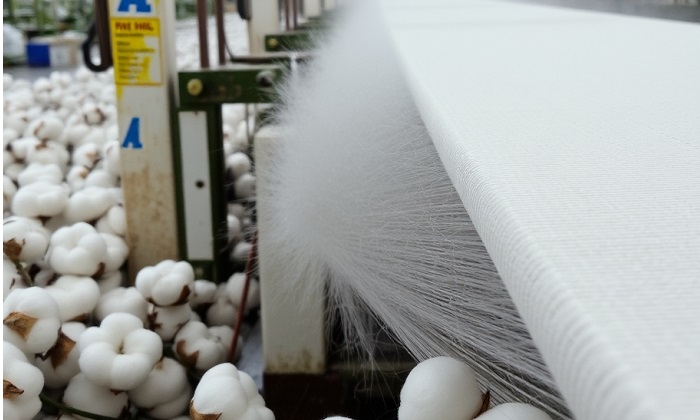
Global cotton consumption for the MY26-27 is projected to reach 122.9 million bales, according to the latest USDA World Agricultural Supply and Demand Estimates (WASDE) report.
Expanding mill processing across China, India, Vietnam, and Indonesia is pushing raw material demand past global production, which stands at 117.6 million bales. Consequently, global ending stocks are expected to decline to 69.7 million bales, generating a pronounced structural deficit. In the United States, severe weather reduced average yields by 74 pounds per acre, driving season farm price expectations up to 75 cents per pound. Spun yarn producers face immediate margin compression as raw fiber inflation outpaces downstream fabric prices, observes Arindam Das, Senior Textile Analyst, Apex Apparel Insights.
Apparel supply chains shift to blends and inventory hedging
The deficit is forcing apparel manufacturers and retail brands to adjust sourcing operations. In a representative case, Vietnamese textile conglomerate Vinatex responded to rising fiber inputs by expanding synthetic blend ratios and securing forward procurement contracts to stabilize supply. Parallel adjustments are taking hold across Asian manufacturing hubs to protect export order profitability. Concurrently, elevated crude oil prices have raised synthetic feedstock costs, limiting alternative fiber substitution and leaving brand margins vulnerable to raw material price shifts.
Commodity forecasts and market intelligence
Established in 1973, the World Agricultural Outlook Board publishes monthly WASDE reports providing global agricultural supply and demand forecasts. Covering major markets including cotton, grains, and oilseeds, the board expands predictive modeling tools to enhance transparency across multi-billion-dollar global agricultural and textile trade networks.
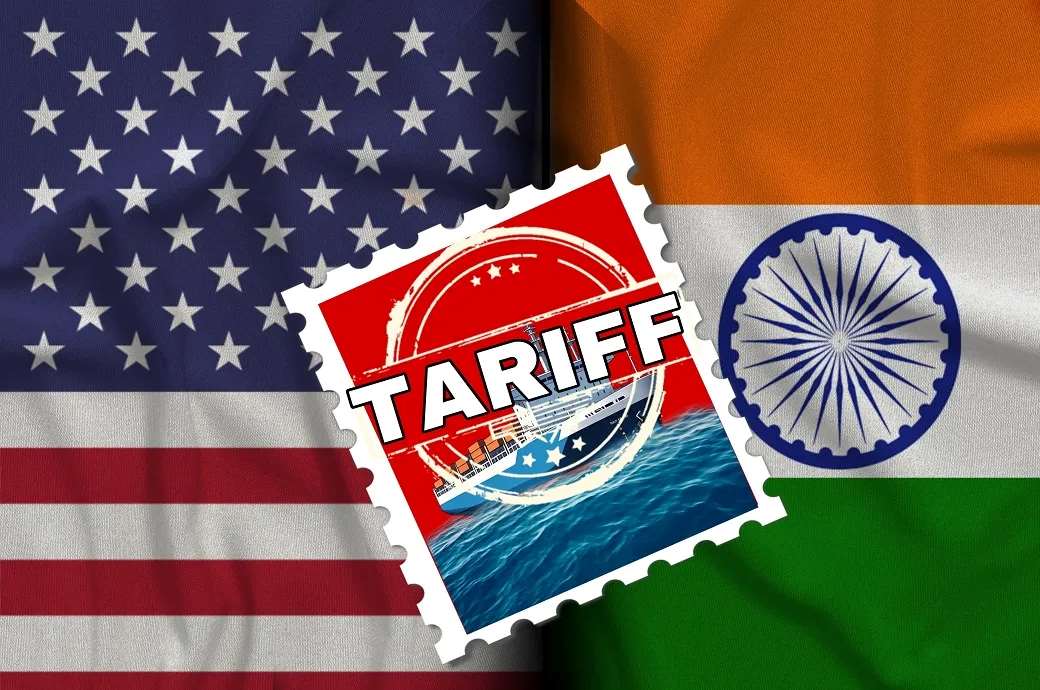
US tariff headwinds cut $1.25 billion from Indian textile exports
Indian textile and apparel exporters recorded a $1.25 billion decline in shipments to the United States during H1, FY26, driven by order reallocations and lingering trade policy uncertainties. Sourcing data indicates, American imports of Indian garments declined by 23.3 per cent Y-o-Y to $4.10 billion, contracting at nearly three times the rate of total US apparel imports.
Consequently, India's share of the US market slipped from 10.4 per cent to 8.6 per cent, as American retailers transferred seasonal orders toward ASEAN suppliers and Bangladesh. Tariff ambiguity during the key order-placement window forced global buyers to hedge risks by diverting long-lead apparel contracts, stated a senior official from the Apparel Export Promotion Council.
Domestic upgrades target diversified growth
To mitigate US market volatility, Indian manufacturers are accelerating supply chain adjustments and entering new geographic markets. The government temporarily lifted import duties on raw cotton and launched a targeted productivity initiative to lower input costs and support mill margins. Additionally, an export promotion strategy focused on 40 priority nations aims to capture growing demand across Europe and East Asia. A case in point is Tiruppur's knitwear cluster, where leading exporters have reallocated 15 per cent of production lines from US basic wear to functional synthetic garments for European buyers, stabilizing overall plant utilization.
India’s textile and garment manufacturing ecosystem accounts for 2 per cent of national GDP and generates over $33.5 billion in annual merchandise exports across yarn, technical fabrics, and apparel. Expanding into synthetic fibers and leveraging new free trade agreements support long-term plans to reach $350 billion in market output by 2030.
Adopt next-gen textile machinery: India ITME urges Coimbatore mills
The India International Textile Machinery Exhibitions (India ITME) Society has formally launched its campaign for ITME 2026 in Coimbatore, urging South India's manufacturing hub to adopt next-generation textile engineering.
Scheduled for December 4–9 in Greater Noida, the 12th edition of the flagship trade showcase will host over 1,800 exhibitors from 95 countries across 240,000 sq m. With Coimbatore producing nearly 30 per cent of India’s cotton yarn, local spinners and knitwear manufacturers face elevated power tariffs and labor constraints, making capital investment in automated spinning, waterless processing, and high-speed weaving imperative. The 2026 showcase provides domestic textile producers a strategic platform to access global machinery innovations and upgrade operational efficiency, states Ketan Sanghvi, Chairman, India ITME Society.
Strategic policy alignment opens global export opportunities
The outreach aligns with national industrial programs, including PM MITRA mega-textile parks and the National Technical Textiles Mission, which incentivize technological modernization. Integrating Industry 4.0 robotics and energy-efficient equipment enables Tamil Nadu’s textile clusters to reduce operating expenses by 15 per cent to 20 per cent while adhering to international environmental standards. Upgrading to high-throughput, resource-efficient machinery remains essential for regional mills seeking to capture higher-value export orders across Western markets, notes Prabhu Dhamodharan, Convenor, Indian Texpreneurs Federation.
Premier industry body for textile engineering
Established in 1980 in Mumbai, the non-profit India ITME Society promotes textile machinery manufacturing, technology transfers, and foreign direct investment. Serving spinning, weaving, and processing sectors across 95 nations, the organization targets expanded international participation for its 2026 exhibition while building trade corridors for domestic machinery builders.
Fair trade and sustainability to drive India’s $100 billion textile export ambition
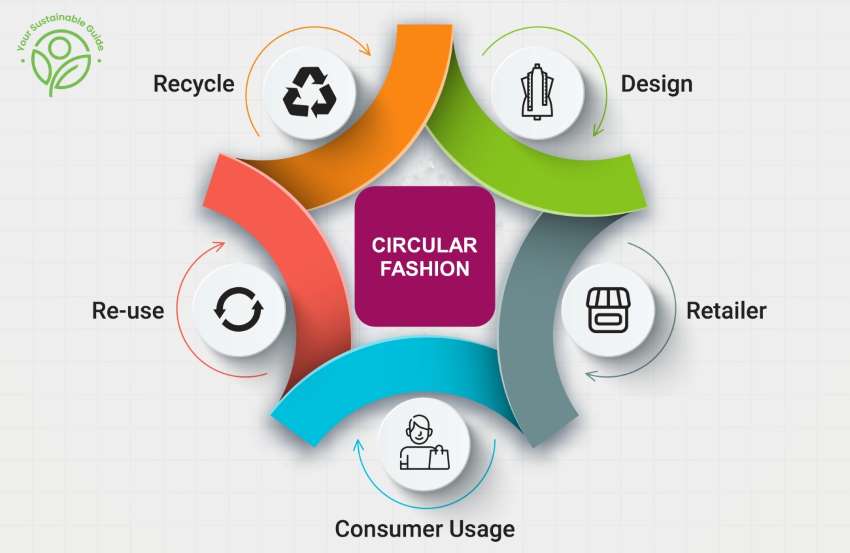
Addressing international trade shifts, Piyush Goyal, Commerce and Industry Minister, urged Indian textile exporters to embed ethical trading, circular recycling, and strict quality compliance to strengthen the 'Make in India' brand across high-value markets.
With total textile and apparel exports standing at $35.52 billion, the Ministry aims to scale total shipments toward $100 billion by 2030. Industry leaders emphasize, adopting fair trade norms and zero-liquid-discharge systems is critical as Western buyers enforce tighter environmental, social, and governance (ESG) rules. Exporters must transition from competing on basic labor costs to delivering high-quality, design-led, and certified sustainable garments under our expanding network of free trade agreements, notes Premal Udani, Chairman, Apparel Export Promotion Council.
Infrastructure expansion and market diversification
To offset export headwinds and input price volatility, apparel manufacturers are utilizing state-backed infrastructure projects like the Rs 1,695 crore PM MITRA Park in Telangana to consolidate production chains and cut logistics expenses. Tirupur-based exporter KPR Mill serves as an operational benchmark, having integrated 100 per cent renewable power, zero-discharge water recycling, and certified fair-wage practices across its production lines. Domestic manufacturers expect these audit-ready compliance capabilities to unlock preferential tariff advantages under active trade pacts with the UK, Australia, and the UAE.
A $225-billion integrated manufacturing engine
India's textile sector processes natural and synthetic fibers into yarns, technical fabrics, and ready-made garments for domestic consumers and major export destinations in Europe, North America, and the Middle East. Rooted in traditional handlooms, the $225 billion industry projects reaching $350 billion by 2030 through mega-parks and PLI support.
Intex & INMAC Sri Lanka accelerates $8 billion apparel export goal
The conclusion of the Intex & INMAC Sri Lanka exposition in Colombo marked a structural step toward scaling the nation's garment export corridor. Uniting over 250 international suppliers from 15 countries, the dual trade showcase connected raw material procurement with automated manufacturing systems.
With RMG generating over 40 per cent of Sri Lanka's total merchandise export earnings, aligning fabric procurement with AI-enabled cutting and sewing machinery yields immediate operational efficiencies. Manufacturing excellence has become just as important as sourcing excellence, states Yasas Hewage, Chairman, Industrial Development Board. Smarter technologies and stronger global partnerships are crucial to help businesses grow, he adds
Bilateral trade expansion drives regional competitiveness
The showcase advances Sri Lanka's roadmap to reach $8 billion in apparel export revenue by 2030. Industry leaders emphasized expanded garment quotas through the India Free Trade Agreement alongside duty-free access via European GSP+ concessions. Integrating sustainable yarns and automated assembly empowers domestic manufacturers to offset freight volatility while satisfying strict Western environmental compliance standards.
A textile sourcing engine for South Asia
Organized by Worldex India since 2015, Intex South Asia serves as the region’s primary B2B sourcing platform across Sri Lanka, Bangladesh, and India, connecting over 70,000 buyers with global fiber, fabric, and machinery vendors. The event series continues expanding regional supply trade networks to support South Asia’s multi-billion-dollar apparel export targets.
East India RMG, hosiery sectors boost investments in high-precision production
The RMG and hosiery sector in East India is accelerating capital deployment into high-precision manufacturing systems to replace legacy equipment. Ahead of the flagship Garknit-X trade showcase in Kolkata, regional mills are prioritizing automated fabric cutting, high-speed knitting, and eco-friendly digital printing. West Bengal aims to double its share of national textile production from 6% to 12%, supported by state-backed apparel park infrastructure. The integration of automated fabric-cutting machinery—demonstrated live at the event—enables regional units to cut material wastage by up to 15% while sharpening production speed and accuracy.
Eastern sourcing base secures export market access
Upgrading regional infrastructure remains critical as European and domestic buyers enforce stricter quality and lead-time benchmarks. Adopting computer-aided manufacturing and high-throughput machinery is essential for local units to capture higher-value apparel orders, notes BP Mishra, Director, Vardaan Events. With over 2 million direct workers relying on the region’s textile ecosystem, modernizing production technology provides regional garment producers a clear path to lower unit costs and capture growing export demand.
Regional industrial catalyst and trade platform
Organized by Vardaan Events, Garknit-X is Eastern India's premier garment machinery and textile technology showcase. Connecting global equipment manufacturers with regional factories across knitting, embroidery, digital printing, and CAD/CAM software, the platform supports West Bengal’s industrial strategy to scale apparel manufacturing capacity.
UK retail campaign pushes for 90 minutes of free high-street parking
Spring & Autumn Fair has launched a national campaign calling for at least 90 minutes of free parking in town and city centres across England, alongside a Parliamentary petition aimed at local authorities. The campaign follows its Voices of Retail research with Faire, which found that 38 per cent of the independent retailers believe free parking would have the biggest positive impact on their businesses, while 63 per cent of consumers say it would encourage them to visit town and city centres more frequently.
The findings point to a wider challenge for physical retail. Some 95 per cent of consumers said they would spend more if their local high street offered a better mix of shops, while 96 per cent want more independent retailers alongside cafés, bakeries and other experiences.
Parking positioned as retail policy
The campaign argues, parking should be treated as part of town-centre economic development rather than solely as a transport or revenue issue. Its petition calls for legislation requiring English local authorities to provide a minimum of 90 minutes’ free parking, alongside wider measures to increase visits and spending.
Jackson Szabo, Portfolio Director, Spring & Autumn Fair, says, retailers and consumers had independently reached the same conclusion on removing practical barriers to high-street visits.
Connecting brands with retailers
Spring & Autumn Fair is a major UK retail trade event bringing together retailers, brands, suppliers and industry professionals. Its portfolio spans fashion, gifts, home and lifestyle products, connecting brands with independent and larger retail businesses. The event’s Voices of Retail research tracks changing retailer and consumer priorities.
Ester Industries posts Q1 FY27 turnaround as value-added films lift margins
Ester Industries reported a sharp improvement in consolidated performance for the quarter ended June 30, with total income rising 27.4 per cent Y-o-Y to Rs 441.9 crore. The company’s EBITDA more than doubled to Rs 58.9 crore from Rs 28.9 crore a year earlier, taking the margin to 13.3 per cent from 8.3 per cent. Consolidated profit after tax stood at Rs 18.6 crore, compared with a Rs 7.2-crore loss in Q1, FY26.
The recovery was led by polyester films, where revenue increased 37 per cent to about Rs 399.5 crore. Film sales volumes rose by 2.7 per cent to 22,120 tons, while value-added and specialty products grew 23 per cent to 6,368 tons, accounting for 29 per cent of total film sales. The company attributed the improvement to better realisations, higher throughput and a stronger product mix.
Recycled polyester gains ground
Sustainability-linked products are becoming a more significant part of Ester’s portfolio. rPET sales volumes increased 19 per cent Y-o-Y to 1,394 tons, with revenues rising 24 per cent to Rs 17.5 crore. This follows a much larger expansion in FY26, when rPET volumes rose 258% to 5,325 tons.
The company said improving industry conditions, tighter Chinese pricing and demand for recycled-content materials are supporting the film business. India’s Plastic Waste Management Rules, which began implementation in 2025, have also strengthened demand for films containing post-consumer recycled material.
Sportswear-linked recycled resin order
Ester’s 50:50 joint venture with Loop Industries, ELITe, has secured a letter of intent from a global sports and athletic brand for up to 15,000 tonnes a year of Loop PET Fiber Grade resin from its planned Gujarat facility. The company said a significant portion of planned capacity has been committed before commercial production, providing visibility for its recycled-materials business. Ester has previously disclosed a multi-year sustainable-materials offtake agreement with Nike.
Polyester and recycled-materials portfolio
Incorporated in 1985, Ester manufactures polyester films, specialty polymers and rPET for packaging, textiles, technical textiles and other industrial applications. It supplies customers across more than 50 countries and operates three manufacturing facilities in India. Its strategy increasingly centres on specialty films, recycled materials and circular-economy technologies, including its Loop Industries joint ventur