This feature marks the final installment of our special series, Wrap Up 2025 | Outlook 2026, exploring the tectonic shifts in global commerce.
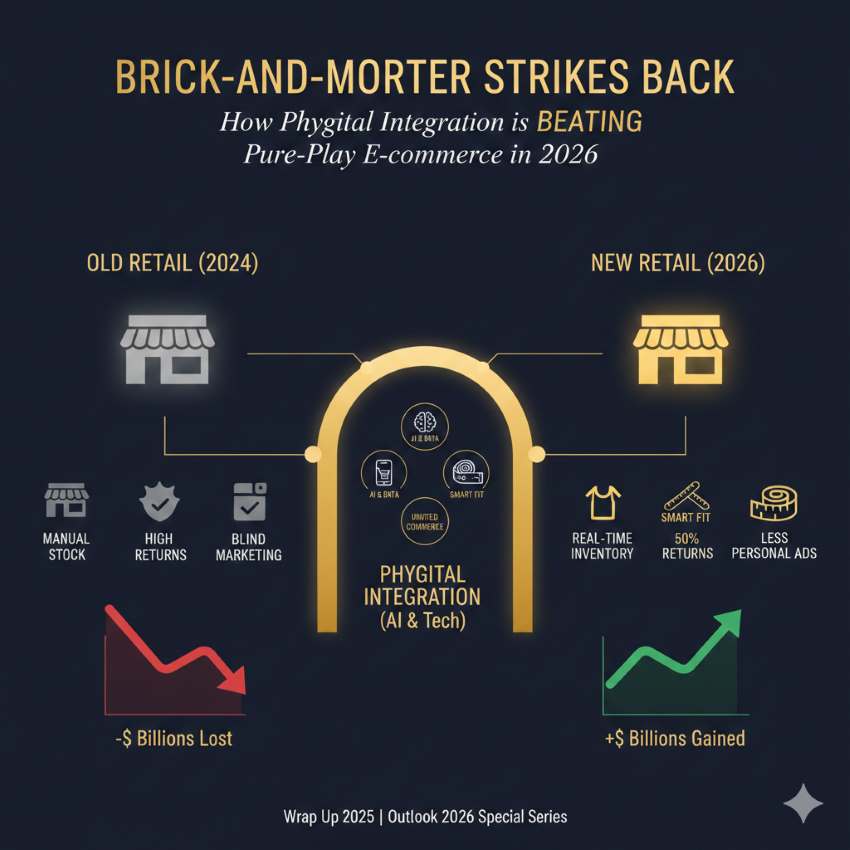
For a decade, the narrative of fashion retail was a eulogy for the physical store. The "Retail Apocalypse" was supposed to be the final chapter for brick-and-mortar, as algorithms and one-click checkouts moved the theater of consumption to the palm of the hand. But as we enter 2026, a surprising plot twist has emerged. Artificial Intelligence, the very force that threatened to digitize fashion out of existence, has become the savior of the storefront through a seamless phygital integration. In the flagship boutiques of Milan, the high-street staples of London, and the sprawling malls of New Jersey, the "Smart Store" is no longer a concept, it is a high-performance engine. By weaving AI into the literal and figurative fabric of the business, retailers are finding that the most potent version of technology isn’t one that replaces the human experience, but one that creates a phygital ecosystem that is hyper-efficient and deeply personal.
Ending the guesswork in buying and stocking
The most radical transformation is happening where the customer never looks: the warehouse and the back office. Historically, fashion has been a game of "guess and distress", buyers guessed what would be hot, and retailers sold the excess at a loss. Today, AI has replaced the crystal ball with a data-driven compass that synchronizes online trends with physical shelf space. At the sourcing level, high-level logistics systems now monitor global shifts, weather patterns, and shipping bottlenecks to reroute goods before a delay even occurs. In 2026, the gap between a trend appearing on social media and the physical garment arriving on a shelf has shrunk from months to mere weeks. Inside the store, the change is palpable. Sensors paired with computer vision systems mean "out of stock" is becoming an archaic phrase. AI-driven demand forecasting now analyzes local events; a concert across the street or a sudden drop in temperature, to prompt immediate shelf replenishment. For the offline retailer, this means the billions annually lost to overstock and stockouts is finally being reclaimed.
Solving the "Fit Crisis" and slashing return rates
Perhaps the most significant breakthrough in 2026 is the technological conquest of the "Fit Issue" through phygital innovation. For decades, inconsistent sizing across brands was the primary driver of customer frustration and a staggering 30% or more return rate in e-commerce. AI has finally bridged this gap by turning the physical store into a precision-measurement hub for the digital world. High-street retailers have replaced traditional tape measures with 3D Body Scanning booths and AI-powered "Fit Concierges." These systems capture thousands of data points in seconds, creating a "Digital Twin" of the shopper. When a customer stands before an AI-integrated smart mirror, the system doesn't just show them the garment; it calculates the exact drape, tension, and movement of the fabric against their specific body shape. This "True-to-Size" matching has migrated from the shop floor to the user’s mobile app, ensuring that when they later shop online, they are only shown items guaranteed to fit. By solving the fit problem in the physical store, retailers have seen a dramatic 50% drop in returns, protecting margins that were previously eroded by "bracketing", the habit of customers buying three sizes of the same item and returning two.
Knowing the customer better than they know themselves
The power of AI in 2026 lies in its ability to move beyond basic age and gender categories. Traditional marketing focused on broad groups, but AI-driven positioning instead focuses on specific shopping behaviors across the phygital divide. By analyzing billions of data points across social media, search history, and in-store foot traffic, brands can now identify niche audiences and tailor their entire brand identity to resonate with a specific lifestyle. This precision has transformed marketing from an expensive shot in the dark into a surgical strike. In the offline world, this translates to "Hyper-Local Merchandising." An AI analysis of a store’s specific neighborhood might reveal that local shoppers prefer muted tones and structured silhouettes, leading the brand to curate that specific branch’s inventory to match the local style pulse. This level of positioning ensures that the store isn't just a place to buy clothes, but a reflection of the community it serves.
Converting window shoppers into buyers
Walk into a premier fashion outlet today, and the experience is supported by sophisticated systems integrated into smart mirrors and staff tablets. Marketing has moved from shouting at everyone to whispering to the individual, creating a personal phygital journey. Offline stores now use secure, opt-in technology to recognize loyal customers and offer them personalized deals the moment they step through the door. If a shopper browsed a specific suede jacket online but didn't buy it, the in-store smart mirror might suggest a matching silk scarf when they enter the fitting room, offering a real-time bundle discount. This synergy between online data and offline presence has turned the fitting room, once the bottleneck of the retail experience, into a high-conversion discovery zone. Furthermore, tools now allow floor managers to monitor the "emotional temperature" of the shop. By analyzing movement patterns and dwell times, AI can flag if a particular section is causing frustration or if a display is being ignored, allowing for immediate changes to the store layout.
The New Math: Comparing Traditional vs. Intelligent retail
The following data outlines the hard financial shift in operational efficiency across top-tier fashion retailers who have replaced gut-feeling management with AI-driven logic.
|
Financial Indicator |
The Old Way (2024) |
The Intelligent Way (2026) |
Performance Gain |
|
Inventory Turnover (Annual) |
4.2x |
7.1x |
+69% |
|
Cost to Acquire a Customer |
$48.00 |
$31.50 |
-34% |
|
In-Store Sales Conversion |
18.50% |
31.20% |
+68% |
|
Profit Lost to Markdowns |
22% |
9% |
-59% |
|
Product Return Rate (Fit Related) |
30% |
12% |
-60% |
Using the shop floor to win the e-commerce war
One of the most profound shifts in 2026 is the blurring line between the showroom and the delivery hub, defining the true essence of phygital retail. Retailers are now leveraging their physical shops as "Micro-Fulfillment Centers" or "Dark Stores" during off-peak hours. AI algorithms determine which stores have the specific surplus inventory to fulfill online orders for the surrounding neighborhood, drastically reducing shipping costs and delivery times. A flagship store on the main street is no longer just a display case; it is a high-speed node in a delivery network. This integration allows for "Hyper-Speed Local Delivery," where a customer can order online and receive their item from the nearest shop within two hours. This strategy has turned the physical store's high rent from a burden into a massive competitive advantage against online-only giants who lack a local presence.
Real-World Proof: The ‘Tech-Led’ turnaround
The benefits of these tools are being proven daily by industry veterans. A major global sportswear brand recently implemented sensors in its New York flagship to track how customers interacted with a new display. The AI identified that while people were looking at the shoes, they weren't trying them on because the price and technical details were hard to find. The brand adjusted the digital signs in real-time, resulting in a 14% jump in sales that same weekend. In another case, a mid-tier fashion chain used AI to adjust stock between its city and suburban branches. The system recognized a 22% higher demand for work blazers in city centers compared to the suburbs, allowing the brand to move the stock where it was actually wanted before it had to be sold at a discount. This single move saved the company nearly $2 million in just three months.
The Outlook: A new playbook for the C-Suite
For the leadership team, the mandate for 2026 has shifted from simple cost-cutting to a total digital overhaul. CEOs are no longer debating whether this technology works; they are restructuring their entire companies around it. The strategic focus is now on systems capable of making autonomous decisions in the supply chain without waiting for a committee. Chief Operating Officers are breaking down the walls between their "Online" and "In-Store" departments, creating one single team that shares the same data and goals. The focus is squarely on "Margin Recovery"—using technology to stop the waste caused by high returns and unnecessary sales. Leaders are now being judged not just on total sales, but on how much profit they can squeeze out of every square foot of shop floor through smart phygital optimization.
Editor Concludes: Putting the soul back in the sale
The fashion industry has always been about the "New," but for years, its business model was dangerously out of date. The 2026 Pivot proves that the physical store is not a relic; it is an asset that has been rediscovered through the lens of science. By leveraging AI to handle the boring parts; counting stock, predicting demand, and managing delivery, retailers have finally freed their staff to do what they do best: talk to people and help them look their best. The winner in this new era isn't the brand with the most complex computer code, but the one that uses that code to make the physical act of shopping feel personal again. We are witnessing a phygital renaissance where the precision of the computer meets the personal touch of the shopkeeper. The store of the future is not a place where machines replace people, but a place where machines make people more successful.