As 2025 drew to a close, the global fashion and apparel industry gave a reminder that recovery is rarely uniform. What initially appeared to be a strong holiday quarter ultimately revealed a market split along clear lines. The final quarter of FY 2025, spanning October to December, underscored that festive demand alone was not enough to guarantee success. Instead, performance gravitated toward companies that balanced aspirational branding with disciplined pricing and near-flawless inventory control.
Rather than lifting the sector as a whole, the much-anticipated festive surge rewarded a narrower cohort of retailers, those capable of translating consumer caution into profitable demand. Shoppers were willing to spend, but only where value, perceived quality, and relevance converged.
The Holiday Quarter: Winners, laggards, and strategic precision
The December quarter unfolded as a competitive contest for a consumer increasingly attuned to discounts yet unwilling to compromise entirely on brand or experience. In the US, spending remained steady but selective, shaped by inflation fatigue and lingering uncertainty around tariffs. Meanwhile, the UK and parts of continental Europe benefited from a timely cold spell that revived demand for winter assortments that had weighed on inventories earlier in the year.
The contrast in outcomes becomes clear when examining the Q4 performance of leading global players.
Table:
|
Brand/Group |
Region Focus |
Q4 Revenue/Growth |
Key Performance Driver |
|
Inditex (Zara) |
Europe/Global |
+10.6% (Sales)* |
High-quality inventory; early winter demand in EU. |
|
Next PLC |
UK |
£6.87B (Est. FY) |
Upgraded guidance due to strong full-price sales. |
|
Gap Inc. |
USA |
$3.9B (Q3) / +3% (Q4) |
Old Navy’s dominance and Gap brand’s reinvigoration. |
|
Abercrombie & Fitch |
USA/Global |
+5% (Q4 Growth) |
Record holiday sales; Hollister segment resurgence. |
|
H&M Group |
Europe/UK |
+2% (LCY) |
Strategic store updates and effective cost controls. |
|
THG Beauty |
UK/Global |
£370M (Q4) |
Strongest Q4 growth since 2021 (+7% Group). |
|
LVMH |
Luxury/Global |
€23.9B |
Louis Vuitton & Sephora (+10%) offsetting Dior flatlines. |
|
Nike |
USA/Sports |
$11.1B |
Better-than-expected "Women in Sports" category performance. |
*Constant currency for Nov 1-Dec 1, 2025.
The table reflects an industry increasingly defined by execution rather than exposure. Inditex’s performance reaffirmed the strength of its vertically integrated model, with timely inventory alignment allowing Zara to capitalise on early winter demand across Europe. Next PLC’s results highlighted the resilience of full-price selling in an otherwise promotion-heavy market, while Gap Inc. and Abercrombie demonstrated that brand reinvention can still unlock growth even in mature retail landscapes.
Luxury and sportswear followed parallel but distinct trajectories. LVMH relied on the continued desirability of Louis Vuitton and Sephora to offset softer performance at Dior, while Nike’s relative stability came from targeted growth in women-led sports categories rather than broad-based demand.
FY 2025 in Retrospect
Viewed across the full financial year, 2025 marked a turning point for the global fashion industry. The opening quarters were weighed down by tariff anxieties, fragile consumer confidence, and lingering inventory imbalances. Yet the second half of the year brought a measurable shift in tone, as companies tightened operations and recalibrated growth expectations.
Overall, the global fashion market grew an estimated 3 to 4 per cent in 2025, modest by historical standards but notable given the volatility that defined the year. Growth was no longer driven by store expansion or aggressive discounting. Instead, it came from improved gross margin discipline, cleaner assortments, and a renewed emphasis on profitability over volume.
Market leaders such as Inditex and Next sustained double-digit full-price sales growth, while turnaround narratives most notably Gap Inc. proved that brand relevance remains a powerful counterweight to macroeconomic pressure. Across the board, management teams showed a clear preference for earnings quality, resisting the temptation to chase top-line growth at the expense of balance-sheet health.
In the US specialty retail finds its voice again
In the US, Q4 marked a quiet resurgence of specialty retail. Brands that communicated clearly, priced transparently, and offered distinct product stories emerged as winners in a crowded marketplace.
Gap Inc.’s performance encapsulated this shift. Reporting its eighth consecutive quarter of positive comparable sales, the company benefited from a sharpened focus on everyday staples enhanced with trend-led updates. High-impact social media campaigns helped reconnect the brand with younger consumers who had drifted toward ultra-fast fashion platforms.
Abercrombie & Fitch delivered one of the season’s most convincing validations of strategic repositioning. Its transition toward elevated casualwear translated into record holiday sales and reaffirmed full-year growth, signalling that its multi-year brand reset has achieved durability rather than novelty.
The UK and Europe saw agility on a pressured high street
Across the UK and Europe, agility proved decisive. Next PLC emerged as a standout by navigating cost-of-living pressures with a highly integrated omnichannel model that blended digital efficiency with store-led fulfilment. Strong fourth-quarter trading prompted multiple upgrades to full-year profit guidance, reinforcing investor confidence in its operating model.
THG Beauty added a layer of innovation to the festive race. Its Lookfantastic brand recorded a sharp spike in UK sales, aided by an unconventional partnership with Uber Eats that captured last-minute gift demand. The move illustrated how speed and convenience have become critical differentiators even within premium beauty retail.
Strategic fault lines in 2026
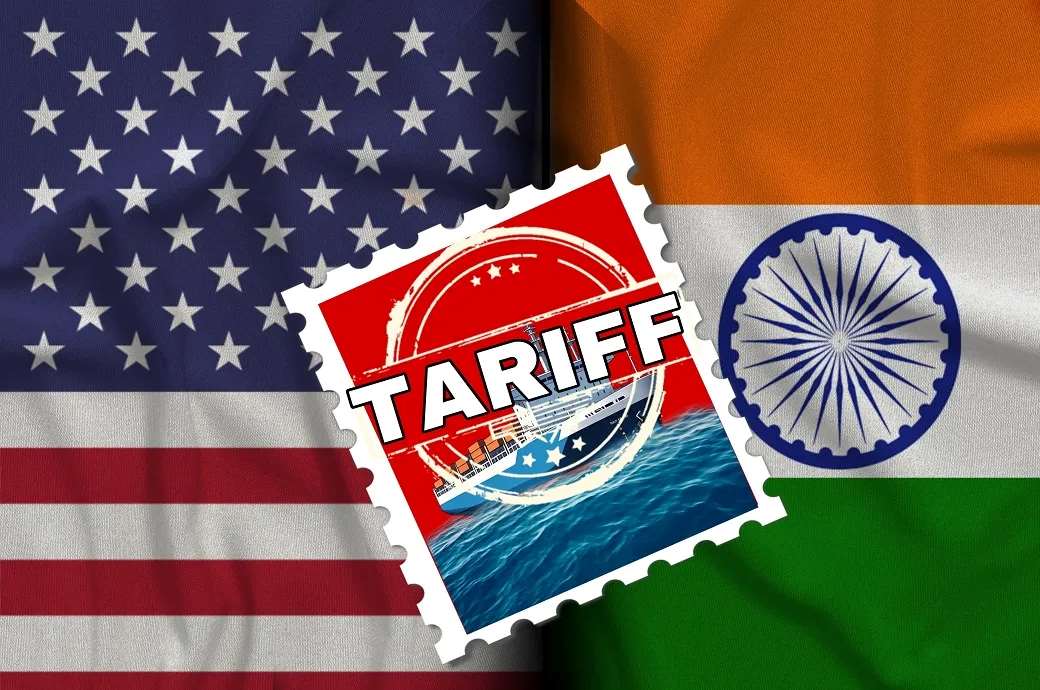
As the entered 2026, uncertainty has not disappeared, it has merely shifted shape. Tariffs remain the most immediate concern, particularly in the U.S., where apparel duties fluctuated sharply toward the end of 2025. Many brands have already absorbed between 100 and 190 basis points of margin impact, prompting renewed urgency around supply chain diversification.
Near-shoring is expected to increase, with production gravitating toward Mexico, Central America, Turkey, and North Africa as companies seek insulation from policy volatility. At the same time, signs of fatigue are emerging within ultra-fast fashion. Late-2025 data suggests consumer spending is gradually rotating back toward domestic value retailers as quality, fit, and ethical considerations regain importance.
Overlaying these shifts is the rapid advance of artificial intelligence. The coming year is poised to usher in early forms of ‘agentic commerce’ where AI-driven shopping assistants evaluate products on attributes ranging from fabric composition to carbon footprint. Retailers that fail to make their assortments machine-readable risk invisibility in this new discovery ecosystem.
The close of 2025 offers a clear lesson: the middle of the market has not vanished, but it has evolved. Scale alone no longer guarantees success, nor does relentless discounting. Competitive advantage now lies in data intelligence, brand clarity, and operational restraint.
As LVMH chairman Bernard Arnault observed in his year-end reflection, desirability remains the most effective defence against macroeconomic noise. In an industry navigating slower growth and sharper scrutiny, that principle appears set to define the winners of the next cycle.