FW
IAF to launch virtual sourcing expo
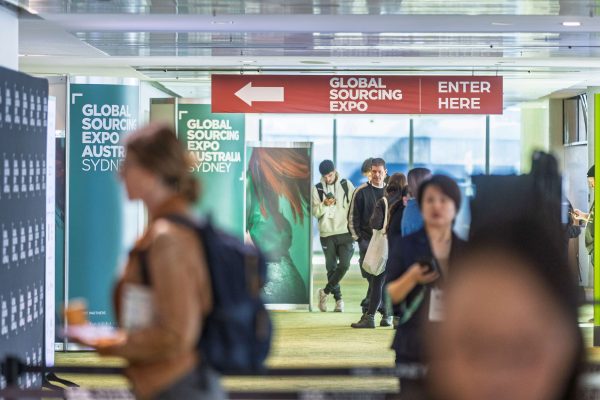
International Apparel Federation( IAF) will launch maiden virtual Global Apparel Sourcing Expo on July 15. The month-long event, which concludes on August 14, will offer price benefits to those apparel manufacturers that are IAF members or members of one of IAF’s organizations. It will include conference programs where global industry experts will speak on varied topics like Sustainability and CSR post COVID-19, Shifts in Global Trade and Digital Product Development as the New Normal.
Before the start of this show, IAF will also conducting a webinar on 9 July titled ‘The New Fashion Delivery Calendar’, wherein the focus will be on the fact that regular flow of fashion calendar has been broken. Under the inspiring leadership of its president Han Bekke and his team, IAF is today committed to achieve all its missions, which also includes connecting and supporting all its members across the globe in expanding their own international network and thereby their ability to do or support the growth of their or their members’ international business.
Lenzing to expand report assessment to more stakeholders
As a part of its efforts to make cellulose fibers less environmentally impactful, Lenzing plans to expand assessment of its Materiality Analysis report to more stakeholders in 2020. Originally released in 2015, the report prioritizes sustainable topics that guide its efforts. The rankings in the report reflect the influence of these activities on stakeholder decision making and the impact of Lenzing’s efforts in this area.
Lenzing first identified the relevant topics by gathering information from employees at its Sustainability Day, as well as through interactions with external stakeholders. From there, a survey was sent out to key customers, as well as employees at varying levels within Lenzing Group. After this study, the results were plotted on a matrix and reviewed by Austrian sustainability consultancy Denkstatt GmbH.
Since the Materiality Analysis first came out, it has been reviewed in 2017, 2018 and 2019, but the topics and rankings have remained the same. It also served as the basis for the company’s ‘Naturally Positive’ sustainability strategy introduced in 2017.
Thousands of Cambodian workers to be jobless as 400 factories shut
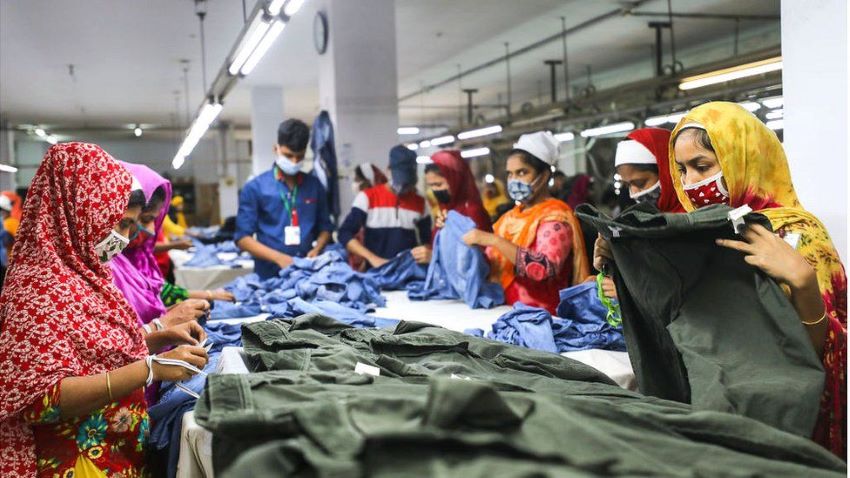
A joint statement by the leading industry bodies of Cambodia states, over 15,000 workers in Cambodia are likely to be jobless as about 400 garments, footwear and travel goods factories in the country have suspended their operations due to the COVID-19 pandemic. The statement was released by associations like Garment Manufacturers Association in Cambodia, the Cambodia Footwear Association and the European Chamber of Commerce in Cambodia.
Statement says, numerous brands and retailers in Europe and North America have canceled or delayed orders due to the drop in retail sales in Europe from the pandemic. Consequently, millions of Cambodians could fall back into poverty due to this crisis as unemployed workers only receive a stipend of $30 from the factory and $40 from the government per month. The statement therefore, urged the European Union to postpone the effective date of partial withdrawal of Cambodia's Everything But Arms (EBA) trade benefits for a year due to the pandemic in Cambodia.
COVID-19: Redefining sustainability in the apparel industry
 Apparel manufacturers invested lot of money in sustainable technologies in the pre-COVID period. However, now many of these manufactures have shifted focus on producing cheaper goods as retailers and brands began demanding discounts on the agreed price for their orders. They even threatened to cancel orders putting millions of jobs at risks. Hence, there is a need to redefine sustainability in the fashion industry in the post-COVID-19 pandemic world.
Embedding social causes in core business
Post COVID-19, manufacturers will have to integrate environmental, social, and purchasing considerations into their core business practices besides making new innovations in sustainability. They will also have to protect workers’ rights and livelihoods. Another way manufacturers can redefine sustainability is by forming greater collaboration and equitable partnerships across all parts of the value chain. They must avoid backsliding on progress by seeking practical and actionable guidance and preparing themselves for a changing industry.
They should resolve immediate inventory challenges by taking advantage of digitalization, innovative business models, and end-to-end solutions – with transparency playing a central role – to assess and demonstrate positive environmental and social impact to stakeholders.
Reinventing business models
The present system of placing new work orders enable clients to alter their ordered items or abandon contracts at any time without hesitation. It also enables them to demand discounts in case of any failure or flaws. Therefore, Bangladeshi apparel makers need to develop a new business model which would make both parties equally responsible for placing orders and purchasing raw materials
An ideal solution would be for buyers to pay for raw materials at the time of placing orders. Trade associations can formulate a set of guidelines including clauses such as no orders without irrevocable LC, views Mostafiz Uddin, Managing Director, Denim Expert.
While maintaining sustainability in their business, fashion companies not only need to safeguard human capital, financial capital, and supply chain relationships but also manage orders and preserve supply chain relationships. They also need to engage in collaborative conversations and respectful dialogue with suppliers on addressing these issues together.
Think out of the box
Lastly, thinking out of the box, manufacturers need to focus on creating a virtual marketplace (business to consumers) like Amazon, eBay as the consumer’s behavior towards purchasing changes rapidly, says Rubana Huq, President, BGMEA. They also need to emphasize on product diversification and technology up-gradation as demands for recycled, non-cotton based clothing goods and circular products items is on the rise, she adds.
Post COVID-19, denim retail to continue resonating with manufacturers
 The denim industry has been integrating new fabric technologies and retail formats to boosts sales for a while. However, increasing unemployment and store closures are forcing the industry to face an unfamiliar retail landscape. These were some of the views presented at a Kingpins24 panel moderated by Edward Hertzman, President, Sourcing Journal, John Deputato, President-US Apparel, The NPD Group and Mark Cohen, Director, Retail Studies and Adjunct Professor at Columbia Business School. The panel focused on how the COVID-19 pandemic is causing enormous changes within the global denim industry.
Boost to online retailers
According to Dupato, the pandemic has turned even the most reluctant consumers into online shoppers. This gave a boost to operations of those retailers’ with a legitimate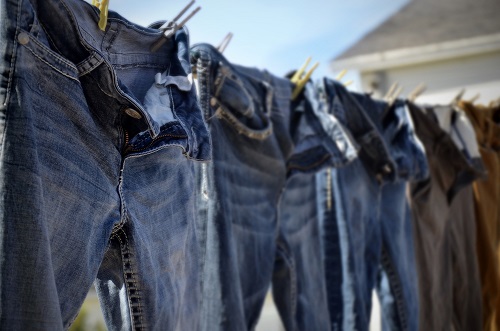 online presence and able to fulfill orders in a reasonable way. Following their initial rush for essentials items like toilet paper and sanitizer, etc consumers have shifted focus to comfort-driven apparel categories like innerwear, socks and pajamas. These apparels are mostly being sold by retailers selling essentials like Walmart, Target and Amazon. Retailers, selling denims and workwear through these stores are currently doing very well.
Patience and focus to guarantee future success
Though this augers well for the industry, rising unemployment is a huge cause of concern for retailers as it will drive away millions of consumers who will now be unable to shop. Consumers’ priorities will once again shift to essentials as a result of which denim retailers may have to wait for a few years for demand to return.
This year as individual states reopen on different timetables, consumers will spread out their purchases across the year. They expect brick and mortar retailers to focus on sanitization and social distancing measures in their stores. On their part, retailers expect the holiday season to be quite dismal in 2020. However, they expect online sales to accelerate with BOPIS (buy online, pick up in store) purchases gathering momentum.
A bright outlook
Casual attire is unlikely to go out of fashion anytime soon. Hence, the outlook for the denim industry remains bright. As long as manufacturers deliver consumers demand for comfort and performance, denim stands a fair chance to be part of the casual apparel rebound, believes Dupato. Echoing the same sentiment, Cohen noted the denim business is unlikely to see any kind of decline from consumer usage point of view. It has always resonated with manufacturers across the world and will continue to do so.
In fact, retailers and manufacturers who have a powerful market share will easily tide over the crisis, said Cohen. They may not sell to as many customers as they were prior to the pandemic but will continue to sell to retailers that are doing business.
Activewear needs a fresh approach as consumers stay away from synthetics
 As COVID-19 forced gyms and workout studios to close doors, the activewear industry suffered huge losses. However, apparel makers still have a chance to improve sales if they start offering clothes in natural fibers with performance technologies.
A recent NPD Group survey notes the adult activewear industry in the US generated sales worth $50.3 billion in 2019. Of this, men’s activewear accounted for 51 per cent market share versus women’s 49 per cent. To be successful in the women’s activewear market, brands and retailers need to blow up the traditional activewear retail model and make a sincere connection with the needs of a modern woman, feels Matt Powell, Senior Vice President and Sports Industry Advisor, NPD Group.
Performance feature drive sales
Powell says, brands and manufacturers must realize that 65 per cent consumers emphasize on performance features while choosing clothes. As per the 2020 Cotton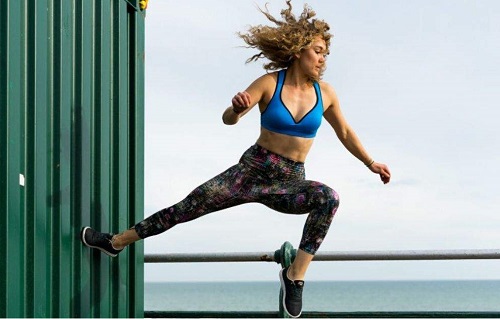 Incorporated Lifestyle Monitor™ Survey, some of the top features that consumers seek out in activewear are: shrink resistance, odor resistance and durability enhancement. This is followed by sweat-hiding features, moisture management, stain resistance, and water repellency.
The survey shows that not only do consumers seek out these features but are also willing to pay more for them. They are also willing to pay a premium for workout clothes that are odor resistant, fade resistant, have sweat-hiding technology and moisture management.
Cotton for comfort and durability
The survey suggests, consumers are also looking for more eco-friendly clothes. Nearly one-third respondents acknowledged being concerned about microfibers from synthetic clothes polluting the earth’s oceans and waters. Two-thirds disapproved the use of synthetic fibers by brands and retailers in their clothes. Eighty per cent also affirmed cotton being their favorite fabric and 51 per cent expressed their willingness to pay more for cotton-rich apparels.
By introducing new technologies for cotton fabrics, brands can give consumers the performance in activewear they’re seeking along with the comfort they prefer. For instance, Cotton Incorporated’s Tough Cotton™ Technology brings increased durability and superior abrasion- and wrinkle-resistance to a garment throughout its life. Odor and antimicrobial technologies can be found in PurThread, XT2®, Polygiene®, and Agion Active™ performance solutions. TransDRY® Technology from Cotton Incorporated is a patented, high-performing, moisture-management technology.
Protecting the wearer
Similarly, cotton technologies used in woven and knit fabrics can be engineered to protect the wearer. For instance, Purepress™ technology can keep clothes wrinkle free. Similarly, EarthColors® technology from Cotton Incorporated and Archroma can bring a responsible solution to dyeing textiles as it uses nearly 100 percent of the cotton plant to create a biosynthetic dye without harmful chemical waste during processing.
Another technology that can wick sweat and keep the wearer dry are the Dry Inside technology launched by Cotton Incorporated in collaboration with Nanotex®. This moves moisture away from the body and spreads it across the fabric surface. It outperforms competition from synthetics like 100 percent polyester or untreated cotton. The Natural Strech Technology from Cotton Incorporated gives cotton apparel pieces a comfortable stretch without the use spandex.
According to Powell, the mature US activewear market needs a fresh approach to grow to full potential. Particularly, the women’s market offers brands and retailers a golden opportunity to explore new avenues, fuelling the growth of the entire market.
Trinidad3 Jeans to launch American Selvedge denim
Men’s denim brand Trinidad3 Jeans launch its first jean made with American selvedge denim on July 4.
The brand exclusively partnered with Louisiana-based Vidalia Mills for the new selvedge fabric made on the antique Draper X3 looms that once weaved Cone Denim’s renowned White Oak denim. The selvedge denim fabric itself is made with cotton grown from BASF’s sustainable e3 cotton seeds farmed in Texas and Louisiana.
The American Selvedge jeans features hallmarks of the Los Angeles-based brand, including its signature no-rivet design, a red bar tack on the left seam, smooth flat felled seams, and clean and unembellished back pockets. The American Selvedge jean will be available in sizes 28 through 40 and will retail for $185.
Trindad3 intended to launch the jean earlier this year but COVID-19 forced delays in the project. The brand was one of the first to pivot production from jeans to face masks at the start of the coronavirus pandemic in the U.S. In just seven days, the team produced 20,000 masks for hospitals in need.
The new style joins the brand’s newly released stretch denim collection and denim neck gaiters. Trinidad3 is sold almost exclusively on the brand’s website, though the company is expanding its wholesale business this fall. The brand will be exhibiting at the upcoming August show at the Dallas Market Center.
American Eagle Outfitters launches new brand
American Eagle Outfitters recently launched a new brand Unsubscribed with a store in New York. American Eagle Outfitters also owns Aerie and Todd Snyder, in addition to the nameplate brand.
Playing off the sustainability theme, the brand incorporates the concept of slow retail, or products that last longer. The brand launches two collections a year, emphasizing quality over quantity. And while not all products are fully sustainable,
Unsubscribed is aiming to be more socially conscious. Some in-store examples include domestically produced knitwear and fleece, recycled nylon swimwear, upcycled denim and handbags made from 100 percent postconsumer waste. Brands such as Ubuntu, Nannacay, A.Shirt.Story, Boyish and Indego Africa can also be found in the store, in addition to the in-house label. Accessories start at $5; swimwear ranges from $70 to $250; dresses from $90 to $550, and tops from $40 to $300.
Munich Fabric Start, Bluzone defer September events
Two weeks after announcing a new, more spacious location to ensure social distancing, Munich Fabric Start and Bluezone organizers are pulling the plug on the Sept. 1-3 trade event.
Instead, Munich Fabric Start will focus on its local German market with an abbreviated event called Fabric Days on Sept. 1-3 that will feature a limited number of exhibitors in four halls at the Munich Order Center.
The next Munich Fabric Start and Bluezone is scheduled for Jan. 26-28. Around the world, Frankfurt Trade Fairs India and MEX Exhibitions have decided to go ahead with new dates for the New Delhi and Mumbai editions of Denim Show, which will now take place from Dec. 17-19 2020, and March 19-21 2021, respectively.
The shows were postponed in view of the rapid escalation in the number of COVID-19 cases and restricted travel. This leaves Première Vision as the next denim event on the calendar. The show is scheduled to take place in Paris, Sept. 15-17.
AEO teams up with NRF, denim retailers
American Eagle Outfitters (AEO) has teamed with the National Retail Federation (NRF), along with Gap Inc., Levi Strauss & Co. (LS&Co), URBN, Meijer and Designer Brands to provide a virtual learning program for retail interns who were left without internships as a result of the coronavirus.
AEO launched Retail Industry Summer Experience (RISE), an eight-week program that brings together 268 college sophomores, juniors and seniors as well as recent graduates and graduate students in the U.S. for a series of educational virtual sessions. Launched in June, the program gives younger generations the opportunity to learn directly from retail giants on new and existing challenges surrounding the industry.
The program will provide professional development opportunities and cover areas such as sustainability, women in technology, and diversity and inclusion—topics that have especially gained significance in recent months. Speakers include Chad Kessler, American Eagle’s global brand president; Jennifer Foyle, Aerie’s global brand president; Chip Bergh, LS&Co. president and CEO, and more. Sessions will be recorded and made available to students to learn at their own convenience.
The program mirrors an industry-wide shift to virtual education, as in-person events have had to pivot to digital methods. Trade shows like Kingpins and accelerator programs such as those organized by Fashion For Good and H&M Foundation have gone virtual to accommodate government restrictions in 2020.