FW
Credit crisis threatens recovery of US clothing, footwear retailers: GlobalData
A report by GlobalData suggests, commercial credit crisis is threatening the recovery of clothing and footwear suppliers in the US. Although customers are returning to stores, these retailers have to depend on the revenue and cash flow from previous seasons to launch new products. COVID-19 has caused massive declines in their revenues and forced them to secure loans for designing new products, placing orders and shipping goods.
Compounding matters, credit terms have changed significantly due to the crisis, which has led insurers to reduce their coverage and services so as to avoid more risk. This may force many brands and retailers to cancel orders or attempt to negotiate reductions, actions which will put more pressure on suppliers, who have already been struggling with the impact of Covid-19 and may be pushed to the edge by further losses.
GlobalData also believes the disruption experienced by apparel and footwear retailers during the pandemic may push many of them to shift significant portions of their production closer to home.
USTR to modify list of EU imports subject to additional tariffs
The office of the US Trade Representative (USTR) is planning to modify the list of European Union products subject to additional tariffs upon importation into the United States and increasing the tariff rate up to 100 percent. The USTR is accepting comments whether specific products should be either added to or deleted from the lists and whether the rate on specific products should be increased. Comments are due by July 26, 2020.
The current rate of additional tariffs is 25 per cent on EU products and 15 per cent on aircraft and aircraft parts. Products from the United Kingdom are also included. In addition to aircraft, the current lists of products include olives, wine, Irish and Scotch whiskies, cheese, oranges, lemons, sweaters, pullovers, sweatshirts, suits, swimwear, blankets, bed linen, axes, tweezers, hand tools, knives, printed books, lithographs and self-propelled machinery. The lists are grouped by product category and country. Accordingly, not all covered products from each EU country are included, so importers are advised to review the current and proposed lists.
Products proposed by the USTR to be added to the tariff lists include certain helicopters and aircraft, fish, cheese, fruit, coffee chocolate, olive oil, beer, vodka, certain chemicals, polyester staple fiber, high tenacity polyester yarn, cotton twill fabric, carpets, glassware, and lifting machinery.
Textile industry in a critical state: BIR
According to Martin Boschen, President-Textiles, Bureau of International Recycling’s (BIR), the textile industry is currently in a critical state and it may take these stocks 18-24 months to hit normal levels. As prices of unsorted, post-consumer textiles are lower than the costs of collection in some markets, collection, sorting and recycling are at risk and if this continues, could end many current collection systems. The pandemic-related closure of many retail outlets around the world has led to a huge increase in inventories of both raw materials and sorted goods, and thus to a substantial decrease in prices.
Current retail revenues are 40-60 per cent (of the norm) in Eastern Europe and Southern Europe, as well as in the open South American countries, and up to around 80 per cent in North-West Europe and in the US. Hence, the industry needs to put reuse always above recycling.
Modernize Sri Lankan garment & textiles industry, urges new report
A new report, 'COVID-19 & Beyond - The impact on the Labor Market of Sri Lanka’, urges the Sri Lankan government to modernize its garment and textile industry besides establishing a comprehensive social security system. Prepared by the country's Commissioner General of Labor, Ananda Wimalaweera, the report reveals results of an e-survey of 2,764 private sector businesses, carried out by the Sri Lankan Department of Labor, to assess the scale of the problems faced by employers.
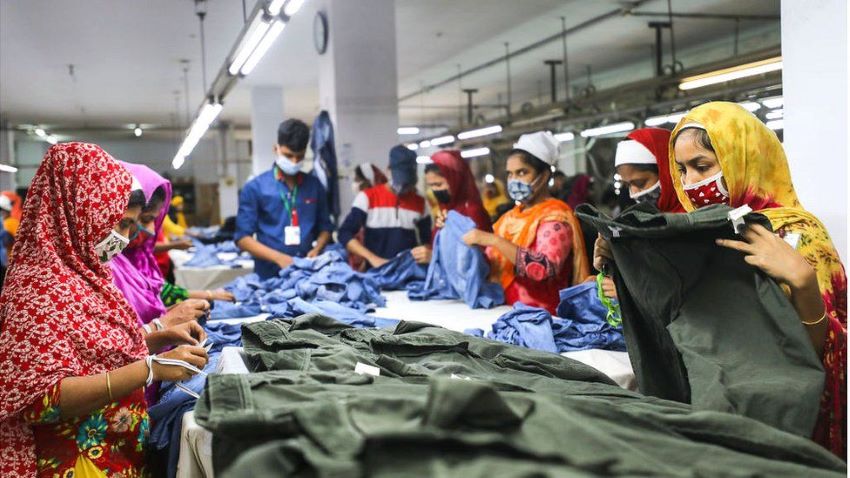
The biggest single sector among those surveyed was manufacturing, with three-quarters of these respondents coming from the key garment and textile industry. The survey found that 53 per cent of businesses had been forced to temporarily shut down their businesses during the pandemic and that only three per cent had been able to remain fully open. The survey found that a staggering 64 per cent of the nearly 600,000 workers employed by the businesses had not been in work during the pandemic. Most were without any form of social security, making them highly vulnerable.
Only two per cent of the business surveyed had been successful in securing working capital loans from financial institutions to help them through the crisis, with another 48 per cent still awaiting the outcome of their applications. The report made a series of short-term recommendations designed to protect workers and reduce the financial pressures on employers, such as the granting of low interest loans.
And, in the medium term, it advised measures including the establishment of a comprehensive social security scheme and adopting strategies to modernize key industries such as apparel and textiles.
Kraig develops new program to protect silk production
Kraig Labs, a developer of spider silk based fibers, has developed a new program to prevent viral pathogens from harming silk production. The company has developed its first immune-enhancing genetic insert to create disease-resistant silkworms. It is now ready for its first round of transgenic creation and resistance testing. This effort was done in a parallel, and complementary, effort to the company’s ground-breaking program developing high-performance spider silk inspired silk fibers and yarns, the company said in a media statement.
The company anticipates its development of a disease resistant silkworm could be licensed across the global silk industry. The success of this program will also provide significant opportunities for growth far beyond the reach of Kraig’s in-house production capacity, with licensing applications globally.
Frasers Group increases stake in Hugo Boss
Mike Ashley’s Frasers Group has increased its stake in German fashion label Hugo Boss for the third time in a week. Earlier this month, Frasers Group had bought 5.1 per cent stake in Hugo Boss through stocks and derivatives. It has further increased its stake in the German label to 10.1 per cent through stocks and derivatives.
The Group now holds 552,500 shares of common stocks which is 0.8 per cent of German fashion house’s total share capital. This investment by the group reflects its faith in Hugo Boss’ future and also the Group’s intent to strengthen the relationship further with the German fashion label.
Hugo Boss is one of the largest German apparel brands with worldwide sales of €2.9 billion. Frasers Group, which was previously called Sports Direct International Plc, is UK’s largest retailer of sports items and has around 670 stores across the globes. It generates revenue of €3.701.9 million.
New Delhi and Mumbai editions of Denim Show rescheduled
In order to provide an impetus to denim industry stakeholders in the aftermath of the pandemic, organizers Messe Frankfurt Trade Fairs India and MEX Exhibitions have jointly rescheduled the New Delhi and Mumbai editions of the Denim Show. The New Delhi and Mumbai editions will now be held from December 17-19, 2020 and March, 19-21, 2021 respectively. The shows were postponed in view of the rapid escalation in the number of Covid-19 cases, restricting inter-state and international travel.
The New Delhi edition will be held at India Expo Mart in Greater Noida, Delhi-NCR while the Mumbai edition will be held at the Bombay Exhibition Center in Mumbai.Denim Show serves as a unique platform where the entire denim fraternity converges to showcase latest products, technologies, and set future trends. Held in association with Denim Manufacturers’ Association (DMA), the show helps in furthering the potential of the Indian denim industry by creating a stage through which suppliers and buyers under the denim manufacturing supply chain could avail the benefits of targeted business opportunities. India’s position in manufacturing denim is very strong and the Denim Show will act as a catalyst taking it a notch-above to make it more competitive.
Better Cotton accounts for 22 per cent global cotton production: BCI
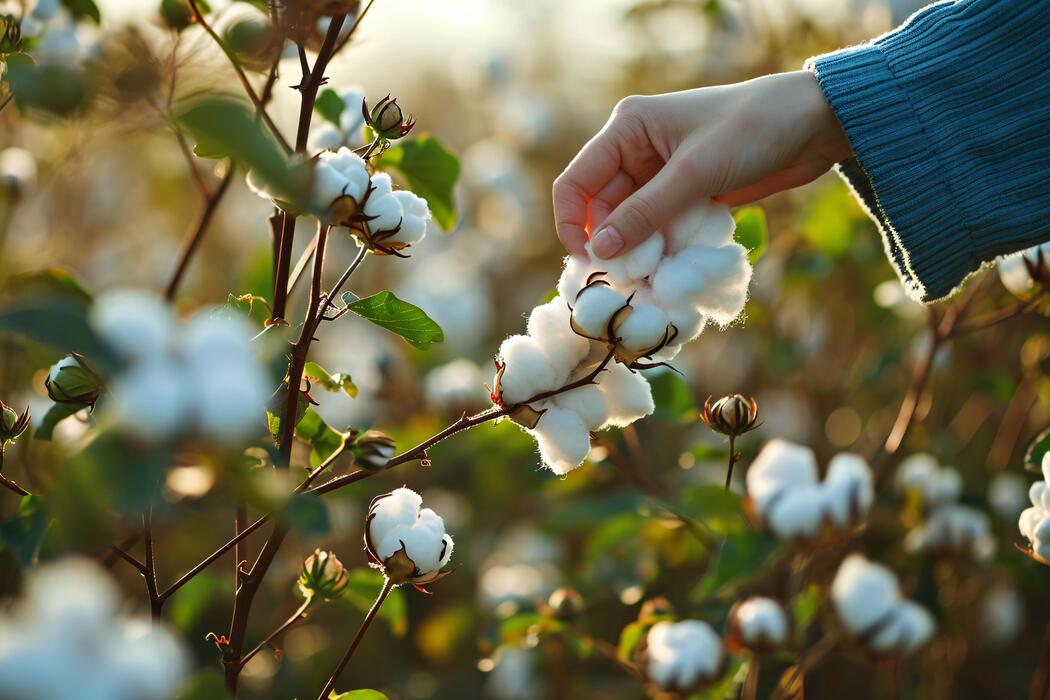
In its 2019 annual report, Better Cotton Initiative (BCI) states that cotton produced by licensed BCI farmers in line with the initiative’s Better Cotton principles and criteria, now accounts for 22 per cent of global production. In the 2018-19 cotton season, with support of more than 1,800 of members, BCI provided training on more sustainable agricultural practices to 2.3 million cotton farmers. Of this, 2.1 million gained a license to sell Better Cotton. This drove the volume of more sustainably produced cotton available on the global market to a new level.
BCI’s retailer and brand members also sourced more than 1.5 million metric tons of Better Cotton in 2019, which sends a clear signal to the market that Better Cotton is becoming a sustainable mainstream commodity. According to the 2019 report, Better Cotton was grown in 23 countries in the 2018-19 cotton season. Licensed BCI Farmers produced 5.6 million metric tons of Better Cotton. That is enough cotton to make approximately 8 billion pairs of jeans, a pair each for every person in the world.
Exporters despair as customs refuses to clear Chinese imports
With India intensifying an economic blockade “unofficially”, aimed at hurting Chinese businesses, consignments containing millions of zippers, buttons and embroidery accessories are not being cleared by the customs. Raja M Shanmugham, President, Tirupur Exporters Association (TEA), reveals payments for these goods have already been made and they are lying in Bengaluru and Chenani airport customs, besides at Chennai Port. His firm, Warsaw International is waiting for Bengaluru Airport customs to clear buttons and badges for him to complete his pending orders. TEA has shot off letters to union ministers of commerce and industry and also union finance minister seeking their immediate intervention.
Similarly, the consignment of Kanta Innovations is not being cleared in Chennai.. His 25 clients are waiting for these buttons to finish their orders. It is impacting not just knitwear but also the manufacture of PPE kits.
CIFF to launch new digital sales platform
The organizers of CIFF have decided to launch a digital sales platform, CIFF Digital, for this summer. The platform was developed in partnership with online fashion sales platform Trade.
For its S/S ’21 edition, CIFF exhibitors will have its own digital showroom to further expand their reach to buyers, while enhancing buyer experience when researching brands online. CIFF Digital provides an additional level of experience, regardless of the physical representation of brands or buyers at the show. CIFF’s partnership with Trade is focused on providing our community with the right toolset so that everyone can focus on what's important. Moreover, the platform will be available during CIFF and outside of its physical dates, securing an even bigger international reach to buyers and brands”, it says from an official statement. Additional information and support materials describing onboarding and all the functions will be available shortly.
CIFF is one of the few trade fairs/events alongwith Revolver and Copenhagen Fashion Week that has only been postponed by a few days and have not yet been canceled.