FW
Century Textiles and Industries Q1 net income jumps 78%
Driven by robust sales during the quarter, the Q1 net income of AV Birla group firm Century Textiles and Industries jumped by 78 per cent to Rs63 crore.
Primarily engaged in textiles, pulp and paper products, the company’ sales grew by 41 per cent to Rs 1,170 crore compared to the year-ago period.
JC Laddha, Managing Director, attributed the growth to the high operational efficiency and improved market demand. The pulp and paper business has performed exceptionally well during the reporting quarter, especially with increased demand in the paper and tissue segment, he said.
Supported by good demand for fabrics for apparel, the textiles business saw impressive growth The pulp and paper business saw sales increasing 49 per cent to Rs 857 crore. This was on the back of better capacity utilisation, which touched 97 per cent leading to a production increase of paper and tissue segments by 17 per cent and 14 per cent, respectively, on a year-on-year basis.
Sri Lanka’s garment textile exports grow 16.7% during January-May 2022
Despite ongoing political and economic crisis, Sri Lanka has registered an impressive growth in garment and textile exports. in the first five month of this year despite the ongoing economic and political crisis. The country’s garment exports grew by 16.7 per cent to $2,206.6 million in January-May 2022 over exports worth 1,890.9 million in the same period of previous year, according to the statistics released by the Central Bank of Sri Lanka.
Sri Lankan textile exports increased by 17.9 per cent year-on-year to $149.2 million during the same period. However, exports of other made-up textile articles stood at $52.7 million during January-May 2022, registering a decline of 3.2 per cent year-on-year, according to the central bank’s report ‘External Sector Performance – May 2022’.
Textiles and garments exports accounted for 56.40 per cent of all industrial exports from Sri Lanka during the five-month period of this year, the report showed.
On the other hand, imports of textiles and textile articles rose by 19.6 per cent to $1,404.7 million, while clothing and accessories imports were up by 21.4 per cent to $109.7 million during January-May 2022.
SITRA to set up centre of excellence in Tiruppur
South India Textile Research Association (SITRA), a textile research organisation here, plans to set up a centre of excellence in Tiruppur as a joint initiative with the Dyers Association of Tiruppur.
PrakashVasudevan, Director, SITRA says, the association working with Tiruppur cluster for almost eight years and wanted to promote green processing among textile units in the cluster. The plan was to set up a centre in Tiruppur, train processing sector personnel, promote use of eco-friendly chemicals, reduce use of water and energy, have a laboratory, demonstrate new technologies, and offer certifications too. This will be an exhaustive facility that will come up at a cost of Rs 70 crore to Rs 80 crore, he says
SITRA had worked with the spinning sector for several decades, extended its work to medical textiles, and wanted to strengthen its research and expand its work to the knitwear cluster in Tiruppur, he adds.
Fashion experts begin exiting from Russia
Fashion experts are giving up hope for a short-term peaceful resolution to the Russia-Ukraine conflict and exiting from the country. H&M has announced plans to exit business in Russia. The decision involves closing of 170 stores and laying off of 6,000 employee
hen retailers like Zara parent Inditex, luxury giants LVMH and Kering, and online retailers Yoox Net-a-Porter and Farfetch have suspended sales in Russia to avoid running afoul of Western sanctions, and partly to head off public outcry. It worked — photos of dark Zara and Dior stores inside Moscow shopping malls satisfied most consumers, even if some knew their owners could theoretically turn the lights back on anytime they wanted.
That middle ground is increasingly unviable, as the war drags on and atrocities such as the massacre in the Ukrainian town of Bucha come to light.
Brands now face a choice: they can shut their Russian operations entirely, as H&M and Nike have done. They can sell their Russian businesses, as off-price retailer T.J. Maxx did when it sold a 25 percent stake in the Russian retailer Familia. Or they can continue with a wait-and-see approach.
Bangladesh Bank extends borrowing limit for textile and garment makers
The Bangladesh Bank extended the increased borrowing limit from the Export Development Fund (EDF) for textile millers and garment makers to December 31 this year.
In January, the central bank raised the loan limit to $30 million from $25 million in order to help exporters offset the business slowdown originating from the coronavirus pandemic. The disbursement deadline was set for June 30, 2022.
Now, the facility for the members of the Bangladesh Textile Mills Association and the Bangladesh Garment Manufacturers and Exporters Association has been extended to December 31, according to a notice of the central bank. This is the third extension. The size of the EDF stands at $7 billion.
Calvin Klein partners Fashion Clinic for a Reimagined Denim collection
Calvin Klein Jeans tapped Fashion Clinic, a Hong Kong-based collective of designers and tailors with specialties in redesigning and up cycling dead stock garments and materials, to help tell a visual and wearable story about denim waste.
The PVH Corp.-owned brand partnered with the collective to develop the Reimagined Denim Collection made from excess and reworked denim. Handcrafted in Hong Kong utilizing 2,000 pairs of unworn jeans, no two pieces in the collection are the same. Fashion Clinic brought the pieces to life through patchwork, reinforced rips, washing and distressing techniques. Labels, buttons and zippers were also kept intact to further reduce waste.
Garments spanned an oversized ’90s jacket re-cut from four pairs of jeans and eight hours of handcrafting to straight crop jeans spliced together from two pairs of jeans with contrasting washes. Other items included a hat, skirt and bralette.
The garments were available from June 22-July 13 exclusively at a dedicated popup located at the Times Square Hong Kong shopping mall. Upcycled denim and “rescued textiles” were used throughout the space to create a denim jungle, including a giant denim tiger made from repurposed materials to mark the Year of the Tiger.
Primark to launch new range with RColorBlend fiber
Primark will launch a new range featuring Recover’s RColorBlend fiber- a combination of recycled cotton from textile waste and low impact dyed recycled polyester, removing the need for garment dye.
The RColorBlend leisurewear range will be available to customers in selected stores across all 14 markets in Europe and the US markets.
Primark is expanding its partnership with recycled cotton producer Recover™ and will become the first high-street retailer to use Recover’s unique RColorBlendfibre on a global scale with the launch of a new leisurewear range. The partnership supports Primark’s commitment, through its Primark Cares strategy, to increase the amount of clothing containing recycled materials and builds on its ambition to make more sustainable fashion affordable for all.
Recover™ is a global producer of low-impact, high-quality recycled cotton fibre and fibre blends, including RColorBlend. The company transforms textile waste into recycled fibres and blends, helping to close the loop on fashion.
The range is made using recycled cotton and polyester fibres and includes t-shirts priced at £6, $10,€8 and sweatshirts priced at £11, $17,€13 in a range of colours including grey, blue and pink. It will launch in selected stores across 14 markets in Europe and the US.
Pakistan’s textile exports grow 25.5% in FY’22: PBS
Pakistan’s textile exports grew by 25.5 per cent Y-o-Y to $19.3 billion in FY22 compared to $15.4billion in FY21, the latest data released by the Pakistan Bureau of Statistics (PBS) showed.
The robust growth in exports is attributed to a rise in global demand post-Covid restrictions and a significant surge in cotton prices.
In the month of June’22, textile sector exports, while sustaining above the $1.5billion level, witnessed an increase of 4 per cent M-o-M and 3 per cent Y-o-Y to $1.7billion, compared to $1.6billion in the previous month and $1.65billion in June’21.
As per the data, during the month, a major increase was witnessed in the value-added division, especially in the readymade garment segment which grew 15 per cent M-o-M. This was followed by knitwear that grew 11 per cent M-o-M, where a 28 per cent increase in volumetric growth played a key role.
Similarly, the value-added segment continued to drive performance on yearly basis, as value-added exports clocked in at $1.2billionn, up by 7.4 per cent Y-o-Y despite a substantial volumetric decline of 29 per cent on a Y-o-Y basis.
Cumulatively, in FY22, total value-added exports were recorded at $13.4bn, showing a growth of 27 per centYoY despite a marginal increase of 7 per cent Y-o-Y in volumes. Within the value-added segment, key contributions came from knitwear ($5.1billion), bedwear ($3.3billlion), towels ($1.1billion) and readymade garments ($3.9billion).
New investments, laws to help sustain Bangladesh’s home textile export growth
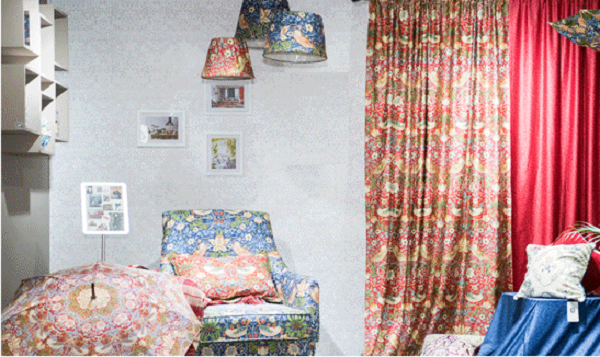
Home textile has gradually become the second most export earning sector for Bangladesh after readymade garments. A recently report from Export Promotion Bureau shows, Bangladesh’s home textiles grew 41.3 per cent to $1.46 billion during July-May 2021-2022. In fiscal 2021-22, Bangladesh’s home textile exports grew by 43.28 per cent to $1.62 billion while Export Promotion Bureau pegs the earnings from the sector in the last fiscal year to $1.13 billion.
Export earnings from the sector also grew by 18.39 per cent to $1.37 billion from the proposed export target set for the FY22, says the EPB data. As per experts, , home textile is one of the first-line export sectors in Bangladesh with the ability to produce bulk products. Bangladesh exports products like bed linen, bed sheets and other bedroom textiles, bath linen, carpets and rugs, blankets, kitchen linen, under the home textiles sector.
Fewer factories despite export growth
Bangladesh’s success in home textiles can be attributed to various factors like investments in research, quality products, innovation and latest technology, sustainable growth, and government support. Yet, the country has fewer home textiles factories compared to woven or knit garments, though Zaber & Zubair Fabrics, Towel Tex, Mosharraf Group, Saad Musa Group, Alltex, ACS Textile, Apex Weaving, Regent, JK Group, Classical Home etc, have established themselves as strong exporters, explains Shahdat Hussain, President, Bangladesh Terry Towel Manufacturers and Exporters Association.
Technavio pegs, the global home textiles trade is expected to grow at 3.5 per cent CAGR during 2018-2025 to reach $170-$180 billion by the end of 2025. Experts believe, the lockdowns in 2020 caused global demand for home textiles to increase significantly. Yet, Bangladesh’s share in global home textile export remains only 7 per cent as the country fails to ensure fair prices for exports.
Market suffers from rising prices, disurptions
Momin Miah, Managing Director, Momin Tex says, despite recovering from the pandemic, the market continues to suffer from supply chain disruptions, rising raw material prices and the ongoing Ukraine-Russia war. The hike in raw material prices and transportation disruptions have compelled many home textile factories to either shut down or reduce their production by 30 per cent-50 per cent, he adds. The hike in gas prices has suffered worsened the situation, he rues
The sound political stability of Bangladesh is instrumental in driving Bangladesh’s industrial growth, avers Hossain. The country is also ably supported by the government that addresses issues like corruption and abolishes NBR and custom-related harassing law that prevent apparel businesses from growing, he adds.
Increase cash incentives
Md Shofiqur Rahman, Senior General Manager, Zaber & Zubair Fabrics says, Bangladesh home textile exports grew in a robust manner during the last financial year. However, sustaining this trend would be challenge with the world returning to normalcy, he adds. Industry experts recommend increasing the cash incentive for exports to 10 per cent from the current 4 per cent and providing seamless service at ports. They urged entrepreneurs to negotiate for better prices to ensure ethical manufacturing,
Bangladesh needs to make more investments in research, quality products, innovation and latest technology, sustainable growth, and government support, he adds. The government also needs to introduce new initiatives to address the corruption, and abolish NBR and custom-related issues that prevent business from flouring.
Upcoming festive season will boost apparel sales in India, hope retailers
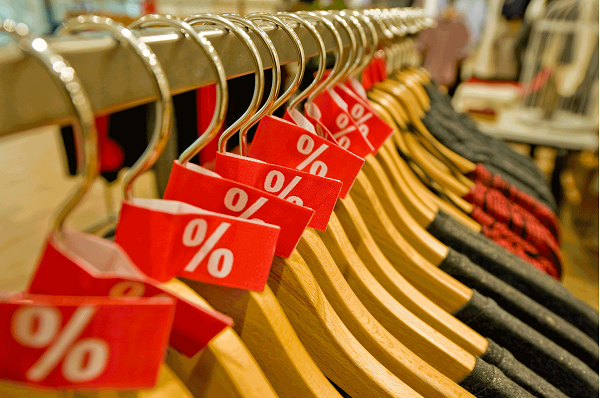
Retailers in India, especially shopping malls, hope, the upcoming festival season will boost sales after the pandemic-induced slump. The festive season in India starts from July 28 with festivals like Nagara Panchami, Raksha Bandhan, and Varamahalakshmi in August. The season continues till January, covering bigger festivals like Ganesh Chaturthi, Dusherra, Diwali, Christmas, New Year, and Makar Sankranti.
No restrictions to boost growth
This year’s festive season is expected to be different from the last two years as there are no COVID-19 restrictions and footfalls at both standalone retail outlets and shopping malls are expected to increase steadily. Having recorded 26 per cent growth in April and 24 per cent in May, India’s retail sector growth dwindled to 14 per cent in June-July because of the inauspicious month of ashada, month, says Kumar Rajagopalan, CEO, Retailers Association of India. The sector is expected to grow on a robust manner in the remaining period with the long festival season giving it a huge fillip, he adds.
Consumption resilience will drive growth despite a rise in commodity prices on an average 10 per cent, observes C Shika, Commissioner, Commercial Taxes. Consumption buoyancy has also led to revenues from commercial taxes increasing to Rs 28,456 crore in the first quarter against a target of Rs 19,118 crore. The growth in tax revenues is expected to get stronger in the festival season.
Malls’ footfalls to increase
Adding to the delight of both traders and public, there are expected to be no further waves of COVID-19 and infections are likely to remain endemic with fewer hospitalizations. This will prevent traders from suffering from any further lockdowns and curfews. The rapid rise in vaccination has placed the Indian retail industry in a better position compared to last two year, opines M K Sudarshan, Chairman, COVID-19 Technical Advisory Committee. Retailers can look forward to a good festive season this year by adhering to all COVID-19 related norms, he adds.
With no drastic curbs required, shopping malls can anticipate big crowds during the upcoming season, says Uday Garudachar, Owner, Garuda Mall. Footfalls at the mall have already reached 80 per cent of pre-COVID levels and may exceed it in the next few months, he adds. In August first week, the retailer aims to relaunch events held during festivals before the pandemic.