FW
Live life to the fullest with Wrangler
Wrangler’s latest promotional campaignespouses living life to the fullest no matter one’s age or circumstances.
The promotion includes a mix of still photographs and short films available for viewing on YouTube starring an assortment of young models shown creating and enjoying music, hanging out in a skatepark, taking a road trip and relishing being in love. It showcases Wrangler’s western heritage and the courage, confidence and resilience of Western culture.
Denim in a wide variety of dark and light washes dominates the new collection with the large barrel-fit jeans and two bell-bottom styles taking center stage for women.Fresh women’s denim jacket styles include fleece-lined ranch jackets and 1980s-inspired coats. This return to retro is also reflected in striped knitwear in bright orange and red, a lilac oversized overall from Wrangler’s Casey Jones utility wear collection, a hyper-scarlet flare and a shrunken concert tee that appears to have been pulled from a vintage bin. For men, a new straight leg fit called Frontier is a product protagonist alongside the wide-legged Casey Jones Utility jean and another roomier one called Redding. Wrangler’s signature western style is represented with pieces including a men’s western shirt, a check shirt and a corduroy sherpa jacket.
Global retailers adjust offerings post covid
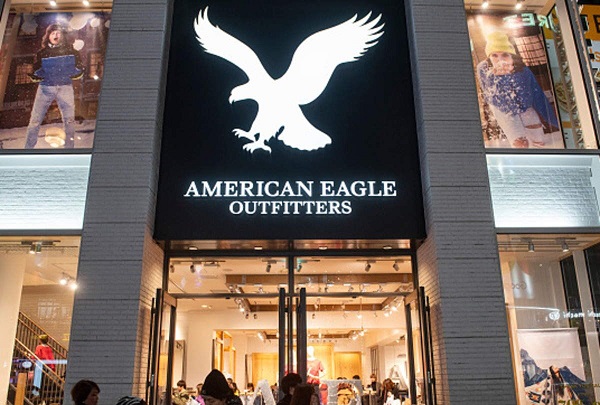
American Eagle’s comparable sales in the latest quarter fell six per cent from a year ago. The brand’s priorities are adjusting its assortments and rightsizing inventory.
Other retailers including Walmart, Target, Gap and Kohl’s face similar problems with bloated inventories. Target has had to resort to deep discounting to get rid of excess inventory when its quarterly profit fell 90 per cent. Walmart has employed similarly aggressive markdowns to move items like clothing out of stores, which has led to a significant cut in profit expectations.Gap and Kohl’s, meanwhile, are looking to avoid some markdowns with a pack-and-hold strategy for certain items, which allows them to reserve excess inventory until demand rises.
Inventories pile up
To clear products off shelves in the meantime, retailers including Macy’s and Nordstrom have turned to markdowns that are cutting into profits. Nordstrom had to go in for deeper discounts than expected and it could take a couple of quarters for the company to properly readjust. The department store operator in August had reported stronger sales for its second quarter, but slashed its financial forecast for the year citing a glut of inventory and slowing demand later in the quarter. Macy’s has also slashed its revenue and earnings forecast for the year because of weakening apparel sales over the quarter as the consumer faces higher costs on essential goods, particularly grocery. The company has taken the markdowns necessary to help clear inventory.
The way forward
The industry is working to figure out the type of items people want coming out of the pandemic, while also facing softening demand as inflation squeezes budgets.By 2023, retailers might be able to adjust more quickly to demand as the supply chain normalizes. But for now companies are struggling to adjust their offerings.
White Milano to feature 400 brands, sustainability key theme
White Milano will be held in Italy, September 22 to 25, 2022. Some 400 brands are expected to reach out to some 28,000 buyers. Sustainability will play a key role within the show which will be hosting a selection of players, talks and events.
Companies will be given support to evaluate their emissions and increase their transparency levels among partners and clients of the value chain. Materials, technologies, zero waste production, customization and treatments that are increasingly less impactful on the environment will be given importance in an immersive and experiential version aimed at better involvement of industry players and the end consumer.
Among participating companies are Dyloan, a leader in innovative technologies and solutions for the fashion world according to principles of sustainability and transparency, Fulgar, an international leader in the market of manmade fibers, entirely made in Italy, specializing in the production of sustainable and responsible fibers, Tencel, a key manufacturer of cellulose fiber of vegetable origin, YKK, the global closure specialist that has set clear goals in climate change, protection of water resources and materials, management of chemical agents and respect for people.
Key players will discuss important topics such as digital passport, green washing, materials and technologies innovations, regenerative agriculture and new frontiers of retail.
Trident bath linen production falls
Trident’s production of bath linen tumbled 37 per cent in August 2022 compared to August 2021.
Production of bed linen slipped 37 per cent. Production of yarn slumped 41 per cent. Production of paper declined 13 percent but production of chemicals rose one per cent.
Consolidated net profit declined 37 per cent in the first quarter but net sales rose 13 per cent.
Trident is a vertically integrated textile (yarn, bath and bed linen) and paper (wheat straw-based) manufacturer and is one of the largest players in the home textile space in India. It currently has around 400 points-of-sales across the country and plans to further expand its retail presence by doubling its point-of-sales next year. Trident believes in offering innovative solutions and delivering high-quality value-added products to customers. Trident is expanding spinning capacity at its Madhya Pradesh plant. The project will help strengthen Trident’s existing home textile business and further expand its market presence. Trident’s existing capacity is 5,43,744 spindles and 6,464 rotors, and the current capacity utilisation is 99 per cent. Trident has planned for small maintenance capex in the form of de-bottlenecking and upgradation of capacities. The company is committed to embark inclusive growth for all its stakeholders and continuing to excel in future.
Tod’s sales up 17 per cent, inspite of fall in China sale
Sales at Tod’s rose by 17 per cent in the first half of the year. Revenues fell by 19 per cent in Greater China due to Covid restrictions.
The Italian fashion group would focus on distribution network efficiency and on digital with the aim of increasing like-for-like and higher-margin turnover.
In the first half of 2022 revenues of the Italian fashion and luxury industry went up by 25 per cent. This includes textiles, leather goods, apparel, footwear, jewelry, beauty products and eyewear. These positive results are partly explained by the price hikes introduced to compensate for the increase in energy and raw material costs. Real revenue has grown by over 18 per cent above the level recorded before the 2008 financial crisis.
Italian companies are currently reaping sizeable benefits from the depreciation of the euro against the dollar, and their exports have grown significantly towards all countries, with the exception of Russia and Hong Kong. Between January 2022 and May 2022, Italian fashion exports increased by 21.9 per cent compared to the same period a year earlier. For the first five months of 2022, Italian fashion sales to the USwent up by 59 per cent, South Korea 34 per cent, Spain 31 per cent, France 25 per cent and Germany 20 per cent. Exports to the UK went up by 22 per cent.
India: Reliance acquires polyester company
Reliance Industries has acquired Shubhalakshmi Polyesters.
The acquisition will strengthen the textile manufacturing business of Reliance and is part of the company’s strategy to expand its downstream polyester business.
Shubhalakshmi Polyesters produces polyester fiber, yarns and textile-grade chips through direct polymerisation as well as extruder spinning with value addition through texturising. It has a continuous polymerisation capacity of 2,52,000 tons a year. The firm has two production facilities.
Global shapewear market grows at seven per cent
The compression wear and shapewear market is growing at a CAGR of seven per cent a year.
Compression wear and shapewear are tight-fitted apparels designed specifically to keep the body in a certain posture. Change in lifestyles, rise in disposable income of consumers, high-end advancements in fabrics and garment design and a surge in demand from the geriatric population are driving the growth of the market. Male users are leading the global compression wear and shapewear market. Men prefer compression garments during a workout, further fueling the demand from the male consumer segment. The women’s segment too is growing owing to interest in fitness and comfortable clothing and an increased participation of women in sports activities.
North America accounts for about 42 per cent of the market share. Among various distribution channels, the specialty retail stores segment holds a revenue share of 62 per cent and is expected to maintain its dominance ahead as well. This segment constitutes company-owned outlets that possess extensive penetration in various geographies and sell wide product lines of compression wear and shapewear. The performance and recovery segment accounts for the maximum revenue share. This segment is expected to grow owing to extensive usage of compression wear to prevent injuries, improve blood circulation, and speed up recovery.
Puma dabbles in metaverse
German sports brand Puma has rolled out an interactive metaverse project dubbed Black Station to display a collection of its limited-edition sneaker NFTs.
The sneaker tokens are part of the firm’s Futrograde collection. Holders of these NFTs can redeem them for physical sneakers at any time.
The Black Station project brings Puma up to par with fellow sports giant Adidas as it becomes the latest sportswear brand to launch digital collectibles.Twenty years ago, Black Station was Puma’s label for its most innovative designs in fashion. Now it is a portal for digital exploration across fashion, sport performance, heritage classics, and innovation. Puma's Futrograde collection follows a recent trend among clothing and luxury brands that are releasing physical products affiliated with digital assets, generally known as phygitals. Other popular brands that have towed a similar path include luxe brands Prada, Tommy Hilfiger, and Estee Lauder.
Ever since its foundation in 1948, it has been the company’s philosophy to provide the fastest athletes with the fastest products, an attitude summarized in the brand’s motto Forever Faster.Track and field is sports and athleticism in its purest form and embedded in the very core of Puma. There are also improved versions of the gold-medal-winning PumaevoSpeed Nitro Elite and several new products for long-distance runners.
Indonesia export earnings up 41 per cent
Indonesia’s earnings from exports of leather, finished leather goods, and footwear increased by 41 per cent in June 2022 compared to the same period in the previous year.
There has been a diversion of orders from several global brands to Indonesia. Utilities of the leather industry, leather goods, and footwear industries also increased to 84 percent in July 2022. Utilities before the pandemic were around 80 percent.
Indonesia holds exhibitions of footwear, leather, and finished leather products. These are a means of product introduction and a bridge between business actors and between business actors and consumers. The goal is to increase inter-industry linkages between national footwear manufacturers and domestic leather producers as well as efforts to make the import substitution program a success and strengthen the supply chain between upstream and downstream sectors of the domestic shoe industry.
Exports of shoes from Indonesia grew 28 percent in 2021. Indonesia is the sixth largest footwear exporter in the world. Indonesia believes the Regional Comprehensive Economic Partnership (RCEP) will open up opportunities to increase exports of footwear. The country’s shoe exports to RCEP countries reached 29 percent of total exports in 2020 followed by the United States at around 27 percent.
EU textile sector wants cap on gas price

The European textiles industry has called on the European Union to adopt a wholesale price cap for gas.
It says a cap above a certain level will result in collapse of businesses. It wants the TTF benchmark parameters to be changed and TTF to be decoupled from the electricity market and the revision of the merit-order principle for the electricity market, which is no longer serving the purpose it was designed for.
Another proposal is that the state-aid framework should be amended and includes textiles finishing, textiles services and the nonwoven sectors as well. If this doesn’t happen, says the industry, Europe will remain without its integrated textiles ecosystem and would not be able to translate into reality the EU textiles strategy for more sustainable and circular textiles products.
Given the dire international competition in which the EU textiles industry operates, it says, it is not possible to just pass on the increased costs to consumers. Yet, with these sky-high prices, companies cannot afford to absorb those costs.EU textile companies are mainly small and medium units that do not have the financial structure to absorb such a shock. The industry fears that if the EU does not act international competitors will have an advantage in the market, resulting in the de-industrialisation of Europe and a worsened reliance on foreign imports of essential products.
Result of high energy prices causes production loss Last month gas wholesale prices reached record levels, triggering sky-high electricity prices. Already, in March 2022, with EU gas wholesale prices what they were, the business case for keeping textiles production was no longer there. To date, natural gas wholesale prices are more than 15 times higher compared to 2021. Many businesses have suspended their production processes to avoid the loss of tens of thousands of euros every day.
MMF production, Nonwovens are the affected sectors
The manmade fibers industry is an energy intensive sector and a major consumer of natural gas and electricity in the manufacturing of its fibers.Not only is it being affected by higher energy process, it is also experiencing shortages and sharply rising costs of its raw materials.For the nonwovens segment, production processes – which use both fibers and filaments extruded in situ – are also highly dependent on gas and electricity. Polymers melting and extrusion, fibers carding, web-forming, web-bonding and drying are energy-intensive techniques. Nonwoven materials can be found in many applications crucial to citizens like in healthcare (face masks) or automotive (batteries).
For some segments the use of gas has no technological substitute: for example the dyeing and finishing production units make very intense use of gas. These production units are mainly composed by boilers and driers, which only work on gas and there is no alternative technology.
The textile services sector requires a considerable amount of energy to keep services, particularly hospitals and care homes, stocked with lifesaving material as well as clothing and bed linens for patients themselves. Losing these businesses would cause a lack of clothing for healthcare professionals, including protective sanitary gowns for surgeons, nurses and doctors, uniforms including other forms of personal protective equipment.