FW
Lenzing tops Canopy’s Hot Button Ranking 2022 for third time
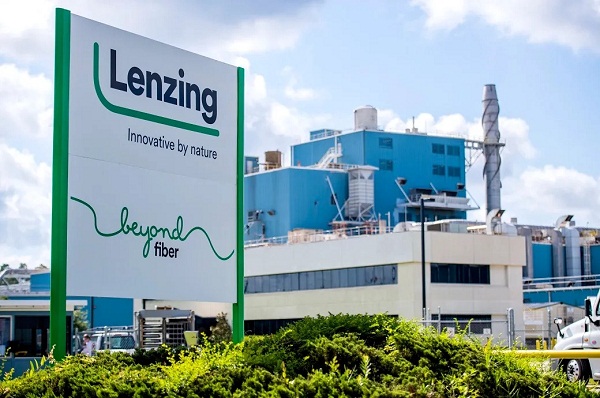
Austria-based Lenzing Group is spinning waves in the textile industry. Recently it emerged in top position in the Hot Button Ranking 2022 of Canadian non-profit organization, Canopy, which works collectively with some of the world’s largest fashion and beauty brands to bring forest-saving solutions from the margins to the mainstream. This global ranking standard of Canopy evaluates the world’s best environment-friendly cellulosic fibre manufacturers.
Focus on sustainability and responsible wood and pulp sourcing
It's a hat trick for Lenzing, as it confirms its leading role in areas of sustainability and responsible wood and pulp sourcing for the third time. The company manufactures environment-friendly high-quality wood-based viscose, modal and lyocell fibers and filament yarn, used in all segments of the textile industry such as clothing, home textiles and technical textiles, as well as the non-wovens industry.
Lenzing now proudly continues to wear its ‘green shirt’ labels again as, over the last five years, it has transformed more than half the viscose supply chain- known as green shirts -- at low risk of being sourced from endangered forests around the world. Ranking first in Canopy’s evaluation of the world’s 34 largest producers of cellulosic fibres relating to their sustainable wood and pulp sourcing as well as their focus on alternative raw materials is a huge achievement indeed for Lenzing.
Fully circular economy by utilizing waste
Lenzing has been focussing on creating a fully circular economy by utilizing waste in all aspects of its core business and developing circular solutions together with potential partners with the concept of a “We give waste a new life every day.” And to achieve this further, it is now cooperating with the Swedish pulp producer Södra and two global market leaders who are well-known for actively promoting the circular economy in the fashion industry are joining forces to better solve the global textile waste problem by making fibres from post-consumer textiles.
Lenzing is well-known in the textile industry for lyocell fibres made from 30 per cent recycled cotton waste. It plans for a greener future will put the textile and knitting industry into a spin. It plans to launch lyocell, modal and viscose staple fibres with up to 50 per cent recycled post-consumer content on a commercial scale by 2025 as well as develop a new circular business model by closing the loops for post-consumer waste. By then, it also plans to have secured more partnerships with 25 key supply chain companies which will further promote is a basic concept of climate protection and circular economy.
The Lenzing Group’s USP of high-quality biodegradable and composite fibres are used in many kinds of garments such as versatile denim and high-performance sports clothing and hygiene products and agricultural applications. Their business model offers solutions to help redirect the textile sector towards a closed-loop economy that is traceable and accountable from the beginning to the end. The company is focussing on accomplishing the targets of the Paris Climate Agreement and the “Green Deal” of the EU Commission to achieve an overall global aim of a zero-carbon future for the apparel industry.
Economic slowdown in the West will affect global apparel exports in 2023: Wazir Advisor

Wazir Advisor’s latest report, ‘Apparel Trade Scenario in Key Global Markets and India - Nov 2022’ reveals India’s garment export was not up to the mark at all, having suffered a decrease of 24 per cent compared to October 2021. However, on YTD basis the exports are 11per cent higher than 2021. However, keeping the high inflation in mind, there is no volume growth over 2019. The report on key markets viz: India, Japan, US, UK and the EU, covers a wide-range of topics related to the global apparel sector.
Slowdown affects consumer sentiment
The current economic slowdown and inflation has led to curtailed consumer buying and that is the main reason for this downgrade. Although India did gain 8 per cent in exports to the US, it lost 3 per cent in exports to the UAE and 1 per cent to the UK. Between January and September 2022, India’s overall apparel exports worth $12billion was largely to the US with 35 per cent share, the UK had 9 per cent share, the UAE 8 per cent, Germany 6 per cent, France 4 per cent and others made up 38 per cent.
With Europe already in inflation-ridden crisis and the UK slipping into recession and predictions that the US may follow will definitely affect garment exporters in 2023. India may well look at the Eastern markets like its neighbor Bangladesh. The proof lies in the fact that Japan’s apparel import as of August 2022 stood at $2.8 billion which was 23 per cent higher than August 2021. Last year, India exported apparels worth $141.37 million.
China sees a drop in the US market
In the US market, China has experienced a sharp decline in garment exports as its share steadily declined by 8 per cent since 2019. Vietnam and Bangladesh are the beneficiaries, experiencing a growth of 3 per cent each. India gained 1 per cent. Looking at the US market in September 2022, apparel imports were valued at $9.6 billion which is 18 per cent higher than in September 2021. On a year to date (YTD) basis, the imports are 35 per cent higher than 2021.
Monthly apparel store sales in the US market in October 2022 were estimated $17.3 billion, 2 per cent higher than October 2021. On YTD basis, sales are 9 per cent higher than 2021. Apparel inflation remained in the range of 5.5 to 8 per cent during 2022, which reveals low volume growth.
China, India lose ground in Europe market
The EU presents an interesting pattern as between 2019 and 2022, China held steadfast with 29 to 30 per cent share. India too, though small, has held steady at 5 per cent. However, both China and India haven’t seen growth whereas Bangladesh has grown by 3 per cent with 23 per cent share in 2022. In the January-August period of 2022, Bangladesh clocked €14.35 billion compared to €8.85 billion in the same period in 2021. With Bangladesh poised to focus on artificial fibers, it is predicted to grab more of China’s share in the EU in the years to come.
Turkey and Vietnam are in a similar situation as are China and India – steady but no growth. While EU’s import figures might look impressive, the high growth figures are due to a low base value and inflated prices. EU’s apparel imports in September 2022 were approximately 42 per cent higher compared to the same period in 2021. The EU basket of apparel imports from January to August 2022 stood at €73. 4 billion, with China at 29 per cent, Bangladesh 23 per cent, Turkey, India and Vietnam at: 12, 5 and 4 per cent, respectively; while others clocked in 27 per cent.
UK shows a different pattern
The UK market shows a slight difference as China, Bangladesh and Turkey increased their exports by 5, 4 and 3 per cent respectively. The UK’s apparel import basket for January to August 2022 stood at 15.4 billion with China’s share at 24 per cent, Bangladesh at 19 per cent, Turkey 10 per cent, India and Italy at 7 and 5 per cent respectively; others stood at 36 per cent. In terms of apparel sales, the year to date performance in the UK is 23 per cent higher and in October alone, it was 3 per cent higher than last October at a total value of £3.5billion. Overall, the growth of apparel sales, imports and exports look healthy but the uncertainty that might befall the world might have a different story.
Bangladesh: Value addition in garment exports drops
Value addition in readymade garment exports of Bangladesh have dropped to 51 per cent in the first quarter of the current financial year. The sector had enjoyed a 64 per cent value addition during the first quarter of the last fiscal. The fall is mainly because of a rise in raw material import cost, especially yarn, which has almost doubled in price but buyers had not increased product prices in line with that.
Exporters are worried about value addition in the next quarter and the business scenario as almost every manufacturer is running their factory at reduced capacity, resulting in increased overheads. If they can run factories at full capacity that may help to regain the value addition as cotton prices come down. Where they would barely make a one dollar profit on a dozen T-shirts, now they have to pay an additional dollar as diesel cost, which hurts profits further.
The industry is passing through a challenging time due to the ongoing Russia- Ukraine war. If they export the same value as last year, the overall industry export growth might be negative as they have to export a higher quantity of products to reach last year's value.
India: Noida to host ITME in December
India ITME will be held in Noida, December 8 to 13, 2022. This is a technology and engineering B2B exhibition for textiles hosted every four years in India to cater to the machinery and technology requirements of the textile industry of India, neighboring Southeast Asia and the Middle East.
Showcasing 1,600 machines, 68 countries, 1,000 exhibitors, the event is geared to creating a high voltage goal-oriented interaction and attracting business leads and creating new opportunities in the Indian market. India ITME 2022 will bring a rich array of concurrent programs, workshops and conferences for industry members.
Key topics for future growth of the Indian textile industry with the latest technology and boosting textile machinery manufacturing will be discussed at a conclave. A buyer-seller meet will connect major buyers with sellers of the textile engineering sector.
India ITME Society has played a significant role in facilitating technology access to the nation’s textile industry from across the globe enabling textile segments to upgrade their manufacturing technology and export capabilities. ITME exhibitions from 1980 onwards have been a boon for small companies to view and access engineering advances in textile machinery from across the globe without bearing the high cost. Over time, India ITME events have become a prime event for southeast Asian countries.
Bangladesh RMG exporters hope to capture higher global market share
Garment exporters in Bangladesh are confident of increasing their share in the global apparel market despite the existing economic challenges facing the world. They also hope to be the top apparel exporter to the European Union within a few years even though as of now the overall demand for apparel by importing countries in the EU has fallen due to the Russia-Ukraine war.
In fact, Bangladesh hopes to reach a share of eight per cent in the global apparel market within this year. One reason for this belief is that international clothing retailers and brands are giving new work orders. Another reason is shifting of orders from China to other manufacturing countries and yet another is increasing demand for knitwear products.
Buyers from the US are shifting their orders from China in large volumes to Bangladesh apart from countries like India and Vietnam. Currently, the share of Bangladesh in global apparel business is 6.26 per cent. Bangladesh is now the second largest garment exporter in the world after China. Although there are some signs of a slowdown in garment exports now, because of the war-related crisis, the global economic turmoil and record inflation affecting retail businesses, it is expected that the shipment to new destinations, particularly to Asian markets, will witness growth.
Pakistan’s October ’22 textile exports down 15 per cent
Pakistan’s textile exports fell 15 per cent in October 2022. A severe liquidity crunch is said to have adversely impacted export growth. Value-added textile exporters are facing severe problems regarding sales tax refund payment orders besides waiting for those deferred amounts. In the meantime, exporters say, their business activities are being hampered, reversing the progress in exports made in the last fiscal year.
Since exporters do not get sales tax refunds on time, they are unable to procure raw materials and other accessories to execute their export orders and this will ultimately affect the country’s foreign exchange reserves, which are constantly declining.
Pakistan’s textile and apparel industry is the backbone of the economy, constituting eight per cent of GDP, 40 per cent of the industrial labor force and more than 60 per cent of the country’s exports while its manufacturing share is 46 per cent. Exports of readymade garments increased 28 per cent during the last fiscal year. The value-added garment sector is the major tax payer and the largest employment generator in the whole textile chain. The country’s apparel industry is playing a pivotal role in foreign exchange earnings, besides being a major tax payer and generating large employment in the whole textile chain.
Vietnam exports to EU up 40 per cent
In the first ten months of 2022, Vietnam’s exports to the European Union increased by 40 per cent.
The EU is the second largest importer of Vietnam’s leather and footwear products and accounts for 25 per cent of the industry's export turnover.Vietnam is developing its production system of footwear and sporting goods in the hope that enterprises in the European Union continue to consider and give priority to choosing it as their producer and supplier in the coming time.
The EU-Vietnam Free Trade Agreement has come into effect and Vietnam’s textile, garment, and footwear products enjoy many tariff preferences, with much lower preferential tax rates compared with those under the most-favored-nation scheme. The trade agreement is expected to strengthen exchanges and cooperation with Vietnam in human resources training for the textile, garment, and footwear industries so that Vietnamese workers will have better skills to be able to access and master new advanced technology and equipment.Vietnam’s efforts in controlling the Covid pandemic and reopening production have been appreciated by European investors who trust in the safety of the country and its commitment to tackling difficulties. Vietnam is forging partnerships with Luxembourg, the Netherlands and Belgium.
Vietnam’s earnings from exporting textiles and garments in the first 11 months of 2022 were up 18 percent from the same period last year.
India: Denim exporters cope with a drop in export orders
Denim manufacturers in Ahmedabad have seen their export orders dwindle in the second half of the 2022-23 financial year. Global disruption and rising costs have put pressure on denim businesses. Export orders for denim clothing and textiles had experienced a boost in the wake of the pandemic in the 2022 financial year but continued global strain is taking a toll on Ahmedabad’s industry.
Factors include the Russia-Ukraine war, depreciating currencies, and rising energy costs among other expenses have caused demand from markets such as the US, Europe, and the Middle East to drop, which has dented the pockets of Ahmedabad’s denim businesses. Production in the European Union reduced dramatically due to high energy costs.
Moreover, wage inflation in the west is also very high in addition to higher fuel costs. As a consequence, industrial capacities are grossly underutilized. This has impacted the procurement of denim from Gujarat. The second quarter is typically a dry season when demand drops. Geopolitical factors, coupled with a lean season, have amplified the adverse effect on orders. However, the premium segment of the market is faring better in the export market due to the fact that spending in the premium segment has not gone down.
Bain buys Japanese apparel company Mash Holdings
Bain Capital is set to buy Mash Holdings. Bain, is based in the US and Mash is a Japanese apparel company. Mash is the owner of luxury loungewear brand Gelato Pique and aims to grow its international footprint, especially in China, with this deal. China will be a crucial market for the Gelato Pique brand to expand luxury loungewear sales internationally. Mash plans to leverage Bain Capital’s investment experience across a wide range of industries to further strengthen its business foundation and accelerate medium- to long-term business growth from a global perspective.
China’s apparel market value is growing at seven per cent a year. Chinese typically purchase clothing and footwear from foreign/global multinational brands, as they perceive these products to be high quality. Such positive perception of foreign clothing and footwear brands makes China an attractive market for foreign apparel brands such as Gelato Pique. China is forecast to account for 27 per cent of the total luxury apparel sales in 2023.
The Asia-Pacific region has the largest share in the global luxury apparel market. This dominance is driven by Chinese consumers’ sustained demand for luxury fashion, the rising middle class, and continued urbanization in the country. Other contributing factors are the high growth rates forecast in major Asian markets such as India and the Philippines.
Delhi to host 10th Intex India from December 8, leading buyers from India and abroad to attend
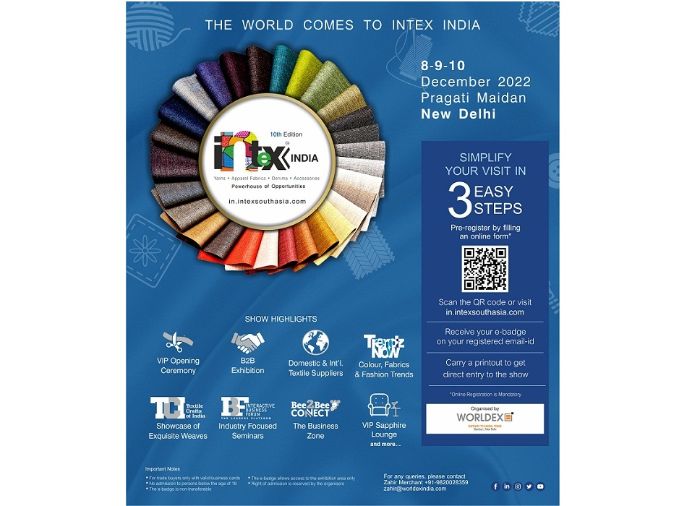
The 10th Intex India, a premier International Textiles Sourcing Show in South Asia, will be held in New Delhi from December 8 to 10, 2022.
Showcase fabrics, accessories from across the world
To keep accelerating India positive growth story, Intex India will showcase international suppliers from: China, Korea, Thailand, Belarus, Italy, US, Vietnam, Uzbekistan, Sri Lanka, Bangladesh, India and others. Since 2015, Intex India has connected over 35,000 buyers from more than 15 countries to nearly 1,350 textile suppliers and has empowered industry players to explore new business opportunities and expand business globally. This makes Intex India the annual calendar event for South Asia’s textile & apparel industry.
The show fulfils the growing demand for fabrics and accessories for India, one of the biggest apparel manufacturing countries in the world. India’s growing demand have seen imports of man-made staple fibres, yarns & fabrics grow from $837 million in 2021 to $1.03 billion in 2022; imports of knitted fabrics grew from $485 million in 2021 to $673 million in 2022, and the numbers are increasing every year.
Arti Bhagat, Executive Director of Worldex India and organizer of Intex India highlights, “It has been a wonderful journey so far. Since 2015, we have organized nine successful shows across the most relevant South Asian textile markets of Sri Lanka, Bangladesh and now looking forward to the 10th edition in New Delhi, India. As an organizer, we are determined to bring a fresh wave of opportunities for manufacturers and buyers from domestic as well as international markets to connect with each other on this platform.”
On similar lines, Mayank Tiwari, Founder & CEO of ReshaMandi says, “Intex India is South Asia region's leading and most successful international textiles sourcing show. ReshaMandi, as India's first digital platform for the natural fibre supply chain from farm to retail, is proud to be the online sourcing partner for this expo. We invite you to come and explore ReshaMandi's sustainable offerings in yarns, fabrics, apparel, home and living and lifestyle accessories and look forward to seeing you at the 10th Intex India in Delhi from December 8 to 10, 2022."
Major exhibiting categories include fibres, yarns, apparel fabrics, denim fabrics, clothing accessories, dyes & chemicals, software & ERP solutions, design studios, testing equipment & compliance solutions, trends & fashion forecasters, textile allied services, etc.
Interactive and seminar sessions
This year, Intex India would also be organizing the renowned Interactive Business Forum (IBF) Seminar Series and ‘Trendz Now’ – the colour, fabric and fashion forecast showcase alongside Intex India, thus creating a premium and complete B2B international textile trade & sourcing platform.
Intex India is co-organised by the Federation of Indian Chambers of Commerce & Industry (FICCI) under the aegis of the Ministry of Commerce, Government of India and supported by the Ministry of MSME, Government of India.
Intex India is supported by apex chambers from India and across the world including: Confederation of Indian Textile Industry (CITI), Tirupur Exporters Association India (TEA), Retailers Association of India (RAI), PHD Chamber of Commerce and Industry (PHDCCI), the Textile Association (India), Tamil Nadu Fabrics Manufacturers Association (TNFMA), Knitwear & Textile Club Ludhiana (K&T Club), South India Garments Manufacturer & Wholesalers Association of Karnataka (SIGA), Garment Exporters Association of Rajasthan (GEAR), Association of Garment Exporters Sitapura (AGES), Recycle Textile Federation, Korea Textile Center (KTC), Malaysian Knitting Manufacturers Association (MKMA), Thailand Textile Institute (THTI), India-Thai Chamber of Commerce (ITCC) – Thailand, Indian Business Chamber in Vietnam (INCHAM) – Vietnam, Vietnam Cotton And Spinning Association, International Textile Manufacturers Federation (ITMF), Dubai Textile Merchants Association (TEXMAS), Bangladesh Garment Buying House Association (BGBA), Joint Apparel Association forum (JAAF), Sri Lanka Apparel Exporters Association (SLAEA), Sri Lanka Chamber of Garment Exporters (SLCGE), Garment Association Nepal (GAN) and others.
Intex India is the gateway to the dynamic markets of India and South Asia, making it one of the must-attend events in the textile sourcing industry.