FW
Plea to scrap duty on VSF: SIMA India
There should be no anti-dumping duty on viscose staple fiber imported from Indonesia. So says Sima.
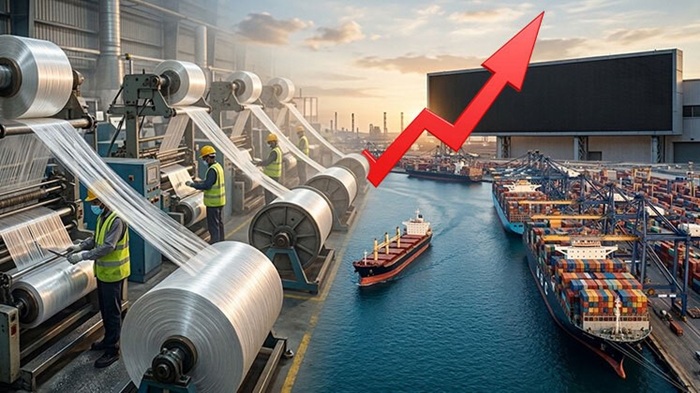
The Directorate General of Trade Remedies (DGTR) has recommended an anti-dumping duty on viscose staple fiber imported from Indonesia. The anti-dumping duty gives a protection to the tune of 28 per cent to the indigenous VSF manufacturer. Much of the imported raw material, machinery, etc., attract only five per cent to 7.5 per cent basic customs duty while such an abnormal protection is totally unwarranted and on the contrary would greatly affect the entire VSF value chain.
Rejection of the recommendation to impose the duty would ensure the survival of micro, small and medium spinning mills, the decentralized powerloom and handloom sector and also the garment sector. Over two lakh powerlooms in Tamil Nadu had diverted to viscose staple fiber fabric manufacturing and enabling value added exports. The levy would again make fabric manufacturers switch over to imports that would have a serious impact on spinning mills. In the past various path breaking policy initiatives had been taken to address the raw material structural issues, especially manmade fibers, the future growth engine of the Indian textile industry, by removing the anti-dumping duties levied on various raw materials including PTA and MEG, polyester staple fibers, acrylic fiber and viscose staple fiber.
Finland top ranked for sustainable shopping
Finland is Europe’s best country for sustainable shoppers. So says Savoo.
The northern European country also reduced its consumption footprint by an impressive 20 per cent between 2010 and 2020, which is the fourth biggest reduction after Italy (26 per cent), Sweden (21 per cent) and Greece (20 per cent).
However, flea markets and antique stores are one area that Finland falls behind in, with just 53 in total to cater to its 5,540,720 population.Denmark is second, having reduced its consumption footprint by 14 per cent between 2010 and 2020. Ranking in third place is Slovenia, which produces an estimated 34 kg of household waste per capita each year. The United Kingdom ranks in sixth place overall as Europe’s most sustainable shoppers.
Home to nearly 68 million people, the country has almost 1,300 flea markets and antique shops available. Zara has been named the most popular second-hand brand, with over 670,000 listings on reselling platforms. Clothes reselling platforms are becoming incredibly popular in recent years. From shopping second hand to avoiding plastic packaging where possible, shoppers are increasingly adopting more eco-friendly habits.
Interest is continuing to grow and more cities are adapting to a more sustainable and healthy lifestyle.
Handa adopts Coats solution for digital transformation
Handa Industries uses Coats Digital’s FastReactPlan as the cornerstone solution of its digital transformation program.
This will enable Handa to manage its increasingly complex supply chain more effectively and optimise production operations to meet the growing customer demand. Coats Digital’s FastReactPlanwill enable Handa to digitally transform its production processes, enabling it to respond agilely to more complex order requests, streamline production processes and improve its on-time delivery targets. FastReactPlan will become the cornerstone solution of Handa Industries’ digital transformation program and will be used to integrate and connect other data sources into a single platform to ensure optimum visibility for all production teams.
Based in China, Handa is an integrated fashion supply chain pioneer, producing fashion garments in a myriad of categories, from high-end sports apparel to fast fashion, producing over 50 million pieces a year.
FastReactPlan is a dynamic, highly visual production planning and control tool that optimises delivery, efficiency and lead times. It is designed and developed specifically for the fashion manufacturing industry, and helps enterprises integrate capacity, critical path and materials into an integrated planning system.
Coats Digital is the software business of Coats Group, the world’s leading industrial thread company and a trusted industry player.
Ghana suspends RFO subsidy
Ghana has suspended the subsidy on residual fuel oil (RFO). This has compounded the country’s textile industry’s challenges.
Inflation and rising utility prices have already put pressure on business margins. The subsidy on RFO was withdrawn to ease the financial burden on the Price Stabilisation and Recovery Account (PSRA). The move is meant to ensure availability and supply of the product – a low grade of fuel oil, which contains the undistilled residue from atmospheric or vacuum distillation of crude oil and is mostly used by manufacturing industries.
Due to increases in global fuel prices and exchange rates, funds accrued through the Price Stabilisation and Recovery Levy – used in paying for subsidies on RFO and premix fuel – were not enough to meet the demand. The policy directive takes consideration of the growing concern about the sustainability of the account to meet under-recovery payment obligations for premix fuel and RFO.
At the start of the year 2022, the subsidy on RFO was 55 percent; then it was slashed by 15 percent around July and completely suspended at the start of November. Suspension of the subsidy is expected to lead to an impending shortage of textiles for the country in the coming days.
Lockdowns hit Chinese luxury market
The Chinese fashion and luxury market has had a rough year. Waves of strict lockdowns throughout 2022, especially the two month long one in Shanghai, wreaked havoc on fashion spending.
LVMH Moët Hennessy Louis Vuitton experienced severe double-digit declines in China. Compagnie Financière Richemont’s jewelry division also witnessed double-digit sales declines in China. Swiss watch exports to China slumped 18 percent in the first ten months of 2022. Chanel saw double digit negative growth in April in mainland China, where five of its 16 boutiques there were closed, while 35 fragrance and beauty stores — roughly equivalent to a third of its network — were also shuttered.
China didn’t scale back the lockdown measures until thousands of people began to protest in late November.By December, China had abandoned most of its rules on mass Covid testings, the track and trace system, and quarantines.Even amid the lockdowns, those brands that were well prepared for the situation came out stronger, while some went the extra mile to consolidate their presence in the market. While China is still performing below 2021 figures, it is expected to recover between the first and second half of 2023.Chinese spenders are expected to account for between 40 per cent and 45 percent of the total consumers of personal luxury goods by 2025.
Esprit gets a makeover
Esprit is being rebranded. This luxury California apparel brand has had a rough couple of decades.In its heyday in the ’80s and ’90s, it was known for its high-end clothing like sweatshirts. But most of its US business dried up in the 2000s, and the company’s German and Hong Kong business began to lose their luster with shoppers.
The major restructuring began in 2021. The company is completely refreshing its assortment and plans to unveil all the new designs later in 2023. Decades like the ’80s and ’90s are in vogue these days, which gives Esprit the chance to resonate well with multiple generations. Nostalgia happens to be resonating with the current generation and consumer who has been through a lot of very stressful times over the last couple of years.
Since consumers find aspirational brands to be something to look forward to, and since things were quite more open and freewheeling in the ’80s, Esprit wants to start by reconnecting the consumer with nostalgia. But this is not just a brand from the ’80s, it is now a modernized version of Esprit. The brand will globally be created, designed, thought through, photographed all in New York City. And it will resonate globally from there.
Anchorage acquires David Jones
David Jones will be acquired by private equity firm Anchorage Capital Partners.
The iconic retailer’s current owner, Woolworths Holdings Limited, and Anchorage Capital Partners entered into a binding agreement that will see Anchorage acquire the David Jones operating business.
David Jones is one of Australia’s leading omnichannel retailers, and the oldest continuously operated department store under its original name.Founded in 1838, it currently has 43 stores across Australia and New Zealand and employs 7500 people.
Anchorage is one of Australia’s leading private equity firms with extensive experience in retail and consumer investments over 25 years. It has fully backed Scott Fyfe as David Jones CEO, together with his management team, and plans to contribute their financial investment to accelerate the company’s existing Vision 2025 strategy.The deal is expected to complete by the end of March 2023.Interestingly, the deal is not expected to include the department store’s flagship store.
David Jones had been delivering sales above pre-Covid levels. Trade in the prior period was impacted by the extended lockdowns, resulting in relatively higher growth rates in the current period compared to the prior period. David Jones’ turnover and concession sales increased by 55 per cent for the period.
Fresh Covid outbreak threatens supply chains
The latest Covid outbreak sweeping China has begun impacting the global textile and apparel supply chain.
This has raised uncertainty over production delays and factory closures.The Omicron variant of the Covid virus is making its way across several big cities in China after the country made a U-turn on its former zero-Covid policy of containment earlier this month.The spread of infections, which has hit China’s capital city Beijing the most, is threatening widespread business disruption to the world’s second-largest economy and largest apparel exporter.
More than half the population has been infected. The increase in infection rates means industry across China is facing disruption such as staffing shortages, which is leaving businesses vulnerable to closures, while sickness in the logistics sector is causing supply chain chaos.One imminent challenge is a nationwide labour shortage, production delays, and even factory closures as Covid cases surge.
When Covid first broke out in China in early 2020, garment-exporting countries in Asia struggled to get enough raw textile materials as China was their top supplier. The same situation could repeat this time.Given these mounting uncertainties, fashion brands and retailers are likely to accelerate their China exit strategy and prioritise mitigating supply chain risks in their sourcing decisions.
China to host Texcare in September
Texcare Asia and China Laundry Expo will be held, September 25 to 27, 2023.
This is the most comprehensive show on advanced machinery and commercial solutions for the laundry and dry-cleaning industry in Asia. The international textile care show will host an estimated 300 local and overseas exhibitors and 20,000 visitors.
As the leading trade fair for the laundry and textile care industry in Asia, Texcare Asia provides business openings across the supply chain, including machinery, systems and accessories, chemicals and consumables, digital and intelligent solutions, energy saving and environmental protection technologies, leather care products, rental services and more.
The fair helps the industry raise the bar when it comes to technology, and as the range of domestic products is rapidly expanding, companies feel the need to increase their exposure by participating at the fair. The Chinese and international laundry industries are eager for in-person business. The fair hopes to take advantage of the country’s gradually easing pandemic restrictions and the market’s steady growth.
Despite the pandemic, the commercial laundry industry has been performing strongly and the global commercial dry-cleaning and services market was valued at around $72bn in 2021. The pandemic has brought new developments to China's laundry industry, in the direction of industry standardisation, increasing production scale and digitalisation.
Burberry launches on Minecraft
British fashion house Burberry is bringing its signature camel trench coats and check-patterned garments to the digital world of Minecraft.
Minecraft is a survival game. Burberry developed the 15-piece capsule collection for players of the popular survival game, but it’s also available in real life.
The 15 pieces include multiple Burberry logo T-shirts, a Minecraft logo jacquard scarf, a black cotton gabardine car coat, a Burberry logo baseball cap, a square cotton scarf, a hoodie, a bucket hat, jogging pants, and sweatshirts and a version of Burberry’s classic Waterloo trench coat featuring a pixelated white Burberry and Minecraft logo on the back.The collection’s laid-back loungewear vibe has comfort as the main priority.
Each real, physical garment has a digital counterpart in the game. Avatars wearing the collection get the chance to complete a series of challenges within four realms, like navigating a maze covered in Burberry’s signature pattern. The game itself is downloadable for free as an add-on adventure for the Minecraft game.
Burberry sees digital crossover as the way of the future and wanted to work with one of the largest, most beloved games, hence the Minecraft choice. Gaming has become an important channel for the brand in terms of customer engagement.