


FW
Rimtex makes spinning more efficient
Rimtex enables spinning mills in being future-ready.
With its pioneering innovations, Rimtex has paved the way for the growth of the spinning industry in the years ahead. Among the innovations are new generation spinning cans, sliver can transportation, ultra-precision combination spinning rings and travellers, new age castor wheel designs along with a huge leap in the domain of sliver intelligence. Spinning cans have a huge bearing on the sliver quality, which has irreversible consequences on yarn quality.
Rimtex Duo and Rimtex Sumo help spinners in the reduction of static and increased sliver loading respectively. Designed especially for the textile industry, Tango powered can mover and Tango powered doffing vehicle are new-age locomotives for efficient material movement.
Rimtex Wizcan is a home-grown system that combines propriety software and hardware that empowers spinners with real-time sliver can tracking and monitoring. This has huge advantages for a spinning mill. The on-toes castors provide fluff-free movement, thus saving a lot of time and hassle for spinners. They also secure the sliver from any form of breakage during the movement.optimum contact area, which has multiple advantages. The company has brought to the fore a new understanding of not looking at spinning rings and ring travellers in isolation but looking at them as a combination product.
Turkish fabric fair in March
Texhibition will take place in Turkey, March 8 to 10, 2023. This is a fabric, yarn and textile accessories fair.
Texhibition is a platform that efficiently networks high-quality Turkish textile production and the international fashion business. Texhibition meets the industry's need for secure nearshore supply chains and is a catalyst to boost Turkey’s exports.
The event will present the trends for spring/summer 2024 with a special focus on sustainability. More than 25,000 international visitors are expectedsuch as large clothing manufacturers, purchasing managers of international chain stores and department stores, managers of international brands and chains with their own brand collections, managers of online sales platforms, importers, wholesalers, distributors, designers, etc.
More than 400 exhibitors from the areas of knitwear, woven fabrics, denim, yarns and accessories will present their collections. Worldwide, Turkey is the fifth most important sourcing market for the textile industry. For Europe it is even the second most important sourcing location. Turkish production offers high-quality products, reliability and short delivery times.
With an export volume of about 13 billion dollars in 2022, the textile industry achieved its best result and exported to a total of 200 countries and regions. An export volume of around 15 billion dollars is targeted for 2023.
Use of responsibly sourced cotton rises
Cotton produced the world over in accordance with voluntary sustainability standards (vss) saw a 39 per cent to 40 per cent compound annual growth rate between 2008 and 2019.
In 2019, about 92 per cent of vss-compliant cotton came from Asia, led by India, China, and Turkey. Cotton compliant with vss accounted for at least 14 per cent of total cotton production in 2016. Consumers and companies across the planet are increasingly choosing cotton produced in accordance with vss, such as Better Cotton or Cotton made in Africa.
Top cotton brands and companies reported that 85 per cent, or 7,20,000 tons, of their cotton was more sustainably sourced in 2020 compared to 2017.Farmers can receive up to 50 per cent higher prices and 20 per cent higher crop incomes for vss-compliant cotton compared to those selling conventional cotton, due to the increased quality and cost-efficient practices associated with compliance.
Sustainable cotton is in high demand as customers look to make responsible purchasing decisions and brands use sustainability to differentiate their products in the market. Most of the demand is coming from Europe and North America. But awareness is rising in big developing and emerging markets that suggests the growth will continue.
Redress promotes circular fashion
Redress, based in Hong Kong, educates and empowers emerging fashion designers about circular fashion, against the background that 80 per cent of a product’s environmental impact is laid down at the design stage.
Redress is galvanising the emerging designer sustainable design movement, creating change at the drawing board. Redress has a vision to build a world in which fashion is circular. Together with emerging designers, academia, business, and government, Redress is accelerating a circular fashion industry globally.
Based in Hong Kong, the heart of Asia and the gateway to the Mainland of China, Redress is in a prime position to address the issue of waste within the fashion industry.While the fashion industry has grappled with many challenging Covid-related supply chain impacts and a challenging economy, fashion’s environmental and waste crisis is worsening.
The equivalent of one rubbish truck of textiles is landfilled or burned every second, global textile waste estimated to increase by 63 per cent by 2030, and the fashion industry is responsible for ten per cent of global carbon emissions — more than all international flights and maritime shipping combined.
Asia is the global fashion industry’s engine of production and, increasingly, consumption. Asia accounts for around 60 per cent of global exports of garments, textiles, and footwear, and China is the world’s biggest fashion consumer market.
Mango publishes supplier list
Mango has published a full list of its Tier III suppliers. The aim of using visibility is to push its sustainability goals. The list follows the publication of its Tier I and II suppliers, all released as part of its sustainability initiatives.
The fashion brand has been the first in its home country of Spain to publish each of the tier lists. Across all three tiers, Mango has about 2,400 factories it works with, each of them named in its spreadsheet along with the city and country they are based in. Of those, nearly 1,300 are purely Tier III suppliers. Additional Tier III suppliers work across multiple tiers. The highest share of factories producing for Mango are in Turkey (663), followed by China (651), India (214), Spain (169) and Italy (150).
The company’s goal is to move towards the full traceability and transparency of its value chain, in order to continue with the process of auditing its suppliers and ensuring that appropriate working conditions are being fulfilled for the workers in the factories the company works with around the world. That level of transparency is, for now, somewhat radical in the fashion industry, which navigates complicated supply chains and, for decades, has been trailed by a long list of concerns around its environmental and social footprint.
European Fashion Alliance aims at responsible fashion
The European Fashion Alliance (EFA) is pushing for a greener, more innovative future.
For one it is supporting designers who have a commitment to sustainability. Since craftsmanship delivers two important things, high quality and durability, EFA is advocating for it, promoting it, developing it further and explaining how it adds value, not just in terms of price, but in terms of culture as well.
The first transnational alliance of European fashion councils and institutions, the EFA has 29 member organisations including the Council of Irish Fashion Designers, the Federation de la Haute Couture et de la Mode and the Camera Nazionale Della Moda Italiana.
EFA’s four main objectives between now and 2027 include an ethical, social and sustainable code of conduct for members and, by extension, the fashion industry as a whole.The European Fashion Alliance wants a new green deal for fashion at the European level, to encourage fashion culture and businesses founded on a circular and social fashion ecosystem.The EFA wants to introduce sustainable and technological training and is putting a strong focus on the empowerment of Generation Z and the new generations as leading forces of value in digital, circular and social transition of the fashion industry.
Pakistan textile exports down 17 per cent
Pakistan’s exports of textile goods decreased by 17 per cent year on year in December 2022.
Lower demand in the world market and import restrictions in Pakistan have been blamed for the slack performance of the textile industry, which has around a 50 per cent share in Pakistan’s exports every year. On a month on month basis, textile exports slipped by six per cent in December 2022 as compared to November 2022. Overall, in the first half of the financial year 2022-23, exports of the textile industry dipped by seven per cent year on year.
A delay in export proceeds due to the uncertainty about the exchange rate also played a role in reining in exports. Textile exports went down primarily due to the curbs on opening letters of credit for raw material imports, a gas shortage and a slowdown in import orders from European countries amid an inventory pile-up.
Pakistan expects textile exports to remain muted in the coming months. A higher working capital requirement will continue to pile pressure on textile players while the clearance of raw material at ports is still awaited owing to the unavailability of foreign exchange.A large number of containers having imported polyester yarn have been help up at ports and the delay in their clearance has caused huge losses to importers.
Fashion brand improves B Corporation score
Australian fashion brand Outland Denim has claimed a revised B Corporation score of 160.2.
This is a jump of 43 per cent from its maiden score of 111.5 in 2018, following a rigorous recertification process that takes place every three years.
B Corp certification is assessed across five categories – governance, workers, community, the environment, and customers. Organisations are required to meet high standards of social and environmental performance, transparency, and accountability to achieve certification, and must meet or exceed a score of 80.
There are currently 5,000 certified B Corps across 79 countries, 154 industries, and over 400,000 workers. Overall, around 200,000 businesses globally have taken the assessment, with an average score of 50.9. The average Australian business scores 83.2. Outland Denim became the first Australian denim label to become B Corp certified in 2018, and the second denim brand globally to be certified.
Each Outland Denim garment is made in the brand’s vertically integrated production and finishing facility in Cambodia, which was founded to offer holistic support, training and employment to young women who have experienced exploitation. The company utilises water and energy saving technologies, sustainable, vegan-friendly raw materials, and biodegradable packaging. Last year, it launched a batch of clay-dyed denim.
Cambodia may see drop in exports
Cambodia’s products are likely to see a drop in purchase orders early in 2023.
Export of garment products, bags and footwear in 2022 increased moderately compared to 2021. At the beginning of 2022, the situation of orders was good, but by the end of 2022 and at the beginning of 2023, orders for shoes and bags decreased by about 30 per cent to 40 percent mainly due to the Russian-Ukrainian war. Footwear exports increased from August 2022 to December 2022 but then have decreased significantly.
Overseas buyers cut back on orders, causing some factories to reduce staff, reducing overtime for production lines and closing some factories. Cambodia’s exports of garment, footwear and travel goods rose by 14 per cent in 2022. Garments, footwear and travel goods products account for 56 percent of Cambodia’s total exports. The garment, footwear and travel goods industry is the largest foreign exchange earner for Cambodia.
The sector consists of roughly 1,100 factories and branches, employing about 7,50,000 workers, mostly female.Cambodia’s biggest markets for travel bags and footwear are the United States and the European Union. But Cambodia also exports to Canada and Asean countries. In 2022 Cambodia’s exports of garment products, footwear and travel goods rose by 12 percent, 24 percent, and 17 percent.
As global fashion sector deal with issues in 2023, economic slowdown is foremost
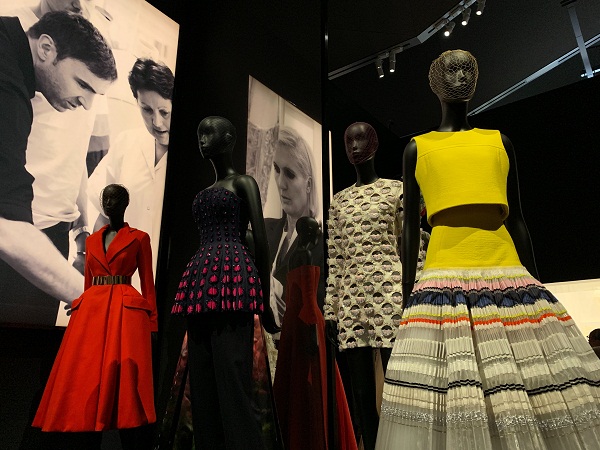
Year 2022 was all about positivity and hope for the fashion industry with much hype about the return of consumers after two years of lockdown and uncertainty. Many brands went on to invest in more “on trend” collections that addressed sustainability and eco-consciousness. Fast fashion was pulled up for its wasteful and environment-damaging ways and brands jumped on the socially-conscious bandwagon. Now, that we are in 2023 and the celebratory confetti of 2022 have settled down on the ground, the sector’s emerging picture looks a little different as quite a few negative trends come to the fore affecting businesses worldwide.
Economic downturn is for real
It can no longer be denied that inflation is on record high and energy costs have soared to the point that consumers are hurting. As per a KMPG report, 2023 is going to be a big year of falling consumer confidence and 66 per cent of consumers, especially in major economies of North America and Europe which are going to drastically cut back on non-essentials. Empirical data shows during economic crisis, the biggest cut back is on fashion, particularly across the West.
A McKinsey report states 72 per cent of fashion brands will be forced to increase prices to protect bottom lines in the face of increased cost of raw material and production that affects their lines. As consumers choose to cut their fashion expenses, these brands face the risk of out-pricing themselves and losing loyal customer bases.
Cost-cutting affects jobs
Fashion brands are leaving no stone unturned in the face of economic adversity. Pressurised by shareholders to curtail costs as much as possible, many brands are letting go of their retail outlets and the associated staff unless they register high performance. Macy’s has already downed its shutters on four of its full-line stores across the US. Additionally, fashion brands are embracing leaner corporate structures with the result that many corporate jobs have been axed. H&M CEO Helena Helmersson recently told a global news service the cost and efficiency programme initiated by the organisation is reviewing the structure and being mindful that it will affect the lives of employees. H&M is about to let go of 1,500 employees worldwide. This move will help H&M save close to $93 million annually. The current economic condition has also tabled the question of the success of the DTC business model. For example, Everlane has been laying off employees since the pandemic started, making itself leaner on average of ten to fifteen per cent of its staff annually since then. In November 2022, UK’s famous online market place Lyst let go 25 per cent of its staff.
Supplier challenge has become an issue
First of all, the US sanctions on Xianjiang-sourced cotton has become a huge issue as brands are being scrutinized for the products. With the monitoring system still in its inchoate stage, brands are struggling trying to keep Xianjiang-sourced cotton off their products. They can’t seem to control the cotton-trading hubs where this banned cotton is entering the legit market through mixing with cotton from other locations.
Similarly, brands are trying hard to cope with sustainability labels as research & development continues trying to bridge the gap between sustainability, wearability and cost efficiency. The other key challenge is trying to find the supplier fit as trends are changing so quickly that established brands can’t project collections for a well-planned production and distribution. As Achim Berg, Senior Partner and Lead on the BoF-McKinsey State of Fashion Report pointed out, the supplier side has a practical problem of delivering what is expected. But they’re also facing the issue of forecasting in a proper way because we don’t know exactly how the consumption patterns will develop.











