


FW
Silk has undimmed appeal, grows at 8% CAGR
The global silk market is growing by 8.2 per cent a year.
An increase in profitability for farmers engaging in sericulture, i.e., silkworm rearing, is predicted to boost the silk market. Additionally, the initial investment required for silkworm rearing is quite low, which is expected to drive the market forward. Along with this, increasing the profit margin of farmers engaging in silk production is expected to propel the market forward.
A wide use of silk in the manufacturing of different apparel and clothing is predicted to offer numerous growth opportunities for the market. Mulberry silk has a dominant share of the silk market. Mulberry silk, a high quality silk, is widely used in the manufacturing of different apparels. The increasing use of silk by various textile companies to manufacture various garments and clothing products is projected to augment the growth rate of the silk market.
The silk market in the Asia-Pacific region is estimated to be the most profitable. The presence of prominent silk-producing countries like India, China, Thailand etc. is estimated to help the market grow substantially. Following the pandemic outbreak strict lockdowns and travel restrictions were put in place across the world. This negatively impacted several industries and businesses causing disruptions in supply chains and manufacturing processes.
The silk market faced a similar situation where there was a massive shortage of raw materials i.e. raw silk due to the shortage of labor. Additionally, import-export restrictions led to a decline in the sales of manufactured silk garments, which affected the growth of the market.
Tunisian company reuses textile waste
A company in Tunisia has found a way to handle textile waste. Fiber Conversion converts textile waste back into fiber before using it to produce products such as rug pads, mopping pads, and mattress pads.
These products are sold in the local market and overseas, creating economic value that is significantly higher than that of exporting raw textile waste.
This innovative approach to waste management has had a significant impact in Tunisia, reducing waste in landfills and preserving the environment. By finding ways to turn waste into useful products, Fiber Conversion is also creating economic opportunities for the local population.
This innovative approach to waste management is a beacon of hope in the fight against environmental degradation. It sets an example for other countries facing similar challenges, showing it is possible to turn waste into useful products while creating economic opportunities for local communities.
Textile waste has been a long-standing problem in Tunisia, with most waste being exported or incinerated, contributing to environmental degradation.However, the existing tax regulations imposed on workers who collect and sell textile waste to the company are a major challenge. These taxes reduce the profit margins for workers and make it harder for them to make a living.
Mango adopts clean processes
Mango’s strategy involves integrating sustainability into its business system and business model.
The Spanish brand’s initiatives have included the elimination of the committed label in favour of an informative QR code, the publication of a complete list of its fabric and accessory suppliers and the launch of its first collection of recycled and recyclable denim.
By 2025 the target is that all of the cotton used in the brand’s garments will be sustainable, all of its polyester will be recycled and 100 percent of its cellulosic fibers will be responsibly sourced. Production processes will be used that help reduce the environmental impact of Mango’s products, such as using less chemicals and water in the manufacturing process of the circular denim collection.
Garments will be made with a single type of fiber or fewer accessories in order to increase the recyclability of the products. Another way would be to design more durable garments by using carefully selected materials with certified physical properties, with reinforced construction and a timeless design. Yet another way would be to take maximum advantage of the materials used and recycling textile waste. Accessories such as trimmings or jacron labels would be eliminated. The production technology will use minimal amount of chemicals and water.
Mumbai hosts Technotex
Technotex, organized by FICCI is being held in Mumbai, February 22 to 24, 2023. This is an exhibition on technical textiles.
The event will provide a common platform for interaction among stakeholders from across the global technical textile value chain.The three-day exhibition cum conference cum buyer-seller meet seeks to envision Indian technical textiles at 2047. It exemplifies the immense potential for trade and investment between India and foreign countries in the technical textile sector.
It pools in participants, visitors, and other key decision makers from a diverse cross section of the technical textile industry, aiming to provide more innovative solutions, identify new business opportunities and create an environment congenial for growth.
As the global technical textile industry continues to grow, India is poised to benefit from the expansion. Domestic consumption and export are both expected to grow rapidly in the next few years, making this an important time for the industry. The end use of technical textiles caters to a wide variety of industries, thereby making it a high value sector. A variety of industries benefits from its products, including those in the automotive, agricultural, home care, construction, aerospace, protective gear, and healthcare sectors, as these products have improved functional qualities like greater tenacity and strength as well as better thermal and chemical resistance.
India aims at being a leading technical textile production center.
Hohenstein develops microfiber test
Hohenstein has developed a new standardized test method for detecting and classifying the environmental effects of textiles during washing.
The test method shows how many fibers are released during textile laundering, how well these fibers degrade in wastewater and how harmful the fiber residues are to the environment.Biodegradability alone does not mean that pure natural fibers, for example, are completely harmless to the environment. They, too, remain in ecosystems until they completely degrade and can also have a negative impact.
In addition, additives, auxiliaries or finishes used in textile production can further slow the degradation process and leach into the environment. The new standard enables textile producers and suppliers to test, evaluate and compare products for fiber release during washing and environmental impact. Washing textiles releases microfibers into the wash water, which cannot be sufficiently retained by wastewater treatment plants.
Synthetic fibers pose the greatest risk to the environment because of their longevity and inability to biodegrade.
With more than 40 offices and laboratories, Hohenstein is an international partner for independent testing, certification and applied research around the human-textileenvironment interaction. Through standard or customized testing, and interpretation of the results, Hohenstein solves problems, verifies claims and helps partners bring better, safer products to market – more sustainably.
B’desh tops EU’s 22 per cent garment import growth
From January 2022 to November 2022 the European Union’s imports of readymade garments increased by 22.39 per cent compared to the same period of 2021.
The EU’s garment imports from China in the first eleven months of 2022 grew by 19.29 per cent compared to the same period of 2021. Apparel imports from Turkey increased by 11.65 per cent. The EU’s imports of readymade garments from Cambodia grew by 35.89 per cent, Vietnam by 34.16 per cent, Pakistan by 27.99 per cent, Morocco by 8.13 per cent, Sri Lanka by 17.32 per cent and Indonesia by 27.80 per cent. And imports from Bangladesh grew by 38.39 per cent. Bangladesh is the second largest apparel exporter to the EU market while China and Turkey occupy the first and third highest positions respectively.
Bangladesh’s apparel exports to the European Union grew by 16 per cent during the first half of the fiscal 2022-23. However Bangladesh’s apparel exporters see 2023 as being more uncertain. Every country is facing high inflationary pressure due to the ongoing war between Russia and Ukraine. Despite all negative indicators, there is optimism about getting some benefits on specific items as many entrepreneurs are investing in the capacity to produce manmade fiber-based garments.
Marks & Spencer onboards sports platform
Sports Edit is on Marks & Spencer’s online platform. The British fashion retailer acquired the fast-growing sports platform at the start of 2022.
The launch features over 200 sportswear and apparel products across women’s activewear and apparel from third-party brands. Dedicated sports platform Sports Edit features expert sports content curation where one can shop by brand, activity, or product type, with all of the advantages of shopping with M&S—such as free click and collect to over 700 stores—to offer customers a seamless shopping experience.
Through Sports Edit M&S aims at offering customers an online sports retail platform which is a one-stop-shop for health and wellness.As well as housing third-party sportswear and apparel brands, the sports retail platform will have a distinct look and feel. M&S’ website will now feature product inspiration including winter ready workout tops and running trainer picks plus wellness content.
The popularity of sportswear amongst M&S customers, particularly those shopping womenswear who seek high quality versatile products, identified a clear opportunity for M&S to expand its offering as it continues to build on style, quality, and value perceptions.The launch continues to build on the retailer’s market-leading position in full price women’s activewear sales, with third-party brand partners complementing the core range and filling gaps in product areas.
Intertextile Shanghai Apparel Fabrics – Spring Edition 2023: Showcase for high-end fashion products
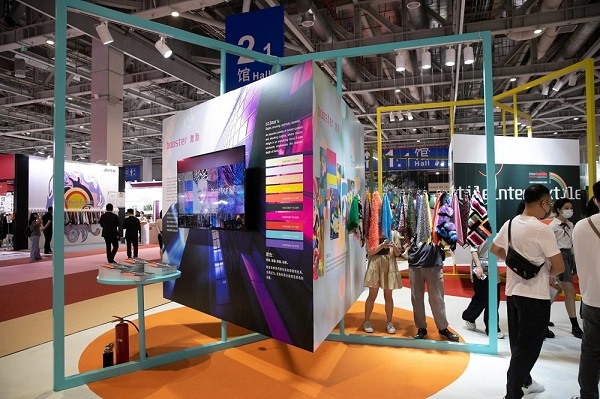
The Intertextile Shanghai Apparel Fabrics – Spring Edition is a highly anticipated textile platform that will take place in Shanghai, China from March 28-30, 2023.
The event is designed to meet the growing demand for high-end apparel products by exhibitors worldwide. The exhibition will feature a diverse range of products, conveniently grouped in various zones to make sourcing easy and create more collaboration opportunities.
Various zones for product segments
SalonEurope, a premier hub for fabrics and accessories, will be hosting suppliers from nine countries including Belgium, Denmark, France, Germany, Italy, Portugal, Switzerland, Turkey, and the UK. The Italian Zone will showcase prestigious mills displaying signature fabrics made from cotton, man-made, functional, and wool materials. Exhibitors such as Lanificio Di Pray SpA, a leading jacket manufacturer, will demonstrate how to combine high-quality Italian wool fabric with natural, pure fibers such as cashmere, alpaca wool, yak wool, linen, and silk.
The Premium Wool Zone will showcase luxury wool sourcing options from Italy and the UK. Exhibitors will present innovative products alongside traditional premium wool fabrics in response to the ever-evolving market. One exhibitor, Successori Reda SpA, is a renowned manufacturer of sustainable Merino wool fabrics and recently launched a new Merino fabric blended with cashmere, silk, and linen fibers. They are the first Italian textile company to receive a B Corp Certification.
Verve for Design will feature creative textile prints and pattern collections from designers in Argentina, Denmark, Italy, Korea, and the UK. Fusion CPH from Denmark will exclusively sell each of their unique designs, providing clients with ready-for-production output files, saving them time and allowing them to place orders flexibly.
Country pavilions showcasing sectoral strengths
The exhibition will also have various country and region pavilions where international exhibitors will showcase their products. The Japan Pavilion will feature 37 companies known for quick delivery, small quantity orders, and product availability, presenting high-quality fabrics made from man-made and natural fibers such as cotton, wool, and silk.
Over 20 exhibitors from the Korea Pavilion will exhibit a wide range of fabrics used for ladies, casual, functional, sports, and outdoor apparel. The Korea Textile Center (KTC) will bring nine members to the fair, presenting functional fabrics, jacquards, polyester woven, and nylon spandex for outdoor, sportswear, ladieswear, and casualwear to buyers.
The Taiwan Pavilion will feature ten exhibitors displaying a variety of products from regenerated and synthetic yarns and fibers to lace, embroidery, and functional fabrics. The Hong Kong Pavilion, organized by the Hong Kong Trade Development Council (HKTDC), will showcase knitted fabrics and accessories such as reflective labelling, lace, ribbon, and embroidery.
Intertextile Shanghai Apparel Fabrics – Spring Edition 2023 is co-organized by Messe Frankfurt (HK) Ltd, the Sub-Council of Textile Industry, CCPIT, and the China Textile Information Centre. The exhibition will take place alongside the Spring Edition of Intertextile Shanghai Home Textiles, Yarn Expo Spring, CHIC, and PH Value at the National Exhibition and Convention Center (Shanghai).
Gucci and Kering launch circular hub
Gucci and Kering have launched the first hub for circular luxury in Italy.
Gucci is part of the global luxury group Kering. The hub will foster breakthrough innovation to accelerate the circular transformation of luxury fashion. Starting from raw materials and design, through to production optimisation and logistics, the circular hub will be an open innovation platform for the design and manufacturing of circular products and the scouting of new solutions.
The hub will support the creation of circular luxury products of the future - products that maximise the use of recycled materials, durability, repairability, and recyclability. The hub will see the involvement of Kering’s facilities, starting with Gucci’s production sites, its Italian-based raw material suppliers, and finished products manufacturers (comprising more than 700 direct suppliers and 3,500 sub-suppliers).
The hub’s activities will then be extended to Kering’s other brands and eventually become open to the entire sector.By sharing the same objectives and pooling resources, knowhow and synergies, the hub will enable the entire luxury supply chain and especially the small and medium-sized enterprises - the heart of Italy’s industry - to play an active role, with the innovative spirit that makes Italian knowhow unique in the world.
India’s cotton import bill up 200 per cent
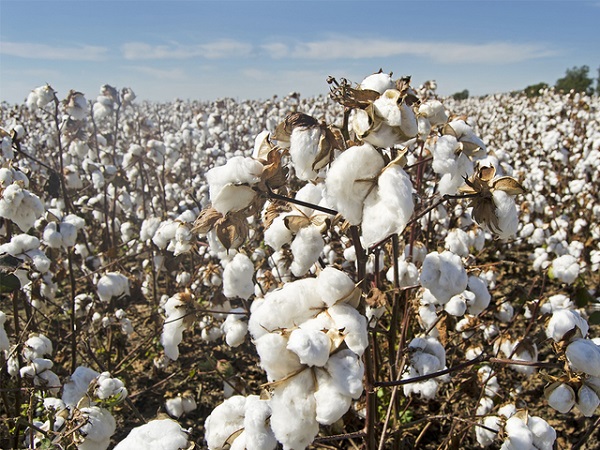
Driven by record high cotton prices amid a global shortage last year, India’s cotton import bill surged 200 per cent in the 10 months to January 2023. Imports picked up sharply between July 2022 and December 2022. India imported close to 1,750,000 bales in the second half of 2022 compared to 4,90,000 bales in the same period last year.
To ease pressure on the industry, customs duty was waived on cotton imports. Popularizing high density planting, farm mechanization, providing policy support to scientists and technology to increase productivity and giving a thrust to research-oriented agronomy are some other important way-forwards to increase India’s cotton productivity at least to the world cotton average productivity mark.
Stagnant production
While cotton prices have eased due to a global demand slowdown in the meanwhile, stagnant cotton production is especially worrying as prices of textiles have risen consistently over the last three years. Clothing and footwear were among the major contributors of headline inflation in fiscal year 2023. The Cotton Association of India (CAI) has reduced India’s cotton crop size to 33 million bales down by 9,25,000 bales from the earlier projection for the 2022-23 season in its latest outlook.
Global production is projected down 3,00,000 bales and largely attributed to lower yields in India. Consumption is forecast down due to lower use in India, Indonesia, and Vietnam.











