FW
Driven by steady demand, Nylon 6 market expected to touch $26 million by 2032: Study

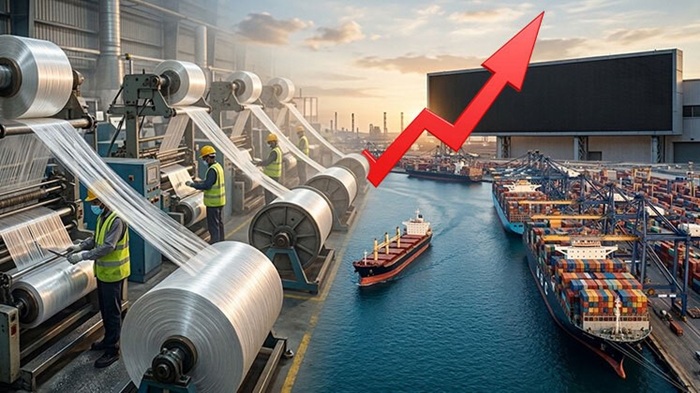
The synthetic polymer market led by nylon fibres which are far stronger and elastic than polyester fibres and can create smooth and lightweight fabric with high tensile strength, is doing rather well in the global markets. The Nylon-6 polyamide fibre which is semi-crystalline and commonly known as polyamide -6 (PA6) is the bestseller of this segment and the market is expected to be worth $26 million in 2032 growing at a CAGR of 5.9 per cent, predicts a Future Market Insights study.
The recent report on the Nylon-6 global market by Future Market Insights highlights, demand for environmentally-friendly products as well as the demand for Nylon-6 in emerging textile market will boost its popularity and hence growth. The incorporation of PA 6 and PA 6, 6 into 3-D printing systems is expected to lead to market growth for nylon-6. From 2016 to 2021, the market grew at 5.1 per cent and this pace is expected to continue over the next decade.
Versatility makes Nylon 6 suitable for many industries
Most industries value the strength, durability, and elasticity of Nylon 6 because it is characterized by many physical and chemical properties that make it suitable for a broad range of applications. About 60 per cent of global production of polyamides is composed of Nylon-6, due to its engineered thermoplastic properties, it has good flow properties, moldability, extrusion capability, chemical resistance, and morphological properties which are useful in present and future markets.
Some industries where its in use are: automotive, packaging, electronics & electrical, wires & cables, textiles, films and coating, while in future there will be a surge in demand in the healthcare and musical instrument segments. Nylon 6 is considered the most preferred polyamide in applications subjected to thermal and mechanical stress due to its high dielectric resistance and this will significantly increase its market share.
Start-ups entering the segment
The Future Market Insights report suggests, along with being used in various kinds of textiles, high-strength Nylon-6 is also popular in industrial applications, transportation, and electronic devices. Seeing it as a lucrative investment, many start-ups in India and around the globe are now using Nylon-6 products in various fields. The main players in the global market include BASF SE, Honeywell International, DuPont, Royal DSM, UBE Industries, Invista, Formosa Plastics Corporation, Gujarat State Fertilizers and Chemicals, June, Taulman 3D, Printscopia and others.
CORDURA Recycled Nylon 6,6 (RN66) is popular and a platform was launched by Material ConneXion, a manufacturer of recycled polymers, which has accepted the CORDURA re/cor RN66 collection. Also in Bangkok, Milan, Daegu, Skövde, Tokyo, and New York, the Material ConneXion exhibition will showcase award-winning fabrics, which includes this collection.
Some properties that hinders growth
However, a significant flammable dripping problem and insufficient flame retardance may limit the use of PA6 in many industries. Pollution caused by plastics and over-specified products, such as reinforced polypropylene, may hamper growth. Also, the low prices of other products like polyvinylidene fluoride, bio-absorbable polymers, and polypropylene, pose a threat of substitutes affecting the market growth.
Due to their biodegradability, some other environment-friendly materials like bio-absorbable materials also can pose a serious threat to the environment. With customers now more concerned about environment and health issues, most governments are monitoring methods for checking the negative effects of polymers on the environment, which will ultimately hit demand of the end-user that defines the growth of nylon-6 in its various segments of transportation, textile, industrial application, electrical and electronics as well as music, healthcare, and coating sector.
However, it is the textile and apparel industry that is the primary growth driver and analysts say if cards are played right, this synthetic fibre segment will be the front-runner now and in the near future.
Women’s wear market set to grow at 4.9% CAGR, driven by premiumisation by brands
Women's apparel market is expected to witness a substantial growth of USD 188.13 billion from 2022 to 2027, with a deceleration in growth momentum at a CAGR of 4.93%.The women's apparel market is expected to witness significant growth during the forecast period, driven by the demand for versatile and multifunctional dresses and the preference for premium and high-end brands. according to the latest market research report by Technavio.
Premiumization through well-positioned brands is a major driver for the market growth of women's apparel. Consumers have a strong preference for premium and high-end brands that represent quality, style, and status. The demand for versatile and multifunctional dresses for both business and private use and the ever-changing fashion trends dictate the demand for tops. These factors are expected to drive the growth of the tops and dresses segment of the market.
The market is fragmented, and the degree of fragmentation is expected to accelerate during the forecast period.
Emerging trends such as virtual reality are expected to fuel the demand for women's apparel. However, the competition with other consumer goods for a share of disposable income is likely to pose a significant challenge to the growth of the market.
In increasing India's cotton imports, exponential growth in duty-free Australian cotton provides relief
India's textile industry has seen a significant increase in cotton imports from Australia in 2022 compared to previous years, with a value of $283.766 million, representing a 4.28-fold increase in value and a 2.66-fold increase in volume from the previous year.
This surge in imports can be attributed to record-high prices of natural fibers and the exemption of import duties on cotton to support the industry during the 2021-22 crop market year. Although India and Australia had entered into the Economic Cooperation and Trade Agreement (ECTA), high prices last year led to an increase in imports beyond the agreement's restrictions. India's textile industry imported 80.860 million kg of cotton last year.
India's textile industry is a major consumer of cotton, but the country's domestic cotton production is often not enough to meet the industry's demand. Therefore, India imports cotton from various countries, including the United States, Brazil, and Uzbekistan. The United States has been the largest supplier of cotton to India, followed by Brazil and Uzbekistan. In 2020-21, India imported around 1.3 million bales of cotton from the United States, 540,000 bales from Brazil, and 320,000 bales from Uzbekistan.
India's total cotton imports during the 2020-21 crop year were estimated to be around 14 million bales, with the country's cotton imports steadily increasing due to a shortage of domestic cotton production and growing demand from the textile industry. According to the USDA, India is expected to remain a significant importer of cotton in the coming years due to the country's rapidly growing textile industry and the limited availability of high-quality domestic cotton. The USDA predicts that India's cotton imports could reach 2.5 million bales in the 2022-23 marketing year, up from an estimated 1.9 million bales in the previous year.
The increase in cotton imports from Australia provides some relief to India's textile industry when domestic cotton prices rise excessively, and the duty-free access to Australian cotton under the ECTA agreement is a significant development for the industry. The peak of cotton imports from Australia was $173.933 million during the third quarter of last year, well before the arrival of the new crop, when Indian cotton prices were still very high.
The surge in cotton imports from Australia, along with India's reliance on imports from other countries, highlights the challenges facing India's textile industry in meeting its demand for cotton. While duty-free access to Australian cotton provides some relief, the industry will need to continue to explore additional sources of cotton imports to meet its growing demand.
Clothing, furniture, and tech top BNPL purchases for US shoppers
Inflation is hitting Americans hard, forcing some to turn to buy now, pay later (BNPL) options to make ends meet. About 46% of consumers in the US used BNPL this year, up from 43% a year ago and 31% in 2021, according to a new survey by LendingTree.
While retailers are using this payment method to generate revenue, it is becoming a "bad outcome" for consumers' financial situation, reflecting it is a sign of slowing and that debt will start to flare up, especially with credit card interest.
The survey found that the largest percentage of consumers (46%) used BNPL for clothing, shoes, and accessories, followed by home furniture and appliances at 34%. Technology and beauty products were also popular, with 27% and 26% of shoppers using the plan, respectively. However, BNPL is increasingly being used for everyday purchases, such as groceries and gas, which could lead to overspending and accumulating debt.
According to an expert, a third of Americans are in a "tough position" due to more credit card debt than what is available to them in emergency savings.
The survey highlights the growing popularity of BNPL as a payment option, but also raises concerns about the potential financial consequences for consumers who use it for everyday purchases.
DyStar to close Ludwigshafen plant following restructuring decision
DyStar, the Singapore-based specialty chemical company, has announced that it will “restructure” its Ludwigshafen plant in Germany, leading to its closure. The plant, which has been producing indigo for over a century, was inherited by DyStar from its founders and has been an integral part of the company’s global network.
The restructuring is a strategic move by the company to focus on developing key emerging markets that have been shifting for over a decade in response to changing business conditions and market shifts. The move comes amid rising energy costs and inflation and is aimed at improving cost efficiency and driving sustainable productivity. The restructuring will be carried out in a phased manner, and terminated employees will receive severance packages.
The company has committed to working with the appropriate local resources to support affected employees and their families during the transition. DyStar has assured its customers that their production will not be affected as it will work closely to meet their specific requirements.
Scientists create self-healing, bacteria-repelling metallic coating for wearable textiles
A team of scientists from North Carolina State University, Flinders University, and South Korea have developed a new metallic coating treatment for clothing and wearable textiles that has the potential to revolutionize wearable electronics.
The treatment utilizes conductive circuits created by liquid metal particles that can autonomously heal themselves and repel bacteria, and even monitor the wearer's electrocardiogram (ECG) heart signals.
According to the researchers, the breathable electronic textiles can create circuits that maintain conductivity when stretched, and when the coated textiles are pressed with significant force, the particles merge into a conductive path. The technique involves dip-coating fabric into a suspension of liquid metal particles at room temperature.
The coated textiles remain electrically insulating until the oxide that forms on the liquid metal particles is ruptured, allowing the particles to percolate and create conductive circuits. The LM-coated textiles offer effective antimicrobial protection against bacteria and are also flexible and adaptable to different wearers.
This development could lead to new applications in human-machine interfaces, including soft robotics and health monitoring systems.
Geo-Politik report calls GSP plus a failed incentive for Pakistan
Pakistan's readmission to the Generalised Scheme of Preferences Plus (GSP+) benefits post-2023 has been called into question by Geo-Politik.
The GSP+ scheme, which granted duty-free access to most of Pakistan's goods in the European Union (EU) in return for compliance with international standards, has failed to achieve its objectives. Despite benefiting immensely from increased exports, the Pakistani government has been slow to implement necessary reforms, particularly in the areas of human and labour rights, women's working conditions, and environmental protection, according to the report,
While Pakistan's exports to the EU have increased substantially under the GSP+ scheme, the report argues that the quality of life for workers, particularly women, has not improved. Despite warnings from the international community, the Pakistani government has been slow to address these issues, and the situation remains dire for many workers in the country.
It is worth noting that Pakistan's textile and apparel exports have played a significant role in the country's increased exports to the EU under the GSP+ scheme. The textile and clothing industry accounts for approximately 60% of the country's exports, and the GSP+ scheme has been a major contributor to the growth of this industry. In 2020, Pakistan's textile and clothing exports to the EU increased by 13.5%, reaching a total of €7.48 billion, according to the Pakistan Bureau of Statistics. This was largely due to the GSP+ scheme, which provided duty-free access to EU markets for Pakistani textile and clothing products.
Geo-Politik report suggests that the GSP+ scheme has been a failed incentive for Pakistan, which has neither maintained EU values nor reciprocated in economic cooperation proportionately.
The EU must now consider whether to continue the scheme post-2023, or whether to seek alternative ways of promoting compliance with international standards in Pakistan.
UAE hosts IATF 2023 with over 200 exhibitors from 22 countries
Dubai, UAE is hostong the International Apparel & Textile Fair (IATF) once again in 2023.
The 15th edition of the fair promises to be a remarkable one, as it brings together over 200 exhibitors from 22 countries under one roof. IATF is recognized as a leading platform for sourcing apparels, fashion fabrics, prints, clothing accessories, home textiles, footwear, and more in the UAE.
The highlight of this year's event is the Spring Summer Collections & Autumn Winter Highlights of 2023-2024. Among the exhibitors, the India Pavilion jointly organized by Apparel Export Promotion Council, Ministry of Textiles, Government of India, and Federation of Indian Export Organization is a major attraction. The Pavilion features a total of 67 stalls, showcasing a wide variety of Indian textiles for export. Additionally, around 23 companies have come on their own to showcase their apparel.
The event attracts a diverse range of textile mills, garment manufacturers, accessories/trim suppliers, print designers, and major footwear manufacturers. IATF offers an excellent opportunity for manufacturers and their agents to showcase their products to the most influential buyers and designers in the Middle East & North Africa (MENA) fashion sphere.
As a primarily "trade-only" event and a B2B platform, IATF offers a professional and conducive atmosphere for business and networking.
The rise and fall of super specialty large stores: what went wrong for retail giants?
The downfall of super specialty stores also termed as category killers has been a topic of discussion in recent years, and the recent bankruptcy of Bed Bath & Beyond and the closure of several of its stores have brought the issue to the forefront once again.
Category killers like Bed Bath & Beyond, Toys 'R' Us, and RadioShack, once considered the epitome of specialty retail, have fallen from grace due to the changing market dynamics and the emergence of online shopping.
These retailers' business models relied on offering a massive selection of products, every variation of what a shopper wanted in one location, and at lower prices than non-specialty stores. They nearly created monopolies in their respective product categories and typically had stores sized at 50,000 square feet, positioning them to be larger than independent store competitors but smaller than megastores like Walmart Supercenters.
According to experts, category killers' ultimate downfall was due to the rapid change in technology from the 1980s onward. The emergence of global supply chains, cheap container shipping overseas, falling telecommunications costs, and computers made it possible for companies to buy at high volume for less money and sell at lower prices. This led to specialized retail giants buying improved technology to place in their stores to set themselves apart from local shops.
However, with the rise of e-commerce, Amazon has effectively taken away the category killers' main advantage of offering more product choices and variability through its website. Walmart and Target can also survive by specifically focusing on products in high demand.
While other category killers like Dick's Sporting Goods, The Home Depot, Lowe's, and Best Buy are still hanging on, it is feared that shoppers will ultimately regret the downfall of category killers.
Africa Fashion Week to showcase fusion of fashion and culture in São Paulo
Africa Fashion Week Brazil is scheduled to hold on May 26 and 27, 2023, at the Expo center in São Paulo. This edition of the event is expected to create a synergy between the fashion industry in Brazil and Africa, promote economic growth, deepen cultural ties, and provide a platform for future collaborations.
The announcement was made at the Consulate General of Brazil in Lagos, where the Consul General of Brazil, emphasized the importance of the fashion industry in promoting diversity of cultural expressions, values, creativity, and craftsmanship.
African textile and fashion industry is growing rapidly, with the sub-Saharan Africa Apparel sector estimated to be worth $31 billion as of November 2022. He noted that the fabrics and prints mostly derived from natural fibers, cottons, and various color dyes, featured African cultural symbols.
Queen Ronke Ademiluyi Ogunwusi, founder of Africa Fashion Week London, Nigeria, and Brazil, said the event would boost economic ties and deepen the presence of African fashion on a global map. She added that the Africa Fashion Week started in 2011 in London, with the aim of bridging the gap between African designers, black designers, and the general public. In 2014, the event was replicated in Nigeria to reach out to talented designers who could not afford the logistics of traveling during international shows.
With the addition of Africa Fashion Week Brazil, the event is set to further promote African fashion and culture on a global stage.