


FW
Men’s dress shirt gets a new look
"Even though ‘casual Fridays’ have loosened up the men’s formal dressing style, the classic shirt, paired with a suit, remains a staple for office going men. The trend is being customised across many apparel categories ranging from jeans and T-shirts to shoes and suits. Suits are taking more casual forms with unstructured tailoring, oversized fits and unconventional designs. However, the classic dress shirt still remains a staple pairing. As per Drury, mass marketers in the US are following suit, recording a 5 per cent increase in dress shirt arrivals in 2018 compared to 2017."
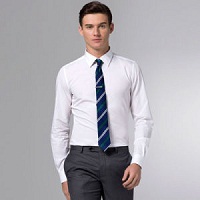 Even though ‘casual Fridays’ have loosened up the men’s formal dressing style, the classic shirt, paired with a suit, remains a staple for office going men. The trend is being customised across many apparel categories ranging from jeans and T-shirts to shoes and suits.
Suits are taking more casual forms with unstructured tailoring, oversized fits and unconventional designs. However, the classic dress shirt still remains a staple pairing. As per Drury, mass marketers in the US are following suit, recording a 5 per cent increase in dress shirt arrivals in 2018 compared to 2017.
In 2018, there was a 12 per cent sellout of styles, more than double the year before. Of those that sold out, majority was split between two brackets: the $40 to $60 range and the $60 to $80 range. J.C. Penney, Express and Kohl’s have had the most sellouts in the last three months.
Demand for more personalised look
The trend of customisation is boosting the sector as consumers are increasingly seeking a more personalised look. Tailored Brands aims to custom suit accessible for anyone who plans to buy a suit. The company has a sustainable competitive advantage in meeting its customers’ needs with custom, given its expansive store footprint, highly trained wardrobe consultants and our at scale supply chain. For the third quarter of 2018, its custom sales averaged over $5 million per week, an increase of a 150 percent compared to $2 million per week for the same period a year ago.
In September, Tailored Brands reduced the delivery of Joe and 1905 custom suits to three to four weeks from the earlier four to six weeks. It also accelerated the rollout of Custom Express to just seven days to all Jos. A. Bank, Men’s Wearhouse and Moores stores. Each of these three brands offers more than 250 custom suit fabrics, over 100 linings and roughly 200 shirt fabrics from which to choose in making a custom garment.
Fabrics with new features a hit
In the third quarter, customised shirts in performance fabrics were introduced in Kenneth Cole at Men’s Wearhouse. Moores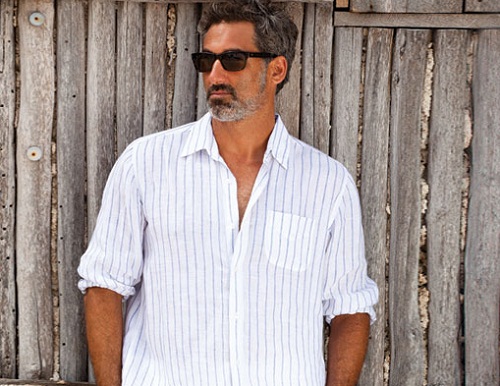 also introduced stretch fabrics and construction that allow for greater range of motion and comfort. At Jos. A. Bank, traveler custom in both suiting and shirts was launched, as was travel tech custom, featuring moisture-wicking technology.
Although athleisure is booming and casual clothing dominates, a formal suit still remains the uniform for a high proportion of men in the US. But now, there is an opportunity for brands to focus on the fit and variety of these shirts. They should be made more high-tech just as the sportswear. In fact, brands like Brooks Brother’s, J.Crew, Banana Republic and Express are incorporating new features like moisture wicking technology, water repellent properties and, most importantly, stretch fabrics in these shirts. Way to go
Zara Home will be part of Zara
Inditex will progressively incorporate Zara Home into the Zara brand. Since 2003, Zara Home, a chain dedicated to homeware and loungewear, has existed as an independent brand within Inditex. The long-term goal is to consider Zara Home as a fourth section of Zara. The strategic decision to integrate Zara Home operations into Zara was motivated by the brands’ increasing synergies. Zara Home will continue to operate with an online shop and 603 standalone stores (of which 524 are directly operated and 79 are franchises), but a selection of its products will also roll out across selected Zara stores as part of a new section, dedicated to homeware and home decor, joining the existing Woman, Man, TRF, and Kids.
Zara Home will become an extension of its sister brand, following in the footsteps of Zara Kids, which is featured as an section within Zara stores and also operates as a standalone brand with 128 stores worldwide. Additionally, plans are to progressively incorporate Zara Home products on the Zara website in some markets starting from next autumn/winter. This will make Zara Home available in many more countries, and allow Inditex to run trials to test the demand for its products, as well as customer behavior, in new markets.
Zara revenue up three per cent
In 2018, Zara increased its revenue by three per cent. Online sales, which already account for 14 per cent of turnover in the markets where the group has an online presence, went up 27 per cent. Zara increased its e-commerce presence to 202 markets in the past year. The brand, together with Zara Home, saw a 3.2 per cent rise in net sales. Zara has the best conversion rate in the Spanish online fashion sector.
Zara, Inditex’s largest retail chain, is exploring personalisation with a customization service. The concept will be introduced in the denim category and allow customers to add embroidered words to the front or back of denim shorts, skirts and jackets. The price of these pieces will be the same as non-personalised items.
This test collection will be launched March 27 and be available in exclusive brick-and-mortar stores in Spain, the Netherlands and Italy. Customers will also be able to personalise pieces online or through the Zara app, where they can select the area they wish to customise as well as the font and color of the embroidery. In this way, the service will be made available in Spain, Italy, the UK and the Netherlands through the retailer’s e-commerce platform.
No deal Brexit: UK exporters to face tariffs
In the event of a no-deal Brexit, the UK will impose tariffs on manufacturers and exporters. All import of yarn and fabrics will become duty free. The majority of exports will be subject to tariffs under World Trade Organization rules. The rates will be up to 12 months while a full consultation and review on a permanent approach to tariffs is undertaken. Out of around 1000 tariff lines for imports of textiles and fashion, 80 product codes will have a duty rate of up to 12 per cent. These products include men’s blazers, T-shirts, women’s underwear, baby garments, jeans and polo shirts. The rest will not have any tariffs. So the move is positive for importers of yarns and fabrics, but at the expense of UK manufacturers and exporters. An Italian woolen manufacturer will be able to sell into the UK at a zero per cent tariff. But UK manufacturers would face up to 12 per cent tariffs when exporting to the EU.
Product movements between the UK and Turkey will be affected. Turkey is a major supplier to the UK fashion industry and under this proposal many imports from Turkey would be 12 per cent more expensive.
South African cotton projects create employment
Almost 50,000 jobs have been created in South Africa’s cotton industry as a result of the increased number of hectares planted. In 2014, the cotton industry was offered funds to establish a cluster. This connects the entire cotton supply chain under one umbrella: farmers, ginneries, yarn manufacturers, weavers and knitters, dyers, finishing plants, retailers and consumers. Its aim is to improve capacity and competitiveness and create jobs in the country’s cotton, textile and apparel industry. Production has increased from 25,000 bales in 2013 to roughly 2,00,000 bales in the 2017-18 season, with a further increase of 20 per cent expected in the new production year.
During the 2017-2018 season, five cotton projects involving 1,300 small farmers were supported as part of the program. They planted a total of 5000 hectares of cotton. Every three hectares of cotton planted creates four jobs – three on the farm and one in the processing and retail sectors. This means that almost 50,000 jobs were created or maintained by the program since its inception in 2014.
The significant growth in the cotton industry has also resulted in capital investment from the private sector in cotton processing. Farmers are putting their hands deep in their pockets to buy new harvesting machines to deal with the bigger crop.
Shanghai Fashion Week to host show by British brands
The British Fashion Council will launch a showcase of British brands during Shanghai Fashion Week, March 27 to April 3, 2019. A series of events will be hosted with key industry partners to celebrate British design talent in the market. The project is part of the British Fashion Council’s China Partnerships Strategy, which aims to solidify the organisation’s commitment to making access to the Chinese market easier for British designer businesses by supporting talent through networking, content and access partnerships and business support. The British Fashion Council will also celebrate British designer businesses that are already in the market.
Designers will have the opportunity to meet not only with key retailers from China and the wider Asian region but also media, stylists, key opinion leaders, creative industry influencers and high-net worth individuals. The legacy from the March 2019 activation is to pave the way to involving a larger number of designers with the support of new and existing commercial partners.
Shanghai Fashion Weekend is a consumer-oriented fashion event. With 15 years of nurturing and growing the industry, Shanghai Fashion Week has established a comprehensive fashion ecosystem that stimulates industry parties to create progressive and energetic events. Features include exhibitions of works, trade, and promotion of fashion consumption.
Reebok sheds flab, focus on growing busines
Reebok is closing underperforming stores and allowing some licensing deals to expire. Meanwhile, it’s spent more on marketing. While Reebok’s revenue fell three per cent in 2018, its costs came down even more, and management expects the business to finally start expanding. The hope is that new footwear lines like the CrossFit Nano and the FloatRide Run will spur sales. The aim is to make sure that the brand heat is based on real products. But growth won’t come easily. While the brand’s fashion-focused classics line posted double-digit sales gains last year, that momentum was overwhelmed by a decline in the sports segment.
After years of efforts to make Reebok profitable again, Adidas wants to get more people to actually buy its products. It will speed up plans to cut Reebok's store network and focus on growing the business with wholesale partners, cutting the number of factory outlets in the United States by a half and limiting the number of FitHub stores. Reebok is a brand with an unmatched heritage with some of the most iconic footwear silhouettes in the industry, an authentic fitness brand. More than a decade after its acquisition of Reebok, Adidas as recently as a year ago was contemplating divesting the brand if it underperformed.
Ramco Fabrics builds yarn dyeing plant in Tamil Nadu
Ramco Fabrics will set up a yarn dyeing and weaving plant in Tamil Nadu in order to produce dyed greige fabric. For Ramco this is a value added step towards forward integration and will enable customers to get consistent quality of weaved yarn. The plant, which will be operational by the second quarter of 2019-2020, will require an investment of Rs 250 crores and will have an initial production capacity of ten million meters of greige yarn dyed fabrics per annum. In addition to this, the new facility will also cater to the fiber dyeing needs of Ramco melange products.
Ramco Fabrics is a division of Rajapalayam Mills and part of the Ramco Group. From its beginnings in 1938, Ramco’s textile division has emerged as one of the most successful groups of textile mills to symbolise an entity with a strong commitment to quality, innovation, and customer satisfaction. It has been a pioneer in adopting state-of-the art technology. Today, Ramco’s textile division has a spindle capacity of around 4,00,000 with an annual turnover of around 175 million dollars, deriving 60 per cent of its turnover from exports. The various brands under which the yarn is exported are Shankar, Mahabar, Oscar, New World, Ultima, Delight, Marvel, Elegant and Gemini.
Picanol’s revenues fell three per cent in 2018
Picanol revenues fell three per cent compared to the previous year. Gross profit percentage decreased from 23 to 22 per cent. Following an absolute record year in 2017, the weaving machines division again experienced an excellent year. Based on the well-filled order book at the end of 2017, it achieved a strong first half-year, with high demand for quality and technology resulting in strong sales. In the second half of the year, increasing geopolitical uncertainty in the markets caused a slowdown in the demand for weaving machines. The industries division also had another strong year, which was driven by weaving machines and this was mainly thanks to the strong growth in new projects. The industries division thus continues to contribute to the growing diversification of the group by fully focusing on castings and mechanical finishing, controller capacities and precision parts.
For 2019, Picanol is taking into account a slowdown in the global weaving machine market. This is due to the current macroeconomic and geopolitical climate, in which customers are more cautious and investment decisions might either be delayed or postponed. For the first half of 2019, Picanol expects a decrease in revenue of 25 per cent compared to the first half of 2018.
Nigeria bans forex sale to textile importers
Banks and other foreign exchange dealers in Nigeria are prohibited from selling forex to any person seeking to import textiles and other clothing into the country. Instead the Central Bank of Nigeria would provide financial support at single digit interest rates to the textile sector to enable operators rejuvenate their capacities through refitting, retooling and upgrading of their factories. These initiatives are expected to help the textile manufacturing sector bounce back to service the domestic market and the export sector.
The measure is intended to reposition the textile, cotton and garment industry for job creation and development of the economy and restore the sector to its hitherto enviable position in the national economy and also save money spent on importing textiles and clothing. Other areas of expected support from CBN include the provision of high yield cotton seedlings and the development of textile industrial areas where stable electricity supply would be guaranteed.
The Nigerian textile industry in the 1970s and 1980s was the third largest in Africa. By 1987 the country had 37 textile firms operating 7,16,000 spindles and 17,541 looms. Between 1985 and 1991 it recorded an annual average growth rate of 67 per cent and was employing about 25 per cent of the work force in the country’s entire industrial sector.











