


FW
Bombay Dyeing targets revenue of Rs 500 crores in 2020
Bombay Dyeing is eyeing revenue of Rs 500 crores by 2020. It is betting big on its menswear brand Cezari to drive growth. It currently has 27 company-owned stores, 3,000 multi-brand stores and over 400 franchise stores across India. The company reported a consolidated net profit of Rs 162 crores for the December quarter as against a net loss of Rs 195 crores it had posted in the corresponding quarter last year. Total revenue for the quarter was Rs 390 crores as compared to Rs 425 crores it had reported in the year-ago period. The polyester segment contributed Rs 271 crores to the company’s revenue during the quarter while revenue from the retail and textile segment stood at Rs 46 crores.
Bombay Dyeing is one of the seven producers of polyester staple fiber in the country with a market share of about 15 per cent. Bombay Dyeing entered the business in 2006. The company produces a wide range of specialty products, including micro fibers, super micro fibers, trilobal, super high tenacity, optically white, optical white super high tenacity, micro super high tenacity, black and black super high tenacity. Bombay Dyeing has a presence all over the globe, except Australia and New Zealand, where there is no spinning industry.
Canclini launches its SS 2021 collecion – focuses on sustainability
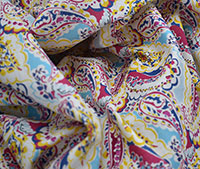 Canclini 1925 starts the new year by setting out guidelines for the future, focusing on a diversified product range, increasingly heterogeneous and green, as well as introducing all the novelties in the 2021 spring-summer collection. The strategy aims at greater product and market diversification, steadily keeping an eye on the quality of products and on the manufacturing process which needs to be even more ethical, innovative and sustainable.
Per Lei and Beachwear: a new extended product range - Constant attention to the market and to new trends lead to new and exciting interpretations in the 2021 SS product range. As a result of this approach, the two collections have been designed to encompass new worlds and products, leading to an offer which is sustainable and of outstanding quality at once.
The line Per Lei includes stylish fabrics with a totally feminine allure. The focus is to leave the comfort zone and 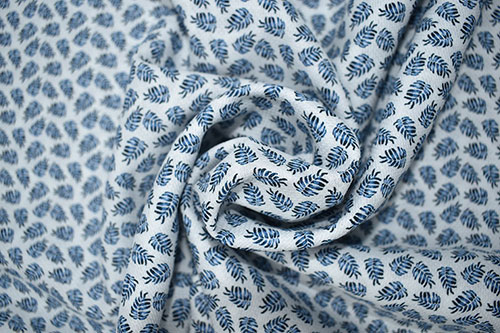 explore a field outside men’s apparel, relying on the expertise, using it to the advantage of other types of fabrics; the Per Lei range has been designed both for a young and dynamic woman and for a successful woman, catering for both formal and more casual occasions. The Beachwear range, on the other hand, is characterised by its colourful and lively interpretations, with a distinctly summertime mood, presented on appropriate foundations. Last but not least, the restyled Blue 1925 line, with denim and non-denim fabrics, offer a wide and multi-faceted range of concepts, for customisable, creative and adjustable projects for any outfit.
The 2021 SS collection: a continuing history of sustainability - Attention to research and the development of sustainable solutions has been rooted in the DNA of Canclini 1925 for decades, and its new 2021 SS collection is even more focused on green concepts. Innovation, energy impact and choice of raw materials are the distinctive traits of the company which, for the new range too, uses sustainable fibres such as Tencel and Cupro, bio cotton, organic linen and recycled man-made fibres. Hence, a comprehensive and diversified range, which includes classic fabrics with a restyled touch.
From the inimitable Lini by Canclini, to items with a high sustainable innovation rate, for example Madre Terra, Bio or Recycled, the range also includes a sports section, increasingly structured, as well as print proposals. Also worth mentioning are the restyled fabrics called Easy Life, which are low-maintenance, and the new Techno Shirt capsule, where formal meets sporty, in a perfect synthesis of versatile and highly eco-performing products, thanks to the use of man-made fibres.
“To deal with the philosophical and ethical evolution now underway, we are proud to put to the service of products and processes our consolidated culture of sustainability: an all-encompassing approach to wellbeing, protection of the planet and its inhabitants, in order to offer ever-evolving products, which also tell about our history of respect and commitment” says Mauro Canclini, Creative Director at Canclini 1925.
Vietnam moves ahead in yarn and dyeing
Vietnam’s garment-textile sector has made significant progress, especially in yarn and dyeing. More than 2.5 million tons of yarn were produced in 2019, of which over 1.5 million tons were exported. Fabric output also increased six times.
Technological applications are reflected in improved productivity, accelerated production and reduced labor force and offer workers stable jobs with higher incomes while helping companies double profits. The textile and garment industry is stepping up its sustainable development strategy implementation to meet the requirements of major foreign markets. Manufacturers in the sector have applied advanced science and technology to green the industry, apart from training human resources. Vietnam’s earnings from textile and garment exports have risen 10.19 per cent. Vietnam is the biggest textile and garment exporter in Asean (the Association of Southeast Asian Nations). The US is the largest importer of Vietnamese textiles and garments, followed by the EU and China.
Free trade agreements that will take effect in 2020 and the penetration of international brands are also expected to favor the industry’s growth. By signing a series of free trade agreements, Vietnam hopes to create a large playing field for its textile and garment enterprises. Among these are the EU-Vietnam Free Trade Agreement (EVFTA) and the CPTPP (Comprehensive and Progressive Agreement for Trans-Pacific Partnership) bloc.
River Island signs pledge
UK fashion brand River Island has signed the Transparency Pledge. The aim is to be more transparent about the factories and boost the rights of apparel workers. River Island joins some 40 other companies that have aligned with the Transparency Pledge, which was created in 2016 by a coalition of nine organizations and global unions, including Human Rights Watch, in an effort to set supply chain disclosure standards.
Over the past few years, consumers have sent a clear and consistent message to apparel brands: they want and expect transparency. When companies publicly disclose the list of factories where their products are made, they show they know their supply chain. And public disclosure helps protect workers. When workers know which brands they are producing clothing for, they know whom they can complain to in case of workplace abuses. Consumers want to know that the brands they are buying clothing from are thinking about the human rights implications of their business practices. Beyond transparency, consumers want to know that the workers producing their clothes have access to redress and other basic rights. Concerned consumers can push brands to go even further in adopting ethical business practices.
FIEO seeks government intervention to resolve deadlock over export benefits
The Federation of Indian Export Organisations (FIEO), the apex trade promotion body, has sought government intervention to resolve the deadlock over export benefits for the garment and made-ups exporters. Dealing a fatal blow to the apparel and made-ups industry, the Rebate of State and Central Taxes and Levies (RoSCTL) scheme was not implemented in entire 2019 and Merchandise Exports from India Scheme (MEIS) also stopped from August 1, 2019.
This has led to a huge blocking of the exporters’ funds under these schemes. The government has not disbursed any items since the announcement of the RoSCTL scheme on March 07, 2019 and MEIS scheme on August 01, 2019. The total amount stuck is nearly Rs 6,000 crore. Most of these apparel exporters are from the MSME Sector and some of them are already in the process of closing their operations.
Adidas develops recyclable shoe
Adidas has developed a recyclable shoe, made solely from a form of thermoplastic polyurethane. The aim of the trainer, once it is worn out, is to be recycled and repurposed so Adidas can use its material to create a new pair of trainers.
Adidas is committed to only using eco-friendly elements in products by 2024. Last year, Adidas announced plans to produce eleven million pairs of shoes from plastic materials intercepted in coastal areas and to replace all virgin polyester with recycled polyester by 2024. Currently, over 40 per cent of Adidas’ apparel uses recycled polyester.
While the majority of plastic waste has been dumped in landfill, a substantial amount has been flooded into the world’s oceans. More than eight million tons of plastic enters the world’s oceans each year. In recent years there has been a surge in sportswear retailers and apparel retailers offering sustainable clothing and footwear ranges to increase their consumer base and appeal. Sustainability and green have been buzzwords for some time and while progress has been made, environmental pressures continue to mount. In 2015, Adidas and environmental organization Parley for the Oceans manufactured a performance trainer with an upper layer made from recycled marine plastic waste.
Milano Unica sees a drop in visitors
The latest edition of Milano Unica was held February 4 to 6, 2020, Italy. The fabric fair which brought together 477 exhibitors saw a two per cent drop in its visitors. The number of visitors from the United States, Turkey, Poland, the Netherlands, Switzerland, Romania, Portugal, China and the United Kingdom rose, whereas the number of visitors from Germany, Italy and Japan experienced a decline. Milano Unica has been created through the tradition of five Italian exhibitions, Ideabiella, Ideacomo, Moda In, Prato Expo, Shirt Avenue.
The project is held twice a year and presents the finest quality products from both Italian and European textile manufacturers. The name Milano Unica represents the three essential characteristics of the textile fair, singular, exclusive, united. Milano Unica has launched an online marketplace. The initiative is intended to promote the textile-apparel fashion sector by extending traditional trade show activities to the digital world, including marketing, contents and promotions, making it possible for companies and their clients to stay up to date year round.
Revenues of the Italian textile sector rose 4.7 per cent in 2019. The year 2019 was a difficult one for the sector. This year does not present itself with the best hopes, weighed down by the Chinese epidemic and drought and fires in Australia.
Mimaki launches new hybrid textile printer
Mimaki will launch a brand-new hybrid digital textile printer, the Tx300P-1800. Uniquely designed with versatility at its core, the new printer enables both direct-to-textile and transfer printing, with interchangeable platens and three different ink combinations – providing unrivalled flexibility within a single system and opening new doors for print service providers. The capability to fulfil diverse applications from fashion textiles to interior fabrics and wallpaper within one system makes the printer an ideal entry-level solution.
The ability of the printer to switch between direct-to-textile and transfer printing is enabled by its interchangeable platens. When printing direct-to-textile, excess ink penetrated through the fabric is drained by a platen with an ink-receiving channel. When printing on heat transfer paper however, this platen can be quickly and easily exchanged for a vacuum platen needed for paper printing – without the need for service engineers. The hybrid printer is also able to facilitate either a traditional one-way ink set, configured with any one of five ink types, as well as various combinations of inks, providing unparalleled flexibility. Users are able to select from three different ink combinations – textile pigment/direct sublimation, textile pigment/sublimation transfer, or direct sublimation/sublimation transfer – to provide the best results across various applications.
Mimaki is a manufacturer of wide-format inkjet printers and cutting machines.
Coronavirus impacts cotton growers in Vidarbha
The outbreak of Coronavirus in China is impacting cotton growers in Vidarbha as farmers in the city largely depend on government purchase at minimum support price (MSP) of Rs 5,550 a quintal. As private traders in the city continue to buy at lower rates, chances of open market rates crossing MSP are slim due to absence of Chinese buying, which has been hit by the coronavirus outbreak.
China is one of the major buyers in international market. The virus outbreak has hit logistics in China, even blocking exports of cotton consignments from India. This has in turn further dampened the rates in India. Traders said Chinese demand could have taken the rates up, at least crossing the MSP in the private market.
A major chunk of cotton supply has been taken away by the government procurement mechanism, which is still not being offloaded in the open market. Though sizeable supplies have been sucked out of the market, rates of raw cotton have not inched up, leaving the farmers to settle at MSP. The price is even less if a farmer goes to private traders who are not offering more than Rs 5,200-5,300 a quintal.
Liquidity crunch hits Indian exporters
Apparel and made-ups exporters in India are facing an acute liquidity problem. Huge amounts of their funds are blocked under a rebate scheme for state levies and an export incentive program. Most apparel exporters are from the MSME sector and some of them are already in the process of closure and default.
Around Rs 6,000 crores of duty refund claims have not been disbursed under the Rebate of State and Central Taxes and Levies (RoSCTL) and the Merchandise Export from India Scheme (MEIS). Many exporters have paid statutory taxes also on RoSCTL and MEIS benefits. MEIS was also stopped from August last year for the apparel and made-ups sectors. Apparels and made-ups is one of the largest employment generation industry particularly supporting women.
India is already fast losing business to other countries like Vietnam, Cambodia, Myanmar, Bangladesh. India’s textile and apparel exports fell by eight per cent from April to November 2019. Exports were severely affected by the trade conflict of the US with China, the EU’s struggle with Brexit, growing geopolitical tensions in the Middle East and the removal of GSP benefits to India by the US. Under GSP, developed countries grant import duty concessions, in addition to prioritising purchase of textile and apparel products from some countries.











