


FW
Vietnam surpasses Bangladesh in apparel exports
Bangladesh recently lost its coveted position of the second-largest garment exporter globally to Vietnam, in face of reversals in the export front, lately. Nevertheless, increased sale of apparel items in the West ahead of Christmas following a hike in demand in run up to the festival season is going to give a fillip to garment exports from Bangladesh, opine garment makers of the country.
They also hope to increase the market share in the USA consequent to the so-called trade war between the USA and the China, which they felt would give a further impetus to apparel exports from the country.
Anwarul Alam Chowdhury, President, BGMEA, said Bangladesh stands a very good chance to gain from the trade war between USA and China, towards increasing its share in the US market.
Meanwhile, as per Mohammed Hatem, Vice-President, BKMEA, temporary factory closure on account of coronavirus breakout in Bangladesh, in April, and reopening to operate only on a limited scale in May and June, are amongst the major reasons why Vietnam had been able to surpass Bangladesh.
Valentino bans alpaca wool from future collections
Luxury fashion brand Valentino has banned alpaca wool from future fashion collections, after PETA’s undercover investigation of the world's largest privately owned alpaca farm in Peru, Mallkini, at which these animals are roughly shorn and left with deep wounds. PETA’s exposé highlighting gross misconduct at the site of Mallkini, the largest farm of its kind globally is ringing alarm bells for apparel brands that are just now becoming aware of the implications of their animal product sourcing strategies.
At the site in Peru, alpaca were found crying and vomiting as they’re roughly shorn with clippers leaving them in a bloodied state. In some cases, these animals were shown to be slammed onto tables, with their limbs clamped to stretching machines that almost dislocated their legs.
Marks & Spencer was the first to respond to the investigation’s findings as it highlighted concerns around the welfare of animals that are farmed to produce alpaca wool. A week later, Fast Retailing brand Uniqlo similarly pledged to ban the material from its products.
Turkey to hold ITM 2021 exhibition in June 2021
Turkey plans to hold the ITM 2021 Exhibition from June 22-26, 2021. The exhibition will direct the textile machinery sector to the latest technologies, new investment decisions, and strong collaborations. The exhibition will be attended by domestic and international textile machinery manufacturers. It will enable these company officials to integrate the latest developments in textile machinery into their production and direct their investments.
ITM 2021 will also enable these manufacturers to prove themselves in the domestic and international markets. The Turkish textile industry has made a righteous name for itself all over the world by coming to the fore in the field of production of masks and protective textiles during the COVID-19 crisis. These companies revitalized Turkey’s economy by providing confidence to the supply chain, taking rapid actions in changing conditions, strong infrastructure, and dynamic and skilled labor force.
These companies engaged in the production of high-quality masks and protective textiles in hygienic conditions, by using the advantages of early delivery due to Turkey’s geographical position. They also become the first choice of the European countries, which turned their route to nearby producers for supply.
TRA welcomes Kenya’s protocol on import and sale of used textiles
UK’s Textiles Recycling Association (TRA), the Bureau of International Recycling and other organizations have welcomed a new protocol that provides information on what Kenya considers to be best practice on the importation and sale of used textiles and shoes and how supply chain operators should conduct their operations whilst ensuring the health and safety of the sellers, importers, wholesalers and buyers.
In its July/August issue of the Recycing International, Alan Wheeler, Director, TRA, appreciated Mitumba Association of Kenya for making excellent representations to their Government to help develop their industry and give it the recognition and credibility it deserves. He believes the formation of the new association in the country demonstrates how the voice of traders can be made stronger and more persuasive through the formation of recognized trade associations. Wheeler also advised Kenya to open its markets again.
Messe Frankurt, Premium Group collaborate to launch Frankfurt Fashion Week
The two leading tradeshow organizers Messe Frankfurt and Premium Group are joining forces to launch Frankfurt Fashion Week in summer 2021. The event will increase Frankfurt’s appeal as an international fashion hotspot. It has been purposely aimed at a forward-looking, digital-savvy fashion and lifestyle community. It will make innovative and sustainable products, collections and business models accessible to the wider market. It will also promote the future-oriented interconnection of fashion and technology as part of the real-digital reality. With leading international fairs like Techtextil, Texprocess and Texworld – and over 50 textile fairs worldwide – the Texpertise Network of Messe Frankfurt will open up further synergies.
The core components of Frankfurt Fashion Week will be Premium, Europe’s most relevant business platform for advanced women’s and menswear; Seek, one of the most progressive tradeshows for contemporary fashion, and Neonyt, the leading hub for sustainable fashion.
Brands offloading financial hardships onto suppliers: BBI report
A new report published by the Better Buying Institute (BBI) has concluded that fashion brands and retailers are offloading their financial hardships onto suppliers. The survey of 147 factories across 30 countries highlighted that since demand picked back up, brands have attempted to undercut the prices they would typically pay to cut costs.
The report, titled ‘Cost and Cost Negotiation and the Need for New Practices,’ assesses the state of relationships between fashion brands and their garment suppliers since business resumed. The report claims the two most reported pricing and ordering strategies: smaller volumes at the same price and lower target prices from previous orders highlights the financial hardship the industry continues to face – as well as the prevailing strategy of offloading financial pressures onto suppliers.
Bangladesh Knitwear Manufacturers and Exporters Association (BKMEA), which is cited in the report says, suppliers are facing upto 15 per cent decline in price points than previous years. The report says that if customer brands to continue to undercut suppliers –then it could signal the demise of decent working conditions in factories. Over half of the surveyed brands indicated that remaining profitable is integral to retaining good working conditions for factory staff.
India to introduce Faceless Assessment Scheme from Sept 25: HEWA
Home Textile Exporters' Welfare Association (HEWA) has informed that acceding to its request, the government will introduce Faceless Assessments and Faceless Appeals scheme in the indirect tax regime and the same would come in force from September 25 onward. Amending thee-assessment scheme launched last year, the Central Board of Direct Taxes (CBDT) recently notified changes to include change in nomenclature of scheme from ‘E-assessment scheme’ to ‘Faceless Assessment Scheme.’
HEWA had sought help for small and medium textiles exporters impacted by the COVID-19 pandemic by requesting the government to relax the GST tax regime. As per the association exporters are facing liquidity crunch due to delayed overseas payments and large scale migration of laborers and reduction of working hours, shortage of working space due to adherence of social distancing norms. These exporters are also not well versed with the GST tax regime and depend on tax consultants who charge hefty amount as professional fee.
The association has demanded in case of an exporter being red flagged or declared as 'risky', he must be informed by field formation the exact cause or the reason for his being red flagged.
Share of Cambodian industrial sector in GDP to increase by 30 per cent
The 2025 Industrial Policy (IDP) policy report states the share of industrial sector in Cambodia’s GDP is expected to increase by 30 percent by 2025, of which the manufacturing sector will increase to 20 per cent. The country’s export of non-textile products will reach 15 per cent of the total export volume by 2025, boosting the export of agricultural processed goods to 12 per cent of total exports.
The report shows that the industrial sector ratio in terms of GDP has increased from 27.7per cent in 2015 to 32.6 per cent in 2018, beyond the target set in 2025. However, the share of garment and footwear exports has declined steadily from 71.6 percent of total exports in 2015 to 69.2 per cent in 2018 as the country diversifies export products as set out in its 2015-2025 industrial development policy (IDP).
Approved by the Office of the Council of Ministers, the IDP draft last report said, during three year of its implementation, the three main goals of the policy were fully implemented by relevant ministries, institutions and sub-national administrations.
Though the European Union (EU) partially suspended the Kingdom’s annual $7 billion garment and textile sector from 12 August, the new law will help Cambodian government to diversify its production line beyond the garment sector.
US fashion brands to increase sourcing from Bangladesh: USFIA
A new study highlights around 55 per cent of US fashion brands plan to increase sourcing from Bangladesh in next two years. The ‘2020 Fashion Industry Benchmarking Study’ jointly conducted by the United States Fashion Industry Association (USFIA) and the University of Delaware reveals though Bangladesh faced work order cancellation or postponement during the COVID-19 pandemic, it managed to become the third largest sourcing destination for the US with 85.7 per cent respondents opting for US, while China and Vietnam secured 100 per cent and 95.2 per cent respectively followed by India 81 per cent, Indonesia 71.4 per cent, Cambodia 66.7 per cent, Philippines 57.1 per cent and Sri Lanka 52.4 per cent.
In the first five months of 2020, Bangladesh accounted for 9.4 per cent of total US imports. Its exports to the country increased despite COVID-19 and the US-China trade war. The country’s strong ability to produce yarn and fabric locally without relying on imports despite labor cost contributed to a significant price advantage for ‘made in Bangladesh’, products.
Moreover, US fashion companies’ eagerness to diversify sourcing from China especially for MMF apparel also boosted Bangladesh’s position as a preferred sourcing destination. However, respondents consider sourcing from Bangladesh involves higher compliance risk with 2.0 rating score, same as last year. The study surveyed some of the country’s largest brands and retailers, including the top 25 US-based fashion brands, retailers, importers and wholesalers.
Zimbabwe’s clothing and textile makers need to create national trends to boost exports
 Heavily influenced by fashion trends, the global clothing and textile market has grown from $925 billion in 2015 to $1 trillion in 2019, indicates Trade Map. During this period, top global exporters of clothing and textile last year were: China, Vietnam, Italy, Germany and Bangladesh.
Meanwhile Africa’s clothing and textile exports also surged during this period. According to Trade Map, the continent’s clothing and textile exports in 2019 were dominated by Tunisia with exports worth $4.3 billion; followed by Morocco, Egypt, South Africa and Mauritius with exports worth $4 billion, $3.2 billion, $1.5 billion and $687 million respectively. Tunisia’s totals exports during the year was $15 billion, while Morroco’s was $29 billion.
Zimbabwean stakeholders can actively contribute to national economic development by introducing an inclusive framework to harness the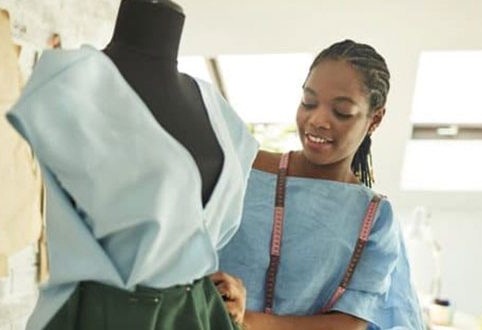 potential of all players, leverage on diaspora and address current challenges affecting the fashion industry. They can define Zimbabwean fashion by making clothes from locally available resources.
Zimbabwean fashion exporters can also link their national style and fashion with their cultural essence. This will make local communities and groups the owners of the essential raw materials and ingredients, unifying all participants under single brand to compete in the export market.
Develop capacities in young designers and businesses
Designers in the country need to collaborate to create national trends. Share information, skills, and periodic updates of trends in the fashion industry through digital media channels. Designers need to develop brands that will distinguish them on the international fashion scene.
Stakeholders should also need to develop capacities in young designers and youth led businesses as they are creative enough to keep up with changing global trends. Start-ups should be nurtured as a remedy for the country’s economic woes in the not so distant future.
Retool the industry
Stakeholders have to engage closely and address challenges that continue to affect the fashion industry. They need to engage in retooling the industry as most machines used by manufacturers have become obsolete and consume more power and raw materials. Stakeholders also have to focus on creating strong linkages between clothing manufactures and learning institutions for continuous upgrading of local skills.
The Zimbabwean government plans to establish a center of excellence for the domestic fashion industry to assist in improving the competitiveness of SMEs within the sector. The center will promote networks and foster cooperation between fashion and textile designers and other creative entrepreneurs, textile entrepreneurs and local mills. It will be integrated with creative incubators for fashion students and upcoming artists for generation of ‘cross-over-effects’ and learning. It will also improve the employability skills of youth and make them ready for international markets.











