


FW
Bangladesh government restores 40 per cent RMG orders
The government in Bangladesh has managed to restore 40 per cent RMG orders cancelled by foreign buyers amid the coronavirus pandemic. This was possible because prime minister talked to the heads of the states urging them to make sure the supply chain of RMG products was not affected, informed AK Abdul Momen, Foreign Minister while inaugurating an art exhibition, "Art Against Corona", at the Bangladesh Shilpakala Academy.
Momen said, Bangladesh RMGF sector was performing better than other times, with Bangladesh exporting more than $3 billion worth of RMG products each month at the moment. Bangladesh’s GDP was also growing at the highest rate in Asia. Currently, the GDP is growing at 5.2 per cent, although the World Bank and IMF projected it to be between 1.38 to 3.38 per cent this year.
Denim demand to bounce back soon: Experts
As per a 2019 report from Business of Fashion and McKinsey, denim production and consumption in India is increasing at a CAGR of 15 per cent. The pandemic has challenged the fashion sector in the nation. Executives from three Indian denim mills shared their views on the current denim industry at a Carved in Blue webinar recently.
Aamir Akhtar, CEO, Arvind , noted that as brands still hold their spring inventory and plan to repurpose the same, they aren’t buying new. However, capacity at several mills still remains underutilized. Over the next six months, most Indian mills won’t surpass a capacity of 45-55 per cent, said Aditya Goyal, CEO and Managing Director, Anuhba Industries.
However, demand in rural areas has been increasing where denim is being purchased as a workwear essential. These individuals are able to sell their goods and have received support from the government. Meanwhile, cities are taking longer to bounce back and make denim purchases since workers are unemployed and businesses are struggling. Because of this, commoditized denim is rebounding at a greater rate than fashion denim.
Even though consumers’ stay-at-home lifestyles have caused denim sales to take a hit, denim mills expect demand for denim to bounce back soon. It cannot be challenged by anything but itself, asserted Subir Mukherjee, Business Head, Bhaskar Denim.
Knitted apparel exports to decline 2.29 per cent by 2022
As per TexPro, exports of knitted apparels are expected to decline by 2.29 per cent to $220,388.87 million in 2022. The global export of knitted attire grew by 1.53 per cent from $222,156.94 million in 2017 to $225,563.75 million in 2019. Complete exports dropped by 2.52 per cent in 2019 over the earlier 12 months.
The worldwide import worth of knitted attire surged by 5.39 per cent to $207,090.81 million in 2019 Complete imports decreased marginally 1.63 per cent in 2019 over the earlier 12 months and is anticipated to plunge to $2,04,811.15 million in 2022 with a charge of 1.10 per cent from 2019.
China ($77,578.24 million), Vietnam ($15,363.12 million), Germany ($11,345.81 million) and Italy ($10,738.62 million) were the most important exporters of knitted apparels throughout the globe in 2019. Their exports collectively comprised 50.99 per cent of complete export. These had been adopted by Turkey ($9,197.28 million), India ($7,882.22 million) and Cambodia ($7,842.53 million).
Denim Premiere Vision transforms upcoming edition into an online event
Denim Premiere Vision has transformed its forthcoming autumn edition into an online event ‘Denim Digital Week’ to be held from November 30 to December 4. The show was originally scheduled at the Areba Berlin on November 24-25. Denim Digital Week is designed to enable exhibitors, whether fabric manufacturers, garment manufacturers, launderers, finishers, accessories producers or technology firms, to unveil their Spring/Summer 2022 collections.
The event will have two trend workshops are scheduled on December 1 and 2, one led by Première Vision staff and the other by Lucia Rosin of creative studio Meidea. There will be a round-table debate on the future of the denim sector, and two creativity workshops led by Alessio Berto. Finally, the inescapable issue of sustainable development will be the subject of two ‘Smart Talks’ conferences. The program has been formulated to enable industry operators and labels to prepare their next collections.
Centric Brands appoints Mark Schneider new chairman
American brand licensing company Centric Brands LLC has appointed Marc Schneider, former CEO, of Kenneth Cole Productions, the new chairman of its board of directors. Schneider has over 35 years of experience in brand building and global business. Prior to being the CEO of Kenneth Cole, a position which he held from 2015 until February this year, he was group president of heritage brands at PVH Corp, the parent company of Calvin Klein and Tommy Hilfiger, for eight years.
His previous stints include senior vice president at Timberland, EVP for merchandising, marketing and planning at Melville Corporation and group vice president at Macy’s. Since February 2020, he has served as a principal at JKLM Advisors LLC and as a senior advisor at TZP Group.
Along with the Centric Brands board, Schneider is also a member of the board of directors of NYC-based luxury mattress company Saatva and Ohio-based footwear and handbag maker RG Barry. Headquartered in New York, Centric owns the Zac Posen, Hudson, Robert Graham, Swims and Avirex brands, and holds a wide range of licenses for labels including Calvin Klein, Tommy Hilfiger, Nautica and Under Armour.
Having filed for Chapter 11 bankruptcy due to the pressures of the Covid-19 pandemic in May, the company emerged from the process under new management earlier this month.
Strategic restructuring, innovation to drive China’s textile & clothing growth
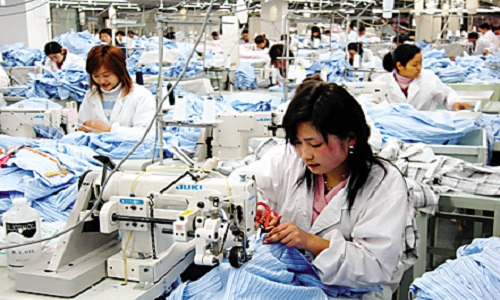 COVID-19 forced Indian textile industry to transfer a large number of textile orders to Chinese factories for production. For example, all orders received by 100 New Delhi factories were transferred to China. To fulfill these orders, Chinese factories are opening new production lines and expanding their staff.
India’s share in China’s pie
Alibaba international station figures reveal, since May, China recorded 100 per cent increase in fabrics and textile raw material orders. It also witnessed 200 per cent increase in apparel orders. In the first three quarters of this fiscal, China’s total import and export volume increased 0.7 per cent to reach 23.12 trillion yuan with Indian textile orders playing a significant role in this.
The Indian textile and clothing industry is worth $ 250 billion. It is also one of the largest sources of forex income and accounts for about 15 per cent of India's total export revenue. From 2000-2018, the industry attracted FDI worth $2.97 billion. However, the pandemic stalled India’s progress and many of factories could not start work as scheduled. As a result, many orders were transferred to China which not only has a high degree of industrial automation but also could complete these orders in shortest possible time.
Boom time for Chinese exports
The Chinese textile and clothing industry has been growing well since May. Exports have been increasing with volume of textiles from the General Administration of Customs increasing by 3.29 per cent to 215.8 per cent in the first half of this year. From January to September, China's textile exports reached $117.95 billion and the export growth rate increased by 5.9 percentage points compared with the first half of the year. According to the General Administration of Customs, since the second half of the year, China’s clothing exports too have improved. The volume of its clothing exports increased 6.5 per cent in September to $15.23 billion.
In general, the Southeast Asian textile and apparel industry is benefiting from the Christmas season in the West. Some factory owners in the region have received orders from European and American countries.
India benefits from low costs
The Indian textile and apparel industry is also benefitting with high orders. The industry offers several advantages with labor cost, energy cost, land cost, government tax, tariff and environmental protection. The gross profit margin of local textile and garment enterprises in Southeast Asia is 5 per cent higher than that of domestic enterprises. Hence, a lot of orders from this region are likely to return to India and Southeast Asia once the outbreak is over. As demand from Europe and the US has not yet recovered, domestic Chinese enterprises need to balance their short-term interests and long-term strategies.
At present, the demand for medium and low-end textile products is low-end in China. Designers in the country favor new elastic fabrics like T400 and T800. Sun Ruizhe, President, China Textile Industry Federation, has advised domestic fabric enterprises to foray into the middle and high-end fabric markets.
Local fashion e-commerce stabilizes China’s foreign trade
The increasing proportion of cross-border e-commerce exports is helping China stabilize its foreign trade. The country is also benefitting from its local fashion e-commerce users. To explore these benefits, Chinese enterprises need to deepen brand building and gradually move from being flow and product oriented to being brand oriented.
The Chinese clothing industry has entered a new stage of strategic restructuring and innovation and reform, and currently leads the global clothing industry reform, says China Garments Association.
South African apparel retailers opt for local sourcing, move away from China
 As COVID-19 has reemphasized the need to reduce dependence of Asian imports, South African clothing retailers are planning to boost local apparel production. As reported by the Kohan Textile Journal, one of South Africa’s biggest dedicated clothing retailers, The Foschini Group (TFG), has decided to reduce its reliance on single-source suppliers like China. The company now sources 35 per cent of its clothing requirements from South Africa itself. It has been investing in “quick-response” local manufacturing capacity for the last seven years which has enabled it to reduce its lead times to just 42 days.
TFG now plans to expand its facilities over the next five years. However, Anthony Thunstrom, CEO, believes, the advantage of local manufacturing cannot be applied to all products and depends on the availability of the required raw materials and manpower.
Increasing local textile purchases to 50 per cent
Another clothing retailer Truworths favors local manufacturing as it enables quick response and fast fashion. The retailers’ percentage of local textile to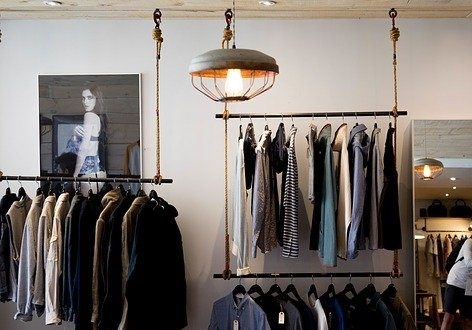 total textile purchase has reached 45 per cent and is expected to further increase to 50 per cent over the next few years.
Truworths recently purchased the Barrie Cline Clothing design house that has exclusively supplied to the group for more than 20 years. The retailer has pivoted its local supply chain model around this design house and a few select design houses like Barrie Cline. However, Michael Mark, CEO, believes, local manufacturing also faces certain challenges such as an ageing skills base, an unstable power supply and rising electricity costs.
A price-sensitive retailer which caters to lower-income consumers, Mr Price is also increasing its local content. The retailer has increased its sourcing of local merchandise from 31 per cent in 2015 to 35 per cent. While China still remains the dominant supplier for Mr Price, the group is diverting its focus to other African countries, which alongwith South Africa account for about 45.7 per cent of its merchandise inputs.
The group is also committed to sourcing 1,357 tons of cotton from local producers via its membership of the South Africa Cotton Cluster (SACC). It is working closely with the government through the CTFL Master Plan 2030, which aims to boost locally-produced goods to 65 per cent of overall apparel items by 2030.
Other retailers join the movement
Retailers Game, Woolworths and Pep have also committed to local sourcing. Not typically associated with apparel, Game re-entered the affordable clothing market by launching its new clothing line Stylessentials in August this year. Nearly 90 per cent of this range has been sourced from local suppliers, while 25 per cent has been locally manufactured, says Andrew Stein, Vice President. The retailer aims to increase the percentage of locally-manufactured items to support local businesses.
Similarly, Woolworths also plans to source more apparel locally with over 50 per cent of its purchases coming from the SADC region. Pick n Pay Clothing has collaborated with South African fashion designers such as Gavin Rajah, Julia Buchanan and Katekani Moreku to make locally produced styles more accessible. Pep Clothing (PepClo), a division of Pepkor, manufactures basic school clothing, knitted underwear and flip flops at its four local factory divisions.
PAF, PHMEA urge for duty free yarn imports
Pakistan’s value-added textile exporters recently urged the government to allow duty-free import of yarn as rapidly rising prices of local fibers are severely affecting their competitiveness. Cotton yarn 30/1 prices have increased by 17 per cent in the last three months, and therefore, the government must intervene to save value-added textile exports, according to the Pakistan Apparel Forum (PAF) and the Pakistan Hosiery Manufacturers & Exporters Association (PHMEA).
In a joint statement, PAF chairman Muhammad Jawed Bilwani and PHMEA central chairman Mohammad Riaz Ahmed said it is alarming that during the last decade, Pakistan's cotton production decreased by 35.42 per cent from 9.60 million (480 pound) bales in 2009-10 to 6.20 million bales in 2019-20 due to sub-standard cotton seeds supplied to farmers.
The trade organizations said huge value-added textile export orders are available, but exporters are unable to accept due to unavailability of cotton yarn in the country at competitive prices, according to Pakistani media reports.
They demanded the stakeholders should be allowed to import cotton yarn from any country till its scarcity is controlled and the required quantity of yarn is available in abundance in all domestic markets.
They suggested that the government should make it compulsory for the large spinning units having more than 30,000 spindles and production to grow their own cotton to manufacture cotton yarn and extend full support to them in this regard
Tablez to launch first GO Sport store in Delhi
Tablez, a leading organized multi-brand retail group, has launched the first store of GO Sport, a global sporting retailer, at DLF Avenue, Saket Delhi. The brand will host a multitude of sports brands under one roof making it the first Multi-Brand, Multi-Discipline Sports Superstore in Delhi.
After successfully launching the superstores in Mumbai and Bangalore last year, Tablez aims to strengthen its retail footprint further in India with the launch of GO Sport’s third store in Delhi. Spread over 7000 sq. ft, the superstore will host multiple brands under the same roof along with offering a great in-store experience.
GO Sport's offerings will range across apparel, accessories, footwear, and equipment in the categories of running, cycling, fitness, outdoor like hiking, trekking, and camping along with racquet sports (badminton, tennis), team sports (football, cricket, basketball, volleyball), and swimming. Tablez plans to expand GO Sport outlets to other metropolitan cities in the coming year.
Shima Seiki launches yarnbank
Shima Seiki has launched yarnbank, its new digital yarn sourcing web service. Yarnbank is the world’s first online web service for searching and viewing the latest yarns, developed with cooperation from yarn companies from around the world. Shima Seiki of Wakayama, Japan, is one of the leading solutions provider in the fashion textile industry.
Registered users have free access to the yarnbank archive of yarn information and digital yarn data. Users can also download yarn data for free, for use in fabric simulation and virtual sampling on SDS-onE APEX4 design system as well as APEXFiz subscription-based design software likewise announced last month. Users can, thereby, avoid the need to scan yarn on their own.
By using yarn that is available for actual production, users can further rest assured that their simulations created using yarnbank are not merely realistic images but accurate representations using yarn that can actually be purchased and used in production. Such clear communication is possible with yarnbank by bringing together each player in the supply chain, spinner, knit manufacturer, and apparel companies, and connecting them digitally to eliminate trial-and-error sample making that is the legacy of obsolete analogue fashion production, according to a media statement by Shima Seiki.











