


FW
Fashinnovation’s 4th Worldwide Talks to host 60 speakers
The 4th Worldwide Talks of Fashinnovation, the platform that mixes traditional enterprises with fashion tech start-ups and emerging brands, will host over 60 speakers. The speakers will discuss a variety of topics and issues related to the fashion industry. To be held on February 11, 2021, the event will be attended by leading dignitaries from the fields of entrepreneurship, innovation and sustainability for the fashion industry. As per Jordana Guimaraes, Co-founder, Fashinnovation, these include Steve Madden; Donna Karan; Tonne Goodman; Manish Chandra; Raissa Gerona; François-Ghislain Morillion, etc.
Prior to Worldwide Talks, Fashinnovation hosted a Virtual Blue Carpet on Instagram LIVE on 8 and 9 February to give attendees a sneak peak of what to expect from the February 11 event.
Since 2018, Fashinnovation has hosted over 400 of fashion’s leading innovators to audiences representing 120 countries. Their platform has amplified the impact of the entrepreneurial spirit of the industry with Josh Luber (StockX), James Reinhart (thredUP), Katia Beauchamp (Birchbox) and Gihan Amarasiriwardena (Ministry of Supply), and has put sustainability front and center with Paul Dillinger (Levi’s), Carry Somers (Fashion Revolution) and Oskar Metsavaht (Osklen).
Brands, retailers expect broader vaccination to boost business across Europe
 Though brands across China and North America are seeing a strong rebound in sales, those in Europe are struggling to meet their shoppers changing demands and threatening industry forecasts. As per a CNBC report, European brands and retailers are being guarded about their future moves. They are rejecting experts’ advice on future moves. Department store operator Nordstrom foresees lower revenue growth than predicted by analysts. The retailer witnessed a 20 per cent decline in sales in its recent holiday quarter. Shoppers store visits also remained subdued despite robust online growth.
Tapestry and Capri pose pessimistic outlook
Tapestry’s sales also declined during the holiday quarter, though online business grew in triple digits. The company expects sales to reach Pre-COVID levels only by June this year. In the latest quarter, sales in China rose 35 per cent. However, sales in Europe declined due to market slowdown. A brand with almost 25 per cent of sales coming from Europe, Capri is also less optimistic about prospects in the European market. The brand does not expect sales to improve in the first half of 2021, says Simeon Siegel, Analyst, BMO Capital Markets. The brand generates 25 per cent of sales from the European market compared to Tapestry whose 16 per cent sales come from Europe.
Capri also does not expect revenue and earnings to exceed pre-pandemic levels till fiscal 2023. Over past 12 months, its shares have declined nearly 47 per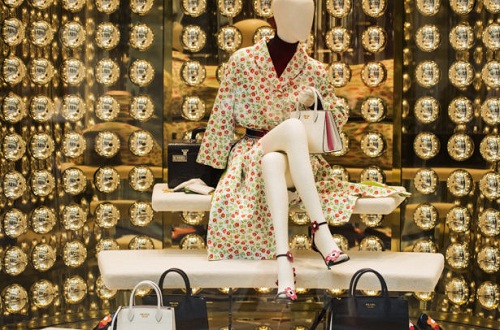 cent and market capitalization is smaller than Tapestry’s
Ralph Lauren sees increase in same-store sales
Unlike other brands, Ralph Lauren expects a broader vaccine rollout to boost business in coming months. The brand expects same-stores sales to increase in upcoming fiscal year and reported highest earnings growth in third quarter while sale sweaters, blazers and trousers expanded gross margins. Though Kohl’s expects a 10 per cent decline in holiday sales, the retailer expects fourth-quarter earnings to exceed expectations. The retailer’s sales strengthened in January as more shoppers visited stores to make Amazon returns after exchanging holiday gifts.
Victoria’s Secret looks at robust Q4 earnings
Victoria’s Secret owner L Brands also expects robust earnings in fourth quarter. The retailer will benefit from selling more items at full price and cutting back promotions. Retailers may also slim down inventories this year as overbuying and employing markdowns pressurizes earnings. In the last 12 months, Kohl’s shares have risen 10 percent, while L Brands’ stocks more than doubled. They expect consumers to eventually venture out for shopping with vaccination providing the much needed boost.
New textile parks, duty reductions, Budget 2021-22 will boost T&A exports
 From being called one of the most pragmatic Budgets of modern India to being hailed for its positive and growth-oriented initiatives, the Union Budget 2021-22 has been appreciated by all sections of the Indian textile and apparel industry.
Textile parks, custom duty reduction to make SMEs more competitive
As A Sakthivel, Chairman, AEPC opines, the budget ensures robust economic recovery. The allocation of Rs 10,683 crore for production linked incentive scheme for MMF garments and technical textiles, will promote MMF garment exports from India. The seven textile parks, to be set up under the MITRA scheme, will attract huge investments, notes Ashok Juneja, President, Textile Association of India. Their plug and play facilities will help Indian SMEs build their competitiveness, he adds. These parks can also be aligned with their sustainability goals to attract international buyers and investors, he adds.
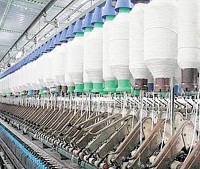
Sakthivel and Juneja also appreciate the reduction in custom duty on nylon to 5 per cent from the earlier 7.5 per cent. This will make the MMF industry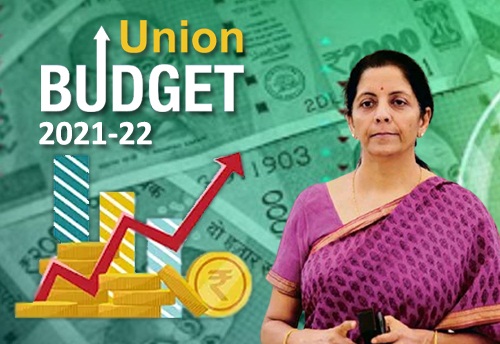 more competitive and boost exports, opines Juneja. However, the levy of 10 per cent basic customs duty on cotton imports may shoot domestic cotton prices, weakening competitiveness of Indian cotton exports, he adds. The Budget also allocates Rs 1,624 crore for the shipping sector. It launches a new scheme to promote flagging of merchant ships which will help reduce shipping costs, Sakthivel opines.
Removing ADD will boost MMF value chain
One of the most important decisions is the removal of anti-dumping duty on PTA, says Rakesh Biyani, President, CMAI. He feels, this will boost the MMF value chain and enhances its competiveness globally. Biyani also appreciates the other measures announced in the Budget. The review of Rules of Origin, cheaper imports of MSME goods and refund of all the taxes and levies for exports will make every Indian district an export hub, he adds.
ATUF to clear pending capital subsidy
Raja M Shanmugham, President, The Tirupur Exporters Association (TEA) is optimistic about the allocation of Rs 700 crore for Amended Technology Upgradation Scheme (ATUFs). He feels, this will help clear pending capital subsidy. The allocation of Rs 30 crore for Export Promotion Studies and Rs 100 crore for Integrated Scheme for Skill Development will strengthen India’s ecosystem, he adds.
Tax norms relaxation will remove anomalies
Shanmugham also hails the government’s decision to allow women workers to work in night shift and reduction of compliance burden on employers with single registration and licensing, and online returns. The proposal to reduce time limit for reassessing income tax proceedings from the present six to three years will help taxpayers concentrate in mainstream business, he adds. Changes in taxation changes and measures taken to simplify GST, will help remove anomalies such as the inverted duty structure, adds Juneja.
Urgent need for waste water management techniques
Though the Finance Minister touched upon clean air and renewable energy in her speech, nothing was mentioned about water conservation and wastewater management. One of the most polluting industries that discharges more than 100 kilo litres of wastewater a day, the T&A industry requires wastewater management initiatives urgently, points out Juneja.
Philippine garment industry to urge for retention of GSP+ access to EU
The Philippine garment industry plans to petition the European Commission, asking it not to consider calls for the country to lose its Generalized Scheme of Preferences Plus (GSP+) access to European Union (EU) markets.
The call follows a resolution adopted by the European Parliament in late September calling on the European Commission to temporarily withdraw the Philippines’ access from the scheme because of human rights abuses.
Access to GSP+ can be suspended if a country breaches a wide range of human rights conventions – such concerns, for instance, led to Sri Lanka losing this status in 2010 (it was restored in 2017).
Robert Young, trustee for the textiles, yarns and fabrics sector of the Philippine Exporters Confederation Inc. (Philexport) and the president of the Foreign Buyers Association of the Philippines (Fobap) said the clothing sector would resist a loss of GSP+ status.
It was planning an official communication to the European Commission, which would have to propose such a move. Fobap will also request an easing of origin rules that have prevented the Philippine clothing sector from making the most of this trade status, Young added.
The GSP+ program grants the Philippines the benefit of exporting more than 6,000 products to any of the 27-EU member countries at zero tariff. Products on the list include textiles, garments, headwear, footwear, furniture and chemicals.
Apparels made with South Korean fabrics to enjoy lower tariffs in EU
South Korea’s trade ministry recently said, apparel and clothing items produced in Vietnam with South Korea-made fabrics will be allowed to enjoy lower tariffs in the European Union.
Previously, clothes needed to be made with locally produced fabrics in order to enjoy the benefits of the Vietnam-EU free trade agreement, according to the Ministry of Trade, Industry and Energy. Vietnam relies on imports for 80 percent of its demand for textiles.
In 2019, China accounted for 55 percent of Vietnam's imports of fabrics, trailed by South Korea and Taiwan with 16 percent and 12 percent, respectively. Japan accounted for 6 percent.
Last year, South Korea's shipments of fabrics to Vietnam came to $2.35 billion, down 18.4 percent on-year.
Introduce new laws to protect Bangladeshi suppliers: Mostafiz Uddin
Mostafiz Uddin, Managing Director, Denim Expert feels the industry needs to introduce new laws to protect Bangladeshi suppliers from going bankrupt. Uddin advises the West to introduce new laws to ensure when new owners take in a business, they also take on a significant proportion of its debt. He says the apparel business needs to be built on mutual respect, shared goals and cooperation. Currently, the scales are tipped almost completely in favor of buyers from the West which does not benefit anybody; neither manufacturers nor buyers. Leaving suppliers permanently out of pocket creates disruption and uncertainty in the supply chains, he adds. The COVID-19 crisis has once again highlighted these difficult issues. He advises industry leaders to tackle them forever.
Denim brands launch size-inclusive, seasonless collections
Besides becoming size inclusive, denim brands are also launching seasonless styles to cater to customers changing demands. As per a reports, last month women’s wear brand NYDJ launched a range of pull-on jeans that stretch to fit three sizes. Before that, premium denim brand Frame had introduced a range of women’s jeans Le One that fits several sizes. Another brand, Good American collaborated with Calik for a range of skinny jeans called Always Fit. The jeans in this range offer 100 per cent stretchability, accommodating a range of three to four sizes without sacrificing fit.
Pakistan-based vertical denim manufacturer Soorty launched Re-Sync denim, a denim range featuring one-size-fits-all technology. The range is made from a trans-seasonal, adaptive fabric that sculpts the body with 360-degree stretch comfort and fits a range of four sizes. The company aims to offer sustainable products and also launched its Re-Dream collection made of nonvirgin materials, such as post-consumer and post-industrial waste, GRS-certified recycled polyester, Lycra T400 Ecomade T400, CoolMax Ecomade and Repreve.
As per US Centers for Disease Control and Prevention, the average American woman’s waist is 37.8 inches—which ranges from a size 16-20 in select jeans. Market intelligence platform Edited reports, there has been an 11 percent increase in the number of new plus-size or curve styles compared to 2019.
India revives trade dialogues with EU and UK
Weeks after the formal Brexit agreement, India has revived dialogues with the EU and the UK to expedite trade deals and aid economic growth in the post-COVID era. EU trade commissioner Valdis Dombrovskis held a virtual meeting with India’s commerce and industry minister Piyush Goyal on February 5, where he urged for a quick early-harvest deal followed by a time-bound and balanced free trade agreement (FTA).
Goyal also urged EU to support India’s joint proposal with South Africa at the WTO, to get a temporary waiver of the restrictive TRIPS agreement to ensure adequate supply of COVID-19 vaccines in developing countries. These dialogues are being held at a time when India’s planned FTA with the EU has lost its importance thanks to Brexit. Britain constituted 26 per cent of India’s apparel exports in FY20 to the EU. It also accounted for 16 per cent of India’s $53.7-billion exports to the EU in FY20. Apart from garments, India ships gems and jewellery, pharma products, footwear and organic chemicals, among others, to the UK in large volumes.
Indian exporters believe, India-UK trade talks won’t have the same level of complication that exists between India and the EU, and a deal can be easily signed between the two countries.
India’s silk exports reach $246.67 million in FY20
India’s silk and silk products exports touched $246.67 million in FY20. As per India Brand Equity Foundation report, total silk and silk products export accounted for $101.82 million from April 2020 to October 2020 and for October 2020 it was $22.98 million.
The silk products exported include natural silk yarns, fabrics, made-ups, readymade garments, silk carpets and silk waste. Readymade garments formed the largest share in export from April 2020 to October 2020 at $ 43.75 million, followed by fabrics & made-ups at $31.73 million and silk carpet at $13.58 million. Fabrics & made-ups formed the largest share in export between FY20 at $138.95 million, followed by readymade garments at $ 71.18 million and silk carpet at $20.3 million. Other products made up for rest of the export earnings.
Second largest producer of silk in the world, India makes all commercially useful varieties of silk. The industry is one of the largest generators of employment and foreign exchange for India. Its sericulture activities are spread across 52,360 villages and provided employment to over 9.1 million people in India during FY19.
H&M collaborates with Lee for recycled cotton denims collection
H&M has collaborated with American denim legend Lee to launch first ever 100 per cent recycled cotton jeans collection. The Lee x H&M range features collections for women, men and kids. It is available online as well as select H&M stores.
Focusing on sustainability, the collection features H&M’s first 100 per cent recycled cotton jeans, made from 80 per cent post-industrial waste and 20 per cent post-consumer waste. It also contains a cotton-free denim made from renewable man-made fibers besides water-saving dyes and lower impact denim washes that are 3rd party verified for their lower water usage, chemical, and energy consumption.
The women’s collection comprises wide and loose jeans that have a 90s throwback feel and Lee’s classic Rider jacket in an oversized cocoon shape. Its denim corsets add a feminine edge, while dungarees and overshirts bring the functional workwear vibe, alongside Texloop™ RCOT™ Recycled Cotton jersey pieces for the full Lee x H&M look.
The men’s collection offers workwear jackets and relaxed fit five pocket jeans made from 100 per cent recycled cotton. The relaxed carpenter jeans are made with water-saving dyes and 100 per cent Tencel™ Lyocell cellulosic sewing threads.
The collection also offers workwear dungarees, denim bucket hats and tote bags, as well as heavyweight jersey pieces to complete the sustainably mad collection. The kids’ collection features Lee’s classic Rider jacket and jersey pieces including t-shirts and hoodies.











