


FW
Garment workers bear the brunt of COVID-19 as brands cancel orders
 Though the pandemic affected the entire fashion sector, its impact on workers was massive. Halting of thousands in-progress or finished order by retailers led to revenues worth $22billion being stuck with brands, says Scott Nova, Executive Director, Workers Rights Consortium, a labor rights advocacy group. This resulted in layoffs and reducing payroll costs in many suppliers’ factories, says a Vox report.
Even workers having full-time employment suffered. As a Clean Clothes Campaign report published in August shows, garment workers across the world failed to receive wages worth $3.19 billion and $5.79 billion in March, April, and May due to COVID-19 cutbacks, while workers in South and Southeast Asia received 38 per cent less pay than usual during those three months.
Brands driving down apparel prices, place fewer orders
Almost 29 of the 50 apparel brands surveyed by the Business & Human Rights Resource Centre recorded profits during the pandemic. Yet, nine of them have still not committed to pay for suspended or canceled orders. As Thulsi Narayanasamy, Leader-Senior Labor Rights, BHRRC says, brands are driving prices down further than they were before the pandemics. Retailers are also squeezing margins in subtler ways.
Also, brands are placing 30 per cent lesser orders than they usually do this time of year, says BGMEA in a survey of 50 factories. This has led to governments of many South East Asian nations urging brands to establish a wage assurance fund to ensure all workers receive their dues in accordance with labor laws and international standards. Nonprofit organization Remake has initiated the #ShareYourProfits campaign that urges 12 top-performing brands — Adidas, Amazon, Asos, Gap, H&M, Levi Strauss, Lululemon, Primark, Under Armour, Uniqlo owner Fast Retailing, Nike, and Inditex — to donate 1 per cent of their net revenue for garment worker relief.
Brands like H&M are donating funds worth billions of dollars to nonprofits including Save the Children and WaterAid. This will help brands provide emergency relief to 76,000 Bangladeshi women and their families. Workers’ rights groups including the Asia Floor Wage Alliance, the Clean Clothes Campaign, and the Worker-Driven Social Responsibility Network plan to sign an agreement to make brands legally liable to pay an additional living wage contribution on every order they place with their suppliers.
Winds of change
There are signs of the industry changing. Earlier this year, nine trade organizations from Bangladesh, Cambodia, China, Myanmar, Pakistan, and Vietnam came together to create the Sustainable Textile of the Asian Region to negotiate better purchasing practices with brands. This initiative is likely to be adopted by other countries.
Though fashion companies often argue they don’t own these factories they source from, many of them have offices based in the countries they produce in. They share a close relation with these suppliers and hence, can determine the fate of these workers.
Government schemes, FTAs can boost India’s MMF exports in future
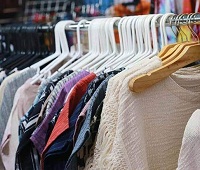 The unlocking of Indian economy has helped revive demand for MMF fibers in the country. As a report by Textile Value Chain highlights, from October to December 2020, fall in MMF production was restricted to the range of 3 to 6 per cent as against a cumulative decline 18.2 per cent Y-o-Y during April-December 2020. Like production, decline MMF exports also narrowed down to 2-8 per cent range during June-August 2020. On a cumulative basis, MMF exports declined 17.5 per cent Y-o-Y to 580,000 tons during April-November 2020. While exports grew 8.4 per cent in September 2020, they declined in the range of 10 per cent -14 per cent during October-November 2020.
The largest share of these exports was accounted by polyester whose exports declined by 20.1 per cent to 520, 000 tons during April-November 2020. Exports of Polyester Staple Fiber increased by 2.6 per cent to 191,000 while that of Polyester Filament Yarn declined by 29.1per cent to 329,000 tons.
Demand, raw material costs lift MMF prices
Growth in demand for MMF led to a substantial increase in prices of both PSF 1.4 den variety and POY 130/34 variety of polyester fibers during August 2020-January 2021. Increase in raw material prices also contributed to this price rise which was highest on m-o-m basis in December 2020 as the prices of both the varieties increased by about 12 per cent.
The raw materials, whose prices increased, included Purified Terephthalic Acid (PTA) and Mono Ethylene Glycol (MEG). The prices of these materials increased in the range of 12 per cent -18 per cent in December 2020 due to an improved downstream demand amid lower inventory in China, their prices increased by 12 per cent-18 per cent in December 2020. In January 2021, the prices of PTA increased by 9.9 per cent to Rs.58 per kg while those of MEG declined by 9 per cent to Rs.50 per kg on m-o-m basis.
The recovery in crude oil prices and feedstock prices of polyester are likely to boost polyester prices in coming months. The global uptick in demand is also expected to support polyester prices.
Low demand, increased competition for Indian apparels
India’s RMG exports on a cumulative basis declined by 28.6 per cent Y-O-Y to $8.2 billion during April-December 2020. Exports to major markets like Europe and the US declined by 30 per cent to $2.6 billion and $ 2.1 billion, respectively, in the first nine months of FY21. Exports to other markets declined by 30.7 per cent to $ 2.4 billion, while those to UAE declined by 13.4 per cent to $1.1 billion compared during April-December 2020
During April-December 2020, US’ apparel imports declined 27.2 per cent to $46.2 billion. Of this, imports from India decreased at a faster pace of 35.3 per cent to $1.9 billion compared to other nations. Therefore, India needs to strengthen its position in global exports in order to gain the benefits of US’ import ban on China’s cotton products from Xinjiang region or any other global development.
Apart from this, apparel exports from India also face tough competition from the Bangladesh and Vietnam as they get preferred access to India’s other major market – the European Union. In order to support exports, the government plans to continue its RoSCTL (Rebate of State and Central Taxes and Levies) scheme until it is merged with Remission of Duties and Taxes on Exported Products (RoDTEP) Scheme.
Government schemes
The government has decided to extend the benefits of Remission of Duties and Taxes on Exported Products (RoDTEP) scheme to boost exports with effect from 1st January, 2021. Additionally, it has introduced a one-time additional ad-hoc incentive of upto 1 per cent of FoB value on export of apparel and made-ups. The government has also removed anti-dumping duty on PTA, a key raw material for the manufacture of MMF fibre and yarn. It has announced a scheme to set up seven Mega Integrated Textile Region and Apparel (MITRA) Parks over the next 3 years.
To gain from US’ ban on China’s cotton and boost MMF exports, India needs to not just effectively implement these schemes but also sign trade pact agreements with other export destinations.
GOTS certified facilities grow by 34% in 2020
The number of GOTS certified facilities have grown by 34 per cent to 10,388 globally in 2020. As per 16 GOTS approved certification bodies, over 3 million people in over 72 countries worked in GOTS certified facilities during the year.
The top ten countries where GOTS certified facilities are located include India (2,994), Bangladesh (1,584), Turkey (1,107), China (961), Germany (684), Italy (585), Portugal (449), Pakistan (391), US (167), and Sri Lanka (126). GOTS approved chemical inputs now number 25,913, an increase of 13 per cent in 2020.
GOTS version 6.0, to be implemented from March 1 2021, includes stricter social and environmental criteria. Certified entities will now have to calculate the gap between wages paid to ‘Living Wages’ and will be encouraged to work towards closing this gap. Specific references to OECD due diligence guidance and good practice guidance for social criteria and risk assessment as well as ethical business practises have been explicitly included, according to GOTS.
Performance Days Loop to provide year-round digital sourcing marketplace
A comprehensive online platform to connect the functional fabric industry and provide a year-around digital sourcing marketplace, Performance Days Loop has been launched by the organizers of Munich Performance Days Fair and Functional Fabric Fair. As per Sourcing Journal, the event will be held from May 19-20 in Munich, July 19-20 in New York and October 27-28 in Portland. The platform provides access to a comprehensive 365-day dedicated marketplace of performance fabric manufacturers, currently consisting of more than 8,000 products from nearly 200 suppliers. The platform will also provide a matchmaking tool to connect sourcing professionals with a global pool of suppliers and products based on their needs and capabilities. It also features 3D visual technology to accentuate and simulate fabric design, look and feel.
Besides in-person events, the platform will also include digital fairs. The Performance Forum will be merged on the digital platform to spotlight exhibitor innovations across the global portfolio of Performance Days and Functional Fabric Fair events.
In addition, Nora Kühner will present Performance Colors, a color card for the outdoor industry, in conjunction with Performance Days Loop.
Gujarat government five investment proposals for state
The Gujarat government has approved five big investment proposals worth Rs 6,000 crore by four firms in the state. As per reports, these firms will set up manufacturing facilities in Dholera and Halol. One of these will be a technical textile plant at Halol by baby diaper manufacturing brand Avgol.
Another includes a proposal by leading furniture manufacturing company Merino to establish a plant with an investment of Rs 630 crore at Halo. Merino proposes to set up facilities for wood processing for particle board, pressing for particle board, pressing for pre-lam particles board, coating on pre-lam particle board, and cutting edging and drilling of furniture.
Another leading company Trafalgar has announced Rs 250-crore investment to produce state-of-the-art natural fibre-based industrial sacks, a substitute of plastic. The company has also proposed an investment of Rs 325 crore for manufacturing value-added products for the automotive and glass industry.
Interest in ITMA 2023 high despite COVID-19: Chairman
Interest in the upcoming edition of ITMA 2023 remains high despite the ongoing COVID-19 pandemic, says Charles Beauduin Chairman, ITMA. As per a Knitting Industry report the event will be held at Fiera Milano Rho, Milan, from June 8 to14, 2023. Its stand applications will open on March 3, 2021. Ernesto Maurer, President, Cematex says, exhibitors will explore additional avenues to promote their latest machinery and solutions through the new digital platform.
ITMA 2023 will feature 20 chapters. It will include a new chapter on machinery for textile reinforcement structures for composites, auxiliary machinery and accessories. The machines to be include in this chapter are machines for the production and treatment of special fibres, such as carbon, glass and aramid fibers, filament winding machines, fiber spreading machines, tape laying machines, fiber placement lines, coating and impregnation machines for prepreg production, other machines for the production of reinforcement structures, special testing equipment for textile reinforcement structures and auxiliary machinery and accessories for machines for textile reinforcement structures
The chapter on software and automation for design, data monitoring, processing and integrated production has been expanded to include digital platforms for textile and clothing production, procurement of textile materials and B2C platforms for retail. There is also a bigger range of solutions for automation of production processes and tracking and tracing of products.
BCI sourcing volumes increases by 13 per cent in 2020
Notwithstanding the significant impacts felt by retailers due to COVID-19, sourcing volumes of BCI retailer and brand members increased 13 per cent in 2020. Members sourced 1.7 million tonne of Better Cotton – a record for BCI and the industry.
BCI’s demand-driven funding model translates the cotton sourced by retailers and brand members into increased investment in training for cotton farmers on more sustainable practices, as set out in the Better Cotton Principles and Criteria. Supplier and manufacturer members also form a critical link between demand and supply of Better Cotton and are committed to sourcing increased volumes year on year. In 2020, spinners sourced an incredible 2.7 million tonne of Better Cotton, ensuring there was ample supply in the global market.
Better Cotton Initiative (BCI) engages and brings together the entire cotton sector, from farmers, ginners and spinners to civil society organizations and major global retailers and brands, to establish more sustainable cotton as the norm.
Spinnova-Suzano JV to build first commercial production facility in Finland
Material innovation company Spinnova and the world’s largest wood pulp producer Suzano have teamed up to build the first commercial scale Spinnova production facility in Finland. The total investment in the project, including all needed infrastructure such as real estate, is estimated to be around €50 million.
As per Innovation in Textiles, the new, industrial scale production unit will be located in Jyväskylä, Finland. Its production will be managed and operated by a new joint venture company owned 50/50 by Spinnova and its partner and investor, Suzano.
Suzano is a world leader in the production of eucalyptus pulp and has expanded its operations to create sustainable and innovative solutions derived from trees to the challenges faced by society. In the joint venture, Spinnova will be the exclusive technology provider, while Suzano will ensure the supply of sustainably produced micro-fibrillated cellulose obtained from eucalyptus planted by Suzano in Brazil.
The fiber produced will be sold under the Spinnova trademark. To date, Spinnova materials have been developed in collaboration with leading fashion brands such as Danish clothing company Bestseller, Finnish fashion house Marimekko, and Norwegian outdoor brand Bergans. Today, the H&M Group announces it has joined the group of brands in a partnership with Spinnova.
Flexible labor laws, innovations can help India regain lost position in global textile, clothing market
 As per Comtrade figures, till 2017 India was the world’s second largest exporter of textiles and clothing after China. However, since 2019, India’s rank dropped to 5th position with the country experiencing negative 1 per cent CAGR in the past five calendar years.
Lack of total garment package solutions
One of the reasons for this is the largely fragmented nature of the Indian clothing industry, and low-scale, says Astute Consulting. As per their report, India’s archaic labor laws prevents factory owners from laying off workers during slack business period. The small size of factories also makes it difficult for owners to invest in technology and product up gradations.
Another challenge the industry faces is the lack of access to global markets. Currently, India does not have preferential trade agreements with other nations, preventing exporters from accessing key markets. Also, like other nations, India does not offer total garment package solutions to leading International brands and retailers. Its textile mills ship fabrics to other garment conversion countries like Bangladesh, Vietnam, that have flexible labor laws and bigger manufacturing facilities.
To regain lost glory, India needs to introduce flexible labor laws besides encouraging entrepreneurs to set up large scale units employing 30,000 to 50,000 workers under one roof. This will boost productivity and reduce per unit cost of manufacturing. It will also help the country allocate higher investments in product development equipment.
Vertical integration of facilities
India also needs to set up integrated vertical setups ranging from fiber, yarn and fabrics to garments at a single location. Fabric mills here need to be either vertically integrated into garment manufacturing setup or backward integrated into fabric and yarn manufacturing. However, this requires huge capital investment.
The US and EU are the largest markets for Indian textiles and clothes. Both countries have free trade and preferential trade agreements with India’s competitors, negatively impacting its exports.
Expedite FTAs with EU
Indian companies also face trade barriers unlike other countries like Bangladesh, Vietnam, Sri Lanka and Pakistan who benefit with a 10 per cent discount on landed price of products due to GSP+ status with EU. Recently, even Vietnam and Korea have entered into FTAs with the EU to improve market access. Therefore, India needs to expedite an FTA with the Union. This will not only benefit its apparel, made-ups and textile industry but also neutralize some of the price disadvantages that it faces today.
Focus on product innovation and sustainability
Another important initiative Indian companies need to undertake is encourage their product development teams to make innovative products that also meet sustainability standards
Companies also need to set up manufacturing facilities equipped with latest state-of-art sampling machines. This will help them manufacture products in smaller batches, reducing their turnaround times. They need to use eco-friendly processing and finishing technologies both for fabrics and the garment washing. Their processes need to be re-engineered to save energy consumption, increase water recycling and improve effluent treatment. Also, they need to adopt new processes to use recycled raw materials, extracted from pre-and post-consumer wastes, like Polyester and Cotton.
India already has a vibrant domestic market and abundant labor force. Now, it only needs to address the above mentioned issues to regain its position in the global textile and clothing market.
Recycling initiatives to help Bangladesh save $100 bn worth discarded materials
 Bangladesh is set to be the global recycling hub as fast-fashion brands like H&M and Target have collaborated to launch a new recycling initiative in the country. Spearheaded by the Global Fashion Agenda, this initiative brings together all industry players who aim to make Bangladesh a global leader in apparel recycling. It’s an excellent place for mass-recycling as a huge exodus of fast fashion items comes out of its factories daily. Factories are filled with clothes discarded either due to production errors or because they are unused.
Initiatives to reduce carbon footprint, climate change effects
As per Global Fashion Agenda, discarded fabrics and finishes are piling up in many Bangladesh factories. The new project aims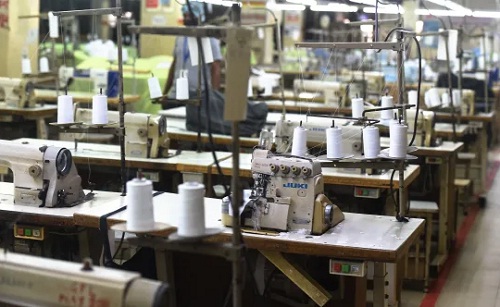 to recycle discarded items into new clothes. It aims to not only reduce the industry’s carbon footprint but also protect Bangladesh from the disastrous effects of climate change. The project earmarks 13 tech companies, including Lenzing and Renewcell who usually partner individual brands on small projects. Involving themselves in a project of such a huge scale will help them expand their reach. These companies will be integrated into Bangladeshi manufacturing facilities by the Global Fashion Agenda to help factory owners use them into their operations. The recycled materials produced by these factories would be incorporated in the upcoming collections of brands, already under pressure to use sustainable materials and production techniques.
Change consumption patterns and shop for durability
Besides curbing pollution and carbon emissions, the project will also provide cheap recycled fabrics to fashion companies. It will help save over $100 billion worth of clothing materials discarded every year, estimates nonprofit sustainability organization Ellen MacArthur Foundation. However, recycling alone will not save our planet, warn sustainability experts. Consumers need to change their consumption patterns and buy durable clothes. Fast fashion companies also need to stop churning out billions of clothes every year while designers need to design clothes that last.











