


FW
Medical textile market to grow at 4.10 per cent CAGR by 2025: Study
A report by Market Study Report LLC forecasts medical textiles market will grow at a CAGR of 4.10 per cent from 2019-2925. During this period, the value of medical smart textile market will increase from $1,151.80 million to $1,351.30 million, says Apparel Resources.
The data has been prepared after an intense study of the industry segments, distinct geographic regions and major companies, with special importance to the production-consumption ratio. It underlines the major driving forces, identifies the key opportunities and also suggests methods for addressing the existing as well as upcoming challenges. It also unravels the expected market patterns besides predicting the growth rate for the forecast period 2019-2025.
The term medical textile refers to all textiles which are used for first aid, clinical, surgical and hygienic purposes. Recently knitted products are most widely used in medical textiles and its market share is much higher than medical textiles in other forms due its advantages over other techniques of fabric formation.
Although all types of knitting machine available in the market are suitable for producing medical textiles, new range of computerized flat bed knitting machine is ideal for medical textile applications, because the machinery can be used in both small and large batch production.
Bangladesh manufacturers panic as orders from US fall
Falling work orders from the US is creating fear in the minds of Bangladesh RMG makers. Fazlul Haque, Former President, BKMEA says, buyers are taking all types of work orders but in less quantity. He expects business to take time to bounce back in the wake of spike in coronavirus infections. Buyers may take decision based on forecast for next 6-7 months, Haque said. If Covid-19 situation doesn’t improve quickly, RMG export may experience downtrend. Although buyers haven’t given any such massage as yet, he added
Global export of apparel products to the US fell by one-fourth in 2020 as the coronavirus pandemic battered the country more than any other parts of the world. Apparel export to the US rose slightly in the first two months of 2021 after the coronavirus situation slightly improved.
Bangladesh also gained from it, but fear looms large again over the export of apparel products to the US market because of new spike in coronavirus infections. As per OTEXA reports, US buyers imported apparel products worth $64.07 billion (6,407 crore) in 2020. US import of apparel products dropped by 13.85 per cent to $10.91 billion (1,091 crore) in the first two months of 2021.
Bangladesh’s export of apparel products to US dropped by 13.11 per cent to $1 billon (100 crore) equal to Tk 85 billion (8500 crore) in the first two months of 2021. Bangladesh is the third largest apparel exporter to the US market after China and Vietnam.
Vietnam’s export to the US dropped by 12.9 per cent to $2.09 billion (209 crore) in January-February of 2021. Vietnam exported apparel products worth $2.34 billion (234 crore) in the corresponding period of 2020. India and Indonesia also saw downtrend in their apparel export to the US. India’s export of apparel products to the US dropped by 21.89 per cent to $590 million (59 crore) in January-February of 2021.
Ecuador textile turnover decreased 36 per cent in 2020
The turnover of the textile industry in Ecuador decreased by 36 per cent from $1.38 billion in 2019 to $885 billion in 2020, informs Ecuador’s Internal Revenue Service (SRI). Javier Diaz, President, Ecuadorian Association of Textile Industries (AITE) says, the Ecuador textile industry lost $500 million last year. Employment in textiles and manufacturing sector decreased 29 per cent and 20 per cent, respectively.
Data from Ecuador’s Central Bank (BCE) shows, the country exports of textiles increased from 26,000 tons worth $103.8 million in 2019 to 28,400 tons worth $104.4 million in 2020. This reflects a 9 percent rise in volume and a 1 per cent increase in revenue. The rise is mainly attributed to higher demand for abacáfibre used to make textiles and paper and specialty items such as face masks, says AITE.
Canada’s apparel imports grow 1.14 per cent in February 2021
Canada’s apparel imports grew by 1.14 per cent to $663.94 million in February 2021 as against January 2020. On a yearly basis, Canada’s apparel imports grew by 8.35 per cent in February ’21compared to that in February ’20, says Apparel Resources. Of Canada’s total import value, import of knitted clothing grew by 27.74 per cent on Y-o-Y basis to $382.24 million and 1.90 per cent on M-o-M basis.
On the other hand, imports of woven clothing declined by 10.15 per cent Y-o-Y to $ 281.70 million while they grew by 0.75 per cent on monthly note. China lost share in February ’21 apparel shipment to Canada as compared to February ’20, while Cambodia – the second largest exporter to the North American country – grew significantly in its value-wise share.
German government recognizes Bluesign’s revision of sustainability criteria
The German government has recognized Bluesign, a textile chemical management specialist company, for revising its Bluesign Criteria that ensures sustainable production for public procurement purposes. For this revision, Bluesign invited over 500 stakeholders to participate in the feedback process, allowing the Bluesign System to continue to develop.
Kilian Hochrein, Director-Environmental Affairs, opines, this revision will help transform and improve the textile industry’s market and technological protective apparel segment. It will help Gore’s efforts to provide high-performance protective fabrics with the least amount of environmental impact to professionals in the public safety, defense, and workwear arenas, he says.
The Bluesign System sets and controls standards for the environmentally friendly and healthy manufacture of sustainable textiles, with the goal of eliminating hazardous substances from the start of the manufacturing process.
Brodelec records increased demand for masks
Brodelec, which invested in the Kornit Presto, two years ago, is recording increased demand for masks The Kornit Presto S has allowed the company to create a website dedicated to the ordering of custom masks. The company is currently printing more than 10,000 masks per week and can respond to requests within extremely short deadlines while guaranteeing quality and sharpness of detail. The masks meet the recommendations of the AFNOR and are designed with a fabric that filters out particles in the air by over 90 per cent.
Therefore, the designed and printed fabric masks are designated as category 1 and meet the UNS1 standards. They are distributed after testing for 60 washes."
Using NeoPigment Robusto ink, the Kornit Presto is based on a responsible and truly sustainable dry printing process. Its dedicated Robusto ink set is Oeko-Passport and GOTS certified, and does not alter the breathability of the masks produced by Brodelec, a vital criterion for meeting current health standards. This new set of inks has a short drying and adhesion time, allowing to produce high-quality finished products in a few minutes.
Declining interest may lead to Chinese abandonment of Australian Wool, say traders
Australian wool traders worry declining interest among Chinese buyers in a wide range of Australian products may lead to their abandonment of Australian wool. As per China Textile, Australia plans to increase its wool export quota to China by 5 per cent in 2021.
Australia’s wool exports account for as much as 40 per cent of the world’s total. More than 98 per cent of the wool produced in the country is exported, of which 75 per cent are sold to the Chinese market. It can be said that Australian wool is extremely dependent on the Chinese market. If the Chinese market is lost, the country will face huge economic losses.
Another worry for Australian businesses is if Chinese buyers stop choosing Australian wool, wool from countries such as New Zealand will quickly grab Australia’s lost market. It is reported that in January this year, China and New Zealand signed a new agreement to upgrade the China-New Zealand Free Trade Agreement. For Kazakhstan, this is also a good opportunity to expand wool exports to China.
Slowdown in EU, US create new opportunities for Chinese textiles and apparels
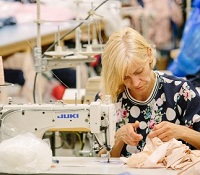 The bull run that the Chinese textile and apparel industry experienced from November 2020 lasted until March 2021. However, by mid-M arch, the Chinese market started gradually weakening as in 2020 the US retail market struggled with inventory stabilization and recovery.
US’ imports of textiles and apparels increases in Q4
Due to the epidemic, US mostly imported its required textiles and apparels, affecting production and inventory. Retail inventory reached a peak in the fourth quarter of 2020, says a report by the CCF Group. However, its inventory growth rate soon started declining.
According to import data of US customs, since the fourth quarter of 2020, US’ has been importing more textiles and apparels though their import value has declined. This happened mainly due to the price reduction for more orders in the first three quarters and the relatively low-priced feedstock.
European imports from China increases
The UK, France, Germany and Italy are the four major economies in EU and Europe. According to OECD business trend data, retail inventory of these four economies has been recovering since September 2020. Their textile and apparel imports from China have increased more than 20 per cent.
The slowing down of European economy has created demand for China’s textile and apparels. The country hopes to exploit the situation to its advantage even though the US ban on Xinjiang cotton may derail its growth to some extent.
Amazon to promote Vietnam textile and garment brands
Amazon has entered into a deal with Vietnam Textile & Apparel Association (VITAS) to allow Vietnamese textiles and garment firms to promote their brands on Amazon Global Selling. This will provide Vietnam an opportunity to showcase its products on a global platform.
The initiative will help Vietnam achieve its goal of having 30 world-class textile brands in the next nine years. Companies in Vietnam, which is the fourth largest exporter of apparel in the world, have been struggling to make the transition from business-to-business (B2B) to business-to-consumer (B2C).
Amazon Global Selling—Asia will invest in smart technologies and solutions to support companies in Vietnam. Earlier, it had set up a team in the Southeast Asian nation to help local businesses directly access 300 million buyer accounts, including more than 100 million prime customers in many of Amazon’s international markets.
Shanghai Fashion Week concludes successfully
Shanghai Fashion Week concluded successfully with over 100 live shows, livestreamed consumer-facing sales events, showrooms and trade shows.
As per Business of Fashion, this Autumn Winter 2021 edition was the second in-person fashion week hosted in Shanghai since China re-opened following its most serious outbreak of COVID-19 infections in the first quarter of 2020.
According to figures from the official Mode Shanghai trade show, the number of buyers at this edition, versus October, was up 153 percent. Many brands on site also reported an increase in orders, with young UK-Shanghai label, Nikita Cai up 300 percent, cashmere-focused Byarn seeing a 60 percent rise and Han Lu Lu reporting a 30 percent increase in orders.
Established Chinese brands, including Comme Moi, Leaf Xia, Yes by Yesir and Dawei, staged runway shows, while the Labelhood platform for independent designer showcases ran concurrently at the Tank Museum in Shanghai’s arts and cultural West Bund hub with featured designers including Angel Chen, Shushu/Tong, Private Policy and Oude Waag.
International brands also took the opportunity to leverage the visibility of Shanghai Fashion Week to stage their own events, with Dior hosting its first show for a womenswear pre-collection anywhere in the world as part of the Shanghai Fashion Week schedule.











