


FW
Australia plans $1million investment to promote local fashion
The Australian government plans to promote locally designed products in the foreign markets with an investment of $1 million. As per reports, the investment will be used by the Australian Fashion Council to launch a local and international campaign that promotes Australian fashion and an industry roadmap for the next decade.
Christian Porter, Minister for Industry, Science and Technology says, the investment will also fund the development of an Australian fashion certification trademark that would promote high-quality locally designed products in key overseas markets. Leila Naja Hibri, CEO, Australian Fashion Council, opines, the trademark will help position Australian fashion as a brand it its own right.
Sam Moore, Founder and Creative Director, PYRA, adds the trademark will be a great initiative to promote locally made goods. The luxury sportswear brand has just started using local print factories to speed up its production and minimize its effect on the environment.
COVID-19: Exploring opportunities to set new standards in fashion

Year 2021 is likely to be the worst for the fashion industry since the Great Depression, says Achim Berg, Senior Partner and Global Leader, McKinsey & Co, and author of ‘The State of Fashion 2021’ report published jointly with Business of Fashion. The pandemic has accelerated demand for athlesiure, adds Anita Balchandani, Partner, McKinsey-London and Co-author. It has also boosted digitization across the industry with nearly 40 per cent of all sales currently being generated from digital channels, she says.
As per Berg, the pandemic provides fewer occasions for dressing up. Hence, consumers’ clothes have become much more causal. The ban on international travel has also shunted demand for luxury fashion, she adds.
Widening product choices
Another change caused by the pandemic is in product choices. Consumers have become more open to new brands, particularly online startups. Also, there is growing affinity towards casualwear, says Balchandani, However, the post pandemic world might rival in demand for occasion wear as a more hybrid work culture is evolve across the world
The industry has been gravitating towards sustainability for a while now. People are realizing the need for buying lesser clothes. However, the industry still needs to do a lot to reduce its carbon emissions, opines Berg. Fashion businesses need to reshape business operations on a number of different dimensions, adds Balchandani.
Pivot to Asian brands
Balchandani believes, it has become easier to launch a brand today. However, their expansion has become difficult, she adds. On the other hand Berg says, though digitization has facilitated the growth of many online fashion brands, it has limited opportunities for young designers.
Online platforms are helping consumers connect with emerging Asian brands. The market is becoming more globalized with the discovery of new brands. However, China still drives most of the demand, particularly for luxury goods, adds Berg.
Redistribution in players’ market share
Berg rues, fashion shows are becoming less important with emerging new social media platforms. She advises the industry to hold more physical shows to enable brands exchange their views on fashion.
Balchandani does not expect the industry to recover completely even this year. She says, brands need to increase delivery speeds and stay attuned to customers’ changing demands. They also need to focus on sales markets and channels. In future, the market share of brands is likely to be redistributed with better-positioned players ending up with a larger slice of the pie, she adds.
The crisis provides brands an opportunity to be much more digitized, agile and flexible. They need to explore these opportunities to set new standards in the industry, concludes Berg.
H&M, Next, Boohoo maintain growth momentum despite COVID-led disruptions
 Despite their business being devastated by pandemic lockdowns, reduced operating hours, supply chains and shrunk consumer needs, fashion players H&M, Next and Boohoo pose an optimistic outlook for the future.
New business models to help H&M emerge stronger
As per a Textile Today report, Helena Helmersson, CEO, H&M affirms, her brand will emerge stronger as the pandemic provides it with an opportunity to create sustainable and profitable growth. According to her, H&M is developing new business models, initiatives and partnerships to satisfy new customer needs and add more revenue streams. Last year, the group was badly hit by COVID-led restrictions leading to a substantial decrease in its sales.
Next to focus on physical stores
British retailer Next has raised its profit outlook for the 2021-22 for the second time in two months. The fashion chain reported better than expected first quarter trading. It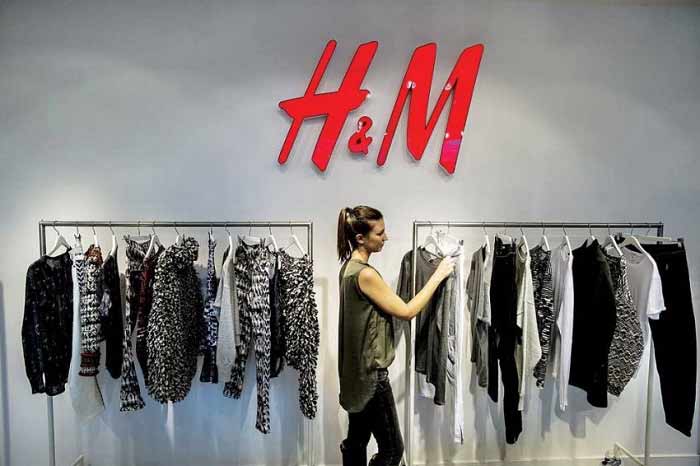 operates 500 stores besides and e-commerce channel,
However, it did expect a post-lockdown surge in sales to endure as last week full price sales in the 13 weeks to May 1 fell 1.5 percent compared with the same period two years ago. The group assumes its first-quarter sales would tumble 10 percent from the same period in fiscal 2019-20. The group has not raise its sales guidance for the rest of the year, which it kept at up 3 percent versus two years ago. However, it has raised its 2021-22 pretax profit estimate to £720 million pounds.
In future, investors may look to see how much business its stores are able to generate apart from online operations, says Steve Clayton, Analyst, Hargreaves Lansdown.
Boohoo addresses supply chain issues
Benefitting from growing trend of online shopping, British online retailer Boohoo posted a 37 per cent jump in annual core earnings, It’s adjusted earnings before interest, tax, depreciation and amortisation (EBITDA) beat analyst forecasts to reach £173.6 million pounds. However, the retailer faced some labor and supply chains pitfalls as an independent review discovered many shortcomings in its supply chain in England. The retailer was also accused of labor abuse in its Leicester factories. It launched an ‘Agenda for Change’ program to fix these issues which strengthened its British suppliers’ list.
WGSN names Digital Lavender as the Color of the Year for 2023
Trend forecasting firm WGSN and color specialist Coloro named Digital Lavender the Color of the Year for 2023. The gender-inclusive color represents a heightened awareness of wellness and virtual escapism, bridging both the digital and physical world, says a Sourcing Journal report.
Digital Lavender is already established in the youth and activewear markets—the color featured in Cardi B’s collaboration with Reebok, as well as in loungewear collections by Lululemon and Pangaia—and WGSN anticipates it will broaden into all fashion products. Though vibrant shades of Pink and renewing hues of green were featured prominently in collections, this shift to lavender was evident in Fall/Winter 21-22 collections. Designers like Salvatore Ferragamo, Blumarine, St. John and Susan Fang used the hue for ethereal dresses and cozy knits.
The color’s digital aspectcame to life in F/W 21-22 collections by MSGM, Dion Lee, Charles Jeffrey Loverboy and Feng Chen Wang. MSGM applied the color to unisex garments with glossy, cracked and high-pile textures. Dion Lee and Feng Chen Wang mixed the color with denim, while Charles Jeffrey Loverboy featured the color in boxy suiting, printed leggings and trench coats.
The color’s sensorial qualitymakes it ideal for self-care rituals, healing practices and wellness products. WGSN expects the color to converge across virtual and physical worlds, making it a key hue for consumer electronics, digitized wellness, mood-boosting lighting and homewares.
Cordura launches new denim fabrics collection
The Invista-owned fabric brand Cordura has launched unveiled its first collection of hemp -blended denim fabrics developed in partnership with Pakistani denim mill Artistic Milliners. As per Sourcing Journal, the range features 11-ounce and 12-ounce fabrics, each made with 20 percent France-sourced hemp. Artistic Milliners and Cordura worked together to develop the fabrics, which are being marketed across the mill’s customer base, from performance apparel brands to companies that have durability as part of their sustainability message.
Aside from hemp’s environmental benefits, the hemp denim range underscores Cordura’s commitment to achieving sustainability through products that last. Cordura Denim is proven to be at least four times more durable than traditional 100 percent cotton fabrics, as it’s engineered from a blend of Invista’s military-grade T420 nylon-6,6 staple fiber and cotton.
In January, Cordura launched a digital fabric library named Cordura Fabric Finder that allows companies to view the assortment using a user-friendly digital interface. This year, the brand is also partnering with Chinese mill Haining Jintai to introduce a jersey nylon and hemp knit.
Dilo to showcase nonwovens technology at ITMA Asia + CITME exhibition
Dilo, a nonwovens machinery manufacturer, plans to showcase a variety of nonwovens technology at the ITMA Asia + CITME exhibition next month, where it will show a variety of its new nonwovens technology.
As per Textile Value Chain, DiloSystems provides production lines for a wide range of nonwovens manufacturing processes using numerous staple fibre products.
DiloGroup, with DiloSpinnbau, DiloTemafa, DiloMachines and DiloSystems as the general contractor, offers a complete range of the machinery required to produce needled nonwovens and, together with partners, thermobonded and hydroentangled nonwovens for a range of applications including geotextiles, housing and roofing, automotive products, filtration, acoustics, artificial leather and medical or hygiene products.
Dilo also recently added water entanglement lines to its portfolio, a result of its cooperation with SICAM S.r.l., a well-known producer of high quality machinery for the nonwovens industry. As well as these latest spunlace lines, DiloGroup is also able to fulfill demands and requirements for products requiring improved tensile strength ratios with Dilo high-speed carding and layering technology.
L Brands to spin off Victoria’s secret as an independent company
L Brands plans to spin off lingerie brand Victoria’s Secret as an independent company after plans to sell it fell part due to the pandemic. Victoria's Secret was to be sold to Sycamore Partners last year for about $525 million but the private equity firm sued to get out of the deal citing the pandemic. At that point, Victoria's Secret was forced to close stores and sales, which had been falling as the brand fell out of favor.
Victoria's Secret has been trying to turn its business around, by reinventing fashion styles and redesigning stores. The brand was founded by late Roy Larson Raymond in the late 1970s. By mid-1990s, Victoria's Secret ruled runways and internet with supermodels advertising for the brand. It also had an annual event dedicated to it on the television. L Brands plans to create two independent, publicly traded companies, the other being Bath & Body Works.
Rajasthan garment factories permitted to continue operating during lockdown
The Rajasthan government has permitted garment factories to continue operating during its 15-day lockdown. The industry has not seen any disruption till now and it can manage for these 15 days with limited workers. However, it is likely to be impacted if the lockdown extends beyond that, says Hero Ravjani, Secretary, Apparel Park Manufacturers Association. Many garment workers have left their jobs either to return to their homes to celebrate Eid or due to pandemic fears as cases mount in the state, adds Dileep Baid, Former President, Confederation of Indian Industry.
The government is currently working on facilitating an e-pass system to enable workers to travel to and from work and continue their duties.
Prada launches new GOTS certified denim collection
Prada has launched a new denim collection made from 100 per cent GOTS certified cotton (Global Organic Textile Standard) made with less water and less energy to ensure that each piece is made without sacrificing quality.
The collection includes denim shorts, dresses, jackets, jeans, and a bra bralette. All organic denim pieces have been lightly distressed and faded, and embellished with the black enamel Prada logo that has become an increasingly prominent part of the brand’s visual identity since Raf Simons joined Miuccia Prada at the design helm.
The brand sources organic cotton comes from farms with low environmental impacts and is free from pesticides and fertilizers. On average, it saves 10 liters of water for each meter of fabric. These traits help improve the brand’s EIM (environmental impact measurement) — a metric that has become increasingly important for brands.
Huntsman Textile Effects to display protection effects systems at Performance Days
Singapore-based Huntsman Textile Effects will present extensive end-to-end suite of protection effects and high-performance solutions for performance apparel at Performance Days Digital Fair Week from May 17-21, 2021. The solutions to be presented by Huntsman include its complete end-to-end systems for protection effects, from pre-treatment to coloration and finishing; revolutionary antimicrobial and odor-control solutions from Sciessent - The Agion, Lava X2 and Active X2 products.
Huntsman will also deliver a presentation on sustainability on May 18, 2021. Titled ‘Sustainability & Textiles: Being the Change That We Want to See,’ the presentation will showcase the megatrends that will define the next five years, and the textile and apparel industries’ quest for more sustainable design, product development, production methods and garment care.
Huntsman Textile Effects GmbH manufactures and distributes cyclic organic crudes, intermediates, organic dyes, and pigments. The company markets its products to companies in the advanced materials, performance products, pigments, polyurethanes, and textile effects industries throughout Germany and internationally.











