


FW
Indonesia’s industry growth in line with national economic growth: Industry Minister
Agus Gumiwang Kartasasmita, Minister of Industry, said, the 6.91 per cent growth in Indonesia’s industrial sector in Q2FY21 is line with the national economic growth of 7.07 per cent. In the middle of this year, Indonesia also launched the results of a study on the potential economic, social and environmental benefits of implementing a circular economy in the country’s textile sector. The implementation of a circular economy in this sector will reportedly help create an economic impact of IDR 24 trillion, 200 thousand jobs, reduce CO2 emissions by 16 million tonne, and save water by 1.3 billion cubic meters by 2030.
On the other hand, consumers will also benefit from products that are durable, long lasting, innovative and environmentally friendly. Kartasasmita explained, the government has mentioned sustainable fashion as part of the green industry in its regulation No. 28 of 2021 and has been implemented or stated in the roadmap for making Indonesia 4.0 in RIPIN and KIN 2020-2024 with a focus on the recycle polyester and staple fiber industry. In particular, it came from used plastic bottles and the development of renewable and sustainable fiber rayon, with tracable woods, sustainable forestry, and eco-friendly production, he added
Rosa Vivien Ratnawati, Director General-Waste, Waste and Hazardous Toxic Material Management (PSLB3), Ministry of Environment and Forestry, explained that textile waste is a potential that can be utilized. Data from August 2021 report shows, Indonesia generates 1.7 million ton wastes in 292 districts every year. A circular economy approach can help alleviate this problem, adds Ratnawati.
Textile Ministry sets up expert committee to boost handloom exports
The Ministry of Textiles has set up a high-level, eight -member, experts’ committee to double the production of handlooms and boost exports. As per a Trade Arabia report, UAE has emerged as the leading investor in India’s textiles sector. Investments from UAE reached $23.09 million in the last five years and are growing. Investments from Oman and Qatar rank on the second and third positions.
The government has also released funds worth Rs 1.25 billion ($16 million) for eight Centres of Excellences in textile research across India. addition, 10 new Handloom Design Resource Centers will be set up by the National Institute of Fashion Technology (NIFT) to build and create design-oriented excellence in handlooms to facilitate exports.
Darshana Jardosh, Minister of State for Textiles, says, the handloom sector has also a vehicle for women’s empowerment since more than 70 per cent of all weavers and allied workers in India are women. The high-level committee is headed by Sunil Sethi, Chairman, Fashion Design Council of India. It has been asked to submit its report in 45 days.
Global fiber production to reach 146 million ton in 2039
Global fiber production is expected to increase by 34 per cent to reach 146 million ton in 2030. As per Textile Today, fiber production doubled in 2000 to 109 million ton in 2020 from 58 million ton. Per person fiber production increased from 8.4 kg per person in 1975 to 14kg per person in 2020.
According to a new Textile Exchange report, market share for preferred fiber and materials grew significantly in 2020. Between 2019 and 2020 the market share of preferred cotton increased from 24 to 30 per cent and recycled polyester from 13.7 to 14.7 per cent. Preferred cashmere increased from 0.8 to 7 per cent of all cashmere produced while Responsible Mohair Standard certified fiber expanded from 0 to 27 per cent of all mohair produced worldwide in its first year of existence in 2020.
The market share of FSC and/or PEFC certified MMCFs increased to approximately 55-60 per cent. While the market share of recycled MMCFs is only 0.4 per cent, it is expected to increase significantly in the following years.
Total number of facilities around the world being certified to the organization’s portfolio of standards increased 75 per cent in 2020.
Denim production in Gujarat rise with orders on the upswing
Denim production in Gujarat mills has picked up pace as orders from key markets including the US, UK, and Europe have increased. Gaurav Devada, Head-Corporate Finance and Strategy, Jindal Worldwide says, export orders helped the company compensate for the slump in domestic demand for denims from April to June 2021– a time when the second COVID-19 wave was at its peak and a slew of restrictions were imposed to curb the spread.
Another reason for increased denim orders includes trade sanctions imposed by numerous countries on China’s Xinjiang province. India stands to gain from reduced textile trade with China, including in the denim market. Decreasing COVID-19 cases and approaching festive season are expected to give the denim industry a boost, adds Devada. From April to June 2021-22, Jindal Worldwide reached 80 per cent of its pre-COVID level of revenues from denim sales. Better realization from exports, helped the company achieve revenue of at least Rs 500 crore ($75.2 million) during this period.
Apparel sales in Japan’s department stores rise 0.80 per cent in July
Apparel retail sales by Japanese department stores increased 0.80 per cent in July ’21 over July ’20, shows data released by Japan Department Stores Association (JDSA). As per an Apparel Resources report, total revenues from apparel sales in the country’s department stores reached 95,832.73 million yen ($870.80 million) during July ’21. These constituted 23.80 per cent of the total revenues earned by the Japanese department stores in the month of July ’21.
Women’s wear proved to be the biggest category as it earned 65.80 per cent of overall revenues and valued 63,083.49 million yen ($ 573.20 million). The revenues clocked by men’s clothing reached 19,581.45 million yen (US $ 177.93 million), dropping 1.70 per cent Y-o-Y. Kid’s wear witnessed a drop of 4.80 per cent on yearly basis to hit 6,034 million yen ($ 54.83 million) in revenues, while all other types of clothing noted marginal growth of 1.60 per cent in July ’21 and valued 7,136.78 million yen ($ 64.85 million).
Labor shortages, freight rates to disrupt Vietnam’s garment exports in H2
Labor shortages, disrupted supply chains, and surging freight fares are likely to disrupt Vietnam’s garment exports in H2, says VmDirect, a securities firm in the country. The social distancing rules imposed in several southern localities are likely to impact transportation of garment and textile materials in the country, says Troung Van Cam, Vice Chairman, Vietnam Textile & Apparel Association. Around 30-50 per cent of garment and textile factories in the country have already been forced to close down as they could not implement the stay-at-work mode. Some firms failed to fulfill orders, deliver goods on time, and have their contracts canceled. This led to their orders being shifted to foreign countries, Van Cham affirms.
If the pandemic was not contained soon, Vietnam could fall short of its annual export turnovers target of $39 billion. The export turnovers may reach only $33-34 billion this year, he emphasizes. Even if COVID-19 is controlled late August, number of employees in garment and textile enterprises is likely to drop by 35-40 per cent, adds Vu Duc Giang, Chairman, Vietnam Textile and Apparel Association.
Many garment and textile firms plan to transport materials from the south to the north to prevent supply chains from breaking. But they have to bear high transportation fees, Giang says. The most feasible solution now is to speed up vaccination among garment and textile workers in industrial parks and industrial complexes, he adds.
However, there is still room for Vietnamese garment and textile firms to compete and increase their market share in the U.S. and South Korea, given that major competitors like India and Myanmar are also struggling in their Covid-19 fight, says VnDirect.
Vietnam’s garment and textile posted an export turnover of nearly $23 billion in the first seven months of this year, an increase of over 50 percent year-on-year, surpassing Bangladesh to become the world’s second biggest garment and textile exporter after China, adds Du Giang.
Industry leaders set maximum price for 30 count yarn
Following continued rise in yarn price in Bangladesh local market for last one month, industry leaders BGMEA, BKMEA and BTMA have set the maximum price of mostly consumed 30 count yarn price at $4.20 a kg and 30s cotton combed yarn at $4.50 a kg. As per a New Age report, the decision was taken on the insistence of country’s readymade garment exporters who had been requesting the government for last few weeks to make the yarn import open through all land ports, alleging price of the item increased 50-60 per cent in the local market compared to international market.
Mohammad Ali Khokon, President, BTMA alleged the unusual price hike of yarn in the local market eroded their competitive edge on the global export market. He said the current global cotton index ranged between 93 points and 95 points and if the index exceeds 100 points, an upward revision of yarn price will take place in the local market and if the index goes down below 85 points, the price will be reduced, he said.
If yarn price in the local market becomes costlier than the international market, the RMG exporters would have to go for import to remain competitive, he added. Setting the price ceiling of yarn has eased the situation and apparel exporters are relieved from an uncertainty in calculating product prices for export, said Faruque Hassan, President, BGMEA
Luxury fashion reaches historic heights in Q2FY21 as winners take bigger leap
 Beating all sales estimates, the luxury sector rebounded to historic heights during the second quarter of current financial year (Q2 FY21-22). Even as stores remain closed, and travel banned across the globe, sales of biggest luxury groups including LVMH, Kering, Richemont and Hermès surged well above the pre-pandemic levels during the quarter. As per a Business of Fashion report, sales surge can be attributed to the economic stimulus announced by various governments and the limited shopping options for consumers. The gradual reopening of restaurants and travel also helped drive luxury sales, despite them being competitors to the industry.
Luxury gap to widen
Sales by the largest luxury maker LVMH increased 120 per cent year-on-year during the quarter. Most of the group’s sales were dominated by brands Louis Vuitton and Dior. Sales of Louis Vuitton grew 40 per cent above 2019 levels. The brand’s first-half operating profit rose 44 per cent over 2019 levels to €7.63 billion ($9.1 billion). LVMH expects growth levels to continue as the brand and its struggling divisions start to recover.
Brands that were leading growth pre-pandemic took a bigger leap during the crisis, says Thomas Chauvet, Luxury Analyst, Citigroup. Though this gap between the winners and loser is expected to narrow in the next few years, it may cause a permanent shift in the industry’s landscape. French brand Hermes’ sales grew 33 per cent above the pre-pandemic level while profitability surged to new heights. In the first half of the year, the brand reported a 40 per cent rise in recurring operating margins compared to 35 per cent in 2019.
Exposure to travel retail boosts Kering sales
Growing exposure to travel retail and wholesale along with consumers’ declining interest in Gucci, helped Kering’s sales rebound in Q2. Sales of Saint Laurent and Bottega Veneta brands accelerated, during the quarter while first-half profits bounced back sharply to €2.2 billion.
Better operations control help Prada’s sales
Efforts to build a better controlled, full-price brand helped Prada’s sales surge 13 per cent in Q2. The brand’s operating profit in first-half of the year grew 11 per cent over 2019 levels to €166 million. Overall revenue declined 1 per cent from 2019 levels as the company continued to slash wholesale brands.
Moncler to focus on A/W season
Sales of Milan-based puffy-coat maker Moncler increased 5 per cent above 2019 levels. The company recently acquired rival brand Stone Island to accelerate sales recovery during Winter Olympics. It does not expect major revenue growth during Q2 and aims to focus on upcoming A/W season, says Piral Dadhani, Analyst, RBC.
Burberry sales rise over 2019
Burberry’s Q2 sales rose 1 percent though revenues fell 4 per cent. The company is working on a turnaround strategy to allay market fears over CEO Marco Gobbetti’s exit from the Florence-based Salvatore Ferragamo later this year. Travel retail leads to 10 per cent decline in Salvatore Ferragamo’s sales. The brand’s recovery remains impacted from high exposure to travel retail, a more formal aesthetic and general lack of brand awareness. Sales declined 10 per cent in Q2. Sales from other channels also declined though from directly-operated stores reached pre-pandemic levels in July.
India’s cotton exports remain resilient with 75.71% increase in May 2021
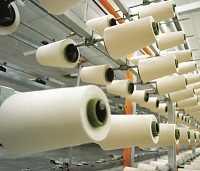 India is the one of the largest cotton exporters in the world. Exports of cotton yarn and fabrics export account for about 23 per cent of India’s total textiles and apparel export. As per a CCF Group report, in May 2021, India exported cotton yarn worth 101.1 kt a 75.71 per cent rise year-on-year and 12.95 per cent month-on-month increase.
Bangladesh tops monthly yarn exports
Of India’s total yarn exports, shipments to Bangladesh increased to 37,642 mt in May 2021 from 30, 539,28 mt in April 2021. These accounted for 37 per cent of India’s total yarn exports. India’s yarn shipments to its second largest export destination China increased 12.95 per cent month-on-month to 21,750.91mt in May 2021 from 19294.2 mt in April 2021. These accounted for 22 per cent of India’s total global cotton yarn exports during the month.
Three largest destinations for yearly exports
Peru remained the largest export destination for India during the year with an increase of 587.9 per cent over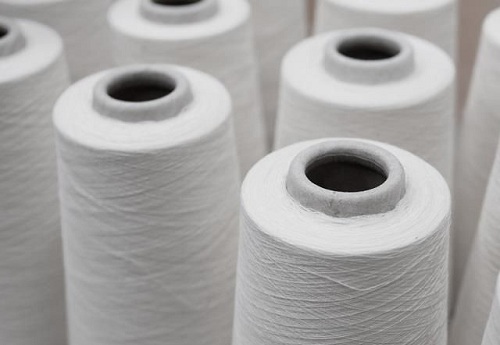 previous year. Exports to Peru increased to 1,713.92 mt in May 2021 from 249.15 mt in May 2029. The second largest export destination was Bangladesh with an increase of 240.72 per cent over the previous year. India’s exports to Bangladesh increased to 37,642.25 mt in May 2021 from 11,047.82 mt in May 2020.
The third largest exports destination for Indian cotton yarn was Portugal with an increase of 123.34 per cent in May 2021. Exports to the country increased from 2,476.91 mt in May 2020 to 5,532.03 mt in May 2021.
Exports to China post 16.95 per cent yearly growth
On a year-on-year basis, shipments to China increased 16.95 per cent. Among products, exports of uncombed 8-25S/1 and combed 30-47S/1 yarn to China increased by 13.3 per cent and 23.1 per cent year-on-year respectively. In terms of month-on-month change, exports of combed 8-25S/1 declined by 36.38 per cent to 10,071 mt and those of 25-30S dropped by 34.09 per cent. Exports of combed 8-25S/1 and combed 25-30S/1 increased by 11.3 per cent and 10.5 per cent month-on-month respectively and declined by 9.1 per cent and 55.4 per cent year-on-year. Exports of combed 30-47S/1 declined the most by 57.1 per cent year-on-year with export volume of 2042mt.
Despite the pandemic, India’s cotton yarn exports grew both on a year-on-year and month-on-month basis. Bangladesh, China and Portugal remained the largest export destinations for India with exports to China also registering a marked increase despite the political standoff between the two countries.
Amazon to expand brick-and-mortar presence in the US
Amazon.com Inc is plans to expand its brick-and-mortar presence in the US by opening large physical shops that will operate like department stores.
To span over 30,000 sq ft, some of Amazon's first department stores will open in Ohio and California. They will offer products from well-known consumer brands.
Amazon, which dominates the online shopping space, made its biggest bet in the brick-and-mortar format with its acquisition of upscale grocer Whole Foods in 2017.
Amazon also experimented with small physical stores for books and groceries in at least 13 U.S. states including California, Colorado, and Washington.
The e-commerce giant has benefited from a surge in online purchases from homebound shoppers as COVID-19 forced millions to stay indoors over the past year. Traditional retailers also saw online sales surge, though total sales fell as they were forced to shut stores, which make up the bulk of their revenue.
Steady vaccine rollouts are now encouraging more Americans to return to brick-and-mortar stores to buy clothes, footwear, and electronics.
Department store chains Macy's Inc and Kohl's Corp beat Wall Street estimates for second-quarter sales, and also raised their forecasts on full-year revenue and profit as buyers came back to stores and spent on perfumes, shoes, and apparel.











