


FW
Urban Outfitters to launch new online resale store
Fuelled by younger buyers’ worries about sustainability and duplicating ensembles, Urban Outfitters plans to launch Nuuly Thrift, an online resale store.
The parent company URBN has been in the vintage rejuvenation business since inception in 1970, Richard Hayne, CEO said, the company will capitalize on the altering customer behaviur to acquire market share in the fast increasing online resale industry.
Urban Outfitters has launched a new platform, Nuuly, where users can resell secondhand items. The company’s existing customers already have a penchant for thrifting and may be primed to use the new platform. Teens’ growing interest in thrifting could also threaten traditional apparel retailers as the popularity of buying and selling secondhand grows. Some young entrepreneurs are growing their side hustles selling clothes on thrifting platforms into full-time businesses.
Taliban crisis halts India’s textile exports to Afghanistan
The Taliban crisis has halted India’s textile exports to Afghanistan. Since its peak of 2019-20, India’s textile exports to Afghanistan dwindled back to $100 million in 2020-21. In the first four months of 2021-22, export totaled just $40 million, implying that it would have crossed $200 million had the crisis not erupted.
Since the past 20 years, India’s bilateral trade with Afghanistan has grown by leaps and bounds, peaking $1.50 billion in 2019-20 with increases in both, imports and exports. In 2020-21, India’s total exports to Afghanistan stood at $825 million, whereas imports were at $509 million.
Basic textile exports to Afghanistan comprising fibers, spun, filaments and fabric shipment had recently peaked to $375 million in 2019-20, accounting for about 4 per cent of total basic textile exported from India during the year. Almost all basic textile exports to Afghanistan were of fabric material. The major types of fabric export were those made of nylon, polyester filament, and of poly/viscose. About 12 per cent of all nylon and poly/viscose fabric exports were destined to Afghanistan and about 3 per cent of polyester filament fabric.
NITMA hails recommendation to impose ADD on Polyester Spun Yarn
Sanjay Garg, President NITMA has appreciated the commerce ministry’s recommendation to impose Anti- Dumping Duty (ADD) on Polyester Spun Yarn, originating in or exported from China PR, Indonesia and Vietnam. He also appreciated the recently announced RoDTEP scheme for exporters covering entire textile value chain, the PLI scheme to encourage the MMF segment. Further, he appreciated the revoking of ADD on PTA which is the primary raw material for Polyester Staple Fibre (PSF), the setting up of Seven Mega Textile parks under MITRA scheme and extension of RoSCTL scheme for Garments & Made-ups, upto March 31, 2024
Siddharth Khanna , Managing Director, Arisudana Industries. ,Ludhiana & Head of NITMA’s MMF chapter, shared, NITMA members made several representations to all the pertinent authorities coupled with offline and online meetings. Also, members of NITMA and many other producers of PSY throughout the country have carried out an immensely meticulous exercise, amidst the pandemic, of collecting data from one of the most fragmented domestic industry consisting of more than 500 entities, so that the facts can be presented before the designated authority and eventually DGTRs’ final findings.
AATCC launches new method to quantify fiber shedding
AATCC has launched TM212-2021, a new testing method to quantify fiber fragment release during home laundering.
AATCC TM212 was developed to provide a means to determine the mass of fiber fragments released in an accelerated laundering setting. This method provides the global industry with a consistent and uniform test method to follow. AATCC TM212 defines standard nomenclature with the terms fiber fragment and microfiber, which address discrepancies that have long been a source of confusion for many who work to tackle pollution.
Originally assumed to be a plastics problem, natural fibers are also appearing in marine life's food cycle. AATCC TM212 is not limited to man-made fibers, as it can be used to determine the fiber shedding potential of natural fibers and blends.
The standard is the result of collaboration, not only within AATCC committee RA100 Global Sustainability, but among stakeholders from several organizations including The Microfibre Consortium, headquartered in the UK, and the Cross Industry Agreement of European signatories.
Innovative design and features will drive future growth of fashion masks
 The outbreak of COVID-19 in 2020 that made masks mandatory for general public has now emerged as a new fashion category with brands launching own designs.
Masks across all price ranges available in the market
As per a Euromonitor International research report spanning 46 global markets, Vietnam produced maximum affordable masks priced $0.60 per unit in 2020. This was followed by Egypt and Indonesia. On the other hand, Sweden, Saudi Arabia and Hong Kong, China lead the countries producing most expensive fashion face masks by average unit price. Consumers in these countries have higher disposable income that allows them to purchase branded fashion items.
Most of these consumers opt for luxury and premium masks launched by high-end brands like Burberry and Dolce & Gabanna. These brands launched masks in the range of $89 to $122. The high popularity of these masks led to several online retailers selling fake versions for as low as $10. Masks in the mid-price range are also available in the market. Most of these are produced by sports brands like Under Armour which launched Iso-Chill fabric feel mask priced at $30. Nike also launched Pro Hyperwarm full-face mask range.
Future demand to remain robust
Several people avoided wearing face masks at the beginning of the pandemic. However, government legislations making mask compulsory, increased usage amongst general public. Nowadays, people wear masks on a regular basis as besides protecting against the virus, they also reduce exposure to air pollution, especially within great urban areas. Masks are also effective against allergies caused by pollen. Consumers are therefore, adding them to their accessories portfolio.
These factors will continue to boost future demand for fashion face masks. However, the volume and value of demand will contract as market stabilization will lead to consumers opting for higher quality items.
Efficiencies, limitations of fashion masks
Imposition of government rules increased usage of fashion masks across the globe. The US and France imposed restrictions on surgical face masks limiting its consumption to medical staff only. This gave extra boost to this product category driving up prices as demand overwhelmingly exceeded supply. However, some restrictions impacted the category negatively. For instance, the rules introduced by Germany in 2021, allowing people to use only N95/KN95/FFP2 masks. negatively impacted sale of fashion masks category.
Hence, fashion players need to have a better understanding of the efficiency of masks and restrictions on types of face masks allowed in public spaces. They need to seek certifications for their products in order to allow wider usage. Future evolution of face masks as a fashion category will depend on the pandemic’s evolution and laws introduced by governments. Brands that are able to offer innovative designs and features will dominate the category in long term.
New Vienna project seeks eco-friendly textile recycling for blended fibers
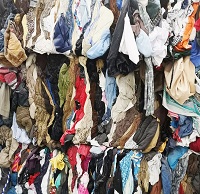 Textile recycling though prevalent is limited to only one per cent of the clothing industry’s annual production. Most textiles or fibers that are recycled are made from PET (polyethylene terephthalate) obtained from beverage bottles, among other things, says Andreas Barti, Particle Technology, Recycling Technology and Technology Assessment Research Group, Vienna University, Austria.
For a truly sustainable circular fashion economy
As per an Innovation Origins report, currently textile recycling is carried out on a voluntary basis as used textiles are considered as household waste under EU directive 2008/851. Also, textile recycling is considered more expensive than producing new ones. The European Union, therefore, plans to introduce a law in 2025 to make textile recycling mandatory. The EU has not yet decided on the quantity of used textiles that will be recycled. However, plans are underway to make recycling of 30 per cent of used textiles compulsory.
As a part of his research, Barti has launched a project ‘System Circularity & Innovative Recycling of Textiles’ (SCIRT) in consortium with 18 research partners from five countries. The project aims to create a truly sustainable circular fashion economy by overcoming barriers to textile recycling. The goals include: introducing an industrial level eco-friendly recycling process for blended fibers and developing recyclable design and production practices.
Green recycling to separate blended fibers
Textile recycling is viewed as a complex process as textiles are usually made from two or more fibers. The most common blend of fibers used in textiles includes cotton and polyester that cannot be separated while recycling. The SCIRT project has introduced a green recycling process to separate mixed fibers on an industrial level. Developed in collaboration with the University of Natural Resources and Applied Life Sciences in Vienna, the process is based on enzymes from bacteria. It enables the industry to recover the polyester from blended fiber.
Textile recycling also suffers owing to the garment’s traditional designs and production practices. For instance, jeans have metal rivets and buttons on their pockets and leather labels on the waistband that cannot be recycled. SCIRT aims to modify this encouraging the use of recyclable textiles.
Seeking policy support
Researchers also plan to urge the European Commission to provide the required policy support for the project. One of the policy changes being demanded is the extended producer responsibility (EPR) that makes manufacturers responsible for managing the downstream phase of the project. The researchers will regulate this phase of the project through fees levied on any products placed on the market. The project would introduce six basic type of recyclable clothing ranging from underwear to sportswear to uniforms. All these clothes would meet the required functions and be affordable for most people.
The research project will introduce sustainable materials in the market, says Barti. As per a British study, currently only 19 per cent of used textiles are recycled while 30 per cent are burned before they are sold. The SCIRT project plans to set up citizen labs across Europe to research this behavior. The labs will examine consumer perceptions, motivation and emotions that drive their purchases as well use and disposal of textiles.
Monforts’ partners seek new sustainable production targets
Nicole Croonenbroek, Marketing Manager, Monforts said the company’s partners are constantly setting new targets in respect of sustainable production and, more importantly, going beyond them. One of them, Turkey-based Bossa provides QR codes with which brands can identify the names of individual farms and their locations, as well as detailed information such as the origins of specific seeds and the use of irrigation by growers.
Another Turkish company, Orta Anadolu offers an interactive supplier map detailing the regions where cotton, dyestuff, chemicals and various fibres are supplied with its new Denim Route. Denim Route shares three years of life cycle assessment (LCA) data on each of the company’s featured fabrics via a dedicated app. Users can access the data for detailed information by scanning the QR code on a product’s hashtag.
Pakistan-based Naveena Denim Mills uses a range of sustainable materials in its new Holistic collection, including organic cotton and post-consumer and post-industrial waste cotton that has been shredded and recycled at its in-house unit in Pakistan. While hemp and Tencel bring sustainable and aesthetic qualities to the collection, the company uses Roica’s Cradle-to-Cradle certified degradable option instead of conventional elastane. Naveena Denim Mills replaces polyester with CiClo, a material developed by re:newcell of Sweden that repurposes discarded cotton textiles such as worn-out denim jeans through a process akin to recycling paper.
Pakistan-based Azgard 9, another brand using Monforts technologies, introduced a living and breathing piece of clothing that absorbs carbon dioxide while simultaneously producing oxygen at Digital Denim Week 2021. Behaving basically like a plant or tree, the sustainable denim garment is treated with microbial pigmentation and is currently analysed by all of the company’s global customers, from large luxury fashion groups like LVMH to fast fashion brands like Zara. During its life cycle, the garment will improve the wearer’s immediate environment and produce approximately the same amount of oxygen as an oak tree. This innovative product is also water-resistant and breathable, with advanced antimicrobial and anti-odour properties.
Invista Nylon Chemicals (China) to expand capacity
Invista Nylon Chemicals (China) Co has signed an MoU to double the current nylon 6,6 polymer production at Shanghai Chemical Industry Park (SCIP). The new capacity will increase to 400,000 tonne/year and enable Invista to quickly respond to the growing demand for engineering plastics in automotive, electrical and other application fields.
The capacity will be expanded with an investment of RMB 1.5 billion (renminbi) and strengthen Invista’s integrated nylon 6,6 value chain in China, according to the company.
Located at SCIP, the expanded production line will be equipped with six batch autoclaves and three continuous polymerisation lines. The additional capacity will support the development of engineering polymer, industrial and apparel segments, and satisfy the downstream application requirements for nylon 6,6 products and solutions, including stronger mechanical properties, higher temperature resistance, and higher heat resistance.
Construction of the product lines is expected to begin in the second quarter of 2022 and be in operation in first quarter of 2024, Invista further added. Supporting the expansion is Invista’s upcoming Asia Innovation Center, which will bring strengthened research and service capabilities to support downstream partners as they seize growth opportunities driven by innovation and high-quality development.
Fashinza eyes the leadership position in 2-3 years
Pawan Gupta, CEO and Co-Founder at Fashinza, says his company plans to position itself as the defacto global leader in lifestyle manufacturing in the next two-three years. It plans to offer manufacturing in every continent of the world so that brands can outsource based on a beautiful combination of speed and cost to digitize the supply chain besides helping MSMEs to gain financial stability. The company also plans to implement strategies to improve trend forecasts, which in turn will optimize the SMEs’ capital investments. In the apparel industry, understanding the trends can be the key to improving demands.
Fashinza has created a one-of-a-kind digital marketplace where brands and manufacturers can freely work together with none of the usual supply chain complications being involved. Brands can state their detailed requirements with a few clicks and the marketplace manufactures the products based on their demands. Inventory risks are reduced because we enable brands to experiment with low MoQs. Selecting designs is super easy with its openly available catalogue. The company’s partnerships with fabric suppliers and financial partners further help to expedite the manufacturing process. It has also empowered SMEs to work directly with some of the biggest fashion brands, both domestic and international.
Professor Parikshit Goswami appointed to UKFT’s board
Professor Parikshit Goswami has been appointed to the board of non-profit organization UK Fashion & Textile Association (UKFT) to help the association increase its focus on innovation, R&D and sustainability. Goswami is currently the Director, Technical Textiles Research Centre and the Head of Department-Fashion and Textiles, University of Huddersfield.
Goswami mainly researches on developing products by using flexible materials and applying Chemistry to functionalize textiles. He manages a large portfolio of research concerned with fiber/polymer science, nonwovens, medical textiles, sustainable materials, nano and submicron fibres and plasma treatments for functionalising textiles. He is a member of Society of Dyers and Colourists (SDC), Education, Qualifications and Accreditation Board (EQAB) and is a Trustee of SDC.
Prior to joining the University of Huddersfield, Goswami was the Director -Research and Innovation, School of Design, University of Leeds and he led the Fibre and Fabric Functionalization Research Group.
UKFT works across a wide range of projects to help the UK industry take full advantage of these new technologies and markets and to help change the future landscape of the textile industry in the UK into one where circularity and environmentally sustainable supply chains are the new normal.
Most recently UKFT has started working with IBM, Tech Data and the Future Fashion Factory to design, prototype and pilot a new technology platform to help the UK fashion and textile industry to drive sustainability and profitability through increased transparency within the supply chain. Retailers Next, H&M (COS brand), N Brown, New Look and yarn manufacturer Laxtons will be part of the initial pilot.











