


FW
Guess Inc to launch Jeans Redesign-inspired collection
Guess plans to launch its first denim drop made in accordance with Ellen MacArthur Foundation’s Jeans Redesign guidelines. The company is continuously concetrating on Resourced, its jeans take-back program, and expanding Guess Vintage online to European shoppers to make authentic vintage Guess items more accessible.
Another focus is, expanding brick and mortar presence. The company plans to test new concepts, including pop-ups and stores dedicated to accessories, athleisure and the Marciano brand—with very limited lease terms and great potential for renewal. These stores will be set up in new locations in Russia, Germany, China, France and the US and Canada. They will have upgraded features like enhanced WiFi networks, extended payment methods and mobile check-outs. The company expects to complete these projects by the end of next year.
Encouraged by a strong demand for denim, Guess hopes to record $2.8 billion revenues by fiscal 2024. In Q2 FY 2022, the company saw 133.7 per cent surge in revenue from two years earlier, which Carlos Alberinim CEO and Director, attributed to expense management. Earnings from operations in the quarter increased 90 percent to $87.4 million from $46 million two years prior. Operating margin increased 7.2 per cent to 13.9 per cent from 6.7 per cent from two years prior, driven primarily by lower occupancy costs, higher initial markups and almost nonexistent promotional activity.
US buyers to increase sourcing from Bangladesh
Fashion firms and buyers in the United States plan to increase sourcing from Bangladesh in the next two years, according to the United States Fashion Industry Association’s (USFIA) “2021 Fashion Industry Benchmarking Study. As per Textile Focus, this decision is influenced by lower prices of Bangladesh produced textiles and garments. A garment product in Bangladesh was priced at $2.5 in July-May this year, while the global average price was $2.6. Respondents to the survey indicate Bangladesh offers the most competitive price, followed by China, Vietnam, Indonesia, India, and Cambodia.
Only China offers lower prices than Bangladesh. However, US purchasers seek to diversify their sourcing away from China to reduce various sourcing risks. The US-China trade battle has intensified sourcing cost concerns and financial challenges for US fashion companies. The average duty on apparels imported from China increased to 23.4 per cent for the US in 2020 from 16.5 percent in 2017.
To emerge as a major apparel exporter to the US, Bangladesh would have to improve its manufacturing flexibility and agility besides diversifying the export product structure. Rising exports are likely to increase competition among the thousands of Bangladeshi clothing suppliers, putting smaller and less competitive players at risk.
8th ITMA ASIA+CITME 2022 to be held from November 20-24, 2021
The eighth combined edition of Asia’s leading business platform for textile machinery, ITMA ASIA + CITME 2022 will be held in Shanghai from November 20 to 24, 2021. Hosted by Cematex (European Committee of Textile Machinery Manufacturers), the Sub-Council of Textile Industry, CCPIT (CCPIT-Tex), China Textile Machinery Association (CTMA) and China Exhibition Centre Group Corporation (CIEC), the combined exhibition will help global textile machinery manufacturers extend their reach into Asia’s vibrant textile manufacturing hub, particularly China.
The exhibition will be organized by Beijing Textile Machinery International Exhibition Co and co-organized by ITMA Services. Japan Textile Machinery Association will be a special partner of the show. The last edition of ITMA ASIA + CITME 2020 was held on 160, 000 square meter in June 2021.The combined exhibition hosted 1,237 exhibitors from 20 countries and regions and attracted visitorship of about 65,000 from 30 countries and regions over 5 days.
Pakistan to expand share of knitwear exports to 20 per cent
Pakistan hopes to expand its market share of knitwear exports to 20 per cent in 2021-22. In 2020-21, Pakistan’s knitwear exports increased by 36.57 per cent compared to 2019-20. As per a Textile Focus report, revenues from knitwear exports increased 25.83 per cent compared to revenues from export of woven garments. Knitwear exports earnings also surpassed earnings from bedwear by 37.68 per cent.
Globally Pakistan has 1.83 per cent share in knitwear exports, Bangladesh has 8.12 per cent share. For three years in a row, Pakistan’s knitwear garment business was ranked first among textile groups in terms of employment. Its knitwear business contributes significantly to the country’s textile industry’s value addition. The country is expanding its product basket of knitwear items to attract new innovations and incentives to increase exports.
Foreign brands in China go local as nationalist sentiments rule consumer choices
 A nationalist sentiment is shaping the way consumers shop in China. Instead of foreign-made goods, young Chinese shoppers are opting for products made by domestic brands and companies. A case in point is the Chinese sportswear brand Erke, which sold products worth over 100 million yuan worth in just three days through its social media platform Douyin.
One reason behind the brand’s recent sales surge is its 50 million yuan ($7.7 million) donation to flood-devastated Henan Province in the north last month, reports Asia Nekkei. Earlier mocked for its tacky designs and poor rebranding efforts, the brand has become a source of inspiration for consumers for its appreciation of Chinese cultural heritage.
Political climate reshaping domestic consumption patterns
The nationalist consumption trend in China is also being fuelled by changing global political climate, says Ivan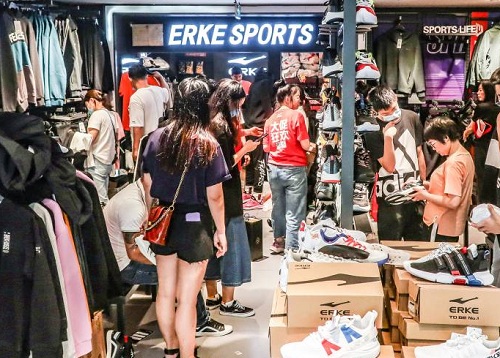 Su, Analyst, Morningstar. The US-China trade war and sanctions against Huawei have brought little-known domestic brands to the forefront and diminished the importance of foreign brands. In March, Western retailers including H&M, Burberry, Nike and Adidas faced widespread boycott in China for criticizing alleged forced labor in Xinjiang, home to the predominantly Muslim Uyghur people. Consumer searches for domestic brands on China’s largest search engine rose 137 per cent following the controversy,
Sales of brands Anta and Li Ning also rose 51.3 per cent and 71.9 per cent on Tmall, China's largest business-to-consumer online shopping platform, part of Alibaba Group. On the other hand, sales of Nike and Adidas fell 58.9 per cent and 79.4 per cent. Both brands also lost their endorsement deals with Chinese celebrities.
Growing demand for traditional designs
Shifting preferences of Chinese consumers are also giving rise to guochao trend, where the designs of consumer products feature strong Chinese elements. Domestic brands are increasingly focusing on indigenous design elements ranging from ancient patterns that originated in the Tang dynasty to high-tech symbols such as 5G and high-speed rail.
Chinese labels accounted for 75 per cent of most-searched brands on Baidu in the first four months of this year. Searches for Chinese digital products, apparel and beauty products emerged as the top three most popular categories. Increased demand for domestic Chinese brands spells trouble for foreign companies that consider China as an important market for them. To survive, these brands would need to keep up with the fast-changing tastes of young Chinese buyers.
The digital-first strategies of domestic brands are helping them surpass foreign competitors. The market share of national brands increased to 46.3 per cent in 2019 from 24.4 per cent, reveals China Insights Consultancy. Growth was fuelled by major e-commerce platforms such as Alibab’s Taobao, JD.com and Pindouduo, says Wang Gao, Professor-Marketing, China Europe International Business School.
Western brands launch limited editions at local festivals
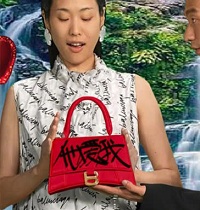
International brands need to accelerate localization efforts to catch up with domestic brands in terms of both merchandising and marketing, explains Pablo Mauron, Managing Director-China, Digital Luxury Group. Some Western retailers have tried to boost their localization efforts by launching limited editions during major Chinese festivals. However, their designs were considered to be too disrespectful of Chinese tradition. Brands Burberry and Balenciaga have been panned by Internet users for their inappropriate use of Chinese phrases on luxury items.
Moroun believes, the growing popularity of gouchao brands is further likely to increase consumers’ skepticism toward Western brands. Foreign brands therefore, need to create new designs respecting local culture for the Chinese market.
Rising rights violations in India highlights need for garment workers empowerment
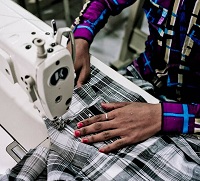 With allegations of human and labor rights violations mounting, most fashion brands are on a mission to reform their supply chains. Criticized by unions and activities, brands in Bangladesh and India are gearing up to tackle labor exploitation issues in their factories. An H&M garment factory in Tamil Nadu faces murder allegations of a young worker by her supervisor. Two fire accidents in Nandan Denim factory in Ahmedabad last year highlighted the brand’s complete disregard for safety regulations with workers exposed to chemicals, cotton dust, and noises.
Lack of regulations often creates exploitative work conditions, says a report by the Swaddle. Fast fashion brands like H&M and Zara have also been criticized lately for the poor working conditions in their factories and failure to adhere to labor rights.
No social security, other benefits for workers
Most international brands fail to pay almost 80 per cent of their workers, shows a recent survey of factory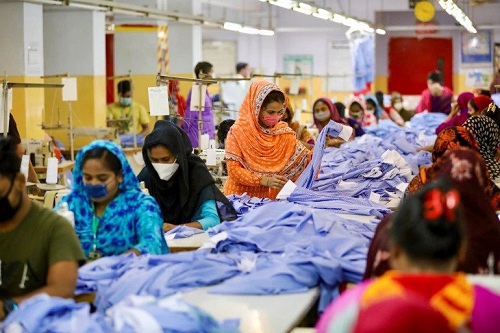 employers. These workers do not get guaranteed minimum wage, which prevents them from claiming insurance and added protection.
As per a 2017 ILO study, contract workers in India seldom receive social security and other benefits even though they are eligible for Provident Fund and health benefits under law. High targets, poor working conditions and low wages leads to more than half of them quitting work quickly, reveals another 2015 ILO study.
Make worker safety a global trend
The pandemic has exacerbated the condition of these workers with millions either losing jobs, or working on reduced wages. Even in such time, brands are focusing on their profit margins rather than worker’s welfare, alleges Ayesha Barenblat, Founder, Remake. Designer Sabyasachi is facing criticism for his new collection launched in collaboration with H&M, a brand known for its faulty labor rights.
Though some of these brands are making plans to ensure that the Rana Plaza isn’t repeated, their efforts are restricted to mere lip service. To translate these into concrete actions, brands need to make workers’ health and workplace safety rights protection into a global trend, opines Nazma Akter, Founder and Executive Director, Awaj Foundation, a labor rights organization in Bangladesh. Activist Mayisha Begum adds, they need to empower workers to fight against their exploitation in the industry.
Supima Cotton forecasts bright outlook for 2021/22 despite drop in cultivation
Marc Lewkowitz, President and CEO, Supima Cotton says, the 2021-22 outlook for the crop looks good despite the large drop in planted acres this year. Demand for Supima Cotton is growing and more brand partners are looking to position messaging and marketing about the extensive efforts they make to do the hard work to ensure authenticity and responsibility around their products in order to deliver upon their brand promise to their customers. There has been strong consumer support for the brand and its retail partners in the US and abroad to message and share responsible and informative information around their Supima branded products.
Supima Cotton will also hold the second digital edition of the Supima Harvest Symposium from November 16-18. This year’s edition will feature new tours of Supima farming, processing and classing that will provide insights to both current and prospective Supima customers.
As per the latest production report by USDA production of ELS (Extra Long Staple) cotton is expected to decline this year to only 371,000 bales. This is the lowest figure in the last 20 years and a reduction from last year’s 546,500 bales of production.
Garmon Chemicals’ application laboratory joins Jeans Redesign project
Application laboratory of Garmon Chemicals, Garmon Studio joined the Ellen McArthur Foundation’s Jeans Redesign Project in July. Garmon Chemicals is the textile auxiliaries business unit of Kemin Industries, a global ingredient manufacturer that strives to sustainably transform the quality of life every day for 80 percent of the world with its products and services. Garmon Studio joins 94 other garment manufacturers, fabric mills, retailers and brands – including GAP, Levi’s, C&A, H&M, Lee and Guess – demonstrating its commitment to sustainable chemicals for the garment-finishing industry.
The Jeans Redesign project provides a set of guidelines for the denim industry based on the principles of circular economy. Today, 95 percent of the brands and garment manufacturers that have accepted the guidelines have already successfully prohibited the use of potassium permanganate, stone finishing and sand blasting – practices that Garmon Chemicals eliminated with its sustainable solutions years ago.
Launched in 2019, Jeans Redesign provides a powerful framework to scale circular practices, driving the whole denim industry forward. Promoted by the Ellen MacArthur Foundation, Jeans Redesign encourages leading brands, mills, and garment manufacturers to transform the way jeans are made. The Ellen MacArthur Foundation is an international nonprofit that spans industries and is committed to the creation of a circular economy that tackles some of the biggest challenges of our time, such as climate change and loss of biodiversity.
Over 50 organizations urge for safety of workers in Bangladesh and Sri Lanka
Over 50 organizations from around the world are urging brands, governments, and employers to ensure the safety of workers employed in garment factories in Bangladesh and Sri Lanka. Unions representing Sri Lankan and Bangladeshi workers and international labor advocates have urged factory managers, national governments, and international apparel brands to:
Include garment industry in lockdowns to protect citizens from COVID-19 and prevent garment production under the pretext of continuing essential services; expand vaccination and testing of garment workers; implement the ILO Occupational Safety and Health (OSH) protection standards and Worker Rights Consortium guidelines for effective infection control in garment factories, with special attention to personal protective equipment (PPE), physical distancing, right of removal from danger and worker participation mechanisms, and adaptation of transport systems; ensure workers continue to receive their full wage in line with the demands of the Pay Your Workers campaign and allow workers to voluntarily refuse unsafe work and do not exclude those who stop working due to COVID-19 risks from unemployment, severance, or other economic rights and benefits during the crisis or penalize them with loss of contracts or work when the crisis subsides.
Gap launches Athleta brand in Canada
Gap launched Athleta brand in Canada, its first move outside the United States. Athleta will initially be available in Canada as an online-only brand. It will later open two stores at Park Royal Shopping Centre in West Vancouver in September, and Yorkdale Mall in Toronto in November. In the US, Athleta has about 200 stores, while its online purchases account for more than half of the brand’s sales.
As per the NPD Group, athleisure brands remained strong as the COVID-19 pandemic cratered apparel sales in Canada. With many people urged to stay at home, demand for comfortable clothes surged in the country. In the 12 months up to June of this year, women’s apparel sales fell by 12 per cent compared to the pre-pandemic period ended in June, 2019. Meanwhile, athleisure sales grew by 23 per cent.
Big brands also forayed into the activewear space in Canada. Earlier this month, denim maker Levi’s announced plans to buy brand Beyond Yoga, citing the need to diversify its business. Owner of footwear brands Saucony, Mernell and Keds, Wolverine Worldwide Incalso announced plans to buy activewear brand Sweaty Betty for $410-million.
Last week, Gap raised its sales and profit forecasts for this year, as its second-quarter earnings beat estimates, driven by increasing sales at Old Navy and Athleta – the two brands on which the retailer is now focusing as part of a wider turnaround plan. San Francisco-based Gap is betting on expanding Athleta, with a goal of reaching $2-billion in net sales by 2023. It also aims to increase sales at its most profitable brand, Old Navy, to $10-billion by 2023, and to close about 30 per cent of its underperforming Gap and Banana Republic store.











