


FW
Duty-free yarn imports necessary till Pakistan achieves self-sufficiency, says PRGMEA
Sheikh Luqman Ain, Regional Chairman, The Pakistan Readymade Garments Manufacturers and Exporters Association (PRGMEA) has emphasized on the need to continue duty-free import of cotton and cotton yarn from all over the world till the country becomes self-sufficient in the raw material.
Amin says, Pakistan has been unable to achieve its full exports potential due to lack of product diversification and limited access to raw-material. All taxes and duties on cotton yarn import should be terminated on long-term basis to achieve price competitiveness and product diversification, he adds.
The Economic Coordination Committee (ECC) of the Cabinet had announced to withdraw customs duty on import of cotton yarn in April this year for the period of three months in order to ensure smooth supply of it to the value-added apparel industry, Amin informs. The government’s earlier move of withdrawing five percent regulatory duty in Dec 2020 on the import of cotton yarn, and then removal of customs duty in April 2021 greatly supported the apparel sector and contributed to the country’s economic stability, which needs continuation, he adds.
Amin has also urged the government extend the relaxation of customs duty on yarn import till the country is capable of meeting textile value-added industry’s demand of 10 million cotton bales. He further requested the Prime Minister to direct the ministries concerned to focus on the value-added apparel sector and prepare a solid strategy to help the industry stay afloat.
Find alternative solutions for Inverted Duty Structure, says Rahul Mehta, Chief Mentor, CMAI
Rahul Mehta, Chief Mentor, CMAI, has urged the Central and State Governments and GST Council to review their decision and find alternate solutions to address the Inverted Duty Structure problem. CMAI has in the past recommended a flat 5 per cent GST across the entire value chain - which will resolve the Inverted Duty Structure, will boost consumption, production and employment, and will cost the government a negligible amount on revenue.
In the absence of such a solution, CMAI urges the authorities to maintain the current status quo.
As per reports, the GST council aims to increase the current GST rates of 5 per cent on all fabrics and garments up to the price of Rs.1,000 to 12 per cent.
Rajesh Masand, President, CMAI urged the Government and the GST Council to consider the fact that the domestic garment Industry is still struggling to revive post the COVID pandemic - with most of the industry still at 60 – 65 per cent of pre-COVID levels. Additionally, there have been massive increase in the prices of raw materials such as yarn, fabric, fuel, packaging materials, transportation, etc that have raised the price of the final product by 20 per cent. The consumer is already reeling with job losses, wage cuts, and social and personal traumas. In such a scenario, adding another 7 per cent taxes to the price of an essential item of consumption such as garments is uncalled for.
Already 15-20 per cent of garments units across the country have either shut down or scaled their operations. The industry is currently seeing a drop of not less than 20 per cent employment in the sector. The move contemplated by the Council is likely to risk an even higher level of unemployment, adds Masand
Indian garment industry is still largely a cotton based Industry. Cotton garments, including traditional wear categories such as dhotis, sarees, etc. form the bulk of clothing used by the poorer sections of the society. This section of population will be hit by another price increase, says Masand.
GST hike to increase garment prices from January 2022
The increase in GST on garments and footwear from the current 5 per cent to 12 per cent is likely to raise the prices of these products from January 2022.
As per a Live Mint report, the GST Council had on 17 September announced its decision to correct the duty inversion on textiles and footwear value chain from January 01.Higher duty on raw materials as compared to finished products leads to an inverted tax structure, making it difficult for manufacturers to claim input tax credit (ITC), and the burden is finally passed on to the consumer.
Under the ITC system, a GST-registered business is entitled to claim levies already paid on inputs to manufacture a product, or supply a service, or both, before making a final sale to prevent cascading of taxes and to lower the tax burden.
The council is considering a 12 per cent GST rate for a bulk of products under the two segments—textiles and footwear. This will effectively correct duty inversions and allow manufacturers to claim the full ITC.
Bestseller partners with TakaTaka Solutions’ subsidiary for recycling project
Bestseller Foundation has invested in the TakaTaka Solutions’ new subsidiary, TakaTaka Textile Recycling to recycle textile waste into new raw materials for manufacturing industries. This will help the company not only create vast numbers of jobs, but also protect the environment.
The first project by TakaTaka Textile Recycling includes piloting a scalable textile recycling model for Kenya by leveraging TakaTaka Solutions’ waste collection capacity and by setting up a textile sorting centre and recycling plant.
The partnership between Bestseller Foundation and TakaTaka Solutions includes a 49 percent stake of TakaTaka Textile Recycling held by Bestseller. TakaTaka Solutions is the largest waste management and recycling company in Kenya and a pioneer in recycling, collecting waste from more than 20,000 households, managing 70 tonne of waste per day and employing 430 staff.
A cautious approach can help apparel exporters boost prices
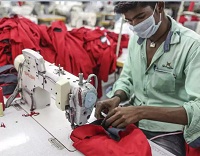 Slowly but surely, the fashion industry is getting back on its feet from the debris created by the pandemic that threatened the entire world. As per a Textile Today report, the industry is bouncing back from the crisis with manufacturers bagging large orders from buyers. Reopening of stores is also boosting sales of biggest fashion retailers including Inditex, H&M, Massimo Dutti, etc above pre-pandemic levels with customers flocking stores in huge numbers.
Sales increase but profit margins suffer
During the May-July period, Inditex sales increased 7 per cent to €6.99 billion. Sales of other leading brands also increased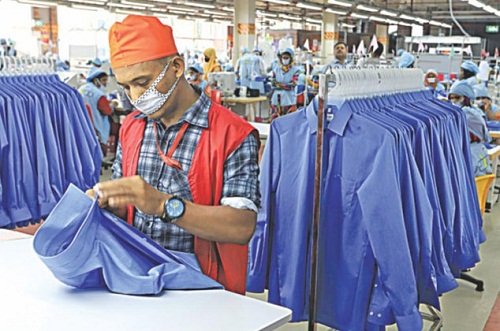 during the period as manufacturers got enough work orders. However, manufacturers failed to get the right prices for their orders from buyers which dented profits by a huge margin. Manufacturers’ profits also suffered owing to other issues like shorter delivery times offered by buyers while placing orders and a rush to ship their goods for Christmas sales.
For time-bound supplies, exporters usually deliver their products through air freight. This increases their import and export costs as COVID-19 has increased freight rates for shipping of goods. Also, the surge in air shipping has increased the number of scanners and flights. This is causing significant losses for Bangladesh apparel exporters as they are missing freight transport deadlines. To survive in a sustainable way, exporters need to ensure a sustainable profit and abstain from accepting all orders offered to them.
Cautious approach to protect exporters’ interest
A lucrative sourcing destination, buyers prefer Bangladesh for the cheap prices it offers. As per many market researches, buyers will continue to favor Bangladesh for its supplier driven policies. Exporters need to explore this opportunity to negotiate better prices. They need to present a united approach to buyers to ensure sustainable profit. A cautious approach while accepting orders will help protect their interests. They need to also keep in mind their capacity to deliver the required products on time. Only, this will help them boost their company’s and country’s image in the global apparel market.
China-Cambodia FTA heralds a new era in trade corporation during pandemic
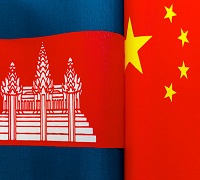 In October last year, Cambodia signed a free trade agreement (FTA) with China to boost its COVID-19-hit economy. As per a Business Times report, the agreement includes development of infrastructure and connectivity projects to facilitate transportation of goods between the two countries. The FTA was signed under the Chinese government’s Belt and Road Initiative. It aims to boost Cambodia’s infrastructure capacity and logistic performance, says Prayag Chitrakar, Country Manager, DHL Express Cambodia.
The agreement provides the much-needed fillip for Cambodia’s COVID-hit economy that is expected to grow only 2.5 per cent this year, against the earlier projection of 4.1 per cent.
Understanding the agreement
Complete details of the deal are yet to be published by the Cambodian government. It is primarily said to be agriculture-oriented, and would help Cambodia boost domestic production of agro products like bananas, mangoes, cassava, longan, cashew nuts,etc, adds Seang Thay, Spokesperson, Cambodian Ministry of Commerce The deal, however, does not take the garment industry into account as China also competes with Cambodia in garment manufacturing, adds Chitrakar. He expects the FTA to grant Cambodia duty-free access to China’s markets in other areas such as agriculture, tourism, construction, transportation, and investment climate.
In all, the deal mandates Cambodia to export over 10,000 products to China, as per a recent Eurocham event. On the other hand, China can ship over 8,000 products to Cambodia. These products could be exported on either zero or reduced duties to both countries. The China-ASEAN FTA already offers reduced tariffs to both these nations.
Aiding economic recovery
The deal would reinvigorate Cambodia’s economy besides reducing the challenges faced by the Cambodian domestic apparel market, says a new World Bank report. Particular at advantage will be Cambodia’s rice industry that exports 50 per cent of rice to China. Around 10 per cent of DHL Express’ outbound shipments from Cambodia are directed to China. The company hopes to grow this percentage further with the conclusion of the deal. However, for this, it needs to first familiarize itself with Chinese markets and its regulations, opines Chitrakar.
Ensuring inclusive growth
The deal needs to increase Cambodia’s economic competitiveness besides generating local jobs, adds Heimkhemra Suy, Advisor, Deutsche Gesellschaft für Internationale Zusammenarbeit, a German development agency. As a part of this deal, Cambodia will develop its rice industry in return for China’s economic efficiency in manufacturing. This will encourage both countries invest in areas of comparative advantage. The signing of this deal signifies the ensuing economic and trade corporation between the two countries.
Mango launches new sustainable fashion brand Alter Made
Spanish fashion retailer Mango has launched a new sustainable fashion brand called Alter Made.
As per Apparel Resources, the new brand will offer the best of durable and timeless high-quality pieces with sustainable characteristics. Mango plans to use a short-run production strategy to reduce its material surplus.
The key is also to focus on promoting ‘local production’. Importantly, apparels for the brand will be made in Europe and Turkey, while the suppliers will be picked based on expertise and traceability control.
Also, fabrics and raw materials will be examined according to certifications of sustainability and quality.
The brand will be available online in some select European countries from November 2021.
The worldwide fiber market to reach $1.7 billion by 2028
Growing at a CAGR of 15.1 per cent from 2021 to 2028, the worldwide abaca fiber marketis expected to reach $1.7 billion by the end of the forecast period. As per a Textile Focus report, growth in the market would be promoted by the adoption of natural fibers as a substitute for harmful synthetic fibers and metals in many sectors.
During the projection period, the paper and pulp sector will emerge as the most important application category. The major target markets will be Japan, the United States, and European nations. Due to growing demand for non-wood fibers as raw materials for specialty paper applications, the pulp and paper product category will account for the biggest revenue share of $347.3 million in 2020. Due to strong demand for items like as ropes, currency notes, automobiles, and food packaging, Asia Pacific dominated in terms of income. The revenue share of the fiber craft product sector is anticipated to rise at a CAGR of 11.8 percent over the forecast period.
Global Fashion Agenda adds Ralph Lauren as a strategic partner
Leading non-profit for industry collaboration on sustainability in fashion, Global Fashion Agency has announced that incorporation of Ralph Lauren Corporation as its strategic partners. Through this partnership Ralph Lauren aims to help lead the fashion industry’s journey toward a more sustainable future through bold action on sustainability and will play an active role in developing Global Fashion Agenda’s thought leadership platform – including the Fashion CEO Agenda. Global Fashion Agenda’s circle of hand-picked industry leaders also includes: ASOS, BESTSELLER, H&M Group, Kering, Fung Group, Nike, PVH Corp., Sustainable Apparel Coalition, and Target.
. Throughout its history, Ralph Lauren has prioritized sustainability in fashion, most recent innovative steps include developing Color on Demand, a revolutionary platform that aims to transform how the fashion industry dyes cotton, introducing a circularity strategy and increasing transparency across social and environmental impacts. Most recently, the company integrated key ESG metrics into its executive remuneration and its ambitious goal to achieve net zero global greenhouse gas (GHG) emissions from its operations and its value chain by 2040.
Cambodia raises workers’ wages
Leading apparel exporter Cambodia has raised the minimum monthly wage for workers in its key textiles and footwear industry by $2 to $194. As per Apparel Resources, the new wage will be effective from January 2022.
Currently worth $7 billion, the country’s garment industry, is Cambodia’s largest employer, with renowned brands and retailers like H&M, adidas, Nike and Gap sourcing from the country.
As per reports, the factory wages have long been a tricky balancing act for Cambodia’s Government – to keep costs competitive for investors and brands while satisfying influential unions representing 7,00,000 workers, which have held strikes in previous years.
Kaing Monika, Deputy Secretary General, Garment Manufacturers Association of Cambodia (GMAC), says the raise could be problematic with operating costs also expected to rise. Even a $2 increase would have a negative impact.
Employers would spend more on pension and healthcare contributions and workplace measures to counter COVID-19, including up to $4 monthly per head on tests, adds Monika
PavSina, President, Collective Union Movement of Workers, says,the new wage announced by the labour ministry would be a struggle to live on. He requested all stakeholders, the employers and the Government to consider the possibilities of adding more to the workers’ wage.











