FW
KG Denim Q2 income rises
For the second quarter KG Denim’s total income was Rs 158.95 crores against Rs 95.31 crores in the corresponding quarter of the previous year and Rs 125.80 crores in the previous quarter.
Net profit / loss was Rs 0.67 crores against Rs 3.91 crores in the corresponding quarter of the previous year and Rs 2.12 crores in the previous quarter. Earnings Per Share (EPS) was Rs 0.26 against Rs 1.52 in the corresponding quarter of the previous year and Rs 0.83 in the previous quarter.
For the six month period, the company’s total income was Rs 284.75 crores against Rs 147.81 crores in the previous year. Net profit /loss was at Rs 1. 45 crores compared to Rs 7.83 crores in the previous year. Earnings Per Share stood at Rs 0.57 against Rs 3.05 in the previous year.
KG Denim is a denim and apparel fabric manufacturer. The company’s product divisions include denim, apparel fabric and home textiles. Its denim products include authentic ring denims, selvedge denim, organic/bio denims, tencel denim, printed denim and coated denim. The apparel fabric products include stretch twills, jean twills, and stretch, with or without lycra. The company currently manufactures 24 million meters of denim fabrics, 12 million meters of cotton fabrics, two million equivalent sheet sets of made–ups and three million jeans and trousers.
Candiani offers On Demand customized jeans
Italian powerhouse Candiani is offering a unique shopping experience while keeping attention on sustainability, craftsmanship, on-demand customization, proximity and Made in Italy.
The project consists of a complete microfactory that produces on-demand made-to-measure jeans. Customers can choose the denim they like best among a selection of eco-friendly Candiani Denim fabrics (including the 100 per cent degradable and compostable stretch fabric Coreva Denim), sustainable trims, sewing threads and labels, and finished with environmentally friendly treating machines and chemicals.
The project involves several Italian small and medium enterprises, all expert insiders in their sector focused on reducing their impact. Every consumer can choose among four fits for men and four for women. They can choose among rigid or stretch denim. The client can choose sewing threads, button, rivets, labels and also an inner label informing about color, composition of the fabric and similar aspects. The finished jeans is delivered in one week from the order. A selection of selvedge denims is also offered. Lighter weight fabrics may be offered for spring. The wastewater is totally clean because of the fabrics and technology used. The percentage ofwater recycled is almost near to 50 per cent. Three pieces of jeans are produced in a day and the ambition to reach about four or five jeans a day in the future.
Chinese yarn supply fluctuates
Over the past one month, direct spun PSF and polyester yarn experienced intense fluctuations in China.
The fluctuation of direct-spun PSF is mainly attributed to costs. Prices of direct-spun PSF plants are hit heavily by the participation of spot-futures traders in trades in addition to excessive supply against demand and occupation of re-PSF. Direct-spun PSF plants have to adjust down prices along with costs.Polyester yarn is more resistant to the decline. Most polyester yarn mills hold pre-sale orders which could last to early November. However, the demand is bearish now.There is no large difference for the spinners to offer 13,500yuan/mt or 13,800yuan/mt, so they do not lower prices so actively. Then the product inventory of polyester yarn increases quickly.
Some believed direct-spun PSF would rebound later amid tight supply and high price of crude oil. Nevertheless, PTA plants now run at over 80 per cent and the processing spread is high within 700 to 800yuan/mt, so it has downward room. Direct-spun PSF will be hard to change the current weakness and polyester yarn will continue to retreat. Later, downstream weavers will focus on consuming stocks and polyester yarn will step into weakening territory, both price and trading volume.
Vardhman adds to spindle capacity
Vardhman Textiles will add to its capacity with 1.65 lakh equivalent spindles in two or three years.
The investment required is Rs1400 crores. The funding will be raised through internal accruals and debt. The capacity addition is aimed at bringing better business synergies, competitive advantage and meeting increased demand. The existing capacity is 12 lakh equivalent spindles, which are running at a capacity utilization of 95 per cent.
Vardhman is a textile and apparel major. Vardhman is into manufacturing of high-end premium quality shirts for large retail brands Van Heusen, Benetton, Sisley, Color Plus, among many others. Vardhman, which began operations in 1965, is engaged in the business of manufacturing yarn, fabric, acrylic fiber, garments, sewing threads and alloy steel. The group has over the years developed as a business conglomerate with a presence in India and in 75 countries across the globe. It is one of India’s largest textile manufacturers with a substantial market share. The company is a one-stop shop for all kinds of spun yarn offering a variety of contemporary blends and shades. Yarn constitutes the largest business at Vardhman. The company also manufactures organic cotton, melange, core spun yarns, ultra yarns, gassed mercerised, superfine yarns, slub and cellulose yarns and fancy yarns for hand knitting.
Blending online retail with brick and mortar stores is the future of fashion retail
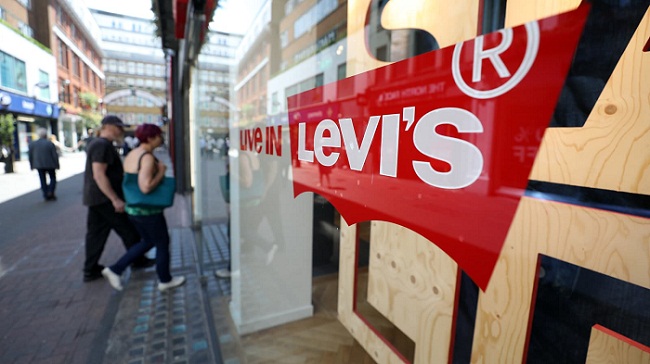
By the end of current fiscal, e-commerce sales are expected to surge to 15.3 per cent of the total retail sales. As per an eMarketer report, it will further rise to 23.5 per cent of total sales by 2025.
Omnichannel for a seamless experience
Building an omnichannel experience has been critical for retailers during this period, says Harmit Singh, CFO, Levi Strauss & Co. The company operates approximately 3,000 stores and shop-in-shops besides selling products online and in other department stores and retailers. It now aims to scale up investments in digital experience besides prioritizing an in-store shopping experience for customers, reports CNBC.
In fiscal 2020, around 25 per cent of Levi’s sales were generated though online shopping, whether directly through own platform or through the digital presence of wholesalers. To push direct-to-consumer stores, the company also introduced a new experiential store in Palo Alto, California during the year. The store has several digitally-focused features including integration with the company’s app, curbside pick-ups and contactless returns, and an inventory assortment that is driven by local customer data.
Restructuring distribution network
Levi’s, which opened 100 new stores last year, plans to open more than 100 this year. It has also scaled up investments to drive more digital experience, adds Singh. Another reformation Levi’s aims to achieve this year is in its distribution infrastructure that has grown in importance amid supply chain challenges. Last year, it recreated the omnichannel approach for West Coast distribution and introduced the ship-from-store strategy. This not only improved inventory efficiency but also reduced service costs.
Similarly, pushing to make it online and in-store experience more seamless, Estee Lauder added several new features like virtual try-on and making its beauty advisors available online, notes Tracey Travis, CFO. Estee Lauder witnessed a three-to-five-year acceleration in its online business across all forms in the last 12 months. Meanwhile, the brand is looking at ways to recover brick and mortar stores, adds Travis. Last year, 21 per cent of its global sales were generated from department stores while sales in travel retail environments, such as duty-free shops in airports, made up 28 per cent of total sales.
Online shift to determine future retail mix
Future balance between e-commerce and traditional brick-and-mortar sales will depend on the number of retail companies shift their operations online. Earlier this year, Saks Fifth Avenue owner, split its website into a separate business apart from its 40 stores. The new digital company is expected to be valued at $2 billion. Macy’s online business is also expected to be worth about $14 billion. Its 2021 sales are forecasted between $8.35 billion and $8.45 billion.
Marc Rosen joins JCPenney as new CEO
Marc Rosen is the new chief executive officer at JCPenney. Rosen has significant e-commerce and retail experience with companies like Levi’s and Walmart. He has spent his career focused on iconic American retailers, which has given him an unique perspective on the value of heritage brands. He joins JCPenney following a year of focused work to stabilize the business, improve financials, and position the retailer for long-term success.
JCPenney has strengthened its omnichannel experience by meeting customers where they are with the brands they love and all the ways they want to shop. In the past year alone, JCPenney has strategically introduced and relaunched 16 private and exclusive national brands―six of which are entirely new private brands―across all divisions. Notable portfolio additions include Ryegrass, Linden Street, Thereabouts, Stylus, and Juicy by Juicy Couture. JCPenney has also improved its digital and fulfillment capabilities and introduced JCPenney Beauty, the company’s new hyper-inclusive beauty experience. These cumulative efforts are helping to win back customers and gain market share. JCPenney looks toward its 120th year of business in 2022 with operation of 670 stores in the US and plans to continue building on the momentum established this year.
Rosen currently serves on the board of Inspire Brands, a multi-brand restaurant company.
Textile Exchange develops material tracing system
Textile Exchange and TextileGenesis have released eTrackit, a digital system for granular traceability using innovative technologies applied to Textile Exchange Standards. The pioneering system creates detailed material accounting of certified materials at article level across the supply chain enabling peer-to-peer validation and leveraging third-party certification bodies in the transaction verification process. The collaboration is an important innovation towards digitizing the chain of custody and traceability, making the tracing of certified materials easier for all supply chain actors alike and furthering transparency.
In a first for the industry, supply chain transactions along with a product level chain of custody can be verified digitally on the platform. eTrackit provides an alternative to the PDF-based transaction certificates, tracking each product's volume of certified material entirely online via e-tokens. This technology accelerates positive impacts throughout the supply chain while also providing brands with the verified data they need to confidently make product claims.
Seven global brands, including Bestseller, H&M, Inditex and VF Corporation, will pilot this innovative traceability system for GRS and RCS certified materials across their supply chains. After these pilots, scaling programs will be designed to facilitate a rollout on a commercial level. The traceability system will be further expanded to cover the animal fiber standards, followed by the Organic Cotton Standard (OCS) in 2022.
SIO approves of Lenzing fibers biodegradability
Lenzing has received further scientific proof of the biodegradability of its fibers. The Scripps Institution of Oceanography (SIO) has confirmed that wood-based cellulosic fibers biodegrade in the ocean within a short period of time at the end of their life cycle, making them a better alternative to fossil-based fibers.
SIO compared the degradation processes of nonwovens made from fossil-based synthetic materials such as polyester with those of cellulosic materials such as Lenzing’s wood-based lyocell, modal and viscose fibers in specific scenarios – under various real oceanic conditions and controlled aquaria conditions. The results of these experiments are striking: while wood-based cellulosic fibers fully biodegraded within 30 days, the fossil-based fibers tested were practically unchanged after more than 200 days.
Lenzing provides wood-based specialty fibers. Its business model is one of a circular economy. Lenzing takes wood from sustainable forestry and uses a highly efficient system of processing all raw materials to produce fibers that are able to return to the ecosystem at the end of their life cycle. The group’s goal is to raise widespread awareness of major challenges such as plastic pollution and persuade the industry to make the transition to wood-based, biodegradable Tencel, Lenzing, Ecovero and Veocel fibers.
Puma expects sales to exceed target this year
Puma expects currency-adjusted sales to rise by 25 per cent this year, up from a previous target of at least 20 per cent. The German sports company has raised its sales and profit forecasts for the year having overcome supply chain hurdles in Asia to meet strong demand for sneakers and sports apparel in Europe and the Americas.
The delta strain of Covid-19 caused factory shutdowns and labor shortages in Asia. That’s driven shipping rates up and raised concerns about the ability of companies to produce enough computer chips, raw materials and finished consumer goods including sneakers, apparel and automobiles. Vietnam has been a particular bottleneck of concern, having attracted investments in recent years from global companies seeking an alternative to China as a production base, a trend that accelerated with the US-China trade tensions.
These challenges have restricted Puma’s supply of products and limited inventory levels. Despite that, Puma has managed to meet surging demand across the west, with third-quarter sales rising 31 per cent in the Americas and 22 per cent in Europe. Footwear and apparel revenue both increased by about 21 per cent. The company is trying to source more from China to make up for the drop in Vietnam.
Archroma gets platinum rating for CSR from EcoVadis
Archroma has been awarded the EcoVadis platinum rating in corporate social responsibility (CSR), placing the company among top one per cent of the best rated companies in the industry. Archroma was evaluated by EcoVadis, an organization specialized in assessing the CSR performance of companies on a global basis.
The assessment focuses on 21 criteria which are grouped into four themes: environment, labor and human rights, ethics, and sustainable procurement. EcoVadis assesses more than 75,000 companies in more than 160 countries and 200 industries. Archroma participated in the assessment for the fourth consecutive year and is a global leader in specialty chemicals. This company has built a strong reputation as a global leader in developing innovations and systems that help minimize resources, increase productivity and create value for its customers. It is reputed for its continuous flow of ground-breaking innovations.
Archroma is a global leader in chemicals serving branded and performance textiles, packaging and paper, coatings, adhesives and the sealants markets. Based in Switzerland, the company operates a highly integrated, customer-focused platform that delivers specialized performance and color solutions in over 100 countries. This footprint is what makes Archroma a reliable partner for brands and textile manufacturers who need world-class and consistent quality and service levels.