FW
Bangladesh garment exports up 50 per cent in Dec 21
Bangladesh’s readymade garment exports grew 52 per cent in December 2021 reveals BGMEA. In calendar year 2021, Bangladesh’s readymade garment exports witnessed about a 30 per cent growth. Apparel makers witnessed growth in terms of both export volume and prices. Bangladesh’s apparel exports have been posing a higher growth for the past few months compared to the fiscal year 2019-20, which saw Covid devastation across the globe. The country’s apparel export industry witnessed the growth in spite of a sequence of lockdowns, Id holiday-led factory shutdown and disruptions due to the countrywide transport strikes against diesel price hikes.
The country’s garment shipments continued impressive recovery, largely driven by volume, as the price hike rate has been very low, with normalcy restoration in the global supply chain from the pandemic's severe fallout. In the US market, the 23.8 per cent growth in export earnings was mostly driven by volume, which rose by 19.8 per cent, whereas in contrast the rise in price per dozen was a mere 3.3 per cent. In the EU markets export earnings rose 8.9 per cent against the backdrop of a rise in volume of 7.9 per cent as against the rise in price by an insignificant 0.9 per cent.
Bangladesh exports of junior wear rises in 2021
Bangladesh’s exports of children’s apparel to the US grew 22 per cent in the first ten months of 2021, reveal OTEXA data. Although amid the Covid-led chaos, the American demand for junior wear was low, it gained momentum in 2021. US imports of babywear in the January 2021 to October period of 2021 grew by 32 per cent. China is the largest exporter of junior wear to the US. From January 2021 to October 2021, exports from China grew by 41 per cent compared to the same period of the previous year. In the same period Vietnam’s exports to the US market witnessed a 32 per cent growth. India’s exports grew 48 per cent.
Bangladesh’s garment exports to the US and the EU increased between July and October of 2021 compared to the corresponding period of the last fiscal year. Bangladesh has two main export destinations for garment products -- the US, which accounts for 24 per cent of the shipments, and the European Union (EU), which accounts for 64 per cent. The country’s garment shipments have continued to attain an impressive recovery, largely driven by volume, as the price hike rate has been very low, with normalcy restoration in the global supply chain from the pandemic's severe fallout.
ITMF postpones annual conference
Due to the uncertain and unpredictable outlook with regard to travel and event restrictions caused by the new COVID-19 variant ‘Omicron,’ the ITMF Board together with the two co-hosts – Swiss Textiles and Swiss Textile Machinery – have decided to postpone the ITMF Annual Conference in Davos, Switzerland from April 10-12, 2022 to September 18-20, 2022.
ITMF is an international forum for the world's textile and related industries founded in 1904. ITMF members are associations and companies covering the entire textile value chain – producers of fibres, textile machinery, chemicals, textiles, apparel, and home textiles. The membership is from more than 40 countries and is representing around 90 percent of global production.
Karl Mayer launches new digital generation tricot machine
The new HKS 3-M ON by Karl Mayer is a high-performance, digital generation tricot machine that works with electronic pattern data obtained directly from the KM.ON cloud, which allows it to offer extremely short and flexible design changes, minimal down-time, and operation without the previous expense of ordering pattern discs, having them delivered, and changing and storing them.
The machine’s customer-oriented features also reduce the risk of operating errors. One of the most important of these is the Spring Motion Assistant – an automatic return device that makes changing guide bars much easier. The new solution starts with the most labour-intensive part of the process: the handling required for the spring motion and pattern push rod.
Together with the push rod, the spring motion forms a system that transmits the pattern-specific movement impulse from the electronic pattern drive to the guide bar. One end of it is hooked into a peg on the guide bar as a loop, while the other end leads to a spring unit that is screwed into a sleeve on the drive unit via a bushing. The operator fastens the connection tight and tensions the spring motion using two spanners. This results in highly-precision guide bar movement in line with the requirements of the electronic guide bar drive. This spring motion system needed to be optimised to work with the new ON gear in the HKS 3-M ON, and the developers also took this opportunity to improve it in terms of ease of use.
Vietnam leads the list global top 10 apparel sourcing countries in 2022
 Just Style’s list of top 10 apparel sourcing countries to watch out in 2022 contains a mix of a few likely and unlikely suspects. Based on the ranking of GlobalData's Apparel Intelligence Center the list rates countries on the basis of 15 main factors that influence a supply chain executive’s decision to use a country for apparel sourcing in 2022.
The list contains 27 countries, rated for their ability to offer free/freight on board, price, tariff advantage, compliance/sustainability, efficiency, lead time, reliability, ability to make basic products, financial stability, ability to source new materials, political stability, flexibility of order quantity, innovation and ability to develop products with buyers and ability to create value-added products.
Vietnam dominates with 59 points
Vietnam tops the list scoring 59 of the total 75 points. The country emerges a global power in manufacturing and exporting of apparels. Apparel accounts for around19 per cent of total exports while employing about 2.5 million workers in 6,000 factories.
Turkey digitizes supply chain
The second top apparel sourcing destination with a score of 58 is Turkey. The country is a provider of basic apparels for many brands and has launched an initiative to digitize the entire apparel supply chain in 2022.
Attractive FDI destination
The only South American country to make into the top 10 list with a score of 55.5, Peru attracts global brands, in part because of its rich heritage in textile craft and eco-friendliness. The country is expected to remain attractive for foreign investment in 2022.
Efficiency and productivity
With a score of 54, China continues to attract apparel buyers due to its efficiency and productivity through advanced manufacturing technologies. It remained the largest supplier to the US market in October 2021, according to data published by the US Department of Commerce’s Office of Textiles and Apparel (OTEXA).
Moving away from CMT
The fifth spot goes to Central America’s El Salvador for its ability to provide FOB with the country moving away from pure Cut, Make, Trim (CMT) to full package. El Salvador has increased its focus on products using those materials such as the growing athleisure market. It is also importing high-tech equipment for production of both fabrics and cut-and-sewn.
Mexico’s apparel exports to rise by 8 per cent
Sixth place goes to Mexico for its tariff advantage. The country focuses on apparel as an important contributor to its economy, employing about 400,000 workers in 22,000 factories. Apparel exports are expected to rise 8 per cent through 2022.
Moderate-size garment industry dominated by US and EU
Ranked seventh, Egypt has a moderate-sized garment industry with the EU and the US listed as its largest export markets. Textiles and apparel represent about 8 per cent exports, 27 cent of industrial production, and 10 per cent of the country’s working population.
Shorter lead times and product innovation
Placed eight, Guatemala offers many benefits for retailers and brands ranging from quality and efficiency to vertical integration and multiple free trade agreements.
Focus on value-added basic products
Africa-based Morocco sits in ninth place by exploiting niche products and focusing on low value-added basic production. Three quarters of Mexico’s apparel exports are formal and casualwear and the value per weight and volume is among the highest in the world.
Refining value-added products
Southeast Asia’s Thailand takes 10th place with apparel accounting for 30 per cent of the country’s GDP. Thailand is committed to improving its competitive position in apparel by refining its value-added products, introducing more advanced technologies, and providing tax relaxation.
Technology and improved wages can make Cambodian garment industry more competitive
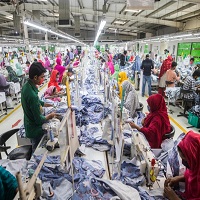 Accounting for around 80 per cent of the Kingdom’s annual exports, the garment industry is one of the main pillars of the Cambodian economy. The country currently has over 500 garment factories which need to be modernized to compete with the global rivals.
The Cambodian garment and the footwear industry employed around 800,000 people before it was hit by the COVID-19 pandemic. The crisis resulted in a loss of around 150,000 jobs besides reducing employment hours for workers.
Tech solutions firm, LT Labs, calls the Cambodian garment sector as the least digitally transformed industry in Cambodia. The Luenthai Group unit promises to increase efficiency, reduce waste and improve the garment supply chain in Cambodia by collecting the required data, as per a Khmer Times report.
Touch-screen technology to determine production efficiency
One of the ways LT Labs inspects fabrics for defects is by using the touch-screen technology to upload pictures of the fabric to the Cloud. This enables the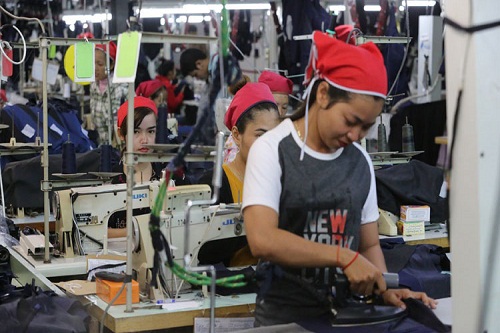 company to determine the average speed of workers and efficiency of the operators on machines. It also helps the company to monitor in-line and end-line production in real time and display it on large screens to let the factory know where delays are happening. LT Labs also allows brands like Adidas to determine the efficiency of the factories they use.
Training its staff and managers in the Khmer language, LT Labs currently targets factories with at least 2,000 employees. In the next few years, it plans to roll out an LT Light plan for smaller factories employing around 500 workers. To achieve this, the company needs to train its workers in technological advancements, says Ath Thorn, President, Coalition of Cambodian Garment Workers Democratic Union. This will enable Cambia to respond to the Fourth Industrial Revolution, he adds. Workers need to be given joint training on high-tech machinery and new fashion styles. Only infrastructure upgrade and lower electricity and water prices can help garment factories become more competitive, he adds.
Increase minimum wages to improve labor productivity
Further, to compete with its overseas rivals, Cambodia also needs to increase its minimum wages. This will help the workers improve their livelihoods and increase their productivity, adds Thorn. The rise in wages will not impact the Cambodian garment sector but make essential goods more affordable for workers, he adds.
India: Review duty on cotton imports, urges SIMA
 The government recently took some bold steps to address tax and raw material issues in the textile industry. First, it brought the entire textile value chain under GST net and also removed the anti-dumping duties on polyester raw materials, polyester fiber and acrylic fiber. Further, it introduced the RoDTEP scheme to refund the applicable and embedded taxes apart from extending duty drawback benefits to refund all the taxes and levies and thereby enhance global competitiveness.
Another important decision is the introduction of 5 per cent BCD, 5 per cent AIDC and 10 per cent social welfare cess on both totaling 11 per cent on cotton imports in the Union Budget 2021-22. However, the industry immediately protested against this and urged the government to roll back its decision as it imports only 5 per cent of the total cotton consumed by the industry.
International volatility leads to spike in domestic prices
In cotton season 2021-22, India’s opening stock stood at 75 lakh bales while estimated crop reached 360 lakhs bales. Unprecedented volatility in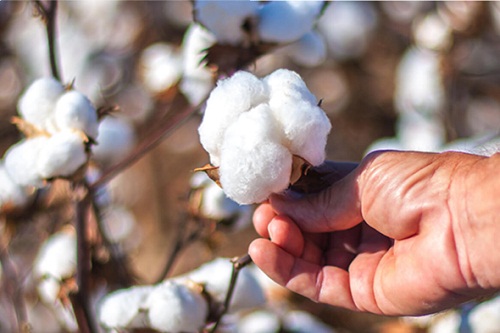 international cotton prices led to the skyrocketing of domestic prices while pent up demand in the post-COVID period led to skyrocketing prices. The situation was further stimulated by the US sanctions on Xinjian cotton that accounts 10 per cent of the world cotton production. Dominated by large traders, the Indian Commodity Markets MCX and NCDEX also fuelled the market.
Ravi Sam, Chairman, The Southern India Mills’ Association states, the Indian cotton textile industry was at an advantage as cotton prices reduced by around 10 per cent during the cotton season -- from December to March. Prices of cotton seed surged from the beginning of the season. Price of Gujarat Shankar-6 cotton increased to Rs 8,930 from Rs 6,788 per quintal on October 1, 2021 while prices of good quality kapas increased from Rs 7,575 to Rs 10,760.
Import duty erodes market competitiveness
For the first time, Indian cotton price zoomed ahead of international prices due to the imposition of import duty on cotton which eroded market competitiveness of the exporters. Price of Indian cotton price increased by Rs 10 to Rs 15 per kg for the last two months and the situation is likely to aggravate. Due to this, exporters have been unable to confirm export orders usually finalized during the December-January period, leading to the diversification of orders to competing nations.
The premium of good quality cotton is 5 to 7 per cent higher than low quality cotton. Due to this, mills have been unable to procure this cotton even for the daily use, posing a huge threat to the entire textile value chain. Therefore, SIMA urges the government to remove the 11 per cent import duty on cotton and cotton waste and also remove cotton from MCX and NCDEX features.
Bemberg to showcase collaboration with Luca Litrico at PittiUomo
On January 11, Bemberg™ will feature an exclusive collaboration with Luca Litrico, Head, SartoriaLitricoat PittiUomo 101.
Bemberg became famous for crafting the highest-quality suits for all the most important men of Dolce Vita era, from Richard Burton to Marcello Mastroianni. Its historic relevance has even been recognized by the Ministry of Cultural Heritage, thanks to its archive composed of hundreds of photos and sketches signed by Angelo Litrico himself
For this occasion, Bemberg™ will showcase four historic suits wore by true style arbiters a such as: former US president John F. Kennedy, dolce vita poster-boy RossanoBrazzi, American astronaut James B. Irwin and iconic fashion designer Angelo Litrico. All garments feature stylish linings woven with Bemberg™ fiber disclosing its ductility always in vogue through time. Over the decades, Bemberg™ established heritage in formal lining has expanded into new territories and able to represent also contemporary outerwear styles.
“We are so excited to be back in Florence. PittiUomo and Italy are the perfect starting point of our journey through style.” says Mr. Koji Hamada, CEO of Asahikasei Fibers Italia, “At our booth visitors can glimpse the link between past and present, our values and chromosomes for the fashion to come.”
“I am extremely pleased to be able to show these works of art, fruit of the mastery and expertise of my uncle Angelo Litrico” said Luca Litrico, CEO and owner of SartoriaLitrico. “The partnership with Bemberg™ has been going on for decades now, and I am hopeful that it will continue for a very long time”.
Bemberg™ vision is centredaround contemporary beauty, and uniqueness – the fibre manufacturing is exclusively taking place in Nobeoka, where its closed- loop circular economy production approach together its transparent and traceable processes are able to guarantee the responsible certified values.
Bemberg™ by Asahi Kasei will unveil the second chapter of its journey at Première Vision in Paris with an exhibition where visitors will be able to explore the fashion world, from India to Japan, through fabrics and style of today and tomorrow.
ITMF adds Arise Integrated Industrial Platform (IIP) as corporate member
Based in the UAE, the textile division of ARISE Integrated Industrial Platform (IIP),j joined ITMF as a new Corporate Member. The platform identifies industrial gaps in African countries to unlock value and create new industries. The objective is to industrialize key sectors by creating local transformation, maximizing production, efficiency, and cost, which in turn generates local value addition.
Arise IIP seek to boost exports, enable local transformation of raw materials and promote trade by tailor-made special economic zones in Gabob, Benin and Togo In Benin and Togo Arise IIP will focus at creating value chains for the textile industry – from raw material sourcing to resource transformation through manufacturing, to exporting final products.
The International Textile Manufacturers Federation (ITMF) founded in 1904 is the international forum of the global textile value chain. Its members are from textile and apparel producing countries representing 90% of global production.
AMSilk Partners with Mercedes-Benz to develop sustainable car door pulls
AMSilk GmbH (“AMSilk”), a world leader in supplying innovative high-performance bio-based silk materials, has entered into a partnership with Mercedes-Benz, for the development of novel, sustainable car door pulls, as part of the car manufacturer’s latest technology program the Vision Eqxx.
The new concept car, vision eqxx, features innovative interior materials, revealing a way forward for luxury design that conserves resources and is in balance with nature. Among the organic interior design features are new door pulls made from AMSilk’sBiosteel® fiber. This high-strength, certified-vegan, silk-like fabric is made using AMSilk’s proprietary biotechnology expertise.AMSilk is the world’s first industrial supplier of vegan silk biopolymers which are 100% biodegradable, recyclable, renewable and zero-waste.
Marking a first in the automotive sector, AMSilk’sBiosteel® provides a solution to the car industry whose need to replace petroleum-based content by natural, bio-based materials is increasingly growing.
This new project is the most efficient electric vehicle Mercedes-Benz has ever built and marks a new expression of efficiency and sustainability in interior design.