


FW
India to achieve $400 bn export target this year: Chairman, AEPC
As per A Sathivel, Chairman, AEPC, India will achieve its $400 billion merchandize exports target for the current fiscal. In December 2021, India’s monthly merchandize exports rose 37 per cent to $ 37 billion against $27 billion exports in December 2020. Sakthivel believes, newly introduced two mega schemes will help India reclaim its global leadership position in textiles and apparels. However, the PLI scheme will be more beneficial if the investment and turnover targets are reduced by 50 per cent as most players in the apparel industry are in the MSME segment, he adds.
Sakthivel also welcomed the 22 per cent increase in readymade garments exports which rose from $1.20 billion in December 2020 to $1.46 billion in December 2021. India’s total apparel exports stood at $11.13 billion during April-December 2021, adds Sakthivel. Exports in the first nine months of this fiscal increased 35 per cent to $8.22 billion between April-December 2020, this despite local restrictions impacting operations in the first quarter during the second wave of the pandemic.
India has a fast growing order book from brands and buyers across the world and will see historic heights in apparel exports in the coming months, claims Sakthivel.
Prada, Adidas join hands for a new collection from recycled nylon
Italian fashion brand Prada and sportswear giant Adidas will jointly launch a new sportswear collection made from recycled nylon. As per a Retail Gazette report, each item in the collection will be made by Prada in Italy. It will made from the recycled re-nylon fabric, created through the recycling of plastic waste collected from oceans, fishing nets and textile fiber waste. The fabric can be purified and recycled indefinitely, with no loss of quality.
The Adidas for Prada Re-Nylon collection will be launched on January 13. It will shift the entire Prada production from virgin nylon to Re-Nylon — a milestone underscored by Lorenzo Bertelli, Group Marketing Director and Head, Corporate Social Responsibility. The collection will be a fusion of the technical innovation and innate knowledge of performance sportswear synonymous with Adidas, and the luxury vision of Prada. The sneakers will be available in monochromatic black and white colorways while the collection also includes six bags.
The Adidas for Prada Re-Nylon collection will be available globally in Prada boutiques and on Prada’s and Adidas’ online shops and will be accompanied by a dedicated campaign and a unique digital activation.
ILO launches new project with the Netherlands government
The International Labor Organization (ILO) has launched a project in collaboration with the Government of Netherlands to anticipate and address future skills needs in the garment sector in Vietnam. As per a Textile Excellence report, the two-year old project starting in January 2022 will require ILO to support the Vietnam government, employers’ and workers’ organizations to understand the industry’s need for skilled employees now and in future. The project will focus on those at highest risk of losing their jobs as a result of the COVID-19 crisis and increased automation and digitalization in the industries.
Guided by the ILO Centenary Declaration for the Future of Work (2019) , the ILO Global Call to Action for a Human-Centered Recovery (2021) and the recent International Labor Conference resolution concerning skills and lifelong learning, the new project will apply lessons learned from similar ILO garment sector skills anticipation projects in the garment sector in Brazil, Ethiopia, Jordan and Peru, and it will build on the achievements of past ILO skills development programs in Vietnam.
The project will be implemented in close collaboration with the IFC-ILO Better Work Vietnam programme, and the findings and achievements in Vietnam will be shared with other Member States of the ILO through the creation of a regional knowledge platform on future skills needs in textiles and garments in Asia and the Pacific.
RCEP to bring more textile orders for China from ASEAN members
The finalization of RCEP deal on January 1 has enabled China's textile makers to take on bigger orders, especially from Southeast Asian nations. As a report by CGTN shows, ASEAN has already become China's largest textile importer. In 2020, China's textile exports to the other 14 RCEP countries accounted for nearly 26 per cent of its total. The Southeast Asian nations have been China's largest textile importers.
The total value of textile exports from RCEP member states accounts for more than half of the world's total. More dynamic ties between the textile industries in China and ASEAN are expected to bring more dynamism to global trade. For instance, Shanghai-based fabric seller Li Haowei is expecting a bigger demand for synthetic fibers from clothing factories in Southeast Asia. In 2021, Li and his team exported fabrics worth some $240 million, mainly to Bangladesh and Egypt. In 2022, Li expects his clients from the Association of Southeast Asian Nations (ASEAN) members like Vietnam and Cambodia to increase their orders.
COVID-19 Surge: Giorgio Armani cancels two fashion shows in Europe
Giorgio Armani SpA has cancelled two major fashion shows in coming weeks due to a surge in COVID-19 cases surge in Europe. As per a Wall Street Journal Report, the Italian luxury fashion house cancelled its planned runway shows at Milan Men’s Fashion Week and Paris Haute Couture Week later this month.
Led by Giorgio Armani, Founder, the company made this decision due to the worsening epidemiological situation. Europe is experiencing a wave of new coronavirus infections driven by the Omicron variant, which has brought renewed chaos to global travel, disrupted supply chains and derailed some companies’ plans to start returning staff to the office.
The surge has also clouded the prospects for large in-person events. Italy and France, which are due to host the coming fashion shows, have both registered record numbers of daily cases in recent days, topping 100,000 and 200,000, respectively, far more than in previous waves of the pandemic. Other luxury brands, including Italy’s Dolce & Gabbana, Prada and Zegna, are still due to present new collections at the show in Milan, which runs from January 14 to 18. The Paris show, which opens on January 24, also has a packed schedule, with brands including Chanel and Christian Dior set to take part.
Organizers cancel high-profile fashion shows in January
In the last one week, several major companies canceled high-profile fashion shows planned for January, including Project with its New York trade show and Brunello Cucinelli with its shows at Pitti Uomo and Milan Men’s Fashion Week. London Men’s Fashion Week has also been canceled altogether.
As per a Glossy report, there are reports in Paris, scheduled to begin on January 24, the Paris Men’s Fashion Week is likely to be cancelled Joseph Keefer, a fashion brand consultant and creative director of an eponymous fashion brand has cancelled his showroom space at Paris Men’s Fashion Week. Many big brands are also following suit.
Many are also rescheduling their shows. London Fashion Week’s men’s shows will be merged with its women’s week starting on February 18, and Ann Demeulemeester’s show will be rescheduled for June, according to the brand. Brands that aren’t rescheduling may opt for virtual shows. While virtual shows can be limiting, they can also be useful in building hype for a collection. And the rise of the metaverse as a concept has made those shows more accessible.
New Year begins with a bang for Indian cotton industry as prices touch record high
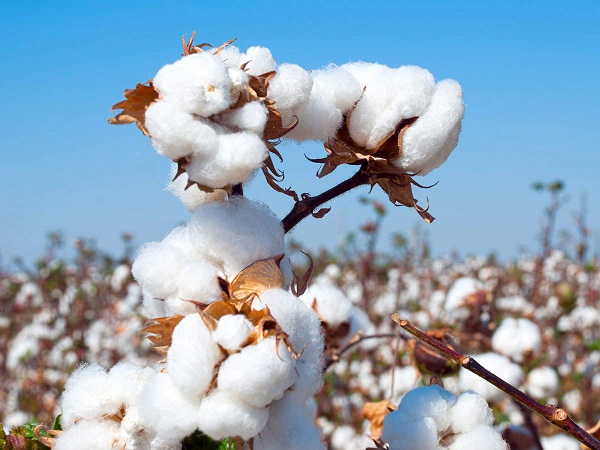
Celebrations continue for the Indian cotton industry with prices skyrocketing to record levels of over Rs 71,000 per candy in the first week of the New Year. Domestic cotton prices are currently on par with global rates, particularly those of Intercontinental Exchange (ICE) cotton futures in New York. ICE New York Cotton March futures are currently quoting at 113.67 US cents a pound or Rs 68,500 a candy. Even the prices for January are quoted at Rs 34,700 a bale or Rs 74, 502 per candy on the Multi Commodity Exchange. In Gujarat, prices are quoted at Rs 71,000 while in Nashik, Maharashtra they are being quoted at Rs 73,000 per candy, says a veteran market analyst.
Gujarat records highest rise in raw cotton prices
In Rajkot, Gujarat, raw cotton (kapas) prices have surged beyond Rs 10,000 a quintal, while in Telengana, prices are hovering around Rs 9,300-9,500. Raw cotton prices on December 31, 2021 surged beyond Rs 2,000 per 20 kg maund in Gujarat while those in Warangal, Telangana reached Rs 9,310 a quintal following moderate arrivals.
The highest rise in prices was noted in Jamnagar APMC in Gujarat at Rs 10,555 per quintal for quality cotton. Prices in the Rajkot market, on the other hand, hovered around Rs 2,010/maund or Rs 10,050 a quintal. The price of average quality cotton in the city stabilized att Rs 7,505 a quintal.
Prices in Bhiwapur market yard in Nagpur reached a record high of Rs 9,510 per quintal. While the prices in the Raichur and Bijapur market yards in Karnataka ruled at Rs 10,200 and Rs 10,300 a quintal, respectively.
Firm demand and tight supplies surges prices
After a lull of two weeks, cotton prices have reached 80-90 per cent higher than last year. The prices of cotton seeds have also reached Rs 3,800-4,000 per quintal. Globally, firm demand and tight supplies have led to a 45 per cent rise in cotton prices from last year. Monitored by the US, Intercontinental Exchange inventories have declined by 99 per cent this year. The prices of Indian cotton have surged higher on ICE New York Cotton March futures Index at 113.67 US cents a pound (₹68,500 a candy).
Since the hedging of multinational risks in Europe futures, Indian prices are ruling at a premium of 5 cents. They are likely to rise to 20-25 cents in future, says Anand Poppat, a Rajkot-based trade in raw cotton, yarn and cotton waste.
No shift to manmade fibers
Cotton prices surged due to a decline in cotton crop. Demand from spinning mills has grown. Yet, yarn makers are not shifting from cotton to manmade fibers, say cotton growers from Punjab. Ginned cotton prices have increased to Rs 75,000 per candy for 29.5 mm. Yet, sellers are reluctant to sell due to higher costing, opine sourcing agents. Cotton production is estimated to reach 360.13 lakh bales this year against 353 lakh bales a year ago, estimates Cotton Association of India. On the other hand, demand is expected to remain flat at 335 lakh bales.
Global ending stocks to decline
According to the Committee on Cotton Production and Consumption, production is expected to reach 362.18 lakh bales this year while consumption will be around 338 lakh bales. Prices are expected to rise to as high as Rs 80,000 per candy. Drop in Pakistan’s output by 133 lakh bales is estimated to lower global production, leading to a surge in prices. Global ending stocks are estimated to decline by 160 bales, according to the US Department of Agriculture.
Men’s fashion comes of age globally as brands adopt size inclusivity

The boom of inclusive sizing within women’s fashion in the past few years highlights the growing awareness about health among all age groups of people. Most brands, like the small-scale Universal Standards to those operating on a global scale like Old Navy, are expanding their size bases, to make their products more inclusive.
Men’s fashion value drops in 2021
However, currently, most of this revolution is happening in women’s fashion. Men’s fashion is yet to adapt itself to size inclusivity, shows data from Statista. The report reveals, the value of men’s plus-size fashion has actually dropped from $1 billion in 2020 to $850 million in 2021. This is contrary to the demand as an average American man’s waist size is 40 inches whereas sizes in the market start from 38 inches.
Few apparel brands have indeed expanded the sizes of their men’s offerings. In 2019, Madewell launched men’s jeans with sizes extending upto 43 inches. Through this move, the brand aimed to bring the same level of size inclusivity and the focus on correct fit as in women’s sizes, says Joyce Lee, SVP-Design, Madewell. Making larger sizes for men helps the brand attract more valuable and long-term customers, adds Lee.
Another brand offering larger sizes for men is Bonobos. The brand offers men’s pants upto size 54. It adopted size inclusivity in 2018, 11 years after its inception. However, only few brands like Universal Standard offer larger sizes with their straight sizes. Usually, plus size fashion is offered by specialty retailers or as an exclusive offering by a mainstream retailer.
More options than earlier
Currently, plus size fashion offers more options than earlier. For instance, on JC Penney recently introduced its plus-size XLG collection designed with Shaquille O’Neal. The line includes men’s shirts, pants, jackets, sweaters and suits, in sizes ranging from a medium tall all the way up to 6XL. The collection delivers on the brand’s commitment to offer plus size fashion to its customers, says Michelle Wlazlow, EVP and Chief Merchandize Officer, JC Penney.
Mostly ignored by the industry, shorter men are catered to by specialty brands like Otero that was launched in 2019. The brand aims to address an underserved market, says Steve Villanueva, Founder, who relaunched the brand over the summer.
Growing rapidly, men’s fashion generated revenues worth $500 billion in 2021, and is expected to grow 10 per cent next year. With revenues declining every year, the market remains largely untapped, waiting for brands to be explored more extensively.
India: Take action against MCX, NYCE speculators, urge cotton stakeholders
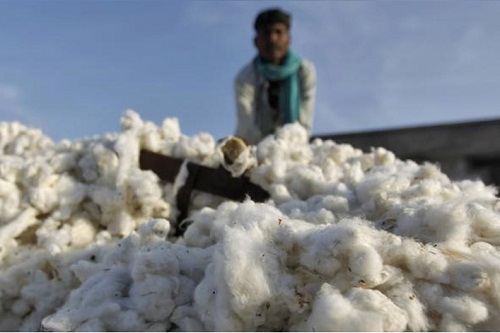
Stakeholders in the Indian cotton industry have urged the Central government to take immediate action against MCX and NYCE speculators for hedging and trading of Cotton Kapas. In a letter to the Prime Minister, R C Jain, Chairman, TT Ltd writes, Piyush Goyal, Union Minister of Textile and Railways had called a stakeholders’ meeting in November to discuss the issue of hike in cotton prices despite an unprecedented yield this year.
Unauthorized speculation a worry
The meeting had concluded price rise is mainly a result of the unauthorized speculation indulged in by MNC hoarders and Indian speculators for monetary gains at the cost of entire textile industry in India. Price rise had halted cotton exports for a few weeks in November. Export of garments and all other accessories also are badly affected due to the new Omicron and COVID waves.
Stakeholders have questioned the government’s failure to include cotton in the list of banned agricultural commodities for hedging and trading on MCX and NYCE to stop speculations on cotton prices. The hedging and trading on MCX and NYCE has led to 80 per cent rise in cotton prices in the last three months and still continues to rise, stakeholders say. Any failure to take action against these activities by the government may lead to halt in power, hosiery and apparel industry activities in the country, they add. Jain has urged the PM to take immediate action to stop hedging and trading of Kapas and cotton by speculators on MCX and NYCE.
New Delhi to host Textile Fairs India in July 2022
B2B fair Textile Fairs India will be held from July 21 to 23 at Hall No. 2, 3 and 4, Pragati Maidan, New Delhi. This trade show brings together textile businesses from across the country in categories from apparel to home textiles to generate business opportunities in the sector. The trade show aims at bridging critical gaps in the textile supply chain and providing a professional environment for manufacturers and buyers to network and transact business.
Textile Fairs India expects to feature over 500 textile and related businesses. The business-to-business event also expects to draw a crowd of between 20,000 to 50,000 people. The event is divided into different segments to focus on different product categories. Textile Fairs India includes the Apparel Sourcing Fair which will focus on readymade garments businesses in categories ranging from casual wear and western wear to ethnic and traditional wear for men, woman, and children.
Homtex, the event’s trade show for home textiles, will feature goods including bed linens, home décor, and upholstery fabrics, among others. Textile Sourcing Fair will focus on all manner of fabrics and Fabrics and Accessories will focus on businesses manufacturing accessories and parts used to make accessories. Finally, the India International Yarn Exhibition will feature fibers and yarns for the knitwear industry.











