FW
Louis Vuitton most popular luxe brand in UK: Raisin Gazette
A new study by Raisin UK has identified Louis Vuitton as the most popular luxury retailer in different countries, by analyzing online shopping habits to see which brand is being searched for the most. As per a Retail Gazette report, Louis Vuitton has been attracting consumers across the world since its inception in 1854. The brand is known for its handbags and high-end ranges costing thousands and pounds and constantly featured on Instagram posts of owners.
As per study, Louis Vuitton attracts an average of 823,000 searches every month as fashionistas a like hunt for the iconic Louis Vuitton print. The brand is hugely popular in the New York fashion scene, as well as in the wardrobes of many Hollywood stars It achieves an incredible 4.09m monthly searches in the US.
The second position has been bagged by Balenciaga which is popular for its quirky, modern, styles donned by Instagram influencers and celebrities on a regular basis. Balenciaga attracts 368,000 searches every month, proving its popularity. Gucci, the home of well-reported family feuds from the 80s, continues to remain popular in the luxury brands market. Gucci also acquires 368,000 searches every month, putting it on par with Balenciaga.
C&A to cut ties with Mustang by next year
European fashion retail chain C&A plans to severe ties with denim brand partner Mustang by next year. As per a Sourcing Journal report, C&A’s partnership lasted four years where it achieved its goal of targeting new consumer groups and strengthening its jeans assortment in upper price range. It has also improved its sales productivity, says Martijn Van der Zee Chief Merchandise and Sustainability officer, C&A Europe.
Now, the retailer aims to shift focus to its own denim brand. It currently has its own roster of 10 labels including Baby Club, Palomino, Here and There, Clockhouse, Rodeo, Canda, Yessica, Your Sixth Sense, Angelo Litrico and Westbury. The end of this partnership with C&A gives Mustang an opportunity to focus on growth strategies, including improving sustainability, creating a unique shopping experience and strengthening the company’s economic performance. The brand aims to attract the best players in the younger and more international customers age group and increase its brand appeal to generate additional growth, says Andreas Baur, CEO.
Incentivize India’s textile investments, urges ICRA
To achieve its target of $100 billion textile exports in the next five years, the government needs to incentivize investments across the textile value chain the upcoming budget, says ICRA. According to the rating agency, India is currently on the cusp of a potential growth cycle in the global textile market. Besides the US-China trade war issues, the China Plus One sourcing policy being endorsed by several large consuming regions across the globe, are fuelling this opportunity. India remains one of the potential beneficiaries of the reduction of China’s share in the global textile market.
However, the country faces challenges from other low-cost/more efficient peer nations, the evolving free trade agreement landscape with some peers already enjoying duty-free access to some of the major markets, as well as domestic issues such as infrastructure bottlenecks, says the ICRA report.
The report states, India’s also lags due to the growing shit to MMF garments and technical textiles. Though the government has adopted several policy initiatives including the announcement of the PLI scheme, extension of the Rebate of State and Central Taxes and Levies (RoSCTL) Scheme for apparel and made-ups for three years, announcement of the Remission of Duties and Taxes on Exported Products (RoDTEP) rates for the other textile segments and notification of seven textile parks under the PM-MITRA Scheme, during the past one year, their effective implementation remains crucial, for which adequate provisioning in the Budget is necessary, adds the report.
The ICRA report also calls for the extension of the ATUFS scheme or announcement of a new scheme particularly for the downstream segments and/or for captive renewable power capacities to encourage investments and enable the companies to reduce their carbon footprint while being more cost-efficient.
Fashion and jewelry shows postponed on Omicron concerns
Several fashion and jewelry shows in India have been postponed due to the spread of Omicron across the country. These include the Jewelry show of India which has been postponed. The event was scheduled from January 14 to 16 in Bengaluru. Similarly, organizers of the Home and Personal Ingredients Exhibition and Conference have postponed the event owing to safety reasons due to the pandemic. The show was scheduled to be held from January 27-28, 2022. The Cosmohome Tech Expo, scheduled to run from February 3 to 4 in Mumbai, has also postponed.
Business-to-customer shopping fairs are also being postponed in numerous areas. Fashion exhibition promoting Indian designers to new audiences, The Haat has postponed its January Raipur and Kolkata editions. The event focuses on small and upcoming brands and its postponement is likely to exacerbate financial difficulties faced by these labels.
China’s RMG imports from Bangladesh drop due to duty barriers
Bangladesh's readymade garment (RMG) exports to China have dropped during last couple of years as some 53 items still face duty barriers. COVID-19 pandemic and US-China trade have contributed to the downturn, say experts. These two extraneous factors forced Beijing to look inward to use its capacity to meet local demand. During the first half of the current fiscal, Bangladesh's apparel exports to China dropped 21 per cent to $110.39 million from $139.81 million during the corresponding period of last fiscal.
Abdullah Hil RAKIB, Director, BGMEA said, earlier 226 apparel items in HS8 tariff schedule from Bangladesh used to enjoy duty-free access under the Asia-Pacific Trade Agreement (APTA). And the recent extension of the product coverage by China, published on July 1, 2020, extended the RMG coverage to 299 in HS8 digit. An analysis shows that Bangladesh exported US$506.5 million worth of garments to China in FY2018-19 and 93 items out of these exports enjoyed duty-free access. These 93 items fetched US$308 million, he said, adding that garments worth $198 million had to face duty on entry to China at varying MFN rates (average 16 per cent).
China has reduced its purchase and meets local demand through its own production because of the China-US trade war, says Mohammad Halem, Executive President, BKMEA. Fazlee Shamim Ehsan, Vice President, adds, China's export to the world, including the USA and the European Union, also forced the former country to use its capacity through local consumption.
Bangladesh: Follow global currency trends BGMEA advises regulatory authorities
Though the current depreciation of the Bangladeshi Taka against the American dollar proves to be a boon for garment exporters, in the long run, it threatens the competitiveness of Bangladeshi apparels in world market, points out Faruque Hassan, President, Bangladesh Garment Manufacturers and Exporters Association (BGMEA).
Taka depreciates 8.13 per cent in last decade
In the last five years, Bangladesh Taka (BDT) has depreciated by 3.84 per cent. Its exchange rate per dollar has increased from 82.82 Taka to 86 Taka as per Bangladesh Bank. Data from Oanda.com also shows, Turkish Lira witnessed the highest depreciation of 265.74 per cent during this period; followed by the Pakistani Rupee which depreciated 59.60 per cent; Sri Lankan Rupee, Indian Rupee and Vietnamese Dong depreciated 31.24 per cent, 16.18 per cent and 0.28 per cent respectively. On the other hand, Chinese Yuan remained stable with 0.98 per cent appreciation against the dollar cumulatively.
In the 10-year period spanning January 2013 to January 2022, the Bangladeshi Taka depreciated 8.13 per cent while the Turkish Lira witnessed 673.80 per cent and Pakistani Rupee 81.24 per cent depreciation respectively. Currencies of other competing countries including Sri Lanka, India and Vietnam depreciated by 58.02 per cent, 34.05 per cent and 8.88 per cent respectively. Chinese Yuan also depreciated during this period by an aggregate 1.26 per cent.
Wider implications on the economy
The depreciation of Bangladeshi Taka had stabilized over the last few years and the currency was again becoming stable. However, the outbreak of COVID-19 last year, once again plunged Taka’s value which depreciated from 84.80 Taka in January 2021 to 86 Taka in January 2022. Supporting export industries, this depreciation reflects the foresight of Bangladeshi regulatory authorities, says Hassan.
However, the benefit it actually offers to Bangladeshi garment industry is questionable. Garment prices in the country are rising due to hike in production and raw material costs. Freight and fuel rates have also surged enabling competing countries to surge past Bangladesh.
Currency exchange rate has a deeper impact on a country’s economy. It not only influences the inflation rate but also affects its balance of payments and FDI reserves.
Enhance efficiencies and waste management techniques
Therefore, to safeguard its domestic industries, Bangladeshi regulatory authorities need to take the global currency trend into account, Hassan opines. He also advises stakeholders to enhance factory efficiencies by making maximum use of the available resources. Industry leaders also need to boost investments in supply chain management and automation besides technically upgrading their factories, he adds.
Another area, Bangladesh apparel leaders need to pay attention is to emphasizing waste recycling in order to boost circularity in the industry. Focusing on these issues will enhance the industry status and make it more competitive in the world market, Hassan concludes.
GST may drive consumers away from value brands fear apparel retailers
Deferment in GST rate hike on textiles from 5 per cent to 12 per cent hardly brings any relief to consumers as they still have dole out extra cash for branded clothes. As Charath Narsimhan, CEO, Indian Terrain Fashion says, with rise in raw material prices like cotton, yarn, fabrics and packaging materials, the price of finished goods are also likely to increase by 8-15 per cent.
Already, many brands have started increasing prices of their garments with others likely to increase by around March. Raw material prices have increased by around 15-20 per cent, leading to a rise in MRP of branded garments by around 10 per cent, adds Yuvraj Arora, Partner, Octave Apparels.
Numero Uno is also increasing prices by around 10 per cent while Madame is increasing by 12 per cent, starting with its summer collections. Prices of summer collections from most brands are likely to increase 15-20 per cent, predicts Clothing Manufacturers Association of India (CMAI).
To reduce the price hike, few brands may tweak their product quality, especially in the lower price range and limit price increase to 5 per cent, adds Rahul Mehta, Mentor, CMAI. Whatever is the scenario, apparels prices are likely to rise from January end, he adds.
Price rise to make up for pandemic losses
For some time, retailers have been absorbing the hike in raw material prices, high freight costs, devalued rupee, into their profit margins. They refrained from passing on the hike to consumers due to sluggish demand.
However, with sales revival and consumer demand, they plan to make up for their losses by increasing prices. As Akhil Jain, Executive Director, Madame notes, brands hesitated to increase prices leading to a decline in selling prices. This along with steep discounting led to industry working on a thin margins His brand Madame used to have 65-70 per cent sale through earlier. But now-a-days, it has only around 55 per cent sale through, he informs.
Ramesh Kapoor, CFO, Numero Uno says, the above factors compelled them to hike prices for all its apparel categories by around 10 per cent. To control rising prices, a few apparel makers have sought government intervention though others believed factors are mostly external.
Significant impact on volumes
Though the GST Council has deferred the proposed hike, it has referred the matter to a Group of Ministers on GST rate rationalization. The Council believes, GST hike will impact prices of only those brands that sell merchandize below Rs 1,000. Prices of these garments are likely to increase 7-10 per cent, opines Mehta.
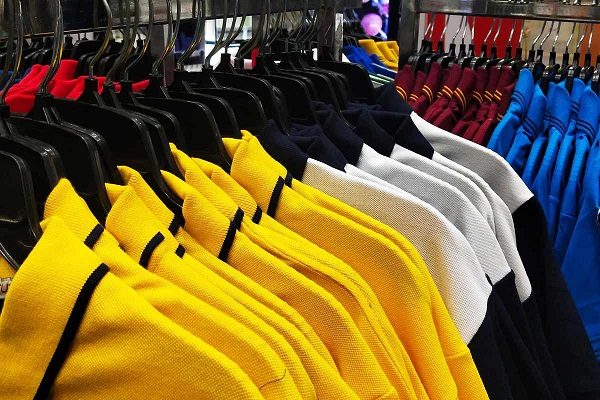
Arora adds, GST hike will affect brands whose merchandise is priced at or below Rs 1,049. Octave Apparels will be impacted as it sells round neck T-shirts for about Rs 799-899 and a polo T-shirts for about Rs 999. GST hike will push up prices by almost 30 per cent for these tees to Rs 1,299. Even a 7 per cent hike in GST will compel the brand to increase prices drastically, Arora explains. The move will decrease the volumes of value brands as consumers may shift to other low-priced brands, he laments.
India: Tiruppur traders expect cotton yarn prices to rise post festive season
Traders in Tirrupur market expect cotton yarn prices to increase post the festive season next week. As per a Textile Value Chain report, cotton yarn prices remained steady in the Tirrupur market despite poor demand. Cotton yarn of 30 counts combed was traded in Tiruppur at Rs 350-360 per kg, 34 counts combed at Rs 360-365 per kg, and 40 counts combed at Rs 390-395 per kg. Cotton yarn of 30 counts carded was sold at Rs 320-325 per kg, 34 counts carded at ₹325-330 per kg, and 40 counts carded at Rs 345-350 per kg. Prices of cotton yarn of 30 count carded and 40 count carded declined by ₹5 per kg due to poor demand.
Many workers in Tiruppur have gone on holiday to celebrate Pongal and other regional festivals. Hence, demand remained weak. However, the scenario is likely to change at the end of this month. Fabric manufacturers will have to buy yarn at higher prices to meet demand from downstream industries. Demand for summer clothing will be good, so the prices are expected to rise for the entire value chain of the textile industry.
Kingpins Show plans next physical event in Amsterdam
Denim show Kingpins Show will host its next physical show in Amsterdam from April 20-21 and at SugarCity from October 19-20, 2022. As per Sourcing Journal, the last Kingpins Amsterdam show was held in Amsterdam in October 2019. The shows in New York and China have since been canceled due to the pandemic.
The global denim industry is hopes to see more in-person events this spring. Munich-based organizer Bluezone plans to host a denim event from May 02-04, 2022, while Denim Premiere Vision’s next event will be held in Berlin from May 17-18, 2022.
Kingpins Amsterdam’s SugarCity show will grow its footprint by over 40 per cent to 100,000-sq. ft. The additional space will enable organizers to add new features to the show and develop some of its key areas to better serve exhibitors and visitors.
Better Cotton Conference to take the hybrid route in June 2022
After two years of being confined to the online platform due to the pandemic, the next Better Cotton Conference will be held in a hybrid format on June 22-23, the conference will help stakeholders transform the cotton sector into a sustainable industry. It is held annually by the Better Cotton Initiative (BCI). A non-profit, multistake holder governance group, the Better Cotton Initiative promotes better standards in cotton farming and practices across 21 countries. As of 2017, Better Cotton accounted for 14 per cent of global cotton production. Its partner retailers included H&M, Gap, IKEA, and Levi Strauss, and include funding partners from USAID.
At the end of 2017, BCI had 1,197 members – 85 retailer and brand members, 1,039 supplier and manufacturer members, 32 producer organization members, 31 civil society members and 12 associate members. BCI contributes towards the UN's goals to achieve better global water sustainability and sustainable agriculture.