FW
Bangladesh Denim Expo planned in Dhaka from May 10-11, 2022
After a two-year break, Bangladesh Denim Expo will once again open its doors in the international Convention City, Bashundhara (ICCB) in Dhaka on May 10-11, 2022. The event will focus on the theme ‘Beyond Business.’
Bangladesh Denim Expo addresses the new opportunities for successful and sustainable business, in a world that now demands that industry leaders to go “Beyond Business.”
Around 79 Exhibitors are expected to attend the event, consisting of both local and international participants. They will display fabrics, garments, threads, machinery, finishing equipment and accessories, positioning the show as a true representation of Bangladesh’s denim industry.
Through a series of product displays, seminar sessions and panel discussions, the Expo will encourage robust debate and interaction among exhibitors and visitors.
Industry experts will gather to discuss how the denim industry can improve, not only from a business perspective, but also considering social and environmental impacts and goals.
Mostafiz Uddin, Show Organizer, says, the show will act as a lightening rod on current industry ssues, bringing together some of the most progressive, forward thinking denim manufacturers in the world to showcase new thinking and the latest technical innovations which are driving our industry forward.
Government plans separate export promotion council for technical textiles: State Textile Minister
The Indian government is planning to set up an export promotion council for technical textiles, said Darshana Jardosh, Union Minister of States for Textiles during inaugurating CMAI FAB SHOW on April 11, 2022 at Jio World Convention Centre, BKC, Mumbai.
She further said that after the tough period during the corona pandemic, now India is progressing well and 21st century will belong to India. The India has achieved its export targets and now the government will announce shortly the new export targets.
The Minister applauded the initiative of CMAI to organize this first of its kind Show bringing the entire Supply Chain under one roof, and appreciated the efforts of CMAI to serve the Domestic Garment Industry and its members.
Rahul Mehta, Past President and now Chief Mentor of CMAI (THE Clothing Manufacturers Association of India) added, CMAI for the first time is organizing the CMAI FAB Show. (Fabrics, Accessories & Beyond) from April 11-13,, 2022. It has 200 participants. Visitors and buyers from eight counties are visiting the show. The fair has 3,500 online registrations before the commencement of the Fair. More than 5,000 garment manufacturers, exporters, retailers with private labels and Traders are expected to visit the Fair.
Rajesh Masand, President – CMAI informed, the CMAI FAB SHOW is been supported by two of the biggest associations in the fabric supply chain – the FABEXA from Ahmedabad, and SGCCI from Surat.
A unique addition to The FAB Show was the Think Out Of The Box Section, with 4 exciting and Scintillating Seminars on a variety of Subjects covering Consumer Trends, Technological Developments, and Global Fashion Landscape. The speakers included some of the biggest names in the Garment Industry, along with speakers from Bangladesh, Turkey, and The Netherlands.
Maintain 5% GST on footwear priced below Rs 1,000, urge CAIT, IFA
The Confederation of All India Traders (CAIT) and the Indian Footwear Association (IFA) have together urged the Ministry of Finance to maintain GST rates at 5 per cent on footwear priced below Rs 1,000. The government previously charged 5 per cent GST on footwear costing below Rs 1,000. However, later it increased the GST rate on all footwear, irrespective of price, to 12 per cent from January 1, 2022.
Around 85 per cent of Indian population buys footwear costing less than Rs 1,000 per pair, argued the associations. Hence, an increase in GST on this category of footwear would directly impact this population, already struggling with the economic effects of the pandemic, they added.
The organizations also urged the Commerce and Industry ministry to apply the Bureau of Indian Standards rules only to footwear costing over Rs 1,000 a pair. As 90 per cent of Indian footwear is made by cottage industries, application of BIS standards would make operations for these small manufacturing units more challenging.
According to CAIT and the IFA, India makes up 9 per cent of the global annual footwear production. Over 30 lakh people work in footwear manufacturing and trading in India and there are over 10,000 manufacturing units in the country.
LPP to expand operations in European Union
After suspending business in Ukraine and closing stores in Russia, Poland's biggest fashion retailer, LPP (LPPP WA), plans to expand operations in the European Union. The company plans to enter Italy, Greece and Cyprus next year and continue expanding its "Reserved" brand in Germany and Britain.
Przemyslaw Lutkiewicz, Chief Financial Officer says the company expects revenues worth over 16 billion zlotys ($3.76 billion) in the current financial year. It also aims to debut in new markets, especially in the southern European region, where it sees a huge growth potential for its brands. This year, the company also plans to develop its e-commerce business, which formed over 30 per cent of its overall sales, in the fourth quarter of its financial year to January 31, 2022. The company expects revenues from online sales to reach 5 billion zlotys this year.
Reformation launches new collection from recycled fabrics
Los-Angeles-based brand Reformation has launched Circular Denim, a collection made with fabrics comprising 20 per cent recycled scrap cotton and 80 per cent FibreTrace Cotton. As per a Sourcing Journal report, the collection has been launched in collaboration with Turkish denim mill Bossa and Strom, a fully vertical manufacturer and laundry also based in Turkey. Both companies are known for their sustainable denim production. Strom uses ozone technology to reduce the laundry’s water, chemicals and energy consumption, while Bossa employs a zero-waste life cycle.
The styles introduced in the collection include a V-neck mini dress with font snaps, utility overalls, pleated trouser jeans and relaxed jean shorts. The Cynthia high-rise jean, Ref Denim’s best-selling style with waitlists of nearly 9,000, is also a part of the collection.
All these garments are 100 per cent recyclable through the brand’s RefRecycling program. The program encourages consumers to return preowned Reformation brand denim, footwear, sweaters and activewear at any of its retail locations or request a shipping label on its website and receive $10-$25 in credit per item.
Indonesia launches new machinery restructuring program
Indonesia’s Industry Ministry strives to improve productivity, efficiency and product quality in the textile and textile products (TPT) industry by restructuring use of production machinery and equipment. The restructuring program helps the textile industry to be more productive and globally competitive, says Ignatius Warsito, Director General, Chemical, Pharmaceutical and Textile Industries (IKFT). Waristo explained that his party is holding outreach activities to make restructuring program of machinery and production equipment successful in the IKFT sector. The ministry has socialized this program to 100 companies physically and more than 143 companies online, he adds.
The machine and equipment restructuring program also encourages the application of technologies such as artificial intelligence, internet of things, augmented reality/virtual reality, advanced robotics, 3D printing and/or machine to machine communication, as per an Indo Textiles report.
This program is implemented by replacing price discounts of 10 percent of the total investment in machinery and equipment originating from imports, or 25 percent for domestically produced machinery and equipment, he adds, It also facilitates the implementation of the Making Indonesia 4.0 roadmap by offering investment incentives to stimulate the use of machines and/or equipment that are more modern, more efficient, energy efficient and more environmentally friendly, he adds.
The machine and equipment restructuring program will also help Indonesia realize its commitment to mitigate greenhouse gas emissions in accordance with the Paris Agreement and the 26th Conference of the Parties (COP26), adds Waristo.
CAI reduces India’s cotton production estimate for 2021-22 by 2.33%
The production estimate for cotton crop for 2021-22 has been reduced by 2.33 per cent to 335.13 lakh bales from October 1, 2021 to March 2022, say the Cotton Association of India. Total cotton supply during the period is estimated to be 343.68 lakh bales. This includes arrivals of 262.68 lakh bales, imports of 6 lakh bales and the opening stock estimated by the CAI at 75 lakh bales at the beginning of the season.
Cotton consumption during the period is estimated at 175 lakh bales while the export shipments upto March 31, 2022 are estimated by the CAI at 35 lakh bales. Cotton stock at the end of March 2022 is estimated at 133.68 lakh bales including 75 lakh bales with textile mills and the remaining 58.68 lakh bales with the CCI Maharashtra Federation and others including the stocks held by MNCs, traders, ginners, MCX, and the cotton sold but not delivered.
The CAI Crop Committee has estimated the total cotton supply till end of the cotton season 2021-22 to decline by 8 lakh bales to at 425.13 lakh bales compared to 433.13 lakh bales estimated by the CAI previously. CAI estimates, the domestic consumption will remain unchanged at 340 lakh bales, while the exports for the season have been estimated at 45 lakh bales.
Hong Fu Industrial Group to invest Rs 1,000 crore in Tamil Nadu factory
Taiwanese footwear manufacturer Hong Fu Industrial Group will invest Rs 1,000 crore over the next five years to set up a factory in Tamil Nadu. As per the memorandum of understanding (MoU) signed with the Tamil Nadu government, the plant will employ 20,000, mostly women, and manufacture non-leather-based footwear that does not require much water.
The unit will export footwear from global brands like Nike, Puma, Converse and Vans. It also has plants in China and Vietnam. The investments would be made in phases over the next three to five years and the unit would also boost footwear exports from the State.
It will give a major impetus to the footwear production and export in the State. Hong Fu serves a host of global footwear brands such as Nike, Puma and Converse, among others
Bangladesh emerges a hub for sewing thread manufacturers
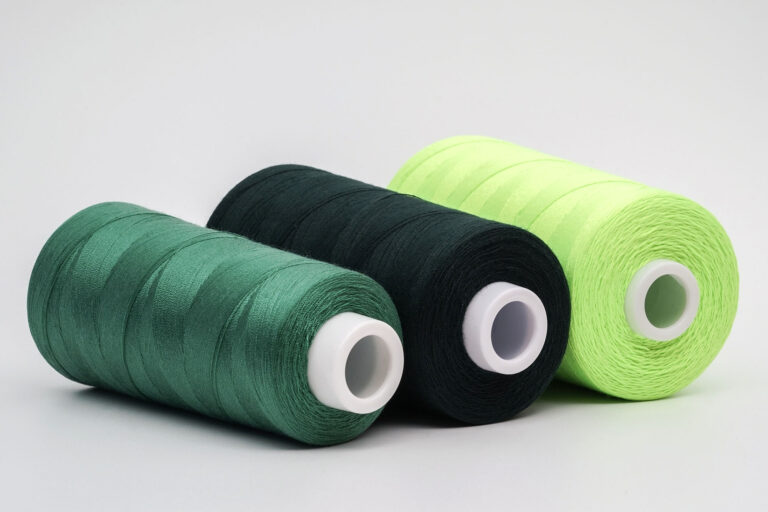
With hundreds of units springing up in the country, Bangladesh has emerged a major hub for sewing thread manufacturers in recent years. These units enable Bangladesh to attain self-sufficiency in the major garment accessory, says a Daily Star report. They also enable apparel manufacturers to reduce dependence on imported raw materials, and maintain strict lead time.
Around 10 years ago, Bangladesh imported sewing thread used to stitch garments. However, now the country not only meets local demand but also exports it. Around 20 local and multinational sewing thread mills in Bangladesh produce more than 100 tons of sewing thread a day.
Attracts investments worth Tk 100 crore
Though it contributes less than 1 per cent to the total garment export of $36 billion, sewing thread is vital to manufacture a finished garment item. In the past decade, the accessory attracted investments worth Tk 100 crore in Bangladesh
Kalurghat-based Sanzi Textile Mills invested Tk 100 crore in sewing thread manufacturing in 1995. Today, the company produces 30 tons of thread per day for domestic and international markets, says Syed Nurul Islam, Chairman, Well Group, Owner, Sanzi Textile Mills. It plans to launch another factory to produce leather sewing thread in Bangladesh. The company currently owns 30 per cent share in the sewing thread segment and rakes in $20 million annually. It also ships more than $6 million worth of the accessory a year. Achieving self-sufficiency in sewing thread manufacturing
Earlier dependent on China and Hong Kong for sewing threads, local manufacturers now supply 95 per cent of the accessory. The rest is imported owing to special requirements from international retailers and brands. DBL Group, a garment exporter, produces 10 tons of sewing thread a day at its Kashimpur factory in Gazipur. Of this, the group consumes 20 per cent while the remaining 80 per cent is sold to other garment manufacturers, says MA Jabbar, Managing Director. DBL Group plans to set up a sewing thread unit in Vietnam within two to three years. The company produces sewing thread of international quality, adds Jabbar.
Synthetic threads’ output remains low
Although Bangladesh has become self-reliant in sewing thread, it still imports associated raw materials, says Abdul Kader Khan, Managing Director, Khan Accessories and Packaging. The country has nearly 200 sewing thread manufacturers supplying to export-oriented garment factories. But, only a few of these cater to the needs of the market, adds Abul Quasem Haider, President, Bangladesh Sewing Thread Manufacturers and Exporters Association.
Local manufacturers cater to around 90 per cent of the demand for cotton-made sewing threads. However, these manufacturers cater to only 70 per cent of the demand for synthetic-made threads. The rest 30 per cent are imported, mainly from China. Over all, Bangladesh has over 100 small and medium-sized mills in the local sewing thread market.
The US textile industry continues to grow with investments across sectors
The apparel, bedding, floorcovering, traditional textiles, nonwovens and technical textiles sectors in the US are booming with new investments and expansions. Most investments are focused on sustainability and development of Central America, says a Textile World report.
One of the first investments is Eastman Chemical Co putting in$1 billion in a material-to-material molecular recycling facility in France. The facility will recycle upto 160,000 metric tons annually of hard-to-recycle plastic waste currently being incinerated. West Sacramento, Calif.-based Origin Materials Inc plans to invest at least $750 million to develop a biomass manufacturing facility in Ascension Parish, La. The plant will produce plant-based polyethylene terephthalate (PET) with sustainable wood residue for use in packaging, textiles, apparel and other applications.
Floor covering companies expand operations
Floor covering companies are also expanding their operations. Dalton, Ga.-based Shaw Industries Group, a global flooring provider, is expanding its operations in Aiken County, SC with $400 million investment. Sherrill Furniture, a manufacturer of high-end furniture, plans to invest $2.9 million to open a new custom upholstery production facility in Conover, NC. The company manufactures high-quality custom furniture for nine furniture brands, retailers and interior designers in 50 states of the US.
Focus on Central America
In December 2021, Vice President Kamala Harris announced significant multimillion-dollar investments by Parkdale Mills and six other companies into Central America. The most prominent amongst these is over $100 million investment by Intradeco Holdings in Central America, part of which will be used to expand the company’s solar energy power. Miami-based Intradeco Holdings also plans to invest $100 million in Central America to make the most of the CAFTA-DR and nearshoring opportunities.
Rise in investments in sleep products
Investments in sleep products have also been growing in recent past. Manufacturer of hybrid memory foam mattresses, Somnus Mattress International LLC announced a $13 million investment plan to establish operations in Blacksburg, S.C. The company will manufacture mattresses to serve clients across the US. Oremium manufacturer and supplier of bedding products BRN Sleep Products AS announced an investment of more than $4.3 million to establish operations in Orangeburg County, SC. The company manufactures and assembles mattresses and bases; besides marketing, distribution and sale of bed products.
Delivering non-wovens and technical textiles
Indorama Venutures company Avgol® America Inc has partnered YanJan USA LLC to deliver exclusive nonwoven product offerings to the North American market. Va-based Verdex has secured financing to scale its proprietary nanofiber technology and complete a commercial manufacturing facility in Richmond, Va. Damien Deehan, Co-CEO, Verdex, says, the investment allows Verdex to target specific challenges and problems in multiple industries to create game-changing products.
Investments in apparel sector
Through one of its wholly-owned subsidiaries, Montreal-based Gildan Activewear acquired 100 percent stake in Phoenix Sanford LLC for approximately $168 million. The acquisition will allow Gildan to build on its global vertically integrated supply chain by further internalizing yarn production.
Charlotte, NC-based clothing and apparel company Citadel Brands LLC announced an investment of more than $7.5 million to establish operations in Kingstree, The new operations will increase the company’s distribution capacity and promote future growth for new products and brands. Though these investments are very large in terms of capital but they enable these companies to participate in the growth story of the US textile industry.