


FW
GOTS certifies 19% more facilities in 2021
Eighteen GOTS Approved Certification Bodies certified 19 per cent more facilities in 2021 than the previous year. In all 12,338 facilities in 79 countries were certified.
The countries that reported the largest increase in GOTS certified facilities in 2021 included Turkey (+61 per cent to 1.799), Italy (+53 per cent to 894), Germany (+19 per cent to 817), Portugal (+35 per cent to 608), France (+22 per cent to 122), Denmark (+14 per cent to 115), Switzerland (+15 per cent to 61), Belgium (+55 per cent to 59), Sweden (+34 per cent to 51) and Vietnam (+264 per cent to 51).
As per the annual GOTS Survey, of the 1.114 respondents , 63 per cent indicated a permanent shift in their sustainability strategy with a focus on the environment and health of their workers and staff.
Growing interest from industry, the public, and the media drove website visits by an percent. Media exposure grew by 64 percent and GOTS social media followers across several platforms jumped by 57percent. Rahul Bhajekar, Managing Director, GOTS says, GOTS began revision of its version 7.0 involving all stakeholders including associations, organizations, companies, and individuals to further advance the progressive, innovative, stringent yet practical standard of GOTS.
NITMA lauds withdrawal of customs duty on cotton imports
Sanjay Garg, President, NITMA has lauded the government’s move to withdraw customs duty on cotton imports till September 30, 2022. The exemption will not only benefit India’s textile chain - yarn, fabric, garments, and made-ups but also help lower the prices for end-user and providing boost to textile exports, he said.
MukeshTyagi, Sr Vice President, NITMA also welcomed the move saying, Cotton is important to enhance India’s competitiveness in global textile trade and the government should introduce a comprehensive Cotton Fibre Policy.
Tyagi also advocated for a permanent removal of the import duty with the arrival of shipments only from April to September, each year. This will help the Textile Ministry increase the industry size to $100 billion s by 2030, he said.
Iranian clothing brands eye Russia market
Iranian brands plan to replace western clothing brands that have exited from the Russian market due to sanctions and the war in Ukraine, says the Russian Council of Shopping Centers (RCSC).
Oleg Voytskhovsky, Head-RCSC, TASS-Russia's state-owned news agency says, Iranian brands may replace Western clothing brands in Russia within three years as they first need to resolve certain organizational issues.
Iranian brands plan to open atleast 30 outlets in Russia including clothing and footwear chains. They are seeking additional investments for this expansion, he adds.
Russia also needs to resolve logistics issues to promote these brands, as per a TRT World report. Russian department stores are ready to present a range of Iranian goods. However, the manufacturers of these goods will have to invest in the launch of local branches with their own management offices and in advertising, addsVoytskhovsky.
3rd Sustainable Apparel Forum planned in Dhaka
The third Sustainable Apparel Forum held in Dhaka, beginning from May 10. To be organized by Bangladesh Apparel Exchange, the forum will enable Bangladesh to develop as a responsible sourcing destination by accelerating sustainability within the industry through education and awareness to reduce the knowledge gap.
The forum will be inaugurated jointly by Towfiq-e-ElahiChowdhury, Prime minister’s adviser on power, energy and mineral resourcesalongwithMdAtiqul Islam, Mayor, Dhaka North City Corporation,. It will be attended by Faruque Hassan, President, BGMEA; His Excellency Anne Gerard van Leeuwen, Ambassador of the Kingdom of the Netherlands to Bangladesh, Md. MohiuddinRubel, Managing Director, Bangladesh Apparel Exchange (BAE), Additional Managing Director, Denim Expert, and also Director, BGMEA, Stephanie Thiers-Ratcliffe, Director, European Brands and Retailers, Cotton Council Internationa.
Prominent speakers from various parts of the world will share their views on sustainability and the importance of meeting customer’s expectations at the event which will also host various specialized plenary session and green growth exhibition.
CMAI FAB Show: Showcases entire supply chain solutions under one roof
 A one stop show for apparel manufacturers, the CMAI Fabrics, Accessories and Beyond (FAB) show was aimed at providing total supply chain solutions under one roof. Organized from April 11 to 13, 2022 at the Jio World Trade Centre, Mumbai, the show spread over 10,000 sq. mt. featured 250 manufacturers and suppliers of fabrics and accessories, machinery, washing units, packaging units, embroiderers, printers, real estate and apparel park developers, and software developers. They showcased products and services for the garment industry. Over 12000 garment manufacturers, exporters, retailers with private labels, and traders visited the show over three days. The show also saw international visitors from eight countries.
In a unique display of collaboration, the show was supported by two of the biggest associations in the fabric supply chain –Fabexa from Ahmedabad, and SGCCI from Surat. A subsidiary of the Maskati Cloth Market Mahajan, FABEXA participated with nearly 50 members while the South Gujarat Chamber of Commerce and Industry (SGCI) saw the participation of over 45 members from Surat.
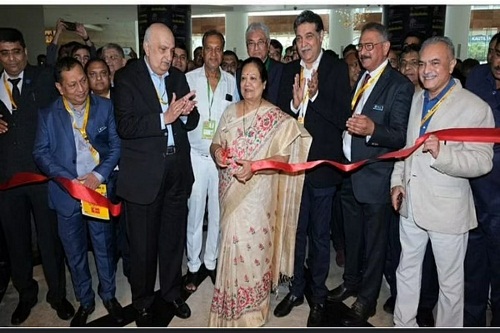
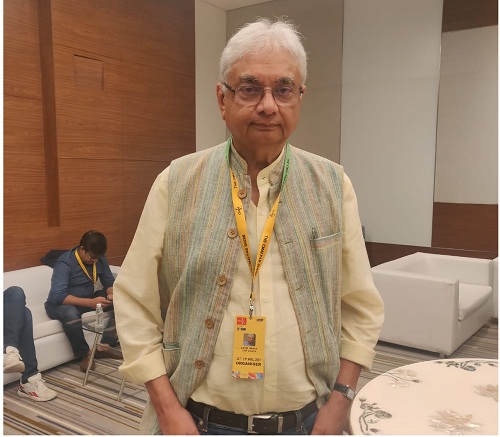
Talking about the show, Rahul Mehta, Chief Mentor, CMAI said, “The idea for the show began with a casual discussion within CMAI committee about the problems garment manufacturers face in trying to locate the right kind of sourcing on various fronts mainly fabrics, accessories, washing units ,machinery and packaging etc. We thought it would be a good idea to get everything under one roof.”
Need for more suppliers highlighted
A highlight of the show was the Think Out of the Box Section which included four seminars on topics ranging from: Consumer Trends, Technological Developments, and Global Fashion Landscape. Speakers from the across the world including Bangladesh Turkey and the Netherlands participated in the show inaugurated by Darshana Jardosh, Minister of State for Textiles. Jardosh urged the entire textile value chain to work in collaboration with each other to expand across globe. The industry also needs to increase the number of the suppliers in the value chain, Jardosh added.
India’s cotton prices are almost equal to the world market, Jardosh said. As per the government’s vision, farmers are earning good income from cotton yield. They plan to increase production next year as returns from the crop increase.
Domestic and international presence recorded
Garment sourcing has become as important as garment marketing and manufacturing, affirmed Navin Sainani, Chairman Fair Committee for The FAB Show. The show offered one-stop sourcing solutions to all garment manufacturers in India, he added.

The show featured 55 manufacturers of cotton garments from Ahmedabad, 45 manufacturers of MMF fabrics from Surat, a few knitting mills like Arvind, top accessories manufacturers and traders from Mumbai. It was attended by over 12,000 visitors within a span of three days. International buyers from eight countries, one international participant and international speakers also attended the show. Mehta said, “The show is an unqualified success. We are hoping to at least double, this will probably twice a year. The venue will depend upon the dates available.” From next edition it will be a bi-annual event with the number of the visitors expected to double from this year.
Global women’s luxury footwear market to reach $39 billion by 2029: Report
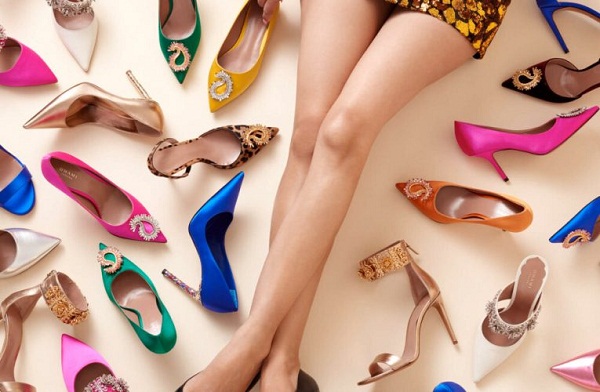 Rise in High-Net-Worth Individuals (HNWI) to 22.4 million in 2021 is likely to boost the women’s luxury footwear market in 2022. Future Market Insights latest report, values the market at $30 billion, and likely to expand at 5 per cent CAGR from 2022-29 to reach $39 billion by 2029.
Young population, sustainability to drive growth
Women’s luxury footwear market has been attracting consumers of all age groups. However, the younger generation is considered key drivers. Gen Y and Z consumers are likely to contribute a significant share to future market growth owing to high purchasing power and growing influence of online sales channels.
The market also enables manufacturers to produce sustainable or eco-friendly products. Manufacturers are prioritizing use of alternative materials including plant-based rubber, bio-printed leather, and natural textile while making their footwear. This is encouraging other players to the enter eco-friendly segment.
Europe to remain prominent growth market
With the presence of prominent luxury footwear brands such as Jimmy Choo, Hermes, Christian Dior, Gucci, Chanel, etc, Europe is expected to remain a prominent market for women’s luxury footwear. The market is expected to see significant development due to consumers’ rising preference for luxury brands. Rising demand for premium footwear with distinct characteristics is also expected to drive future growth.
The US is expected to lead growth with manufacturers diversifying their product portfolio to maintain a competitive advantage. The market is being driven by the presence a large number of elite customers having high disposal incomes. These customers are encouraging luxury footwear producers in the country to prioritize R&D and launch new products in accordance with demand.
Market growth in China is being driven by the tendency of women to follow latest fashion trend, brands’ extensive promotional methods as well as brand engagement. Chinese customers are also benefitting from discounts offered by their favorite women’s designer shoe companies on e-commerce channels. They are likely to be attracted by the high-priced editions of women’s custom footwear being introduced in the market.
Boots’ market share to reach 40%
Availability in a wide variety of designs is likely to boost the global market share of boots to over 40 per cent in 2022. Propelled by the desire to balance fashion with comfort, boots are expected to lead sales in women’s luxury footwear over the next decade. Earlier focused on performance and functionality, boots have been given fashion reinterpretation with celebrity endorsements. Future advancements in technology such as 3D printing and advanced sensors are also likely to push manufacturers to introduce innovative
Omni-channel to be the future of retail
Though most women still prefer buying footwear in stores, online sales channel is becoming equally popular as people become more digitally savvy. This is encouraging manufacturers to design new user experiences and create new business plans. E-commerce channels have been influencing luxury footwear manufacturers and compelling them to adopt an omni-channel strategy.
The pandemic led to many store closures; disrupted logistic systems and forced manufacturers to suspend operations. On the other hand, it pushed consumers to turn to e-commerce for purchases, enabling manufacturers to enhance their internet presence.
Mergers and acquisitions on the rise
Players in the luxury footwear market are also taking to mergers and acquisitions to drive growth. In June 2021, Louis Vuitton launched the LV Squad sneaker and LV Sunset mule footwear commercials with online sensations Emma Chamberlain and Charli D'Amelio. The new footwear styles are now available at all brand's retail locations and online retailers.
As US apparel makers shift sourcing Central, South American countries will benefit
With buyers looking to diversify their sourcing portfolio, apparel exports by Pakistan, Bangladesh and Cambodia have already surpassed pre-COVID levels. As seen from US Office of Textile and Apparel (OTEXA) import data, in 2021, China’s apparel exports to the US increased just 0.45 per cent to 11.13 billion. Conversely, export volumes from Cambodia, Pakistan and India grew significantly The whole sourcing landscape has changed, points out Sheng Lu, Associate Professor, Department of Fashion and Apparel Studies, University of Delaware. Many companies shifted their priorities from price to products, leading to a 60.6 per cent drop in market shares of the top five suppliers to the US.
Pakistan’s share on the rise
Pakistan’s apparel shipments to the US jumped 49 per cent to 895 million SME in 2021 compared to 599 million SME in 2019. In fact both India and Pakistan registered the largest increase in share of US apparel market during 2021. While Pakistan registered 11.4 increase in share and holds 3.04 per cent of US apparel export market. India’s share grew 11.3 per cent year on year making up 4.35 per cent of US apparel export market.
Pakistan’s share in the global apparel exports has been steadily increasing since 2018. It has also emerged the most competitively priced apparel supplier to the US on a price per unit basis in 2021. Yet, Pakistan lags behind China in terms of the actual size of imports. The sheer size of China’s installed supplier base makes it difficult for manufacturers to diversify the entire production elsewhere.
El Salvador, Honduras record a dip in exports
Apparel exports from El Salvador and Honduras to the US declined in 2021 despite the government’s recent push on nearshoring. El Salvador exported apparels worth $656 million during the year, a 12 per cent dip from 2019 while apparel exports by Honduras dipped 14 per cent to $872 million during the period, shows GlobalData.
Sheng Lu believes, it would take longer for apparel exports from these two countries to recover the effects of pandemic. In 2021, their exports to the US grew 28 per cent and 33 per cent year-on-year (by quantity), suggesting a sound recovery. Robert Antoshak, Industry Consultant adds, the US government has been assisting countries like Honduras and El Salvador to attract more investment to rebuild their clothing sectors. However, it will take some time for these initiatives to fructify.
Xinjiang cotton bill to benefit Central American countries
In 2021, China accounted for 15.4 per cent of US apparel imports. Of this, nearly one-third constituted non-cotton apparel items. US fashion companies imported 2,662m SME more clothing from China in 2021 than a year ago. However, the newly enforced Uyghur Forced Labor Presentation Act will change market scenario in 2022. Enforcement of the new law will make it tough for US fashion companies to source much from China.
Moreover US fashion brands and retailers will have to reconsider sourcing from China due with US Customs prohibiting import of goods made with raw materials from Xinjiang, western buyers have no choice but to diversify sourcing, adds Antoshak. This scenario will benefit apparel associations in Mexico who should seize this opportunity by catering to the growing demand for raw material and supplies, says Guillermo Romero, Executive President, APIMEX (Asociación de Empresas Proveedoras Industriales de México.
Antoshak notes, in order to benefit from present opportunities, apparel sourcing hubs located close to the US, need to position themselves correctly as ideal investment destinations and major suppliers. Countries in Central and South America can benefit on account of their close proximity to the US. They can also gain from lower carbon emissions resulting from shipping distances, adds Antoshak.
Nike tops list of world’s 10 most valuable apparel brands: Brand Finance
Nike has once again topped the list of world’s 10 most valuable apparel brands. Published by Brand Finance, the list shows, the value of the Swoosh brand jumped by 9 per cent to $33.2 billion but still isn’t at the level it was two years ago. Last year, Nike’s brand value dropped by 13 per cent from 2020 to $30.4 billion but it still managed to hold the top spot.
The other brands in the list included Adias, Louis Vuitton, Gucci, Chanel, and Hermès. The aggregate brand value for sportswear brands grew by 10 per cent to $74 billion, while luxury brands grew by 21 per cent to $125 billion.
With convenience at the center of marketing strategy, luxury and sports brands have mastered online delivery fulfillment, says Richard Haigh, Managing Director, Brand Finance.
Smaller sportswear brands were among the fastest-growing brands in the list. The brand value of Skechers’ skyrocketed by 68 per cent to $3.2 billion while Li-Ning’s brand value increased by the same amount to $2 billion. Sportswear brands — Nike, Skechers, Moncler, Li-Ning, and Adidas — were ranked 5, 7, 8, 9, and 10, respectively.
Texworld, Apparel Sourcing, Home Textiles Sourcing to return as physical events
Texworld New York City (NYC), Apparel Sourcing New York City and Home Textiles Sourcing will return as physical events this July with new product categories, partnerships, educational opportunities, curated trends and more. These in-person international shows will include new invigorated specialty sections and a robust offering of networking.
They will include live textile talks and the seminar series with an impressive speaker line-up and tailored industry topics. Texworld NYC’s educational program will offer insightful and informative sessions for every role and level of experience across all segments of the industry that include topics that are necessary in today’s environment. In addition to live education, attendees can also discover the trends for F/W 23-24 in the Texworld Trend Showcase curated by New York-based trend agency, TOBE/The Doneger Group, fair organiser said in a press release.
Texworld NYC, Apparel Sourcing NYC, and Home Textiles Sourcing will connect global manufacturers and suppliers to the US market with hybrid format options: the Sourcing Showroom and the Virtual Platform. This innovative exhibition concept offers those exhibitors still facing travel restrictions the ability to showcase their textiles and finished goods without physically being present at the event.
BASF collaborates with e3 Sustainable Cotton Program
BASF has collaborated with e3 Sustainable Cotton program and the United Nations-hosted Conscious Fashion and Lifestyle Network for a series of convenings in New York City throughout 2022. As per an Innovation in Textiles report, the network aims to foster transparent, inclusive and transformative engagement of global stakeholders to drive urgent action for sustainability. It will provide an impartial platform for the industry and the UN system to mobilise expertise, innovation, technology and resources towards a sustainable and inclusive Covid-19 recovery, with the SDGs as a guiding framework.
The program will co-host a series of roundtable events to explore how the fashion and lifestyle industries are positioned to collaborate and engage on SDGs.
Jennifer Crumpler, Regional Seed Sustainability and Fibre Development Manager for BASF Agricultural Solutions says, the collaboration will allow us to create awareness about sustainable cotton clothing. It will enable cotton farmers to deliver on sustainability measurements to leave the land better than they found it. It will make the cotton supply chain transparent for consumers. b











