


FW
Simply rules of GST act, urges CAIT
The Confederation of All India Traders (CAIT) has urged the government to simplify current rules of Goods and Services Tax (GST) Act. The trade body plans to meet the finance ministers of all states to put its demand. It will also meet around 100 prominent trade leaders at a two-day convention in Nagpur from June 25-26, 2022, to devise a strategy for a national campaign on both GST and e-commerce which will begin on July 1.
Nearly 100 prominent trade leaders of all states will have a brainstorming session at Nagpur during the two days of the convention, CAIT said. Praveen Khandelwal, Secretary-General, CAIT also emphasized on the need for widening the tax base of GST by simplifying the GST Act, this will yield more revenue to both central and state governments.
A Joint GST committee in every district of the country comprising senior tax officials of GST and trade leaders of the respective district, should also be formed, stated Khandelwal.
The rationalization of the GST rate should be done after consulting stakeholders, he added. He emphasized on keeping textile and footwear under the tax slab of 5 per cent.
Acute shortage compels Indian mills to import cotton yarn to keep units operational
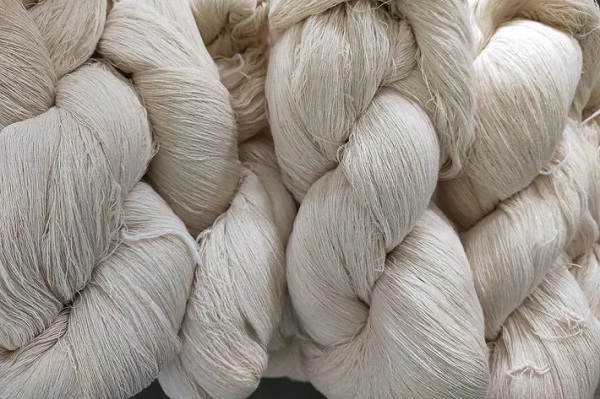
Traditionally, a major cotton exporter, India, for the first time is importing cotton yarn to guarantee uninterrupted supply to weavers and textile mills. Traders are selling imported cotton yarn at Rs 30 per kg lesser than the price of the local yarn, adding further pressure on dwindling profit margins. Atul Ganatra, President, Cotton Association of India notes, for the first time, traders and brokers have imported 4,000 tons of 40 counts of combed-carded compact yarn from Vietnam, Indonesia and Taiwan. A few weavers and mills are buying imported cotton yarn in small quantities to test their quality before ordering in bulk, he adds.
Duty removal pressurizes local spinners
A producer of 4.7 mt of spun and 3.4 mt o cotton yarn, India has world’s second largest spinning capacity after China. Around 65 per cent of the cotton yarn produced by domestic spinning mills is consumed by local weavers and textile mills and rest is exported. Removal of import duty on cotton procured from Vietnam has lessened the prices of Vietnamese cotton, leading to a reduction in capacities of local spinning units, says Jayesh Patel, Executive Committee Member, Confederation of Indian Textile Industry (CITI). This has further made it difficult for these units to sell products in the domestic market, he adds.
Big companies, with capacity to make cotton yarn, are importing cotton. For example, Welspun Group which is procuring cotton from Egypt to make yarn. The yarns are then sold at minimal rates to weaving units, notes Chintan Thaker, President.
Ahmedabad-based Chiripal Group, is importing 100 mt cotton from Nigeria. The company has taken precautionary measures like cotton hedging to prevent rising prices from impacting margins, says Ronak Chiripal, CEO. It has neither reduced nor cut down its installed capacity.
Textile mills rapidly exhaust quality stocks
Most spinning units are struggling as there is an acute shortage of quality cotton in the market, rues Gautam Dhamsania, Owner, Narmada Spinning. Mills are exhausting their stocks rapidly and would have to import cotton yarn for the next 3-4 months. Larger textile units like Welspun would also have to import raw cotton until fresh cotton stocks arrive in the local market, observes Dhamsania.
Customs delays, higher freight rates impact China’s spandex imports from January to April’22
Net data from China Customs shows, China reduced its spandex imports 20.7 per cent to 7,140 tons from January-April’22 while exports declined only 9.5 per cent to 29.6000 tons from January-April’22. China’s net exports declined 5.1 per cent on annual basis and continued to fall month by month. Imports too remained low during the period.
Exports decline by 9.5%
During the January-April’22 period, China’s spandex exports declined 9.5 per cent to 29.6000 tons. As per a CCF Group report, the average export unit price of spandex increased $1.867/kg on the year. Exports dropped gradually month-by-month as suppliers bagged lesser orders. Spandex was exported to five more nations taking total export destinations to 91 from January-April, 2022. The biggest exports to Turkey followed by South Korea and Vietnam. Together, these three nations accounted for 50.5 per cent of China’s total spandex exports. On the other hand, China’s spandex exports to Bangladesh, Egypt, India and Taiwan declined 20-50 per cent over the same period of January-April,2022 last year.
Imports sees greater decline
China’s spandex imports declined 1,883 tons during the period to 7,140 tons. The average import unit price increased $2.446/kg Y-o-Y to $10.872/kg. China’s monthly spandex imports hit a four-year low as imports declined by 27.5 per cent M-o-M to 2,302 tons in April with import unit price averaging at $9.793/kg.
Major spandex import destinations remained Vietnam, Singapore and South Korea accounting for 77.7 per cent of total. China’s spandex imports from Vietnam, Singapore, South Korea and Japan declined 23.6 per cent, 12.5 per cent, 8.1 per cent and 30.6 per cent Y-o-Y respectively during the January-April’22 period.
Companies shift focus to Southeast Asia as China market weakens
The weakening of China’s spandex market led to many MNCs concentrating on other countries during this period. Demand for spandex also rose in other Southeast Asian countries as textile and apparel production resumed. A few MNCs also reduced Spandex distribution in mainland China and focused on consuming the material locally. China’s spandex imports also suffered owning stricter disinfection of imported goods, delayed customs clearance and high sea freight rates.
Athleta to expand Saysh’s retail and product footprint
Athleta, the San Francisco-based apparel retailer has invested in the label Saysh founded in June 2021 by the American Olympic sprinter Allyson Felix and her brother Wes Felix.
The investment is part of an $8 million Series A funding round, led by Gap and consumer fund Iris.
Saysh will use the funding to scale its e-commerce business, wholesale distribution, and community-based retail footprint, according to a company statement Thursday.
The brand also plans to expand its product offering by launching new activity-specific sneaker lines.
Allyson Felix signed as Gap-owned Athleta’s first-ever sponsored athlete after leaving Nike in 2019. Felix called out Nike for allegedly proposing a 70 per cent pay cut in a new contract following the birth of her son.
SIMA to organize textile machinery exhibition in Coimbatore
Southern India Mills Association (SIMA) plans to organize an exhibition of textile machinery, accessories, and spares in Coimbatore from June 24 to 27.
The event will be held at CODISSIA Trade Fair Complex on the four days and will have 233 exhibitors displaying machinery and accessories in 312 stalls.
This year, it will focus on import substitution and the growing demand for electrical, electronics, spares, and components made indigenously.
The exhibition will be a platform for launching over 50 products. It is expected to generate a business of Rs 1,500 crore.
The exhibition will have 140 exhibitors from Tamil Nadu, the rest from other States and a few representatives of overseas companies. The fair, for which entry is free, is expected to attract one lakh visitors.
Sri Lanka’s garment exports surge by 13.7% during Jan-Apr’2022
Sri Lanka’s garment exports surged by 13.7 per cent during January-April 2022 to $1,769.9 million as against exports of $1,556 million in the same period of previous year, according to the statistics released by the Central Bank of Sri Lanka.
Sri Lankan textile exports increased by 13.3 per cent year-on-year to $112.2 million during the period. However, exports of other made-up textile articles declined by 4.3 per cent Y-o-Y to $42.6 million during January-April 2022, according to the Central Bank’s report ‘External Sector Performance – April 2022’.
On the other hand, Sri Lanka’s imports of textiles and textile articles rose by 23.8 per cent to $1,161.7 million, while clothing and accessories imports surged by 25.3 per cent to $93.9 million during January-April 2022.
During the month of April 2022, garment exports increased 21.5 per cent to $409.3 million. The export of textiles rose 37 per cent to $28.2 million from the same period of last year while exports of other made-up textile articles up 19.7 per cent to $10.2 million in the same period.
Cotton and yarn price declined in recent weeks: SIMA
Prices of cotton and yarn have declined in the recent weeks, say SK Sunderaraman, Deputy Chairman and Ravi Chairman, Ravi Sam, Southern India Mills’ Association (SIMA).
According to them, yarn is currently being sold at a discount price of Rs 20 to Rs 25 a kg in Tiruppur. Despite this, mills have been able to sell only 50 per cent of the yarn produced. Most of the mills have reduced production.
Cotton prices have also fallen significantly. The spot price quoted for Shankar-6 variety of cotton has fallen to Rs 91,000 (approximately) compared to almost Rs 1 lakh a candy last month.
With the Union Government permitting duty free imports till September 30 cotton prices started declining. The mills have sought extension of the exemption till December 31.
Pure London appoints Promostyl as Trend Agency Partner
To be held from July 17-19, 2022 at Olympia London, UK’s leading trade fashion buying event Pure London has appointed international style agency Promostyl its Trend Agency Partner. Paris-based Promostyl has been advising global brands on fashion trends, brand strategy and collection development since 1966. At Pure London, Sebestian Renault, Artistic Director and Malaika Ewande, Assistant Creative Director will deliver three trend presentations on The Catwalk in partnership with Drapers.
The partnership will also include a trend podcast, digital style guides, and post-show trend reports. The presentations will delve on the trends and consumer behavior for Spring/Summer’23, Loungewear, and ethical and committed fashion:
Gloria Sandrucci, Event Director, Pure London says, “Promostyle’s expertise, its insights and trend predictions will be an invaluable resource for Pure London community and buyers.” Visitors to Pure London will also discover an exciting collection of British and international womenswear, jewellery, accessories and footwear from brands and designers including One Hundred Stars, etc.
Promostyl is an international style agency with headquarters in Paris and a network of offices in New York, Tokyo, Beijing, Shanghai and Guangzhou. Since 1966 the agency has been assisting companies at various levels: trend book fashion, market strategy, brand strategy, positioning, collection development, space collections, space creation, advertising & communication.
Pakistan’s textile and clothing exports grow 28.26% in 11 months of this fiscal
Rapid depreciation in the value of the rupee and growing global demand led to Pakistan’s textile and clothing exports growing 28.26 per cent Y-o-Y to $17.62 billion in the first 11 months of this fiscal year (11MFY22). As per Pakistan Bureau of Statistics (PBS), Pakistan’s textile and clothing exports grew 56.02 per cent Y-o-Y during May this year. RMG exports grew 30.63 per cent in value and 49.70 per cent in quantity during July-May, while knitwear exports increased 36.44 per cent in value but dipped 4.34 per cent in quantity. Value of bedwear exports grew 21.68 per cent. However, its quantity decreased by 15.19 per cent. Pakistan’s towel exports increased 21.66 per cent in value and 7.17 per cent in quantity, whereas exports of cotton cloth rose by 26.81 per cent in value and 7.14 per cent in quantity.
Exports of cotton yarn increased 24.18 per cent, and those of yarn made from material other than cotton increased by 109.68 per cent. Pakistan’s made-up article exports excluding towels surged by 15.19 per cent, while exports of tents, canvas, and tarpaulin dipped by 2.16 per cent during the period under review. During the review period, the export of art, silk, and synthetic textiles increased by 29.36 per cent.
Textile machinery imports increased 47.24 per cent Y-o-Y to $722.605 million in July-May. Import of raw cotton increased 25.28 per cent while the import value of synthetic fibers rose 19.29 per cent followed by import of synthetic and artificial silk, whose imports rose by 28.80 per cent during the period. In 11MFY22, imports of used clothing increased by 46.90 per cent compared to the same period last year.
Greater Noida to host 16th edition of IFJAS from June 16-20
An apparel exclusive show, the Indian Fashion Jewellery & Accessories Show (IFJAS) will host its 16th edition from June16-20, 2022 in Greater Noida alongside the India International Garment Fair (IIGF). IFJAS will be hosted by the Export Promotion Council for Handicrafts and open to overseas buyers, buying and sourcing professionals as well as domestic volume retail buyers.
This edition will showcase innovations in fashion jewelry and accessories, design and trend forecast theme pavilions, regional treasures, daily ramp sequences, live craft demonstrations among other collateral activities. The three day event will have over 150 exhibitors from across India. Buyers can scout for a wide product range including fashion jewellery, semi-precious jewellery, belts & wallets, hand bags & purses, fashion accessories, head & hair accessories, stoles & scarves, shawls, embroidered, beaded & sequined accessories; fancy footwear; and artisanal apparel. The show will be attended by artisans from across India, says Raj Kumar Malhotra, Chairman, EPCH.











