FW
Cambodia, Myanmar catch up as Vietnam rises as the next popular apparel sourcing hub
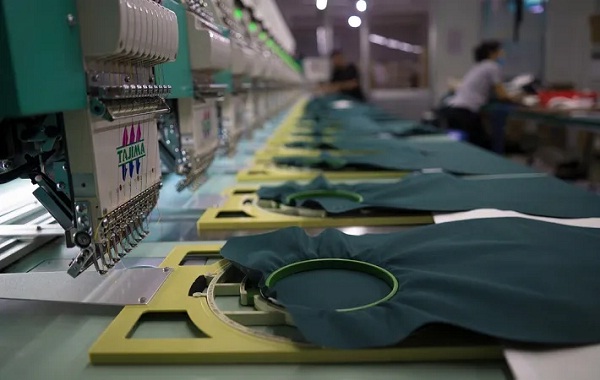
Widespread COVID-19-led disruption of business operations in China caused textile manufacturers to lose around 5 per cent export orders from October 2021 to March 2022. Most of these orders from the US were diverted to the Association of Southeast Asian Nation (ASEAN) countries, especially Vietnam, shows US Customs data.
Since the last few years, garment factories in China have been relocating to other nations due to rising labor costs. They have been mostly moving to countries in Southeast Asia and South Asia such as Vietnam and India, as per a Khmer Times. The popularity of Vietnam as a preferred apparel sourcing destination has been growing over the last few years. However, Myanmar and Cambodia have also caught up fast, says Wang Huanan, an industry leader with 20 years of experience in shipping and world trade.
The relocating of these factories has however, not had any major impact on China as it mainly involves manufacturing of low-value products. The relocation of textile factories has been directed to Vietnam in particular, as per a research by Everbright Securities.
New tax reforms and policies to attract investors
Cambodian and Myanmar have been attracting foreign investors by introducing tax reductions, exemptions and investment-friendly policies. The Cambodian government exempts foreign companies from import and export taxes for one year and corporate income taxes for three to five years on meeting requirements set by the Cambodian Investment Board. The government also exempts companies set up in special economic zone from taxes for nine years.
These facilities have enabled Cambodia’s exporters to outperform Vietnam’s. In the first five months of 2022, Cambodia’s exports grew 34.5 per cent Y-o-Y with garments, leather goods and footwear being the most exported products. Most of Cambodia’s exports are directed to the US. From January to May, Cambodia’s exports to the US grew 57.7 per cent to $3.73 billion. The garment industry benefitted from special tariffs imposed on Chinese textiles following US-China trade war in 2018.
Another emerging popular destination for Chinese factories is Myanmar. Around 70 per cent garment factories in Myanmar are Chinese textile enterprises, notes Shi Kun, President, Chinese Textile & Garment Association in Myanmar. Access to preferential treatment from the US, EU and Japan is attracting many Chinese enterprises to set up units in the country. From 2012-19, garment factories in Myanmar increased from less than 100 to over 500. During this period, Myanmar’s garment exports reached over 18 per cent of its total exports, and have now expanded to over 50 per cent. Exports totaled over $5 billion between 2018 and 2019, adds Kun.
The pandemic and following political turmoil interrupted this rapid growth and Myanmar’s foreign trade value dropped 19.5 per cent Y-o-Y. Garments, luggage and travel bags, shoes and hats exports dropped 21.4 per cent. Garment exports are recovering slowly with trade resuming. The sector is likely to attract more investment as the political situation stabilizes, adds Shi.
Availability of raw materials, rising costs hinder growth
Both Myanmar and Cambodia continue to make clothes from imported materials despite rapid growth of manufacturing facilities. Factories import 95 per cent of their raw materials, notes He Enjia, President, China Textile & Garment Association in Cambodia. On the other hand, Vietnam has established the complete textile value chain including weaving, dyeing, printing and garment making. It provides over 40 per cent of the fabrics and accessories locally.
Textile manufacturers in Cambodia also have to face high electricity and water costs, says He. The cost of electricity is about O.14 US cents per kilowatt-hour (kWh), compared to 7 to 9 cents per kWh in Vietnam. Another drawback is rising labor costs. Before 2021, Cambodia’s labor was low with basis salary of $61 a month. This has tripled to $194 a month driven mostly by political factors, these irrational rise is making Cambodia less competitive, affirms He.
‘Sri Lanka will emerge successfully from current crisis’: William Eias, Chairman, Sri Lanka Apparel Sourcing Association
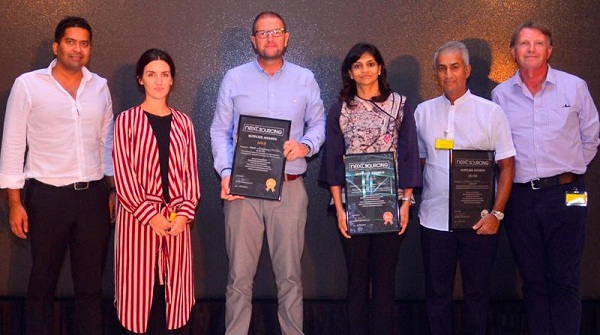
Having lived through a crippling civil war, a tsunami, the Easter Sunday bomb attack and the two-year long pandemic, Sri Lanka is geared to overcome the current economic crisis. However, it urges the rest of the world to believe in the country’s resolve. “Sri Lankan apparel companies have built a reliable industry that boasts of a speedy deliveries of good quality products,” opines Wilhelm Elias, Chairman, Sri Lanka Apparel Sourcing Association. “Through myriad crisis, companies have built an apparel industry that has become a reliable sourcing destination for some of the largest global brands. They have reaffirmed confidence in Sri Lanka’s delivery of both product and quality and always looked to Sri Lanka as a safe and reliable pair of hands. The country has developed an enviable reputation for ethical and sustainable manufacturing,” he says. The country had gained a reputation for manufacturing ethical and sustainable products. However, now, it is struggling with a macroeconomic crisis beyond its control.
Two years ago, the US and China entered a trade and tariff war that was exacerbated further by Russia’s invasion of Ukraine. The situation worsened as supply chains broke down and inflation rose across the world. The Sri Lankan industry may not emerge unscathed from this crisis.
Boost apparel exports
To sustain its current political stability, the Sri Lankan government needs to boost apparel exports that not just help pay for critical imports but also obtain credit from trade partners India and China, opines Elias.
Elias says, “Some taxes have been raised, and more will be. But the need is for structural reform, aligned in response to significant global economic changes. White elephant infrastructure projects, for example, should be removed from the country’s future plans.”
Additionally, Elias advises the government to prioritize export and manufacturing industries that are most forex earning sectors. It needs to create conducive environment for operating these industries and ensure adequate energy and raw material supplies. “Experience over three tumultuous decades has demonstrated that buyers, customers and lenders are as invested in Sri Lanka’s apparel industry and economic revival as Sri Lankans are. This is where faith in the apparel industry’s resilience is well seen.”
Cut back subsidies
The government needs to also cut back on the subsidies on products and increases prices of essential commodities including energy and food. It needs to establish a five or six-step economic revival plan, with the help the IMF and other agencies.
The plan should be aimed at making the entire political system accountable for meeting the set objectives. This will help Sri Lanka emerge victorious from the current crisis, he asserts.
Impending recession calls for inventory saving measures by apparel brands

As a looming economic downturn threatens consumer spending on fashion, apparel retailers are distressing over rising inventory levels. Manufacturers like FutureStitch are reducing the volume of their apparel production to cut stocks. Along with partners like Everlane and Crocs, Futurestich expects stocks across three manufacturing facilities to decline soon due to a drop in orders by a third.
Piling inventory a concern for brands
Over the last two years, measurements of success have changed for garment manufacturers, says Taylor Shupe, Co-founder Stance and Owner, FutureStitch. Earlier, a manufacturers’ success used to be measured by its gross margins, now it is measured by the inventory he holds.
On the other hand, brand partners measure a company’s success by the profitability of each product it holds in inventory. Reducing inventory has become extremely crucial for brands as seen from tumbling of Target’s shares after it slashed prices to clear unsold inventory in early June. Even Walmart plans to slash inventory that rose by 33 per cent last year.
However, not all brands are decreasing their orders volumes. A few continue to place large orders amid tight supply chains and delayed shipments.
Innovative ways to manage inventory
Matt Field, Founder, MakerSights opines, the best way to deal with an unpredictable inventory situation is to follow the 80/20 rule. His partners are cutting back on the number of Stock Keeping Units (SKUs) manufactured and making up for the fewer options with cost benefits.
Michelle Cordeiro Grant, Founder, Lively, an intimates brand adds, she has been focusing on SKU rationalization in anticipation of a recession. Around 85 per cent of her sales currently are coming from just 20 per cent of the assortment, she affirms.
Grant has been protecting her top-selling products while placing lesser emphasis on the low-selling assortment event though it’s causing her to lose out on the novelty factor. She has been using two materials to manufacture each of her products. Currently, each of her products is being made from a combination of nylon and spandex.
Expanding into new categories and new materials and increasing product portfolio are strategies useful in a booming market. A recessionary market, on the other hand, calls for a little saving on the available resources.
ICRA revises long-term rating for V-Mart Retail
Rating agency ICRA has revised the long-term rating for V-Mart Retail at [ICRA]AA- and short-term rating at [ICRA]A1+ for the captioned line of credit.
The Outlook on the long-term rating has been revised as Positive from Stable.
The rating agency has reviewed total bank facilities worth Rs195 crore. This includes Long-term facilities worth Rs132.43 crore, short-term facilities worth Rs16.57 crore, and unallocated facilities worth Rs46 crore.
The revision in the outlook on V-Mart Retail long-term rating takes into account ICRA's expectation of healthy growth in turnover and sustained improvement in profitability, driven by continued network expansion, recovery in sales per square foot from the pandemic impact, and profitable ramp-up in operations of the 'Unlimited' stores acquired in FY22.
This, along with calibrated expansions and low reliance on debt, is expected to keep the company's financial risk profile strong, with a conservative capital structure, strong liquidity profile, and robust debt coverage metrics.
IshaAmbani named Chairman, Reliance Retail
MukeshAmbani’s daughter IshaAmbani has been named as the Chairman of Reliance Retail as the company pushes ahead with a plan for succession in one of Asia’s richest families.
IshaAmbani’s promotion follows that of her twin brother, AkashAmbani, who was appointed as chairman of the telecom unit, Reliance JioInfocomm. Both Ambani brother and sister have been part of teams that negotiated Meta Platforms Inc.’s investment in the group.
Isha, 30, is an alumnus of Yale University. The twins have a younger brother, Anant, 27.
Reliance Retail and Reliance Jio are subsidiaries of the family’s oil-to-telecom conglomerate, of which the $217 billion Reliance Industries is the flagship firm. MukeshAmbani is chairman and managing director of Reliance Industries
Operating profitability of home textile companies stabilizes to 13%
The operating profitability of home textile companies is stabilizing by 150-200 basis points to 13 per cent due to a decline in export demand and increase in raw material and transportation costs, says Credit Agency Crisil Ratings. The agency analyzed 60 companies accounting for 60 per cent of the sector’s revenue. It predicts, credit outlook for the sector will remain stable.
The companies’ balance sheets, strengthened by healthy cash accrual and debt reduction over the past two fiscals, will lend support to exports, says the agency. India’s home textile exports account for 60-70 per cent of revenues. Most of these exports are directed to the US which accounts for 58 per cent of these exports.
Global demand for home textiles is likely to decline due to inflationary pressures with big retailers cutting inventory and consumers curbing discretionary spends. India’s home textile exports declined 5-6 per cent from January-April 2022 owing to a slowdown in sales of key US retailers in the past 3-6 months. The increase in raw cotton prices impacted exports further.
H&M to restructure company’s capital through shares buyback program
Hennes & Mauritz (H&M) AB has decided to acquire the company’s own B shares worth SEK 3 billion in order to transfer capital to the shareholders and adjust the company’s capital structure. The brand will execute the buyback program in accordance with the EU Market Abuse Regulation (MAR) and Commission Delegated Regulation. It will hire a management firm or credit insituutio to manage this share acquisitions.
The share buyback will be executed on Nasdaq Stockholm in accordance with its Rule Book for Issuers, MAR and the Safe Harbour Regulation. The shares shall be purchased at a per-share price within the price range (spread) on Nasdaq Stockholm applicable from time to time, meaning the spread between the highest purchase price and the lowest selling price prevailing and disseminated by Nasdaq Stockholm from time to time.
The program began on June 29, 2022 and will conclude on November 30, 2022. Payment for the shares will be made in cash.
India lifts anti-dumping duty on import of textile chemicals from Bangladesh
The anti-dumping duty on import of textile chemicals from Bangladesh has been lifted. Anti-dumping duty of $27.81-$91.47 per tons on the import of hydrogen peroxide was withdrawn after the lobbying of Bangladesh government and local companies.
Mohammad Akramuzzaman, Chief Financial Officer, Samuda Chemical Complex says the removal of duty will enable his company to export the chemical to India. It will also give boost to chemical’s export from Bangladesh to India, says Tapan Kanti Ghosh, Senior Secretary, Commerce Ministry. Before duty imposition, exporters shipped 3,000 tons of the chemical a month to India.
Anti-dumping duty is imposed by a government on imported items to ensure fair price in the market. Many countries impose such duties on the products they believe are being dumped in their markets in order to protect local industries.
Garment Show of India postponed to July 27-29, 2022
The upcoming edition of The Garment Show of India has been postponed, and the show will now be held from July 27-29 at the Noida Expo Centre in Sector 62. The show organized by Saina Events and Trade India in its sixth edition will feature manufacturers from garmenting hubs including Noida, Gurgaon, Ahmadabad, Jaipur, Kolkata, Punjab, Kanpur, Tirupur, Indore, and Meerut, etc.
It will feature runway shows and seminars and offer networking opportunities by organizing a fashion forum to discuss industry trends. A Khadi Pavilion will promote handloom, sustainable weaves as a versatile fabric for brands to use and showcase a range of examples.
Large-scale retailers including Shoppers Stop, Reliance Retail, Aditya Birla Group and Central will participate. It will feature apparel product categories like ethnic and western wear, eco-friendly clothing, maternity wear, sportswear, fabric and trims, handbags, leather goods, and retail technology, etc.
Cone Denim highlights use of regenerative cotton in premium denim range
Global leader in denim authenticity and sustainable innovation for over 130 years, Cone Denim is expanding its sustainability commitment by highlighting the use of regenerative cotton in its premium denim lines. As per a Textile Today report, Cone Denim is executing the project in collaboration with international regenerative agriculture initiative Regenagri. The project aims to increase access to sustainably sourced cotton grown using regenerative agricultural practices besides working on various programs to help customers and brands achieve key sustainability actions.
Cone fully supports the Regenagri® initiatives that help businesses move to holistic farming by prioritizing soil health and biodiversity, lowering greenhouse gas (GHG) emissions, and sequestering CO2. Meanwhile, along with its parent company Elevate Textiles, Cone Denim has pledged to the UN’s Sustainable Development Goals and committed to source 80 per cent verifiably sustainable cotton by 2025.
The brand offers a variety of responsibly sourced cotton including recycled cotton, organic cotton, and Better Cotton Initiative (BCI) cotton, and continuously invests in supporting new initiatives.