FW
Comfort, sustainability drives global loungewear market, APAC leads growth: Study
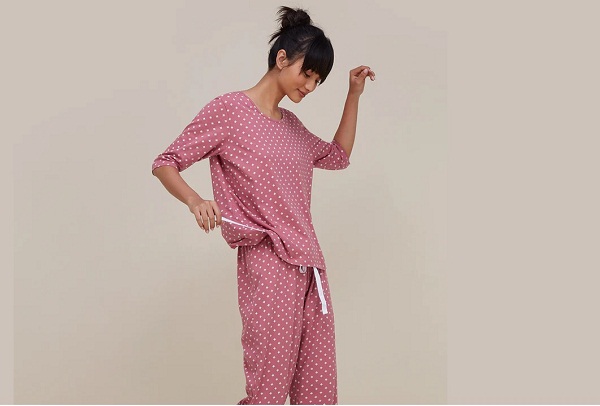
The world spent two years in lockdown, with varying intensities based on local laws and work from home became the norm. Indeed, professionals are finding it hard to break in 2022. Is it any wonder then that sleepwear and loungewear the preferred garments for spending time at home has turned to comfortable clothing at work as well? In a study, Technavio, a leading global market research company has stated the global category classified as sleepwear and loungewear is experiencing growth momentum since 2022 with CAGR of 10.21 per cent. The categories’ market share is predicted to reach $29,398.4 million in the next five years with the market growth at a 9.66 per cent year on year. The report was compiled after researching consumers in APAC, Europe, North America, South America, and the Middle East and Africa.
What’s driving growth
Demand for comfort is shaping into a major trend, particularly as the world of apparel grows more inclusive with greater demand for plus-size clothing. For the past few years, this segment of consumers have not only become vocal but are also being acknowledged by fashion brands that are now showcasing their product line of sleepwear and loungewear with plus-size models.
Additionally, the study found women in the US and Europe have reorganized their wardrobe priorities as 78 per cent of those interviewed chose being comfortable as their number one reason for buying loungewear and sleepwear. The new trend as per 74 per cent respondents is more informal and laid-back dressing not only at home but also whilst going out. Interestingly, whilst 61 per cent of female respondents chose to buy comfortable casual wear, another 44 per cent are decreasing formal wear in their closets.
Comfort, sustainability in focus
The versatility of loungewear is seen as the perfect fit for home to outside crossover. Fabric plays an important role as the stress is on comfort and here lies an opportunity for the entry of sustainable and bio-degradable fabric that can balance comfort as well as the consumers’ growing environmental awareness. This trend is creating a whole new avenue of opportunities for the sleepwear and loungewear category as the study revealed a satisfaction gap between what consumers want, i.e. comfort, fit, quality, drape and durability and what is currently on offer. Many brands are now on an overdrive to close this gap with creative designs and innovative fabric solutions. However, established brands investing in developing designs and fabric options are finding counterfeit market a challenge as their items are being copied, flooding markets with low-cost products and fake labels that are of low-quality damaging their brand image and equity.
APAC the leaders
APAC as a large region has not yet felt the tremors of Western economic crisis so far. As these countries open, return to normalcy, jobs and economic growth are on the upsurge, leading to more disposable incomes and a changed outlook towards formal wear. International brands have responded quickly and introduced their lines of loungewear that is increasingly driving demand for more variety. The report sites this region to be the fastest growing market and will contribute to 30 per cent of the global growth.
Offline retail the frontrunner
In terms of retail channels, it seems offline channels due to their sheer physical presence is currently and will outperform online for the next few years. Branded stores, multi-brand stores, fashion and apparel stores, hypermarkets, supermarkets, convenience stores, clubhouse stores, and department stores with their renewed pricing strategies are encouraging shopping and on spot purchases. The presence of such physical distribution channels has a flipside as well which established brands are dealing with – in South Asian an d South East Asian countries as well as China, counterfeit products are breakers on the road to success.
Troubles beset EU
The European Union (EU) is now in a challenging phase. The energy crisis is eroding household purchasing power and weighing on production. Economic sentiment has markedly fallen.Growth is set to significantly contract at the turn of the year.
Amid elevated uncertainty, high energy price pressures, erosion of household purchasing power, a weaker external environment and tighter financing conditions are expected to tip the EU, the euro area and most member states into recession in the last quarter of the year. The EU is among the most exposed advanced economies, due to its geographical proximity to the Ukraine-Russia war and heavy reliance on gas imports from Russia. However as inflation keeps cutting into households' disposable incomes, the contraction of economic activity is set to continue in the first quarter of 2023.
Growth is expected to return to Europe only in spring, as inflation gradually relaxes its grip on the economy. With powerful headwinds still holding back demand, economic activity is set to be subdued, with GDP growth reaching 0.3 per cent in 2023 as a whole in both the EU and the euro area.By 2024, economic growth is forecast to progressively regain traction, averaging 1.6 per cent in the EU and 1.5 per cent in the euro area.
Turkey retail sales volume up nine per cent
Turkey’s retail sales volume rose by nine per cent in September 2022. In the same month, non-food (except automotive fuel) sales increased by 13 per cent, automotive fuel sales decreased by three per cent and those of textile, apparel and footwear rose by two per cent compared to September 2021.
Retail sales volume increased by one per cent in September 2022 compared with August 2022. In the same month, non-food (except automotive fuel) sales increased by two per cent, automotive fuel sales increased by one per cent and those of textile, apparel and footwear did not rise at all.
Retail turnover increased by 130 per cent in September 2022, while its rise was five per cent month on month. The retail turnover of the textile, apparel and footwear sector rose by 127 per cent year on year in September while its rise was six per cent month on month.
From January 2022 to September 2022 Turkey’s apparel exports increased by ten per cent.Earnings from exports of knitted and crocheted clothing and accessories grew by seven per cent during the same months of the previous year. Earnings from exports of non-knitted apparel and accessories grew by 14per cent compared to the same period of the previous year.
Plus size clothing up 5%, Asia fastest growing market
The plus size clothing market is growing at five per cent a year. With the greatest obese population, and the most money spent on plus size clothing, the United States leads the market. The Asia-Pacific region is forecast to grow at the highest rate. Europe is expected to develop rapidly in the global plus size clothing industry.
The market for plus size apparel has been boosted by a number of factors, including celebrity endorsements and a positive public impression of persons who are plus sizes.
The male category leads the market. The casual wear category dominates the plus size clothing marketdue to increased acceptance and acceptability of casual wear among consumers for social occasions. The mid-priced segment dominates the plus size clothing market. In response to the rising demand for plus size clothing, retailers are focusing on launching plus size apparel in order to attract more customers.
The market share for plus size clothes is increasing as obesity and overweight problems become more prevalent. The market share for plus-size clothes suffered as a result of the Civid outbreak. Due to a labour shortage, production problems like fabric shortages and order cancellations, lower exports, and a decrease in consumer spending on non-essential items, plus size clothing sales have decreased.
Savio develops efficient winder
Savio’s new Proxima Smartconer is a high-tech winding machine. It is capable of perfectly adapting to the demands of connectivity, Industry 4.0 and Industrial Internet of Things.
Spinners will get a machine featuring high-tech capabilities, thanks to a design with a strong focus on the main benefits for customer’s competitive advantage: high productivity, low energy consumption, premium yarn quality, automation, and data connectivity.
Proxima Smartconer has been designed with the foremost attention to customers’ needs in the optimal utilization of a winding machine. The machine offers high productivity thanks to the new Smart Booster, a shorter bobbin change cycle and a faster splicing cycle. Energy consumption is low through the use of the latest and most efficient self-regulating independent motors and frequency inverters. It has easy use and settings thanks to the new Human Machine Interface. Bobbin flow is efficient in the automated models.
Smartconer means a winder with many smart functions, making for a more connected, increasingly efficient, and flexible machine. Smart monitoring of the winding process is possible thanks to the Industrial Internet of Things digital solutions.
Savio, based in Italy, began as a workshop for the production of textile components and is today the leader in the yarn finishing machine sector. It operates worldwide in the manufacturing and marketing of automatic winders, heat-setting winders and two-for-one twisters with factories in Italy, China and India.
India ITME to be held in December
India ITME will be held in Noida, December 8 to 13, 2022.
This mega technology and engineering B2B exhibition for textiles is hosted every four years in India to cater to the machinery and technology requirements of the textile industry of India, southeast Asia and the Middle East.
India ITME has planned a rich array of concurrent programs, workshops and conferences. Key topics for the further growth of the Indian textile industry with the latest technology and government policy vision for boosting textile machinery manufacturing will be discussed.
India ITME Society has played a significant role in facilitating technology access to the nation’s textile industry from across the globe enabling textile segments to upgrade manufacturing technology and export capabilities. ITME exhibitions from the1980s onwards have been a boon for small companies who can view and access engineering advances in textile machinery from across the globe without bearing high costs.
Over time, India ITME events have become a prime event for southeast Asian countries. Slow and steady has been the growth story of the Indian textile industry, which has striven to build modern capabilities alongside nurturing age-old tradition and skills to stay strong and proud; face challenges from speed, cutthroat price competition, youthful/instant fashion brought on by the advent of modern technology.
B’desh can get better prices, grow share in growing MMF garments exports
Switching to manmade fiber can help Bangladesh apparel manufacturers get higher prices. The country has the potential to switch to the production of synthetic fiber-based textile and apparel to realise greater per unit values in the world market.
The global consumption of polyester filament and staple fiber has been on the rise while the demand for clothing made with cotton has been on the decline. Buyers are choosing manmade fabrics as substitutes to cotton fiber for sustainability and environmental issues. Synthetic fiber makes up 78 per cent of the world's clothing and the remaining 22 per cent is made of cotton fiber.
As of now 70 per cent of garments exported from Bangladesh are based on natural cotton while the remaining 30 per centis made of synthetic fiber. So Bangladesh holds just a five per cent market share of the global manmade apparel trade while rival Vietnam holds a ten per cent share.
Global manmade fiber apparel exports grew by four per cent while that of cotton-based items shrank by 0.5 per cent annually between 2011 and 2019. Cotton apparel exports then fell by some 15 per cent in 2020, while manmade fiber garment shipments saw robust growth of eight per cent in 2021.
Industrial fabrics grow at 7%, Asia to emerge largest market
The industrial fabrics market is growing by seven per cent a year.
Major key factors propelling the growth of the industrial fabrics market are the rapid expansion of the textile industry across the world and the production of fabrics globally.
Industrial fabrics are generally utilized in the production processes of the parts of structures, machines and other technical articles. Employing both natural and synthetic materials, industrial fabrics are manufactured in diverse patterns to be used in varied manufacturing processes. The presence of textile businesses is anticipated to bolster the production of industrial fabrics.
The global industrial fabrics market is also estimated to grow on account of the growth in the production of textile fibers across the globe and the significant number of industrial accidents. The automotive segment is anticipated to garner the largest revenue. The rising demand for automobiles by the burgeoning population is expected to increase the sales of industrial fabrics in the upcoming years.
The Asia Pacific industrial fabrics market is anticipated to hold the largest market share by the end of 2033 among markets in all other regions. The rising population along with their increasing demand and manufacturing of textile fibers in the region are some of the major factors anticipated to drive the growth of the market in the Asia Pacific.
ICA holds event in the US
The International Cotton Association (ICA) held a trade event in the US, November 8 to 10, 2022.
Over 450 delegates from the global cotton community gathered. This was the ICA’s first traditional trade event in three years. The three-day event saw a variety of top industry speakers take to the stage. The event began with a series of regional forums and a diversity focused panel session. There was also plenty of opportunity for delegates to network and do business, one of the main event attractions. The ICA fully embraces sustainability and to that end continues to work with sustainability platforms around the world.
This year, ICA has signed MOUs with Better Cotton, US Cotton Trust Protocol, and Cotton Made in Africa, and actively engages with all organisations to promote sustainability throughout the cotton supply chain. The Women in Cotton group continues to make great strides in increasing diversity within the cotton industry. Next year's event will take place in Singapore, October 10 to12, 2023.
Promoting global cotton trade, the International Cotton Association (ICA) is the world’s leading cotton trade association and arbitral body.The ICA has more than 550 members and its membership spans all corners of the globe and represents all sectors of the supply chain.
Despite T&C index poor performance, India’s IIP rebounds in September
India’s growth of Industrial Index of Production (IIP) rebounded in September 2022 to 3.1 per cent. This could have been higher had the textile sector performed even at an average rate. However the textile and clothing sector (T&C) performed poorly on IIPs.
In September, the index declined 12 per cent for textile manufacturing and 21.7 per cent for apparel manufacturing. The index for manufacturing of textiles declined to 106.8 in September 2022 from 121.4 during the same period of last year. Manufacturing of weaving apparel went down from 158.7 to 124.7. The cumulative index for April 2022 to September 2022 fell 108.8 for manufacturing of textiles. The index was noted at 115.1 in April 2021 to September 2021.
The index of wearing apparel increased from 116.1 to 134.2 in April 2022 to September 2022. The IIP for September 2022 rose to 3.1 per cent from August’s contraction of 0.7 per cent. Growth in September 2021 was 4.4 per cent. For the April to September period, IIP grew by seven per cent compared with a 23.8 per cent rise in the previous year’s same period. The textile sector is facing a slowdown in India and the world at large due to economic adversities. Therefore, India’s domestic and export demand for apparel has declined.