FW
Ethnic wear retailers see huge demand
Demand for occasionwear and ethnic wear has perked up.
After two years of muted demand, fashion and apparel retailers hope to surpass the previous season’s sale numbers. Over 32 lakh weddings are expected in this season and consumers are celebrating festivals across India during the current quarter. Online sales too are expected to play an important role in aiding wedding sales. People are shopping at rates almost equal to the pre-Covid era and with offices opening, the wedding season, and festivals, the retail market is flying high. The Indian wear category for both men and women has witnessed an increased demand of almost 1.5 times over the last year. This shopping season has witnessed a traction in premium home-grown labels and curated merchandise.
Brands await the rush
The festive and wedding season has helped increase the customer base for brands like Manyavar, Kisah, Tasva, Libas, Varanga and House of Pataudi. TCNS Clothing which runs the brands W and Aurelia is catering to the rising consumer demand by opening more experiential stores in tier II and tier III cities.Fabindiahas seen continued demand for ethnic wear this wedding season. The brand has also seen a splurge in gifting and hence has launched a gift collection along with gift cards. Online fashion platform Myntra has also seen an uptick in Indian wear demand this season and is continuously adding more brands and styles to fulfil the growing demand.
Beximco allows for complete traceability
Bangladesh Export Import Company (Beximco) has teamed with FibreTrace to provide complete supply chain traceability to its sustainable practices.
The partnership will involve the application of FibreTrace pigment to cotton, hemp, recycled polyester, and recycled cotton fiber during the spinning process. The pigment will remain with the textile for life through use, reuse, recycling, and reimagination. As of January 2023, yarn, woven fabrics, knit fabrics, and clothing resulting from the agreement will be offered. Beximco is one of the largest vertically integrated textile and apparel firms in South Asia and has cutting-edge technology in spinning, knitting, weaving, denim, and garment finishing. With the ability to finish 350,000 yards of fabric per day the company has a track record of implementing cutting-edge, intelligent fibers. Beximco is eager to use FibreTrace verified technology to demonstrate its dedication to transparency and traceability as the technology monitorsits progress toward a more sustainable future for economic, social, and environmental development.Being the biggest conglomerate in Bangladesh, Beximco has a significant presence in several of the key economic sectors of the nation. The group’s textile segment is a fully integrated producer of cotton and polyester mixed fabric and apparel, meeting the demand in both domestic and international markets.
Global textile businesses continue to be negative, but stable: ITMF
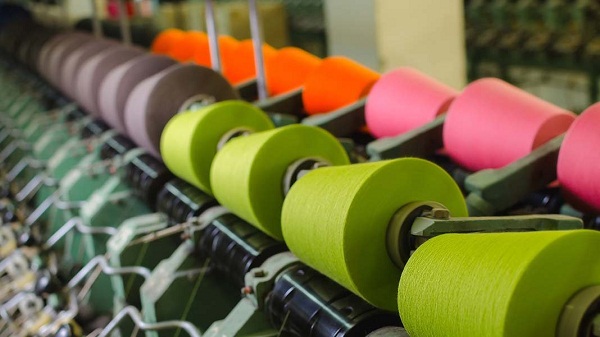
On the whole the business situation in the global textile industry deteriorated further in November 2022. So says the ITMF.
At the same time, global business expectations in six months’ time remained in negative territory but did not get gloomier. The indicators for order intake, order backlog, and capacity utilisation rate dropped globally. The business situation in the three Asian regions and Europe remains especially poor. In north andcentral America the business situation has improved markedly.
Except for the textile machinery segment that still benefits on an average from a long order backlog, all other segments found themselves in negative business situations, especially fiber producers and spinners. Global business expectations have remained negative but have stabilized since July 2022. Expectations have improved significantly in South Asia and Europe. Business expectations in all segments remain in negative territory with four out of seven recording improvements.
Order intake weak except north and central America
Order intake nosedived in November, in line with the weaker business situation and weaker demand, currently the biggest concern for the global textile value chain. Only companies in north and central America registered on average a good order intake, while all other regions were faced with an unsatisfactory order situation. Except for southeast Asia and north and central America order backlog fell. The only segments where order backlog increased were the downstream segments of garments and home textiles. Capacity utilization rate dropped in all regions in November 2022. It only increased in the textile machinery segment but fell otherwise.
Demand reduction cause of concern
Weakening demand is by far the biggest concern in the global textile industry, followed by the root causes of demand reduction, namely high energy and raw material prices which lead to high inflation rates. The good news is that logistical costs are not much of a concern anymore. Concerns about geopolitics on the other hand have increased again in the past two months.
Vietnamese companies make strong presence at Intex India
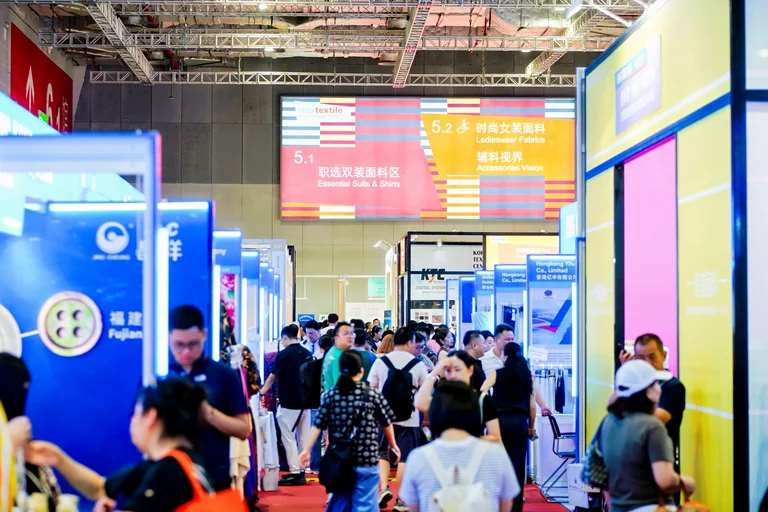
Vietnamese businesses are taking part in Intex, New Delhi, December 8 to 10, 2022, in a big way. Among them, Mai Mai Service and Trading, Max Blue Vietnam and Beevalue are showcasing a number of fashion items, along with fabric, yarn, and accessories.
The event, a leading international textile sourcing show in South Asia, has taken place for nine times in Sri Lanka, Bangladesh, and India since 2015.This year, more than 100 major suppliers of fiber, yarn, fabric, apparel accessories, dyes, and chemicals have come to the show, which also includes a series of workshops and networking events.
This year, alongside the exhibition, Intex India is hosting a buyer-seller meet. Since 2015, Intex India has connected 35,000 buyers from 15 countries to 1350 textile suppliers and has empowered industry players to explore new business opportunities and expand business globally, making Intex India the annual calendar event for South Asia's textile and apparel industry. Shows have been organized across the most relevant South Asian textile markets of Sri Lanka and Bangladesh.
Intex is determined to bring a fresh wave of opportunities for manufacturers and buyers from domestic as well as international markets to connect with each other on this platform.
Pure London to feature exciting collections
Pure London, to be held in the UK, February 12 to 14, 2023, will host pioneering designers who will showcase their latest collections. Visitors can engage with the next generation, providing a new home for alternative lifestyle collections from around the world. Firmly rooted in inclusivity and diversity and offering innovative, creative collections which inject colour, confidence and creativity, the exhibitors will be independent, unapologetic, and diverse, proudly embracing difference in all its glory and offering bold collections that make a statement and demand zero-judgment.
British brand Innocent will present a dark yet playful collection that explores PVC, faux fur, buckles, lace inserts and unique cuts. Spanish brand Costurero Real’s statement pieces are handmade and reference nature and fiction with bespoke fabrics and unique designs. Pamela Mann, a leading and hosiery specialist, will present avant-garde prints, beautiful lace inserts, vibrant prints and statement fabrics creating a truly unique and unrivalled offering. Collectif’s range will feature a unique mix of bespoke prints, unique embroideries and timeless styles that have become synonymous with the brand. Collectif combines modern trends with classic retro styling to create an exciting mix of romance and glamour set against an unconventional background.
Pure London presents the UK’s most comprehensive women’swear, accessories and shoes brands offerings.
Thailand apparel imports from Cambodia go up
Thailand’s apparel imports from Cambodia are likely to rebound during the current year, although they may still not touch pre-Covid levels.
The trade was at $39.729 million in January 2022 to September 2022. The shipment had witnessed a steep fall in 2020 and 2021. Imports during the first three quarters of this year indicate that the trade is rebounding well.Thailand imported apparel worth $39.729 million in the first three quarters of this year, already nearing the total imports of $41.010 million during 2021.
Imports this year from Cambodia are likely to breach last year’s figure. Imports peaked at $95.806 million in 2019, increasing from $89.091 million in 2018 and $67.170 million in 2017. But it slid to $73.986 million in 2020, before falling drastically to $41.010 in 2021.
Traditionally, Thailand is an apparel importer from Cambodia and exports apparel though in smaller volume to the latter. Thailand’s apparel exports to Cambodia stood at $7.099 million in 2021, $6.394 million in 2020, $10.680 million in 2019 and $9.957 million in 2018. It exported apparel worth $8.482 million in the first three quarters of this year. Cambodia’s apparel exports in the first ten months of 2022 rose by 18 percent.
Playboy releases denim line
Playboy has launched denim for men and women. This is Playboy’s first owned and operated denim line.
The collection spans men’s straight, skinny and dad fits to women’s loose and flare fits. Each jean features Playboy’s iconic bunny as a crystal appliqué, cutout, embroidery or laser print as well as branded hardware and back patches.The line offers stretch and rigid fabrications with washes leaning into ’90s and Y2K trends. Washes include light and medium blue, destroyed gray, pink stonewash, vintage black, deep indigo and black waxed. Other styles have an allover bandana print and a camouflage print. All jeans are made in Rurkey. The line has been developed as the merging of two American icons: Playboy as an iconic American brand and denim as an iconic American sportswear category.
Offering everything from rabbit head cookie-cutters to beach towels, phone cases and condoms, Playboy is among the top 20 most licensed brands in the world and its merchandise is sold in more than 180 countries. Playboy denim marks the second owned and operated launch by the brand’s consumer products division following the release of lingerie. The company looks forward to continued expansion of its owned and operated business and will leverage these new product lines across the Playboy ecosystem, including through its robust creator network.
PFY prices rise in China
Polyester filament yarn prices have started rising in China. Leading yarn producers have kept raising prices. On the one hand, polyester filament companies wanted to cover earlier heavy losses when many companies cut production.
On the other hand, stimulated by the bullish macro environment, the whole chemical fiber industry held slightly better expectations toward future movement.In addition, downstream players saw alleviated pessimism when the pandemic control and prevention policies have been eased and polyester filament yarn companies continued raising offers tentatively. Some speculative demand was also boosted. As a result, sales of polyester filament yarn remained good in recent days. The inventory of polyester filament yarn was falling, which alleviated some inventory burden.
Sales of some warp knitted and circular knitted fabrics slightly increased with the colder weather, which may retard the holiday plans of some downstream plants. Meanwhile, downstream buyers show apparently higher intention to replenish with recovering confidence. If the price of polyester filament yarn declines to their price idea, some downstream plants may restock a lot at the end of year.Polyester filament yarn companies may be slower in cutting or suspending production when market fundamentals are improving periodically.
Lululemon Q3 revenue up 28 per cent
Lululemon revenues for the third quarter increased by 28 percent. Net revenues in North America were up 26 percent for the quarter, year over year and 41 percent internationally. Revenues in mainland China grew nearly 70 percent during the quarter.
Lululemon is a Canadian athletic apparel, accessories and footwear maker. Total comparable sales rose 22 percent while comparable store sales were up 14 percent during the quarter. Direct-to-consumer net revenues — which represent 41 percent of total company revenues — grew 31 percent. Both the men’s and the women’s business grew during the quarter, up 28 percent and 23 percent, respectively, while accessories was up 52 percent, year over year. In-store traffic grew 25 percent, year over year, while traffic to the e-commerce business rose 50 percent.Third quarter ending inventory grew 85 percent. But the company made the decision to stock up on product last year in order to capture growing guest demand.Inventory levels were too lean last year but now Lululemon is well positioned to be in stock throughout the holidays.The company delivered a quarter of strong sales and earning growth, despite a dynamic operating environment, and looks forward to a strong finish to the fiscal year.
Japanese companies shift out of China
Japanese apparel manufacturers are shifting production from China to other southeast countries to compensate for the rising cost of raw materials.
They are taking advantage of the reduction of customs duties on merchandise imports because of the Regional Comprehensive Economic Partnership (RCEP).
Matsuoka Corporation, a contract manufacturer for Uniqlo, plans on decreasing production in China from 50 per cent to 29 per cent and plans to increase production in Bangladesh to 34 per cent from 28 per cent and in Vietnam to 28 per cent from 16 per cent by 2025.
China as a source for Japanese apparel has declined from two trillion yen in 2011 to 1.5 trillion yen in 2021, whereas the sourcing of Japan’s apparel in Vietnam has increased from 0.25 trillion yen in 2011 to 0.5 trillion yen in 2021.Due to the increase in labour costs because of the rapid economic rise in the Chinese economy, the onset of the zero-Covid policy, which mandates an initial suppression phase and so on, companies are now looking to shift base to other countries.
The average monthly salary in Vietnam and in Bangladesh is $ 270 and $120 whereas the average monthly salary of a factory worker in China is about $ 670.