FW
Uniqlo leverages ‘Most Influential’ status to drive multi-billion dollar global expansion
Following its debut on the TIME100 Most Influential Companies list in May 2026, Uniqlo is capitalizing on its ‘Leader’ status to accelerate its transition into a dominant global lifestyle brand. The recognition coincides with a period of unprecedented fiscal strength for parent company Fast Retailing, which reported a record consolidated revenue of ¥1.03 trillion ($6.7 billion) in Q1, FY26 - a 14.8 per cent Y-o-Y increase. This financial momentum is fueled by a deliberate shift toward high-tech, functional ‘LifeWear’ that bridges the gap between basic utility and high-fashion aesthetics.
Aggressive infrastructure and market penetration
Management is aggressively scaling its physical footprint in Western markets to mitigate fluctuating demand in Greater China. The group aims to reach 200 stores in North America by 2027, with recent high-profile openings in Miami and Texas serving as strategic anchors. The brand’s inclusion in the TIME100 reinforces that their philosophy of simplicity and quality is a global competitive advantage, stated a senior executive during the Q1 earnings call. To support this growth, the company recently launched a 110,000-sq-m automated warehouse in the Netherlands, designed to optimize e-commerce fulfillment across Europe and reduce logistical lead times by 20 per cent.
Innovation and cultural capital
The brand is also deepening its cultural footprint through high-value sponsorships, including a $125 million naming rights deal for Dodger Stadium's field and the appointment of tennis star Emma Raducanu as a Global Brand Ambassador. These initiatives, paired with the appointment of Clare Waight Keller as Creative Director, demonstrate a move to capture the premium retail segment. By integrating Industry 4.0 automation in its supply chain and focusing on circular economy initiatives like the ‘RE.UNIQLO’ repair service, the company is addressing the dual challenges of operational efficiency and environmental accountability.
A global apparel powerhouse, Uniqlo specializes in functional ‘LifeWear’ across 2,500+ stores worldwide. It is the core driver of Fast Retailing, which targets ¥3.8 trillion in FY2026 revenue. Originally a single shop in 1984, the brand now prioritizes rapid expansion in North America, Europe, and India.
Tamil Nadu boosts advanced manufacturing with Rs 480 crore technical textile expansion
Tamil Nadu is effectively transitioning its industrial base from traditional apparel to high-value functional fabrics through the T3 Mission. Data from the Department of Textiles indicates a targeted facilitation of 24 new industrial units specializing in technical segments, representing a projected investment of Rs 480 crore. This capital infusion is designed to capture a larger share of the global technical textiles market, which is estimated to reach $264.42 billion in 2026. By subsidizing up to 50 per cent of technical consultancy costs - capped at Rs 50 lakh per unit—the state is lowering entry barriers for MSMEs attempting to enter complex sub-sectors like Meditech and Mobiltech.
Infrastructure upgrades and global market integration
To secure quality benchmarks required for international trade, the state has allocated Rs 6 crore to establish an Advanced Quality Testing Laboratory at SITRA in Coimbatore. This facility focuses on high-growth categories such as athleisure and activewear, sectors where Tamil Nadu is actively pursuing joint ventures with Taiwanese manufacturers. Recent export data confirms the state's resilience, with textile and apparel exports reaching Rs 57,858.7 crore between April 2025 and January 2026, a 3.3 per cent Y-o-Y increase. These figures underscore the state's role as a primary contributor to India’s textile trade surplus, even as global demand shifts toward performance-oriented and sustainable materials.
Tamil Nadu Department of Textiles
The Department of Textiles oversees the state's vast manufacturing ecosystem, ranging from traditional handlooms to advanced industrial fabrics. Operating primarily in clusters like Coimbatore, Tirupur, and Erode, the department is currently executing a five-year modernization plan. With an interim budget allocation of Rs 1,943 crore for 2026–27, the focus has shifted toward Industry 4.0 integration and renewable energy adoption. Historically the ‘Manchester of South India,’ the department now aims to position Tamil Nadu as a global leader in synthetic and technical textile exports.
Sky Industries to set up specialized production unit in Gujarat
In a calculated move to capitalize on the ‘technical textile’ boom, Sky Industries has finalized an MoU with the Government of Gujarat to establish a specialized manufacturing facility. Involving a capital commitment of approximately Rs 49 crore ($5.15 million), the project focuses on high-performance technical textiles and functional apparel. Formalized in May 2026 during the Vibrant Gujarat Regional Conference, this strategic alignment positions the company to leverage the state’s 2024–2029 Textile Policy, which offers up to 7 per cent interest subsidies for labor-intensive units. By moving beyond traditional hook-and-loop fasteners, the firm is addressing the rising demand for technical substrates used in industrial and automotive sectors.
Supply chain resilience and market consolidation
The new unit represents a critical phase of Sky’s broader Greenfield strategy, following a series of strategic land acquisitions in Valsad. Despite a cautious global retail climate, Sky reported a resilient 19.8 per cent Y-o-Y jump in net profit for Q3 FY26, signaling robust internal accruals to support this expansion. The company is focusing on creating a consolidated production ecosystem that integrates automation with high-specification material science, stated a senior executive during the signing. This expansion is timed to mitigate supply chain bottlenecks and reduce lead times for regional clients. As the industry faces a shift toward technical fibers, Sky’s investment serves as a case study in diversifying a legacy portfolio to remain competitive in a high-value, specialized manufacturing landscape.
Narrow fabric and fastening specialist
Sky Industries manufactures specialized fastening solutions, including hook-and-loop tapes and functional elastics, serving automotive and footwear sectors. With its primary base in Mumbai and expanding hubs in Gujarat, the firm reported FY25 revenues of Rs 85.5 crore. Its current growth roadmap prioritizes technical textiles through its new subsidiary, Skytech Textiles, targeting high-margin industrial categories.
BUFT drives circularity agenda at BTKG 2026
The BGMEA University of Fashion and Technology (BUFT) recently utilized the 2026 Bangladesh International Textile, Knitting, and Garment Industry Expo (BTKG) as a platform to accelerate the nation’s transition toward a circular economy. During a high-level academic-industry dialogue titled ‘Circular Fashion in Bangladesh: From Waste Crisis to Competitive Advantage,’ BUFT leadership emphasized, sustainability is no longer a corporate social responsibility elective but a survival prerequisite. As Bangladesh nears its November 2026 graduation from Least Developed Country (LDC) status, the sector faces potential 12 per cent tariffs in European markets. BUFT’s strategy centers on converting the country’s massive pre-consumer textile waste—estimated to generate significant volume annually - into high-value recycled yarn to maintain preferential market access.
Scaling innovation through academic-industry synergy
The seminar highlighted a critical shift toward ‘innovation-led’ manufacturing, moving beyond the traditional low-cost labor model. Prof Dr Engr Ayub Nabi Khan, Vice Chancellor, noted, integrating circularity into the core textile curriculum is essential for developing a workforce capable of managing advanced recycling infrastructure. By targeting systematic fiber recovery, the industry aims to mitigate rising energy costs and reduce its heavy reliance on groundwater.
With Bangladesh already hosting over 200 LEED-certified green factories, the focus is now on ‘textile-to-textile’ closed-loop systems. This academic-industry alignment serves as a case study for emerging markets, demonstrating how structured innovation can transform environmental liabilities into a robust, climate-neutral competitive edge.
Fashion education and research hub
BGMEA University of Fashion and Technology (BUFT) is a premier Bangladeshi institution dedicated to apparel and textile education. It serves the global RMG sector by producing highly skilled professionals in fashion design, engineering, and sustainable manufacturing. BUFT’s current roadmap prioritizes R&D in circularity to bolster Bangladesh’s $45 billion apparel export economy.
BGBA, TIE team up to modernize apparel sourcing
The Bangladesh Garment Buying House Association (BGBA) has formalized a Memorandum of Understanding (MoU) with the Textile Innovation Exchange (TIE) to modernize apparel sourcing in the country. Signed in Dhaka on May 5, 2026, the agreement marks a shift for buying houses from traditional intermediaries to high-value strategic partners. As Bangladesh nears its LDC graduation on November 24, 2026 - a milestone expected to impose 10–12 per cent tariffs in key markets - the BGBA is prioritizing ‘innovation-led’ sourcing. This partnership aims to integrate digital tools and structured innovation systems across its members, enabling them to meet stricter global compliance and traceability standards, including the EU’s Digital Product Passport mandate.
Scaling factory-level innovation and resource efficiency
The collaboration leverages TIE’s ‘Partnership for Implementation of Innovation Circles’ (PIIC) to embed systematic problem-solving within factories. By targeting at least 25 factories and engaging 400 mid-level professionals, the initiative addresses critical resource challenges, such as the industry’s heavy reliance on groundwater. Many innovations inside our factories emerge from practical necessity; our goal is to formalize this culture, noted Ehsanul Karim Kaiser, Chairman, TIE. Amid a 3.46 per cent growth in the home textile segment and a projected $45 billion in total apparel exports for FY26, the BGBA is steering its members toward technical textiles and automated logistics. This data-driven approach is designed to mitigate rising energy costs and maintain a competitive edge through efficiency rather than low-cost labor alone.
Sourcing and innovation ecosystem
The Bangladesh Garment Buying House Association (BGBA) represents the nation's critical buying house sector, facilitating billions in apparel exports. Under the rule of Md Abdul Hamid, President, it targets a $25 billion export contribution within five years through digital transformation. The Textile Innovation Exchange (TIE) provides technical frameworks to bridge the gap between global innovations and factory-floor implementation.
The Lyst Reset: Chanel and Dior rewrite luxury’s power index
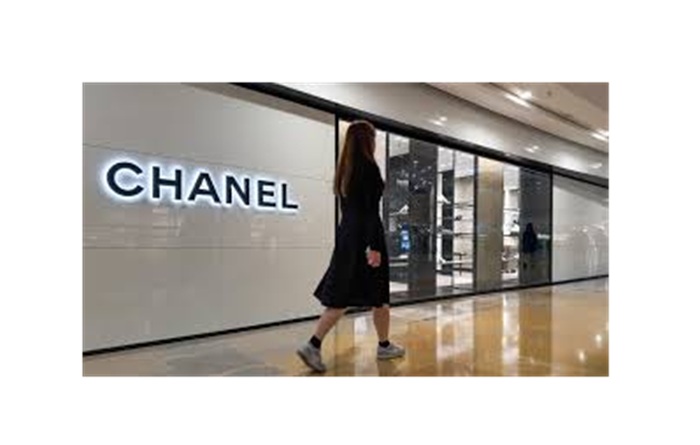
The global luxury hierarchy has been quietly rewritten, and not by sales alone. In Q1 2026, Chanel rose to the top of the Lyst Index for the first time in its history, along with Dior debuting at No. 3. This is not a routine reshuffle; it is the outcome of a shift in how ‘brand heat’ is measured, monetised and sustained in a digitally mediated market.
New currency of luxury, from sales to signal
Lyst’s methodological overhaul marks a decisive break from legacy metrics rooted in sell-through and inventory velocity. The new framework, centred on desire, demand and discovery boosts cultural relevance into a quantifiable commercial driver. In this system, visibility across AI-powered search ecosystems, creator networks and secondary marketplaces becomes as critical as boutique performance.
Chanel’s rise exemplifies this transition. Demand for its reinterpreted Maxi Flap bag, combined with a 45 per cent increase in interest around vintage tailoring, reflects a consumer no longer shopping by logo alone. Instead, purchasing decisions are being filtered through aesthetic alignment, what the product signals within a broader cultural narrative. Luxury, in effect, has become a language, and brands are now judged on fluency rather than scale.
Table: Reading the leaderboard
|
Rank |
Brand |
Movement |
Key driver |
|
1 |
Chanel |
New Entry |
Cultural dominance & pricing power |
|
2 |
Saint Laurent |
-1 |
Consistent creative leadership |
|
3 |
Dior |
New Entry |
High-profile couture events |
|
4 |
Miu Miu |
-2 |
Gen Z community conversation |
|
5 |
Gucci |
+4 |
Creative reset momentum |
|
6 |
Ralph Lauren |
-2 |
Heritage demand stabilization |
|
7 |
Prada |
-2 |
Product lifecycle longevity |
|
8 |
Coach |
-2 |
Accessible luxury resilience |
|
9 |
Burberry |
-1 |
Outdoor & utility trends |
|
10 |
COS |
-7 |
High-street saturation |
What stands out is not just who leads, but why. The top tier is dominated by maisons that have mastered cultural storytelling at scale. Chanel and Dior are no longer just selling products; they are orchestrating narratives that travel seamlessly across digital and physical ecosystems. Meanwhile, the volatility in the mid-tier signals a deeper stress. COS’ sharp fall alongside softness across the ‘premium essentials’ category, suggests that minimalism without narrative is losing traction. In a market driven by expressive consumption, neutrality has become commercially fragile.
Creative direction as a growth driver
Among the movers, Gucci’s climb to No. 5 is particularly instructive. Its post-reset momentum, punctuated by a double-digit spike in demand following its Milan showcase, reinforces a critical insight: creative direction is once again a primary growth lever. In a market saturated with product, differentiation now hinges on point of view.
This has broader implications. The cyclical nature of fashion leadership is being compressed, with brands able to gain or lose relevance within a single season. The velocity of digital amplification has shortened the feedback loop between runway and revenue.
The Zara playbook, where speed meets culture
If luxury is redefining aspiration, high street is redefining agility. Zara emerged as the quarter’s breakout player by aligning itself with cultural flashpoints rather than seasonal calendars. Its collaboration with Bad Bunny triggered a 300 per cent spike in searches for men’s leather within 48 hours, an outcome that underscores the power of cultural adjacency.
Zara’s strategy effectively decouples price from perceived value. By embedding itself in high-visibility cultural moments and leveraging rapid-response supply chains, it competes not on cost, but on relevance. The coexistence of a viral sub-$5 tote and a Chanel investment bag within the same trend cycle illustrates a fragmented but opportunity-rich market where storytelling trumps price hierarchy.
The squeeze in the middle
The data points to an increasingly polarised market. At one end, ultra-luxury players like Chanel and Dior are pushing pricing boundaries while reinforcing exclusivity. At the other, culturally agile high-street brands are capturing attention through speed and accessibility. Caught in between is the $200-$800 segment, where differentiation is eroding. Without either the cachet of heritage luxury or the immediacy of fast fashion, these brands face a diminishing share of cultural relevance. The implication is clear: the middle is no longer a safe zone, it is a strategic void.
Opportunity in the $1,000-$2,000 Gap
Yet within this disruption lies a clear whitespace. As top-tier brands escalate prices, a gap is emerging for labels that can deliver investment-grade quality at relatively accessible luxury price points. Brands like Saint Laurent and Miu Miu have already begun to capitalise on this by cultivating tightly knit brand tribes, communities that engage beyond transactions and remain resilient across cycles. This community-driven model may well define the next phase of growth. In an attention economy, loyalty is no longer built through ubiquity, but through belonging.
Chanel’s strategic play
At the centre of this transformation sits Chanel, a privately held powerhouse that continues to set the industry’s strategic tempo. Its focus on ultra-exclusivity, manifested through controlled distribution, price increase and experiential retail has allowed it to maintain both scarcity and desirability.
Crucially, Chanel’s strength lies in its ability to bridge heritage and contemporaneity. Founded by Coco Chanel in 1910, the maison has evolved from a symbol of timeless elegance into a masterclass in cultural engineering. Its dominance today is not just a function of legacy, but of its ability to continuously reinterpret that legacy for a digitally native audience.
The Q1 2026 Lyst Index signals more than a reshuffling of ranks, it marks the institutionalisation of a new retail logic. Brand heat is no longer a byproduct of success; it is the engine itself. In this paradigm, the winners will be those who can convert fleeting attention into sustained desire, and desire into measurable demand. For the global fashion industry, the message is unequivocal: relevance is now the most valuable currency. Everything else follows.
Inventory, not expansion, defines winners in global apparel
The 2025 fiscal year has crystallised that revenue growth and operational health are no longer moving in tandem. In an environment shaped by inflation-conscious consumers and demand polarisation, the middle market has hollowed out. What has emerged instead is a stark divide between retailers that convert inventory into profit with precision, and those still reliant on blunt expansion or discount-led growth.
With industry-wide growth averaging just 3.2 per cent, the profit pool is concentrated. The message is unambiguous, inventory is no longer a buffer; it is a balance sheet risk. Yet operational discipline alone is insufficient without consumer relevance, creating a narrow pathway for sustained success.
The inventory-to-sales equation
At the centre of this transformation lies what analysts now define as Inventory-to-Sales (I-t-S) optimisation, a formula that is rapidly replacing store count and topline growth as the primary indicator of retail health. The performance gap between leading global players reflects this clearly.
|
Metric |
Inditex (Zara/Portfolio) |
H&M Group |
Fast Retailing (Uniqlo) |
Gap Inc. |
|
Revenue Growth (YoY) |
3.20% |
-2.60% |
10.80% |
1.90% |
|
EBIT Margin |
20.20% |
8.10% |
17.20% |
7.30% |
|
Inventory Delta |
-2.20% |
-12.00% |
+7.7% |
+6.8% |
|
Gross Margin |
58.20% |
53.40% |
54.00% |
40.80% |
Inditex has effectively redefined efficiency in this cycle. Despite reducing its store footprint by 6 per cent over three years, it delivered a 22 per cent increase in sales, alongside an industry-leading 20.2 per cent EBIT margin. Crucially, this growth has been achieved while lowering inventory levels, an inversion of traditional retail logic. This is not incidental. The company’s proximity sourcing model and tightly integrated logistics ecosystem allow for rapid replenishment cycles and minimal dead stock. With an I-t-S ratio of just 8.2 per cent, it is able to sell current-season merchandise at full price, while competitors remain locked in markdown cycles.
In contrast, H&M Group continues to grapple with declining revenues despite aggressive inventory reduction, highlighting that efficiency without product resonance can erode topline performance.
Uniqlo’s rise and the complexity of dual-speed growth
Fast Retailing, the parent of Uniqlo, has emerged as the strongest growth challenger to European incumbents. A 10.8 per cent revenue increase in 2025 underscores the global traction of its LifeWear proposition, functional, durable apparel positioned against fast fashion volatility. Growth is decisively international. North America and Europe recorded revenue gains of 24.5 per cent and 33.6 per cent respectively, signalling a shift in consumer preference toward longevity and value-per-wear.
However, beneath this momentum lies a structural imbalance. While Uniqlo scales successfully, its sister brand GU is under pressure, with profits declining by 12.6 per cent. The challenge is: can a low-cost, trend-driven format sustain itself in high-cost Western markets? This two-speed dynamic will define Fast Retailing’s 2026 trajectory, particularly as it attempts to globalise GU beyond its Asian stronghold.
Hyper-expansion vs inventory risk
If Inditex represents disciplined optimisation, Poland-based LPP S.A. exemplifies aggressive expansion. Through its value-focused brand Sinsay, LPP added nearly 900 stores in 2025 alone, driving revenues to €5.3 billion. The strategy is clear: capture underserved demand in secondary European cities through rapid physical rollout. Yet the financial structure underpinning this growth raises questions. With an I-t-S ratio of 19.8 per cent, the highest among major players the company is significantly exposed to inventory risk. The model’s sustainability now hinges on logistics automation and demand forecasting. If consumer sentiment weakens in Central Europe, LPP could face a sharp reversal driven by unsold inventory accumulation.
Mid-market volatility and reinvention
The middle tier remains the most structurally challenged segment of the apparel market. Primark is undergoing a fundamental shift. After years of resisting digital commerce, it is now separating from Associated British Foods in pursuit of a potential £9 billion valuation. This move reflects both ambition and pressure, as like-for-like sales declined by 2 per cent amid intensifying competition from digital-first players and value-focused sub-brands.
Meanwhile, Gap Inc. is executing a structured turnaround. Under CEO Richard Dickson, the company has stabilised its core operations. Old Navy continues to anchor growth, while the flagship Gap brand has delivered three consecutive years of positive comparable sales, including a 6 per cent increase in 2025.
However, the next phase introduces new risks. Expansion into China through local partnerships and the attempted revival of Athleta, where sales fell 10 per cent—will test the durability of this recovery.
Inditex as benchmark
Founded in 1975, Inditex has evolved from a regional manufacturer into the global benchmark for integrated retail. Its portfolio including Zara, Bershka and Massimo Dutti operates across more than 200 markets, supported by a tightly synchronised design-to-distribution system. In 2025, online sales reached €10.7 billion, accounting for approximately 27 per cent of total revenue. The company’s €2.3 billion capital expenditure plan for 2026 is directed toward further strengthening logistics, digital integration, and circularity initiatives. The throughline remains consistent: reduce lead times, minimise inventory exposure, and align supply precisely with demand.
The 2025 cycle has made one principle unequivocal: scale without control is increasingly untenable. As consumer demand fragments and cost pressures persist, the industry is transitioning from a growth-first paradigm to one defined by precision. Retailers that can synchronise sourcing, inventory, and demand signals in near real time are pulling away decisively. Those that cannot are being forced into reactive strategies discounting, overproduction, or risky expansion. In this new equation, operational discipline is no longer a back-end function. It is the core driver of competitive advantage.
From growth-at-all-costs to cash discipline, the new economics of DTC fashion
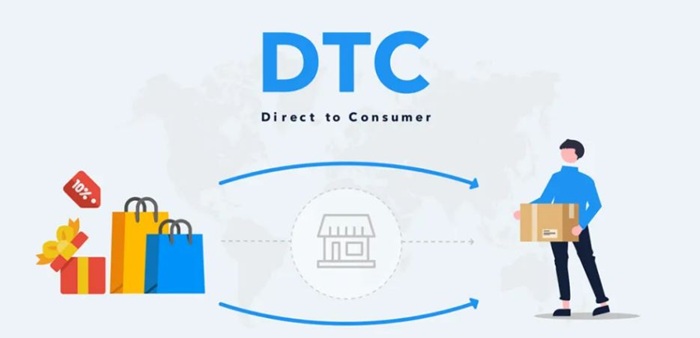
The global direct-to-consumer apparel market is entering a correction phase, as fashion brands across the US, Europe and the UK abandon the venture-led doctrine of growth at any cost. In its place, a more disciplined framework is emerging, one centered on unit economics, cash generation and capital efficiency. For a sector once obsessed with topline acceleration, 2026 is proving to be the year profitability has moved from aspiration to operating mandate.
This shift is being led as much by macroeconomic pressure as by internal reckoning. Higher digital media costs, growing interest rates and investor scrutiny have exposed the fragility of growth models dependent on subsidized customer acquisition. In response, global fashion brands are redesigning what many operators now call a ‘DTC survival architecture’, where sustainable economics matter more than scale narratives.
At the center of that reset is the growing rejection of blended customer acquisition cost, or CAC, as a strategic compass. For years, brands used blended CAC to average costs across channels, often masking severe inefficiencies. A business reporting a healthy $45 blended CAC may, in practice, be carrying an $85 acquisition cost on paid social while being rescued by a $5 branded search cost. The result is capital misallocation, where the most expensive channels absorb the highest budgets while the most efficient remain underinvested.
This has made channel-level CAC decomposition a boardroom imperative. Rather than asking what acquisition costs in aggregate, brands are increasingly asking which channels generate profitable customers and which merely create volume. That distinction is becoming central to survival.
Margins become the real measure
If channel economics are being reassessed, lifetime value calculations are undergoing an even deeper overhaul. Revenue-based LTV models, long treated as the benchmark for DTC forecasting, are being recast as structurally incomplete. The emerging standard is margin-adjusted LTV, which shifts focus from sales generated to cash retained.
The change is significant. As reflected in the evolving DTC valuation framework, the traditional model takes gross order value as the primary input, often smoothing over returns, discounting and fulfillment costs. The newer model substitutes net gross margin, segments return rates by channel and category, and deducts promotional erosion from unit economics. What appears in legacy models as healthy repeat behavior can, under margin-adjusted analysis, reveal value-destructive growth.
Table: LTV framework model and impact on valuation
|
LTV component |
Standard revenue-based model |
2026 standard margin-adjusted model |
Impact on valuation |
|
Input Value |
Gross Order Value |
Net Gross Margin |
High (Reveals true cash) |
|
Return Rate |
Often Ignored/Averaged |
Segmented by Channel/Category |
Critical (Drives unit economics) |
|
Discounting |
Included in Top Line |
Deducted from Unit Margin |
High (Identifies Toxic growth) |
|
Cohort Focus |
Average of all customers |
Segmented by first-purchase price |
Medium (Predicts repeat behavior) |
Analysis based on DTC economic principles
The implications are especially acute in premium apparel. A customer acquired through heavy discounting who purchases three times may contribute less economic value than a full-price buyer with only two transactions. Similarly, return-heavy customers sourced through paid social can appear profitable on revenue metrics while destroying margin in practice.
The LTV framework table illustrates this shift. Each adjustment from segmenting returns to focusing on first-purchase pricing cohorts, tightens the relationship between valuation and actual cash generation. In effect, margin is replacing revenue as the dominant truth metric in DTC.
Payback as the new survival ratio
Yet even margin-adjusted LTV does not answer the question now most critical to operators: how long does it take to recover acquisition spend? That is where payback period has become the defining metric of the new DTC era. While revenue may shape investor storytelling, payback determines liquidity. And in a capital-constrained market, liquidity increasingly defines resilience.
The logic is straightforward. If a brand spends $60 to acquire a customer but recovers only $25 in gross profit over the first 90 days, growth is consuming cash rather than compounding it. At scale, this creates a hidden working capital squeeze, often invisible until it becomes acute.
This has led leading fashion operators to replace ‘Return on Ad Spend’ with payback ceilings that cap spend on channels exceeding acceptable recovery windows. The model has begun gaining traction because it captures something ROAS often misses: two channels can show identical acquisition costs but radically different cash consequences, depending on margin structure and returns behavior.
The case study of a UK premium lifestyle reflects this shift. By reallocating budgets away from channels breaching a 120-day payback threshold and redirecting investment toward organic growth channels, the brand improved liquidity not through cost cutting, but through capital efficiency.
Escaping the paid media treadmill
The profit reset is also reshaping channel strategy. With Meta and Google auctions continuing to increase, many global fashion brands are moving beyond what operators call the paid media treadmill, toward acquisition engines that compound rather than reprice. Traditional SEO is seeing renewed importance, not as a legacy traffic source but as a low-CAC growth asset. Its appeal lies precisely in what paid media lacks durability.
More notable, however, is the emergence of ‘Generative Engine Optimization’, or GEO, as a frontier growth discipline. As consumers increasingly use AI-led discovery platforms for shopping recommendations, fashion brands are beginning to optimize not merely for search rankings but for inclusion within generative recommendation ecosystems.
This changes the economics of discovery. In GEO, visibility is driven less by bid intensity than by authority signals, editorial mentions, structured product credibility and third-party citation strength. For brands seeking customer acquisition that does not inflate with every auction cycle, that represents a potentially structural advantage.
Rather than treating SEO and GEO as experimental overlays, many brands are positioning them as core to profitability architecture because they lower dependency on paid acquisition while improving customer intent quality.
The new discipline of durable growth
What is emerging across global DTC fashion is not simply a retreat from aggressive growth, but a redesign of growth itself. Scale is no longer being pursued as an end in itself, but as an outcome supported by durable economics. That explains why channel-level CAC scrutiny, margin-adjusted LTV, payback ceilings and AI-era discovery strategies are mixing into one operating philosophy. Together, they showcase a move away from capital-consuming expansion toward self-funding growth.
For fashion brands operating in expensive digital ecosystems, that distinction is profound. The winners in the next phase of DTC may not be those growing fastest, but those proving they can grow without continually buying that growth. In that sense, the sector’s profit crisis may be less a dip than a cleansing. And in 2026, that may be exactly what global fashion DTC needed.
Squatwolf expands footprint as Middle East athleisure market eyes $45 billion
Dubai-based performance wear innovator Squatwolf has inaugurated its second Qatari flagship at Doha Festival City (DHFC), marking a strategic acceleration of its regional omnichannel rollout. This expansion follows a successful debut at Place Vendôme and arrives as the Middle East and Africa athleisure sector is projected to reach a valuation of $45.2 billion by 2033, with a robust 7.9 per cent growth rate starting in 2026. By securing a high-traffic location at Gate 2 of DHFC, the brand is positioning its signature ‘Warrior’ and ‘Lead’ collections to capture the region’s surging demand for premium, multi-functional apparel. Analysts note, in the GCC, physical touchpoints generate a 20 per cent higher average transaction value compared to digital channels, as consumers prioritize tactile engagement with high-performance, moisture-wicking fabrics.
Transforming retail into community wellness hubs
The Doha expansion is the latest milestone in a high-velocity growth phase fueled by a $30 million Series B investment from ASCA Capital. Squatwolf is leveraging this capital to transition from its e-commerce roots into a comprehensive ‘bricks-and-mortar’ ecosystem that emphasizes personalized brand experiences. The new DHFC store features dedicated fit-and-performance consultation zones, reflecting a 2026 trend where 65 per cent of Gen Z and Millennial athletes seek customized gear advice. Opening in Doha Festival City is a data-driven response to the intense community demand we’ve seen in Qatar, stated Mahmoud El-Zeheiry, Head-Expansion. This local strategy is part of a broader roadmap that includes upcoming 2026 launches at Abu Dhabi’s Yas Mall and further penetration into Kuwait and Saudi Arabia.
Navigating global growth and design innovation
As the global athleisure market climbs toward $536 billion in 2026, Squatwolf’s ability to compete with established giants like Gymshark relies on its distinct ‘born in Dubai’ identity and UK-based product innovation. The brand is navigating current supply chain volatility by diversifying its manufacturing and leaning into sustainable fabric innovations, such as recycled polyester and anti-microbial blends. With distribution already spanning 120 countries, the Qatari expansion serves as a blueprint for the brand’s global ambitions. By bridging the gap between high-intensity gym performance and premium lifestyle aesthetics, the company is successfully tapping into a ‘wellness-as-status’ movement that continues to redefine the modern retail landscape in the Middle East.
Founded in Dubai in 2016 by Wajdan Gul and Anam Khalid, Squatwolf is a premium performance-wear label specializing in technical gym apparel for men and women. Having secured $30 million in growth funding, the brand is aggressively expanding its physical retail footprint across the GCC while maintaining a global e-commerce presence in over 120 countries.
Primark redefines value-core anchoring at Hurst’s North East mall
Global value-fashion leader Primark officially inaugurated its latest US location at North East Mall in Hurst, Texas, on April 30, 2026. Occupying a 30,000-square-foot multi-level footprint in the former Nordstrom space, the launch serves as a critical milestone in the brand’s mission to reach 60 national stores by year-end. This conversion reflects a broader structural evolution in the Dallas–Fort Worth (DFW) retail sector, where traditional luxury anchors are being replaced by high-volume, value-oriented tenants. As DFW’s population hits 8.5 million, the market is experiencing a significant surge in demand for affordable ‘trend-led’ essentials, driven by consumers seeking style without compromising their budgets in an inflationary environment.
Leveraging physical footprints for national dominance
The Hurst opening marks Primark's 40th US location and its fifth in Texas, following recent expansions in Katy and Grapevine. Despite a wider retail climate characterized by cautious consumer spending, Primark reported a 12 per cent revenue increase in early 2026, primarily fueled by its aggressive new-store pipeline. Shoppers across Texas have validated the necessity for high-fashion, value-forward options, stated Kevin Tulip, President, Primark US. By eschewing home delivery to minimize logistics costs, Primark maintains a lean operating model that allows it to offer women’s denim from $12 and men’s basics from $5 - price points that digital-only rivals struggle to match given rising customer acquisition costs.
Navigating the road to standalone independence
This Texas expansion is unfolding against the backdrop of a major corporate realignment. Associated British Foods (ABF) confirmed in April 2026 that it will spin off Primark into a standalone entity listed on the London Stock Exchange by late 2027. This move aims to unlock the retailer's full valuation, currently estimated near £10 billion, as it positions itself against global competitors like H&M and Zara. While regional instability in the Middle East has volatile impacts on global supply chains, Primark’s focus on large-format ‘super-value’ stores in high-growth US catchments remains its primary engine for growth. The Hurst flagship is expected to act as a traffic catalyst for North East Mall, backfilling vacancies left by legacy tenants and solidifying the brand's Southern US presence.
Founded in 1969 in Dublin as Penneys, Primark operates nearly 490 stores across 19 countries. The brand specializes in high-volume, trend-led apparel and homewares. Its growth strategy prioritizes a 60-store U.S. target by late 2026, supported by a transition to a standalone public entity by 2027 to optimize shareholder value.