FW
Zara collaborates with Renewcell for a recycled textiles collection
Global fashion brand and part of Inditex Group, Zara has collaborated with Renewcell to launch a capsule collection made with Circulose®, a branded material produced from 100 per cent recycled textiles.
Developed by Renewcell, Circulose® is a biodegradable raw material used to produce textile fibers for fashion like viscose and lyocell. Fibers produced with Circulose® helps brands to limit the use of virgin textile fibers, reducing the climate and environmental impact caused by raw material production and waste.
Soon operating at commercial scale in their new plant in Sundsvall, Sweden, the 100 per cent textile-to-textile recycled material Circulose® by Renewcell continues to save waste from landfills by creating value through circular supply chains with brands around the world, now with Zara.
For Zara, this collaboration is part of Inditex's Sustainability Innovation Hub, an open-innovation platform. The aim is to work alongside start-ups, academic institutions, and tech centers to promote and scale initiatives developing new materials, technologies and processes that reduce the environmental footprint of fashion and help advance towards more sustainable production.
US denim jeans market go grow at 3.14% from 2021-2025
The US denim jeans market will grow at 3.14 per cent from 2021-2025 as against the global market growth rate of 3.65 per cent during the same period.
The US denim jeans market was estimated at 523.97 million units in 2021. It may grow to 561.29 million in 2022, 582.19 million in 2023, 593.80 million in 2024, 603.48 million in 2025 and 611.54 million units in 2026
The global market of denim jeans is expected to grow from 2,893.37 million units in 2021 to 3,461.56 million in 2026. The market size will grow to 3,145.55 million in 2022, 3,273.73 million in 2023, 3,351.19 million in 2024 and 3,409.81 million in 2025.
As for China, its denim market size is likely to grow to 588.82 million units in 2026. The growth rate will be 4.86 per cent between 2021 and 2026. Its market size was 464.55 million in 2021.
Similarly, India’s market size of denim jeans is projected to grow to 426.12 million units in 2026. The growth rate will be 4.38 per cent between 2021 and 2026. Its market size was 343.93 million in 2021.
Vietnam’s garment –textile exports revenues grow by 20% Y-o-Y in July
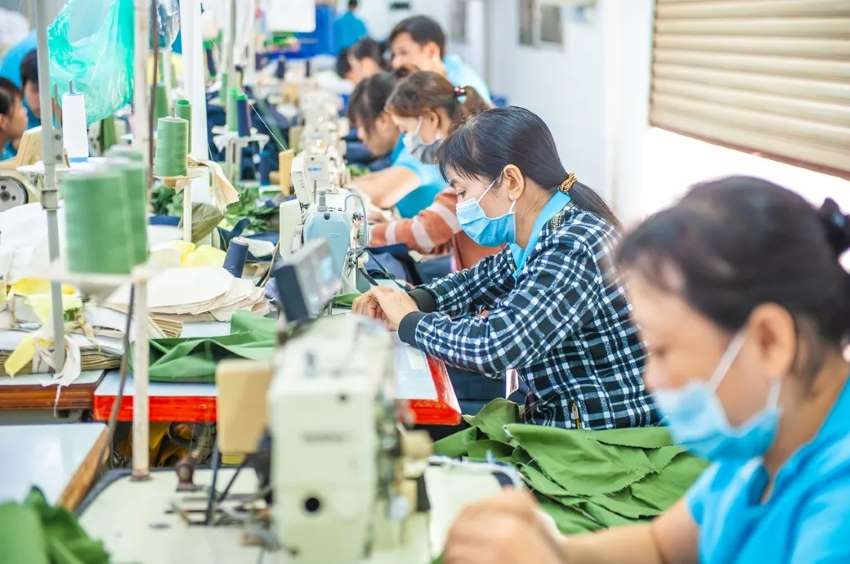
Revenues from Vietnam’s garment and textile exports grew by 20 per cent Y-o-Y in July this year to $20 billion, as per data from the General Department of Vietnam Customs.
The value of exports from the sector increased by over $1 billlion. Vietnam exported its garment-textile products to 55 countries and territories worldwide, including 17 markets with a turnover of more than 100 million USD each.
The US, Japan, the Republic of Korea and Canada were among major importers of the Vietnamese products.
Earlier, the Vietnam Textile & Apparel Association said, textile-garment producers in the country aim to increase their exports to $21 billion in the second half of this year, raising total shipments of the year to around $43 billion.
Polyester and Polyester-cotton yarn trades higher in Ludhiana
Better demand led to few counts and varieties of polyester and polyester-cotton yarn trading higher in Ludhiana. The hike in price of polyester staple fibre (PSF) by Reliance Industries (RIL) supported prices of polyester value chain. But ease in freight charges and US dollar may cause decline in PSF prices.
As per a Ludhiana based trader, demand improved in polyester and PC yarn market. The Ludhiana market y witnessed better buying. RIL had increased PSF raw material prices due to stronger dollar and other factors. The market leader of PSF and its raw materials had increased prices by up to 2.5 per cent for this week.
However, there was certain degree of uncertainty about the demand in the north Indian market. According to trade sources, container freight charges decreased by about 3 US cent per kg. Weaker dollar may also reduce landed prices of imported PSF and other material. Therefore, polyester value chain can see downward trend in near future.
In Ludhiana market, few counts and varieties of polyester-cotton and polyester yarn prices improved due to rise in raw material prices and better buying. 30 count PC combed yarn was sold at Rs 260-274 per kg (GST inclusive) with increase of Rs 2 per kg, 30 count PC carded yarn (65/35) was priced at Rs 220-230 per kg. 20 count PC (recycled-O/E) PSF yarn was traded at Rs 180-190 per kg. 30 count poly spun yarn was sold at Rs 175-187 per kg. High tenacity recycled fibre was priced at Rs 88-92 per kg. The prices of 20 count PC (recycled-O/E) PSF yarn (40/60) increased by Rs 5 per kg. High tenacity recyclefibre also gained ₹2-3 per kg.
Reliance Industries had earlier increased prices of purified terephthalic acid (PTA), monoethylene glycol (MEG) and MELT. The price of PSF remained steady at Rs 120 per kg. RIL has fixed prices of raw material as: PTA Rs 88.10 (+2.50) per kg, MEG Rs 56 per kg (+0.40) and MELT at Rs 94.81 (+2.29) per kg
Meanwhile, cotton prices gained further in north India as arrivals were minimal amid improving demand. According to traders, spot market prices gained ₹100-150 per maund of 37.2 kg. Cotton was sold at Rs 8,800-9,400 in Punjab, Rs 8,500-9,000 in Haryana and ₹9,250-9,450 per maund in Upper Rajasthan. Cotton was sold at Rs85,000-87,000 per candy of 356 kg in lower Rajasthan.
Global zippers market to reach $22,280 million by 2028
Presently valued at $16.760 million, the global zippers market is expected to grow by 4.1 per cent CAGR to $22.280 million by 2028.
According to an analysis by Market Research Guru, top five zippers producers including YKK, Coats Industrial, SBS, Weixing Group and YBS Zipper, account for around 20 per cent of the market.
The largest market is in the Asia-Pacific region, with a market share of approximately 60 per cent, followed by North America and Europe, each with a share of around 15 per cent. With a market share of roughly 65 per cent, Nylon Zipper is the most significant product category.
The research report includes a review of various market growth-enhancing elements. It consists of patterns, barriers, and forces that alter the market either favorably or unfavorably. The scope of various market segments and applications that may in the future have an impact on the market is also included in this section. The specifics are based on historical turning points and present trends. The amount of production for the global market and for each type is also analyzed in this section. The amount of production by region is discussed in this section. The research includes a pricing analysis from 2017 to 2028 for each type, manufacturer, area, and global price.
Fast fashion waste to reach 134 million tons by 2030: UN Charter on Climate Action
A statement from the United Nations Charter on Climate Action projects, waste from the fast fashion industry is predicted to reach 134 million tons by 2030. The industry has committed to achieve zero emissions by 2050 to tackle climate change.
The UN climate summit first inaugurated the fashion charter COP24 in Katowice, Poland in December 2018, then updated it as COP26 in Glasgow, UK, last November 2021.
The charter focuses on the impact of the apparel industry on the environment, as well as its role in achieving the goals of the Paris Agreement. It also urges the industry to adapt climate change in a systematic and in-depth manner.
The apparel industry has a unique opportunity to control climate action using its collective power to transform the industry into low-carbon technologies and products through the Fashion Industry Charter for Climate Action, says NiclasSyenningsen, UN Global Climate Action Manager.
The Charter also aims to introduce real actions to deal with environmental impacts that occur.
Global textile colors market to reach $11.1 billion in 2032: Report
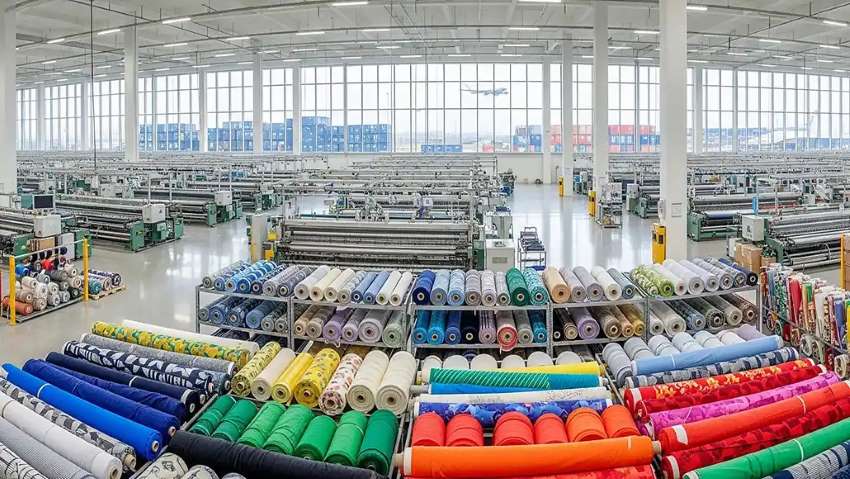
Growing at 6.2 per cent CAGR from 2022-2032, the global textile colors market is expected to reach a value of $11.1billion in 2032. As per a report by the Future Market Insights, the global textile colors market experienced significant growth over a five- to six-percentage-point increase in the last five years. The market growth is being driven by rising innovations in the sector.
Additionally, demand for vibrant fabrics and fibers, significant R&D expenditures in plant-based dyes, increased demand for Textile Colors in the Asia-Pacific region, and lower costs in production are likely to drive this sector forward.
In terms of dye type, the market for direct dyes is projected to grow at a 6.5 per cent CAGR while revenues through dyes for polyester fabrics are projected to grow at 4.5 per cent CAGR during the historical period.
US remains the dominant region in the textile colors market with the market expected to grow to $1.8 billion during the forecast period.
Demand for organically derived eco-friendly dyes is expected to increase in the near future. This is due to the fact that consumer awareness has risen. Producers are also making it a point to supply less harmful products as part of their corporate social responsibility.
Groz-Beckert to participate in 18th Indo Intertex
Groz-Beckert will exhibit its innovations at the upcoming 18th Indo Intertex that will be held from August 10-13, 2022 in Jakarta, Indonesia.
As per a Knitting Industry report, the largest trade fair in Southeast Asia will present products from the areas of knitting, weaving, felting, carding and sewing.
The product area Knitting will exhibit as a system provider at Indo Intertex. It will present perfectly coordinated needles and system parts for knitting as well as special application needles for processing staple fibres and for the production of technical and industrial textiles.
With the miniature weaving mill, GrozBeckert will show the entire variety of products in the Weaving sector - from cleaning machines and weaving accessories to the KnotMaster – and all on less than one square meter thanks to augmented reality.
In the Felting area, Groz-Beckert will be showcasing products for the production of nonwovens at Indo Intertex. The focus will be on the GEBECON needle, which is characterized by improved surface quality and optimized bending resistance.
The product area Carding will present numerous further developments for the spinning industry - from a new stationary flat series to the revolving top TV56 and a cylinder wire with special tooth geometry.
Asos appoints Elena Martinez Ortiz as new Director-Womenswear
British clothing e-tailerAsos has appointed Elena Martínez Ortiz as its new director for womenwear.
Earlier engaged with Inditex, Ortiz will lead the Asos Design brand, which has been instrumental for the e-tailer’s over £ 1 billion in sales. She has an experience of almost 18 years at Inditex’s Stradivarius.
At Stradivarius, Ortiz has been serving as a product director since 2013, prior to which she was the sourcing director in Asia.
Ortiz will be responsible for strengthening Asos Design, the e-tailer’s core brand, and also for expanding the range.
Following her appointment at Asos, Ortiz will relocate to London. She is expected to assume her new office by the end of August 2022.
Ortiz will report to José Antonio Ramos Calamonte, the new CEO at Asos. Interestingly, Calamonte too was once an integral part of Inditex Group.
Asos was founded in 2000 in London, which sells over 850 brands as well as its own range of clothing and accessories.
Synthetic clothing contributes to microfibre pollution in India: Report
A new research report by environmental research organization Toxic Link reveals, synthetic clothing is a huge contributor to microfibre pollution, especially in India, where synthetic apparel are capturing substantial market share.
Titled, ‘Dirty Laundry: Threads of Pollution – Microfibres,’ the report highlights, around 124 to 308 milligrams of microfibres are released per kilogram of fabric during washing. Synthetic textiles add approximately 35 per cent to the global release of primary microplastics to the world’s oceans, the report adds.
Apparel made of synthetic materials like polyester, acrylic, nylon, and others consists of plastics and denote around 60 per cent of the clothing material globally, the report states. It raises serious concerns regarding microfibre pollution in India, which is the second-largest producer of polyester and viscose in the world.
Though globally there is greater awareness among consumers, researchers found that the awareness in India regarding the concerns of synthetic textiles is negligible. In an earlier study done by Toxics Link, a high percentage of microfibre was found along the Ganges River in samples collected from Kanpur, Varanasi, and Haridwar. In another study by Toxics Link, water samples from Goa water treatment plant were found to have around 37 per cent of microfibre concentrations. The latest study stressed on the impact of microfibre pollution on environment and human health due to its minuscule size and capacity to penetrate different ecosystems.
The study also said that the country has no regulation or policy to check microfibre pollution caused by its mammoth textile industry. On the other hand, countries like France and the US have mandated brands to mention the presence of synthetic material and how it will leach microfibre pollution.