FW
Around 2.3 million pairs of jeans sold every year: Research
As per a new book published by Maxine Bedat, around 2.3 million pairs of jeans are sold every year. As per a Planetscope data, this is equal to selling 73 pairs of jeans sold per second, says Bedat in her book titled Unraveled — The Life and Death of a Garment. US leads in the sale of denim jeans with around 450 million pairs sold each year. From the sourcing of raw material to customers’ closets, these jeans travel around 65,000 km and pass through various manufacturing stages across the world. They require around 3,781 liters of water for a single piece equaling to 33.4 kg of carbon emissions, estimates United Nations Environment Program (UNEP). Other sources say that up to 10,000 liters of water are used to make a pair of jeans.
According to Ademe, the average lifespan of a pair of jeans is four years, which she says isn’t very much considering the garment’s impact on the planet.
Savile Row Tailors should focus on customization, says Director, Kiglour
Alex Lamb, Director, Kilgour advises Savile Row tailors to focus on customization and offering efficient services to customers. In a Drapers Online report, Lamb says, though the diaries of these tailors are filling up, they face a tough road ahead. These tailors have maintained existing customer base with the help of technology, and have even managed to win new customers though Zoom and Face Time consultations.
However, they are unable to conduct business with international clients due to lockdowns. Lamb informs, roughly 30 per cent of his brand’s business comes from overseas clients though its primary base is still domestic. He therefore urges the government to lift restrictions on the sector.
The pandemic has accelerated demand for easier-to-care-for clothing and smart, technical products that will continue to grow within the luxury menswear sector. Tailors need to opt for more technically advanced fabrics, be this more active or waterproof cloths, etc adds Lamb.
Budget measures for next fiscal may hamper textile and garment exports: BTMA
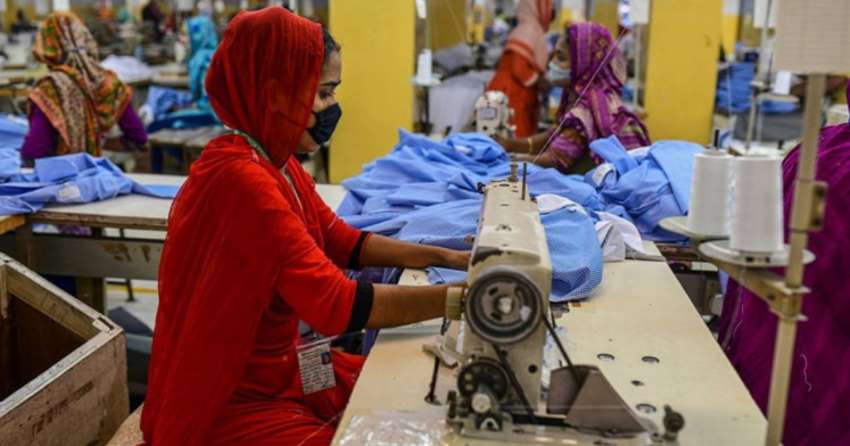
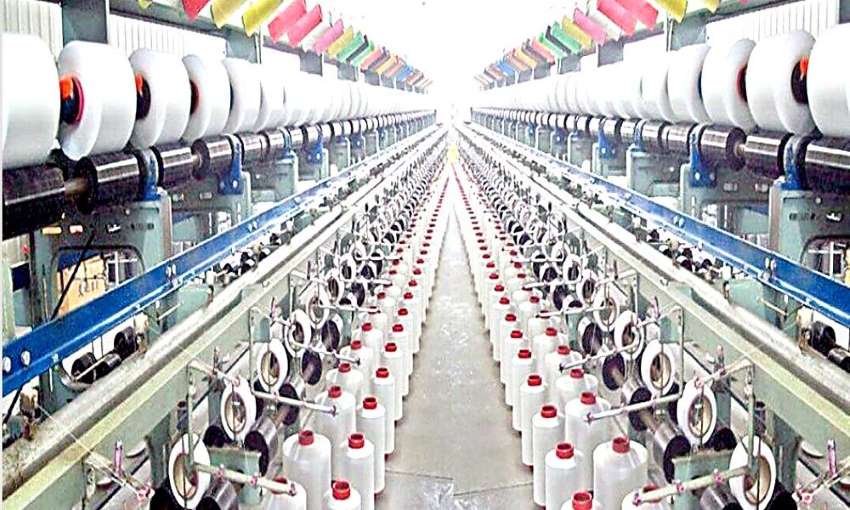
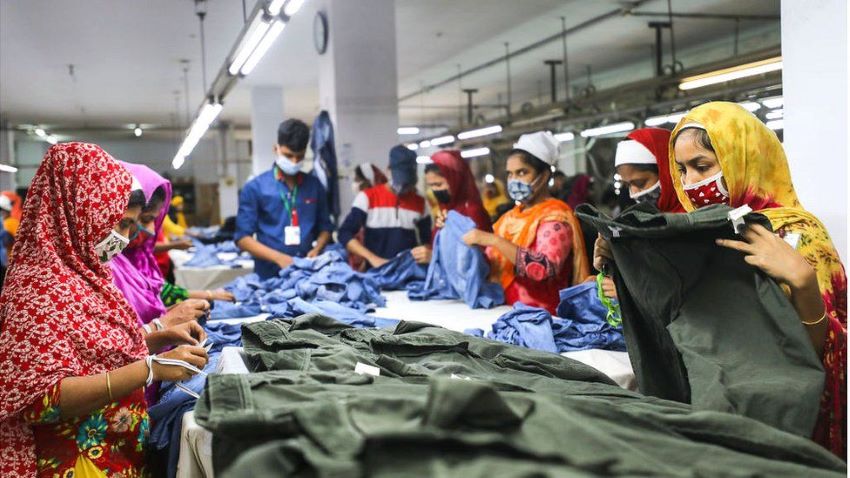
Bangladesh Textile Mills Association opines current insufficient budgetary measures proposed for the next fiscal might hamper the country’s textile and garment exports. While it hailed other proposals in the budget, BTMA urged the government to reduce source tax to 0.25 per cent, re-fix fabrics tariff value, and 1.0 per cent import duty on all types of spare parts of textile machinery.
Mohammad Ali Khokon, President, BTMA also urged the government to fix VAT on all kinds of yan to Tk 3, withdraw VAT on fabrics made from MMF and allow duty-free import of all types of fibers. Khokon also wants encouragement for product diversification and discouraging large import of artificial yarn. He believes, though the budget priorities RMG exports, it does not encourage entire development of the sector.
Bangladesh Textile Mills Association or BTMA is the national trade body for textile mills, manufacturers, and mills in Bangladesh and is located in Dhaka, Bangladesh. It carries out research on the Textile Industry in Bangladesh. Tapan Chowdhury, the Chairman of Square Group, is the president of the trade association.
Galway Wool Co-op sells stock to Donegal Yarn
A group of wool producers – The Galway Wool Co-op has sold its entire Galway stock to Donegal Yarn. As per Agriland reports, the Galway is Ireland’s native breed of sheep. From its wool the Irish Aran sweater was created. Donegal Yarn recognized the superior quality of this crisp white wool, its importance and agreed to purchase at a rewarding price this year.
The Galway wool co-op will prepare its first order for 5,000 kg of clean rolled Galway fleece for supply to Donegal Yarn. Every bag and fleece of this wool will be inspected by a group of volunteers to ensure the wool is clean, dry-rolled Galway wool. After inspection, the wool will be weighed and the farmer issued with a voucher. This voucher indicates the weight of the wool and will be exchanged for payment,” says Blatnaid Gallagher of the group.
The group has received funding from Leader and will begin construction of its virtual Galway wool co-op. The Galway wool co-op will seek the support of the Irish consumer in asking for Irish wool instead of imported merino wool in their home interiors and lifestyle products. It will also provide a platform for home interiors, lifestyle designers and makers, to partner with it and showcase the products they have produced from Galway wool.
Maintain source tax at 0.5% for five years, urges BGMEA
Bangladesh garment exporters have urged the government to maintain source tax at 0.5 per cent for the next five years. Faruque Hassan, President, BGMEA, warned, changing source tax rate would hamper the countries’ garment sector. He also urged the government to provide a 10 per cent cash incentive on exports of manmade garments. He said, the global fashion industry has been increasingly adopting garments made from manmade fibers due to their eco-friendliness, functionality and durability. However, Bangladesh has not yet warmed up to manmade fiber that make up 78 per cent of global apparel market while cotton made garments occupy the remaining 22 per cent.
Around 74.14 per cent of Bangladesh's garment export earnings still come from cotton made garment items, Hassan added. A nationwide trade organization of garment manufacturers in Bangladesh, the Bangladesh Garment Manufacturers and Exporters Association or BGMEA is located in Dhaka and plays a pivotal role in the country's earning sector of foreign trades.
PVH to exceed pre-pandemic growth levels in 2021: Stefan Larsson, CEO
Stefan Larsson, CEO, PVH Corp projects the company to continue to exceed pre-pandemic levels throughout the remainder of 2021. As per Sourcing Journal, the company projects to grow by approximately 26 per cent full year and 23 per cent on a constant currency basis compared to 2020. Despite pandemic-related supply chain issues, the company’s first quarter results exceeded expectation with revenues increasing by 55 per cent to $2.08 during the first quarter compared to $1.35 billion in the prior-year period.
The denim category experienced one of the fastest sell-outs within the Calvin Klein brand, demonstrating its potential as a multi-category lifestyle brand, says Larsson. The brand’s recent collaboration with designer Heron Preston and its new campaign featuring models Ashley Graham and Kaia Gerber, rappers Nas and Lil Uzi Vert, skater Stevie Williams, helped it tap into a younger demographic, adds Larsson. The collaboration also yielded some of the highest average unit retail (AUR) and average order retail the brand has ever seen. Larsson says, Calvin Klein will continue to launch creative collaborations and campaigns to increase its brand’s relevance,
PVH’s other brand Tommy Hilfiger also benefitted from an increased demand for denims. The brand’s revenues increased 63 per cent increase due in part to a spring collaboration with Amsterdam-based streetwear brand Patla, adds Larsson. The brand recently also launched a limited-edition three-part collection of upcycled Tommy Hilfiger and Tommy Jeans products. Part of the Tommy for Life program, the Reloved collection featured previously owned products traded in by consumers. The Refreshed collection offers repaired garments from the store and e-commerce returns. In the Remixed collection, items damaged beyond repair are broken down to the fiber level and reimagined into new garments or used for insulation.
The brand also launched the third installment of Tommy’s Drop Shop co-designed with London-based creative, Stevie Gee, featuring limited-edition hoodies and T-shirts exclusively sold in Europe.
Walmart to close stores on Thanksgiving day
For the second consecutive year, Walmart will close its US stores on the Thanksgiving Day.
As per Economic Times, the nation's largest retailer and biggest private employer ants to give workers time off for all their hard work and dedication to the company. It follows the decision by Target Corp., which announced back in January it would be closing its stores again on the annual late-November turkey feast.
The move shows the lasting effects of the pandemic on the retail industry's strategies, even as the health virus ebbs. For almost a decade, Black Friday store shopping had been kicked off with big crowds on the Thursday of Thanksgiving and expanded into Friday. However, last year, given safety concerns, most stores were closed on Thanks giving.
Walmart, like other stores, successfully pushed more sales online to reduce crowds in its stores. But, even as safety protocols relax, the Bentonville, Arkansas-based retailer apparently believes that not having the Black Friday kickoff on Thanksgiving won't hurt its business.
Given the clout of Walmart and Target, other major retailers will likely follow their lead again this year.
Victoria’s Secret accused of contract violations by landlord
Victoria’s Secret’s landlord has accused the company of prematurely ending itsstay at the Westfield World Trade Center Shopping Center, located in downtown Manhattan, in alleged violation of a lease agreement.
In a complaint filed in late May in New York state court, Westfield made claims for more than $30 million to retailer alleging that it had refused to pay rents and backed out part way through from a 12-year lease that was meant to end in 2029. As per Women’s Wear Daily, the suit seeks more than $4.2 million in unpaid rent and roughly $28 million in damages for the alleged violation of the lease.
The dispute centers on a point of contention facing mall tenants and their landlords around the country as retailers have closed thousands of stores during the pandemic. When major tenants leave a mall during a crisis, what happens to those left behind?
Lease agreements sometimes address these scenarios through what are known as co-tenancy clauses. Such provisions may allow tenants to reduce their rent or leave their premises during their lease term, if they can show other important tenants have already left.
Victoria’s Secret allegedly invoked such co-tenancy failures and sought to terminate its lease. But Westfield argues in its suit that the retailer had not shown evidence for its claim about such co-tenancy issues.
New Fortune Initiative ranks PVH as the ninth most progressive company
The Fortune’s Measure Up list ranked PVH on the ninth position in the ranking of the top 20 most progressive companies in diversity and inclusion. As per reports, the list analyzes and scores diversity and inclusion data of ranked Fortune 500 companies. PVH also ranked this year on the 67th annual Fortune 500 list at No. 404.
The Measure Up initiative aims to make diversity, equity and inclusion disclosure and performance a critical metric for successful businesses.
Fortune partnered with Refinitiv, one of the world’s largest providers of financial markets data and infrastructure, to analyze diversity and inclusion data sourced from 2020 and 2019 public disclosures. Fortune found from the companies listed on the Fortune 500 list, 256 had published racial data last year, but only 22 had published a full breakdown of the percentage of minorities in their companies and reported metrics for representation in management and on the board, as well as for their racial pay gap.
Softbank Vision Fund plans $600 million investment in Flipkart
Softbank Vision Fund is negotiating with Flipkart to invest around $600-700 million three years after its exit from the Indian online retailer.
As per Economic Times, the funding is part of a larger $2 billion round which could see the participation of a group of sovereign wealth funds like Abu Dhabi’s ADQ, Canada’s CPPIB, as well as the company’s existing investors such as GIC and Qatar Investment Authority.The transaction is likely to value the Bengaluru-based firm at $25-30 billion, sources said.
The invesment could lead to Flipkart pushing back its plans for an initial public offering (IPO) in the US. Flipkart will stay on as a private company for longer than what was being earlier talked about. The company has been preparing to go public by early next year, as reported earlier.
The Canada Pension Plan Investment Board (CPPIB) is expected to join the fundraise along with existing backers such as GIC of Singapore and Qatar Investment Authority.
If the deal materialises, it will be yet another big move by the Masayoshi Son-founded SoftBank in India’s e-commerce market. It had earlier tried to bring about a merger between its portfolio firm Snapdeal and rival FlipkartIn 2017. But, the deal was scuppered largely because of opposition from Snapdeal. The conglomerate went ahead to back Flipkart, only to sell its entire 21 percent share holding to Walmart a year later for about $4 billion.