FW
International Woolmark Prize teams up with Saint Heron to highlight finalists’ works
The International Woolmark Prize is teaming with American singer-songwriter Solange Knowles’ creative firm Saint Heron to highlight the work of this year’s six finalists in a digital format, which includes all visuals, website design and a fashion film being released Thursday.
Concepted by Knowles, the film “Passage” features a diverse cast of artists showcasing looks from Bethany Williams, Casablanca, Kenneth Ize, MattyBovan and The be Magugu, who were selected from more than 380 applicants from 55 countries.
The winners will be revealed June 10. The recipients of the grand prize and Karl Lagerfeld Award for Innovation will receive 200,000 and 100,000 Australian dollars, respectively.
A new prize, the Woolmark Supply Chain Award, will also be given to recognize the outstanding contribution by a trade partner and presented to a member of the supply chain.
This year’s finalists have received 60,000 Australian dollars funding to create a six-look merino wool collection with a “less is more” approach to celebrate slow and responsibly produced fashion and craftsmanship.
They have also been participating in a yearlong mentoring program from IWP’s innovation academy, which offers finalists access to 43 supply-chain partners and mentors, product development support, textile research and development, business and sustainability strategies.
Some of them help a designer enrich their brand’s digital journey, such as the virtual ready-to-wear design system Hologarment, which produces an interactive AR showroom experience, and Blue Bite, which empowers brands to create digital experiences out of their physical products.
Clovia ropes in Sharen Jester Turney as its new advisor
Clovia has roped in Sharen Jester Turney, Former President and CEO, Victoria’s Secret as its new advisor.
As per Economic Times, Turney is currently a board member and advisor to several global retail and techology brands and philanthropic organizations. Her expertise and advisory roles span the globe including London-based Marks and Spencer, Gloria Jeans in Russia, Cosmo Lady in China, Sweden-based global brand Happy Socks, , and New Store Omnichannel platform in the USA, to name a few.
She was president and CEO of the global lingerie brand Victoria’s Secret for nearly two decades.
Women’s innerwear, loungewear, and personal care brand Clovia has been one of the key branded players in the Indian direct-to-consumer space, which has been scaling profitably on the back of extensive use of technology and data in all its business areas.
Turney will support the organization support across functions like business strategy, category expansion like personal care, market insights, strengthening of brand positioning and experience, and international expansion.
Rent the Runway expands into resale
Rent the Runway is expanding into resale to enable customers to buy used designer clothes from the business in addition to renting them.
As per CNBC reports, customers will not require any membership to bu these clothes as Rent the Runway looks to broaden its reach and give shoppers more feasible entry points. Previously, only paying members were able to buy gently used Rebecca Minkoff dresses, Tory Burch tops and even Lululemon leggings from Rent the Runway, at a discount.
The launch comes as Rent the Runway is clawing its way back from the effects of the COVID pandemic. The company said that getting into the resale market offers another engine of growth and a fuller realization of our value proposition. It added that it has noticed twice as many customers self-reporting that they’re coming to Rent the Runway for sustainable fashion solutions, compared with 15 months ago, a sign that shoppers’ appetite to add secondhand apparel to their closets is growing.
With the launch, Rent the Runway positions itself as a closer competitor to already established resale marketplaces including Poshmark, ThredUp, TheRealReal and StockX. The latter, known for landing coveted sneakers, is expected to go public later this year. E-commerce marketplace Etsy plans to buy secondhand fashion app Depop for $1.62 billion
The total resale market in the U.S. will be worth more than $33 billion by the end of this year and is on track to top $64 billion by 2024, according to GlobalData.
Analysts say thrifting for clothing, accessories and home goods could be an even more compelling value proposition coming out of the health crisis, especially as Americans look to clean out their closets to make room for new styles, potentially in new sizes.
AAFA opposes California’s Senate Bill for garment sector
The American Apparel & Footwear Association has opposed discrete elements of California's Senate Bill No. 62 (SB 62) related to employment in garment manufacturing sector. Although well-intentioned, the bill, in its current form, would, among other things, impose unprecedented joint liability on businesses with no control over garment workers, AAFA said.
Though there are elements of this bill that AAFA supports, the brand guarantor provision, creating joint and severable liability, represents an extraordinary misunderstanding of who is responsible for the payment of workers’ wages and will worsen the situation of garment workers by creating an exodus of brands from California and subsequent job loss, the letter said.
Presently, all businesses engaged in garment manufacturing must register with the California labour commissioner and pay a registration fee. If a worker experiences aalabour violation, his employer as well as any manufacturer who contracts directly with the employer is jointly liable. SB 62 significantly expands this joint liability by creating per se joint liability between the employer, manufacturer and any other company in the garment supply chain, including licensors.
The bill, as currently drafted, does not recognise that brands or buyers may have little to no control over how a particular garment factory employer manages their payroll or enterprise finances. Further, any ‘brand guarantor’ would be liable for the worker’s entire wage claim, not only wages for time spent on garments related to their brand, adds Lamar.
Furthermore, the legislation includes intellectual property licensors, who do not issue purchase orders or set prices,he adds.
Textile Exchange refutes many PETA allegations against alpaca handling
People for the Ethical Treatment of Animals (PETA) has urged retailers to ban alpaca wool altogether as Textile Exchange’s Responsible Alpaca Standard (RAS) fails to prevent animal suffering.
Laura Shields, Corporate Responsibility Manager, PETA says, Textile Exchange’s RAS was created in response to the animal welfare group’s undercover investigation allegedly showing workers hitting, kicking, tying down and mutilating pregnant alpacas. She says, though the RAS claimed to treat the animals responsibly and respect their freedom, it fails to protect the basic welfare of alpacas in substantial ways.
Textile Exchange refuted many of PETA’s claims, but did acknowledge others. It said in contrast to PETA’s claim, if farmers are responsible for transporting alpacas, they must meet the standards of transport within the Responsible Alpaca Standard. These cover all aspects of transport from the condition of the vehicle, loading the animals, space in transport and transport duration.
On pain relief, Textile Exchange said while there is no therapeutic currently licensed for alpacas, it is actively working on a project to address the limitations of licensed pain-relieving products for all fiber animals across the countries where these are not available through the work with our stakeholders on the Animal Fibers Round Table.
Munich Fabric Start cancels View Premium Selection
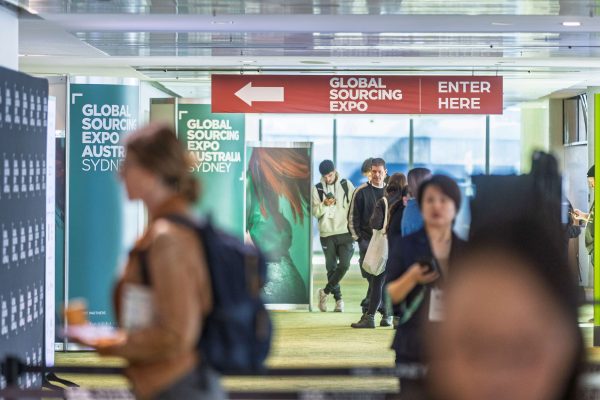
Munich Fabric Start has cancelled fabric show View Premium Selection, scheduled to be held on July 13 and 14, 2021.The show has been cancelled due to the Bavarian government extending the current ban on events beyond July 14, 2021. In line with the Bavarian Ministry of State's decree, the organizer now wants to focus on planning Munich Fabric Start from August 31 - September 02, 2021, as well as Bluezone from August 31 to September 01, 2021, affirms Sebastian Klinder, Managing Director, Munich Fabric Start.
The organizer’s aim is to present the familiar exhibitor portfolio at MOC Munich for the Fabrics, Additionals, Bluezone, Keyhouse, Design Studios, Sourcing, ReSource and Sustainable Innovations segments at Munich Fabric Start. Also at Bluezone, visitors can expect the proven spectrum of international denim weavers and manufacturers at the Zenith Areal, together with the newly staged innovation hub Keyhouse.
Pakistan’s textile and apparel exports increase 231.2 per cent in April
In April 2021, Pakistan’s textile and apparel exports increased 231.2 per cent year-on-year but declined 1.3 per cent month-on-month, and rose by 17.4 per cent compared with that in same period of 2019. As per the CCF Group report, Pakistan’s export of knitwear, bedding and towels rose 238.2 per cent, 181.9 per cent and 308.4 per cent in volume respectively compared with the same period of last year. Compared with the same period of 2019, the export volume increased by 36.5 per cent, 24.7 per cent and 12.9 per cent respectively, indicating that the above three have recovered to the pre-pandemic level, and even achieved double-digit rises.
However, Pakistan’s apparel, cotton yarn and cotton fabric exports declined in varying degrees by 18.4 per cent, 17.6 per cent and 84.5 per cent respectively, indicating that the above three have not yet recovered, among which the export of cotton fabric had a larger decline.
From the perspective of cumulative exports from January to April, compared with the same period in 2019, total export volume of textile and apparel increased by 17.1 per cent, in which the cumulative export volume of knitted fabrics, bedding and towels rose by 31.6 per cent, 20 per cent and 14.3 per cent respectively while that of apparel, cotton yarn and cotton fabric dropped by 21.1 per cent, 2.8 per cent and 81.2 per cent respectively.
ITMA Asia-CITME 2020 to showcase latest technology from big industry names
Leading flat knitting solutions provider Shima Seiki Mfg has confirmed its participation in ITMA Asia +CITME 2020 exhibition along with Hong Kong subsidiary Shima Seiki (Hong Kong). As per Knitting Industry reports, the exhition will be held at the national Exhibition and Convention Center in Shanghai, China, later this month. The theme of the exhibition will be ‘Step Beyond’ through which Shima Seiki will present its vision of the future, besides addressing a variety of solutions in factory automation, digital transformation (DX), and various online solutions.
One of Shima Seiki’S exhibits will include the wholegarment knitting machines; MACH2XS which features the proprietary four-needle bed and Slideneedle technology combined with spring-type moveable sinkers and i-DSCS+DTC Digital Stitch Control System with Intelligence and Dynamic Tension Control, and capable of all-needle knitting of wholegarment items.
The other machine to be exhibited includes the MACH2VS, a flexible V-bed machine capable of knitting Whole garment knitwear using every other needle, or conventional shaped knitting using all needles. It also features spring-type moveable sinkers and i-DSCS+DTC Digital Stitch Control System with Intelligence and Dynamic Tension Control. MACH2VS is presented in ultrafine 18 gauge with auto yarn carriers as a prototype option.
ITMA Asia will also launch the next-Generation 4-bed whole garment knitting technology in the form of SWG-XR which adopts the SWG moniker from the first-generation whole garment knitting machine introduced back in 1995. The ‘X’ represents 4 needle beds arranged in an X- shaped formation as per the original SWG-X machine, while ‘R’ stands for Reborn and Revolution Shima Seiki will also showcase three new online services at ITMA Asia. These include APEXFiz subscription-based design software; yarn bank digital yarn sourcing web service; and Shimanavi e-learning service.
USTR concludes investigations into DSTs
United States Trade Representative (USTR) has concluded the one-year Section 301 investigations of Digital Service Taxes (DSTs) adopted by Austria, India, Italy, Spain, Turkey and the UK. As per Sourcing Journal, the taxes aim to impose additional tariffs on certain goods from these countries, while suspending the tariffs for up to 180 days to provide additional time to complete the ongoing multilateral negotiations on international taxation at the Organization for Economic Cooperation & Development (OECD) and in the G20 process.
At a USTR hearing last month, Blake Harden, Vice President, Retail Industry Leaders Association (RILA), stressed imposition of any additional tariffs on imported goods would hurt American companies, consumers and workers without obtaining the elimination of Austria, India, Italy, Spain, Turkey, or the UK’s digital services taxes.
Beth Hughes, Vice President-Trade and Customs Policy, American Apparel & Footwear Association (AAFA), added that the group has serious concerns that the imposition of new punitive duties on US imports from Austria, India, Italy, Spain, Turkey and the U. would result in great harm to the domestic industry and exacerbate supply chain disruption issues.
From USTR’s proposed product lists, members of the Retail Industry Leaders Association, including Walmart and Target, import goods such as cosmetics, perfumes and shampoos from the U.K.; carpets, bed linens, curtains, tiles, kitchen fixtures and bathroom ceramics from Turkey; glassware and footwear from Spain, and jewelry and furniture from India.
Harden fears that the tariff may fail to convince US’ trade partners to withdraw or reform their digital services taxes. They may also harm US’ retailers’ ability to compete globally, he adds.
Crystal International launches new denim fabric collection
Hong Kong-based Crystal International Group has launched a new denim fabric collection using recycled fabrics and other sustainable components. As per Sourcing Journal, the company has developed a line of 10 denim fabrics for men and women called Second Life Denim that provide deeper color shades and strong weft yarn compared to traditional recycled fabrics. The collection is made using recycled fabrics certified with Recycled Claim Standard (RCS), as well as sustainable materials including Lycra T400 fiber with EcoMade technology and Repreve recycled polyester.
The collection is a part of the denim factory’s wider efforts to close the loop—a concept that it initiated last year when it partnered with The R Collective to launch a range of jeans resewed from upcycled Levi’s inventory and leftover samples. The collection carries forward Crystal’s commitment towards cleaner production with dyes and wash processes. The recycled cotton is dyed with liquid indigo for further water and chemical reduction, and sustainable washing methods are adopted in the finishing.
The collection is available in physical and digital formats to meet the market’s growing demand for 3D virtual sampling. Customers can learn more about the fabric’s footprint by scanning the QR code on the product, which gives access to a video about the collection and manufacturing information, including fabric information, Environmental Impact Measurement (EIM) score, sample room and washing information and certificate logo.