FW
Revoke yarn prices to help complete summer orders, Tirupur exporters urge government
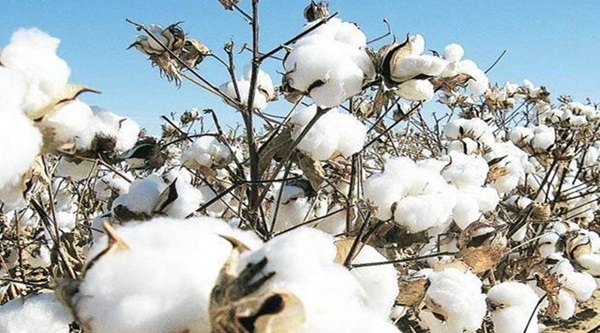
The price rise to Rs 100,000 for a single cotton candy is bleeding the entire textile chain with export demand dwindling and production curtailed at every level. The price rise is affecting not just small units but also big players. What’s more abolition of import duty on cotton has not provided any respite to the ailing sector.
Unable to to match retail rates with high cotton prices, retailers are seeking government invention to curb the reckless rise in India’s cotton prices. Chintan Thaker, President, Welspun Group points out, despite price rise, big companies like Welspun are being compelled to curtail production in order to fulfill long-term orders of international clients. The company’s units in Gujarat are currently running at 60 per cent capacity. They are likely to face further production cut if the situation prevails for long, Thaker warns.
Gujarat denim makers balance price rise with production cut
Similarly, not being able to balance raw material price hike with finished products, denim manufacturers in Gujarat have cut production by up to 50 per cent, notes Ashish Shah, Managing Director, Aarvee Denims and Exports. Most affected by the current inflation in cotton prices are spinning units whose cotton procurement has declined almost 50 per cent, claims Gautam Dhamsania, Secretary, Spinners Association of Gujarat (SAG). Of the 120 spinning mills currently operating in Gujarat, five-six have closed operations and another six have switched to manufacturing polyester and viscose yarns. The remaining are working with limited capacity.
Limit cotton stocks with traders
Saurin Parikh, President, SAG opines, future trading on commodity exchanges coupled with stock piling by a handful of MNCs is responsible for the current unrealistic cotton price hike. He urged the government to limit cotton stocks with traders to curtail prices. Gujarat spinners mostly purchase the quantity of cotton for processing from Tamil Nadu. With weavers in Tamil Nadu reducing production by 50 per cent, processing job orders from Gujarat processors have also reduced says Naresh Sharma, President, Ahmedabad Textile Processors’ Association.
Demand for polyester and viscose-knitted yarns from Tamil Nadu has also been declining for the past fortnight, avers Dev Kishan Mangani, Former President, Surat Textile Traders Association (STTA).
Knitwear exporters in Tirupur have urged the government to address the problem immediately. The export cluster has observed strikes to attract the Centre’s attention and seek solutions for the crisis, says Raja M Shanmugham, President, Tirupur Exporters’ Association (TEA). The TEA has also sought financial assistance from leading banks to help garment manufacturers. The association has also sought more liquidity from the government through schemes like ECLGS and additional credit facilities of around 10-20 per cent of existing limit for MSMEs.
Workers’ livelihoods under threat
Experts point out, the price rise in knitwear sector will threaten the livelihood of thousands of workers employed in these units. Knitwear exporters in India are also facing a hike in freight charges due to the Russia-Ukraine war. These factors are likely to prevent exporters from fulfilling over 40 per cent of current export orders, Shanmugham laments. Tirupur-based exporters have urged yarn suppliers to revoke prices and help them deliver summer orders by May-end.
Smart production techniques, sustainability in focus at Denim Premiere Vision-Berlin
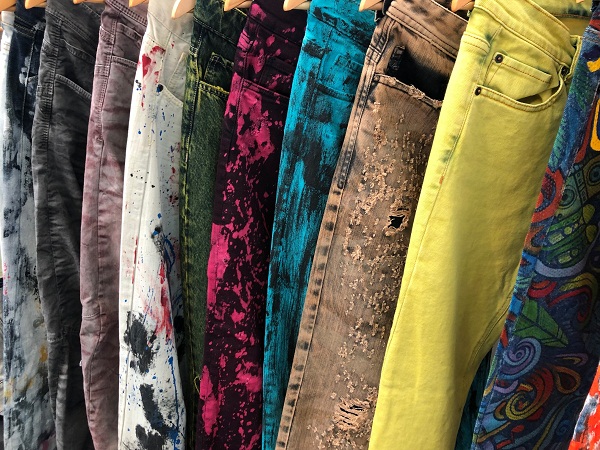
Many felt a later date would have worked better for the just concluded Denim Premiere Vision-Berlin held on May 17 and 18, 2022. However, the two-day event was attended by over 80 exhibitors who showcased their Fall/Winter 2023-24 collections and latest sustainable R&D developments.
Highlights on new design techniques
The show provided an opportunity to exhibitors to focus on the intricacies of their collections and learn new fashion techniques. Visitors could meet the creative heads of brands like Blue of A Kind and Isko and designers like Simona Testucci and Alessio Berto. Owner of Diesel and other OTB Group brands, Blue Jeans Lavanderie launched a chlorine- and potassium-free permanganate solution to achieve in-demand 3D effects on garments seen on the F/W 2022-23 catwalk. The MSLR-compliant laundry is able to achieve more defined ozone finishing on garments through Soko’s Lumina solution.
Karachi-based manufacturer, SM Denim’s booth featured some of the most eye-catching digital prints. The company has launched new cotton-free fabrics, stay black fabrics and Tencel shirting fabrics.
Indigo Textile showcased knit button-down shirts that appear like woven but are comfortable as knits and seamless athleisure and blends with Lurex. Naveena Denim (NDL) presented mechanical stretch denims fabrics while Square Denim showcased fabrics based on ballerina concept with 85 per cent stretch and no growth.
Delving into smart production methods
Companies also delved into smarter denim production methods .Indigo Textile presented a collection focusing on zero-waste concept developed in collaboration with US designer Danielle Elsner. The collection includes three zero-waste patterns for unisex jacket, jeans and kids’ jeans. Made completely from a single fabric derived from hollow synthetic-free yarns promoting temperature regulation.
Wiser Wash launched a new solution Ozone Tumbler. The solutions revealed details to make a machine both worker and planet friendly. The solution also helps eliminate obstacles faced by workers on laundry floor.
Vav Technology emphasized on the uses of its laser machines. The self-refilling gas canister in the machines enables it to continue production unhindered.
Showcasing sustainable fabrics
Spanish denim manufacturer Evolx showcased sustainable fabrics including those made from organic cotton, recycled fibers and zero polyester. The company also presented no-wash fabrics in a unique blue shade. Closed-loop concepts were highlighted by Eurotay who presented three styles meeting the Ellen MacArthur Foundation’s Jeans Redesign guidelines. Produced from 100 per cent cotton, rivet-free jeans has removable buttons and enzyme washes.
Signature fabric franchises like Iso Reform and Iso Pop were showcased by Turkish denim mill Isko. Turkish trims supplier Kasiv presented recycled leather patches. Made of upcycled leather scraps, these patches were combined with a water-based chemical that bonds the pieces.
New collaborations
Exhibitors emphasized collaborations is key to many new innovations. Indigo Textile showcased a new traceable technology being developed in collaboration with Diamond Denim by Sapphire. Being used by brands like Reformation, the technology is available in a limited range of Indigo Textile fabrics. However, the company plans to expand its use at client’s request.
Rashid Iqbal, Executive Director, Naveena Denim said, collaborations between brands, mills and fibers will become the new norm in the denim industry. The mill’s collaboration with the German brand Tom Tailor emphasizes on the benefits of four hemp-blended fabrics used across men’s, women’s and children’s jeans and jackets. The company has developed a rope-dyed 100 per cent hemp fabric that complements the first woven fabric.
Sri Lanka’s crisis leads to 10-20% loss in apparel orders
Sri Lanka’s ongoing crisis is leading to a loss of 10-20 per cent of orders that are being diverted to India and Bangladesh, warns Felix Fernando, Joint Apparel Association Forum.
As per a Tamil Guardian report, major brands have had to meet with buyers in recent weeks to reassure them that the ongoing unrest in the country would not disrupt their orders.
According to a report by the Export Development Board, Sri Lanka’s apparel and textile turnover increased by 13 per cent Y-o-Y to $1.9 billion between January and April 2022. However, the country may not be able to sustain this if it fails to restore buyers’ faith
The situation may further worsen by concerns of a coming global recession which would further dampen the buying power of apparel buyers and badly damage Sri Lanka’s export sector.
Fernando noted that road closures due to protests had caused difficulty for apparel companies in getting their workers into the factories leading to missed deadlines. However, he notes that trade unions have recognized the seriousness of the challenge and have not taken to strikes. Fernando further states:
Gap releases Q1FY’22 financial results
Gap Inc, a portfolio of purpose-led, billion-dollar lifestyle brands including Old Navy, Gap, Banana Republic, and Athleta, and the largest specialty apparel company in the US reported fiscal 2022 financial results for its first quarter ended April 30, 2022.
As per the company’s figures, its net sales declined by 13 per cent to $3.5 billion, from last year. Sales growth was negatively impacted by an estimated 5 percentage points related to lapping the benefit of stimulus last year and approximately 3 percentage points from divestitures, store closures, and the transition of the company’s European business to a partnership model.
Comparable sales declined by 14 per cent Y-o-Y. Online sales declined by 17 per cent compared to last year and represented 39 per cent of total net sales. Store sales declined 10 per cent compared to last year. The company ended the quarter with 3,414 store locations in over 40 countries, of which 2,825 were company operated. The company’s gross margins declined by 930 basis points from last year to 31.3 per cent.
Crocs collaborates with Chumbak to launch first India-specific collection
Footwear brand Crocs has launched its first ever India-specific collection in collaboration with lifestyle retailer Chumbak, The collaborative venture titled, ‘It’s a Vibe,’ speaks a contemporary and Gen- Z inspired fashion vocabulary.
As per a Vogue report, the Chumbak X Crocs collection features a vibrant reinterpretation of the staple clogs. The signature Chumbak designs known for their joyous color palette and patterns of ikat and paisley rejuvenate the footwear through an Indian lens. Synonymous to everything exciting and inventive, the collection inspires a new generation of street style and elevates any look that passes the vibe check. (pun intended)
The one-of-a-kind colorful clogs are decked with fun jibbitz featuring cultural motifs, logomania and cute doodles. Practical, quirky and decorative, these shoes retain the best of both brands. Their traditional Indian patterns and designs retain the magpie vibrancy that is often typical to an Indian wedding.
GOTS increases certified facilities by 19% in 2021
In 2021, GOTS increased the number of certified facilities by 19 per cent to 12,338 facilities across 79 countries, shows the firm’s 2021 Annual Report.
As per Textile Network, the report details the growth achieved by the firm in 2021, which included an increase of 19 per cent in GOTS certified facilities around the world, with Certification Bodies (CBs) reporting 12,338 facilities in 79 countries.
Three new GOTS-approved Certification Bodies brought the total to 18, nine of which have chemical input approval in their scopes. The additional CBs are helping meet an ever-increasing demand for certification. The rise in certifications also allowed GOTS to expand internally, adding representatives as well as colleagues with expertise in Standard Development and Implementation, Quality Assurance, Communication, and IT. Visits to the GOTS website jumped 43 per cent from 2020 and GOTS’s following on social media expanded significantly, gaining 57 per cent across platforms.
Additional highlights covered in the report include chronicling the implementation of the most recent update to the standard document, GOTS version 6.0, and the release of ‘Conditions for the Use of GOTS Signs (CUGS)’, which outlines the rules for using the GOTS logo and labeling and updates to GOTS Scope and Transaction Certification policies which are a crucial part of the certification process.
Centro teams up with Toms to launch footwear collection in India
South India’s largest multi-brand footwear chain, Centro has teamed up with American lifestyle brand Toms to launch its footwear in India.
As per an Indian Retailer report, Toms will introduce its iconic collection of slip-ons having a durable and flexible sole. A few of the footwear styles also have earth-friendly elements like uppers crafted in heritage canvas or recycled cotton canvas, and insoles with 50 percent eco content. The Alp is the ultimate throw-on-and-head-anywhere shoe, it’s pragmatic and uncomplicated and a statement of people’s values. All products designed by Tom help support efforts to build equity at the grassroots level. Their packaging is earth-friendly with carton boxes/paper bags made from recycled paper and filling, making it a great gift for earth-conscious consumers.
The Alp and along with a wide range of fashion-forward and sneaker-sized iterations is being sold throughout India with the latest Spring Summer 2022 collections. With an expansion plan of 20 dedicated - Free Standing stores in the next three years. Currently, Toms is available on the brand website, Tata Cliq, Tata CliqLuxe, and Centro. Style and coming soon on Myntra, MyntraLuxe, Ajio Gold, AjioLuxe, and Nykaa Fashion. Further customers can experience the brand offline across Centro Stores and coming soon at Shoppers Stop, Regal, Venus Steps, D-lounge, and in cities in India like Mumbai, Delhi, Hyderabad, Bengaluru, etc.
Ban futures trading of cotton to regulate prices, say textile and garment firms
Blaming the government for driving up fiber prices, textiles and garment firms have urged for a ban on futures trading of cotton. Domestic cotton prices have more than doubled to breach Rs 100,000-mark per candy of 356 kg in the past one year. Consequently, cotton yarn prices, too, have jumped substantially.
In December 2021, to regulate rising prices, stock and commodity markets regulator Sebi suspended futures and options trading for one year in seven farm commodities: chana, mustard seed, crude palm oil, moong, paddy (Basmati), wheat and soyabean and its derivatives. However, it did not ban cotton trading completely. However, now exporters have requested the government to ban futures trading of cotton completely. Similarly, they have requested the government to formulate a long-term strategy to ensure adequate availability of cotton to consuming industries, informs Raja Shanmugham, President, Tirupur Exporters Association.
Cotton yarn prices surged 20 per cent to Rs 446 per kg in May, points out Narendra Goenka, Chairman, Apparel Export Promotion Council (AEPC) in a letter to Piyush Goyal, Textile Minister. This continuous price-rise may make India highly uncompetitive in the global textile markets, he adds. The AEPC has recommended quantitative restriction on export of raw cotton and cotton yarn and besides reducing declaring cotton as essential commodity to help government regulate its supply. Sanjay Jain, former Chairman, CITI opines, rising cotton prices are eroding India’s competitiveness vis-à-vis the world’s largest textiles and garment player.
Central Leather Research Institute launches 3D foot mapping project
To enable footwear brands to better serve Indian consumers, the Central Leather Research Institute, under the Council of Scientific and Industrial Research, has launched the 3D foot mapping project. The project involves developing India-specific footwear-sizing chart. The project involves a survey of over 100,000 people in the age group of 05-55 from across 73 Indian districts. The size chart will be developed upon completion of the survey.
The survey involves collecting of 29 data from each Indian foot examined, says Sreeram, Director, Central Leather Research Institute. Indian feet generally have a wider front portion compared to European feet. This can make European-sized footwear uncomfortable for many Indians, he adds. Indian sizing standard for footwear will be published in the Bureau of Indian Standards by the end of 2022, By then, footwear makers will starting manufacturing shoes and closed footwear for men, women, and children, he adds.
Founded in 1948, the Central Leather Research Institute is also celebrating its 75th year platinum jubilee this year. The organization has released a commemorative stamp with the Indian postal department to celebrate the occasion.
Guess estimates FY’23 revenues will rise by 4%
Anticipating no COVID-19 related shutdown during the year, American retailer Guess Inc expects fiscal 2023 revenues to increase by 4 per cent. The company’s revenues increased 21 per cent to $593 million during Q1 FY’23 from $520 million in the same prior-year quarter due to a surge in licensing sales and Americas wholesale revenues.
Retail revenues from the Americas increased 7 per cent while composite sales including e-commerce, increased 3 per cent. Wholesale revenue from the American region increased 50 per cent. Revenues from Europe increased 14 per cent, while the region's retail composite sales, including e-commerce, decreased 6 per cent. Revenues from Asia increased 1 per cent while the region's retail composite sales, including e-commerce, decreased 11 per cent.
Despite the sales uptick, net earnings for the three months ending April 30 fell to $10.5 million, from $12.9 million in the quarter last year, said Guess.