FW
Taiwan Textile Federation launches TEPP project to promote circular textile exports
The Taiwan Textile Federation (TTF) has launched its "Textile Export Promotion Project" (TEPP) to promote exports of premium textile by exporters adopting circular economy principles.
As a country that cares about sustainable development, Taiwan's textile industry attaches great importance to introducing advanced technology and using recycled materials to produce environmentally friendly products in a circular way.
Leading textile manufacturers, such as Super Textile, Libolon, Kingwhale and Hermin, are playing an essential role in promoting a circular economy mindset.
Super Textile Corp. continues to create fabrics with recycled components that reduce the impact of waste on the environment. The Taipei-based company received the National Enterprise Environmental Protection Award and the Industrial Waste Reduction Award for its Pineapple Leaf Fiber Fabric.
With a solid commitment to sustainable principles, Libolon produces recycled polyester material derived from post-consumer wastes such as plastic bottles and marine litter into mechanical recycled PET or pre-consumer wastes such as fabric wastes as well as discarded polyester fabric.
Libolon has an extensive collection of recycled polyester products in multiple categories for woven and knit fabric that adhere to the international textile standards, according to Steven Su, assistant vice president at Libolon.
Kingwhale has set clear goals for cutting carbon emissions to protect the environment and promote sustainable development. By setting clear goals for becoming carbon neutral by 2050, Kingwhale has positively impacted the environment and contributed to a more sustainable future.
The textile industry is notoriously complex, and sustainable fabric production often falls by the wayside as companies prioritize profit over environmental responsibility. HerMin Textile aims to meet this demand by investing in new technologies and processes that will allow them to produce fabrics more sustainably. One example of this is the company's recycled materials, which have helped reduce factories' waste.
With this observation in mind, HerMin Textile is working on new methods of dyeing and printing fabric that use less water and chemicals. The Taiwan company shows its commitment to becoming more sustainable and responsible by investing in these initiatives.
Texbrasil brand CotexTextil launches new collection
A Texbrasil (Brazilian Apparel and Fashion Industry Internationalization Program) brand — result of a partnership betweenAbit (The Brazilian Textile and Apparel Industry Association) and ApexBrasil (Brazilian Trade and Investment Promotion Agency), brandColtexTêxtilhas launched a collection inspired by challenging scenarios, the connection between nature and technology, in art and wellbeing, with creative and daring prints, unique textures, colors and fabrics.
Highlights of the collection include Extreme Emana fabrics and the Elastic line, items featuring compression, high elasticity and maximum comfort for sports that demand performance and freedom of movement. The brand has also showed the main consumer trends and forecasts for the Winter 2023 season, in addition to new textile technologies aimed at the fitness, beach and lingerie markets.
PEL to invest in Shree Ganesh Textile Park
One of the key players in the embroidery and laces in India and owners of brand Hakoba, Pioneer Embroideries (PEL), plans to invest in Shree Ganesh Textile park with a view to modernize and consolidate embroidery business at single location.
Pioneer Embroideries is becoming a promoter in Shree Ganesh Integrated Textile Park Private Ltd. (SGITPL), at village Deogaon, district Dhule, Maharashtra, a textile park approved under Government of India (Gol) Scheme of Integrated Textile Park (SITP). PEL will set up a greenfield embroidery project at SGITPL.
Government of India and Maharashtra Government (MH) has approved grants of Rs. 49 crore Total approved project costs as per GoI is Rs. 104 crore, comprising of approximate Rs. 57.20 crore towards factory buildings and Rs. 46.80 crore towards common infrastructure, viz., site development, roads, storm, rain water harvesting, water connection, sewerage, landscaping, telecommunication, electrical transmission and distribution, hostel, training centre, etc. The park is spread over 120 acres.
PEL believes this will help to set up a greenfield embroidery manufacturing facility and provide enough land parcel to expand in the long-term future too. This will help PEL achieve its ESG (environmental social governance) initiative.
PEL will become one of the three co-promoters. SGITPL has already received Gol approval to accept PEL as co-promoter. All the three promoters are investing 33 per cent each.
Holding Textile Hermes and Bucol textile brand certified by GOTS
A part of the luxury goods company Hermes, Holding Textile Hermès and its Bucol textile brand have obtained GOTS Certification to reaffirm their eco responsible commitment towards a more sustainable fashion world. Bucol silk and cotton products are already OEKO-TEX certified.
The silk and cotton fibers used by Bucol are sourced organically. The chemical substances used in Bucol’s products are carefully selected to be less harmful for mankind and nature, a rigorous traceability is followed during production processes and precise social criteria are respected, the company said in a media release.
“Since its inception, Bucol has been committed to offer its clients’ high-end textiles with an exceptional level of quality. Its people are at the centre of its creative process, anchored in modernity and in the universes of fashion and accessories. Bucol appeals to the rarest expertise of the Lyon region such as the warp print technique or knife cut velvet and works with the best craftsmen either from its own house or from its external partners. Because of this, Bucol is naturally moved by ethical and environmental issues,” the release added.
Holding Textile Hermès, which Bucol belongs to, has received GOTS Certification by Ecocert under license number 228603.
GOTS certified facilities increase by 19% in 2021
According to the 2021 Annual Report released by GOTS, there was a significant increase in the number of certified facilities in 2021 despite continued COVID constraints.
According to the report, the number of GOTS certified facilities increased by 19 per cent in 2021 with Certification Bodies (CBs) reporting 12,338 facilities in 79 countries. The additional CBs are helping meet an ever-increasing demand for certification. The rise in certifications also allowed GOTS to expand internally, adding Representatives as well as colleagues with expertise in Standard Development and Implementation, Quality Assurance, Communication, and IT. Visits to the GOTS website jumped 43 per cent from 2020 and GOTS’s following on social media expanded significantly, gaining 57 per cent across platforms.
The report further chronicles the implementation of the most recent update to the standard document, GOTS version 6.0, and the release of ‘Conditions for the Use of GOTS Signs (CUGS)’, which outlines the rules for using the GOTS logo and labeling and updates to GOTS Scope and Transaction Certification policies which are a crucial part of the certification process.
Cornell University launches new study for garment workers
Cornell University has launched n new study on alternative models for social protection for garment workers.
Undertaken by the New Conversations Project at the Cornell University School of Industrial and Labor Relations, the project lays out the key elements for a global severance fund, namely the need for it to be legally binding and to feature detailed obligations on brands and employers regarding the provision of severance. The fund should not replace the need for government social protection schemes, but rather incentivise the strengthening of such schemes. The findings support the proposal for an enforceable agreement put forward by the Pay Your Workers-Respect Labour Rights (Pay Your Workers) campaign, which is backed by dozens of garment worker unions in major apparel producing countries, as well as labour rights organisations including Clean Clothes Campaign and Worker Rights Consortium.
Both the Cornell research and the Pay Your Workers campaign emphasise the current lack of adequate social protection systems in major apparel production countries, and the responsibility brands have towards workers in their supply chains. Cases of severance theft have grown exponentially during the pandemic, with Worker Rights Consortium estimating that over half a billion dollars in severance has been stolen from garment workers since the pandemic began. Brand inaction has left millions of workers struggling to survive. The Cornell research confirms the need for brands to pay into a binding global severance fund to ensure that workers whose factories close or who are laid off en masse receive their full legally mandated severance when their employer fails to pay.
Thirty listed companies fall short of social and environmental targets: Report
Thirty of the industry’s largest listed companies are expected to fall short of social and environmental targets mentioned in the Paris climate agreement and UN Sustainable Development Goals, says a Business of Fashion report. The industry is wildly underperforming despite few front runners taking small steps to achieve environmental sustainability, says Sarah Kent, Chief Sustainability Correspondent, The Business of Fashion.
The second annual report by the online publication ‘Business of Fashion Sustainable Index 2022’, analyzed publicly-disclosed information of companies in three categories - luxury, sportswear and high street fashion. Puma emerges a leader in the report with a score of 49 points out of 100, followed by Kering, which continued to lead rankings of luxury players. It is followed by new additions to the list Levi Strauss, H&M Group and Burberry.
Kent adds, the industry is not seeing the big transformational leaps that we really do need to see over the next 8 years, adds Kent. This would lead to companies losing their cultural relevance and destroying long-term value, claims the report. The companies scored highest points for progress in reducing emissions amongst the six topics including workers’ rights and materials. Dragging down the overall scores was the enlarged scope of this year's report, which doubled the number of companies from last year's 15.
Indo Count acquires GHCL I Q4FY’22
In Q4FY’22 Indo Count Industries acquired the GHCL home textile business making it the largest global bed linen manufacturer. The company was able to meet FY22 volume guidance of 75 million meters despite challenges and high inflation affecting discretionary purchases. Sales volume in FY22 was 75.8 million metres, and Q4FY22 sales volume was 17.6 million metres. Revenue during the quarter grew 17 per cent, while EBITDA grew 39 per cent and PAT grew 44 per cent due to better raw material hedging and higher contribution from value added products.
The company announced new Capex plans to enhance spinning capacity at subsidiary PSML. The proposed capex will be towards additional spinning capacity of 68,000 spindles. In the first phase of the project, the company will invest Rs 98 crore to add 24,192 spindles by December 2022. In the second phase, the company will invest Rs 172 crore to add 43,776 spindles by March 2023. In all, the company will invest Rs 270 crore in the project.
Rising raw material prices to hinder India’s $40 billion export target: AEPC
India's textile exports are unlikely to achieve its previous year’s figures of $40 billion owing to rising raw material prices, says Naren Goenka, Chairman, Apparel Export Promotion Council (AEPC). The rise cannot be passed on to the consumers as it is around 125 per cent, Goenka says. The rise is more concentrated in Western countries whose consumers are buying more essentials, he adds.
Many cotton spinning mills in South India have shut down due to availability and price issues. Cotton prices increased to Rs 90,000 per candy in March 2021, owing to 11 per cent import duty levied on the raw material. Union Minister Piyush Goyal has cautioned export should not be at the cost of the domestic industry, which is the largest generator of employment in the country.
The government plans to launch the second Production-Linked Incentive Scheme for the textile amid the rise in cotton prices and mills in southern India. In March, the government had issued a notification to set up textile parks under the PM MITRA (Mega Integrated Textile Region and Apparel) scheme, to create an integrated textiles value chain right from spinning, weaving, processing, dyeing and printing to garment manufacturing at one location. The scheme aims to generate one lakh direct and two lakh indirect jobs per park. The Centre is planning to set up seven MITRA parks with a total outlay of Rs 4,445 crore.
Candiani, Lenzing join hands to launch new denim fabric with alternative fibers
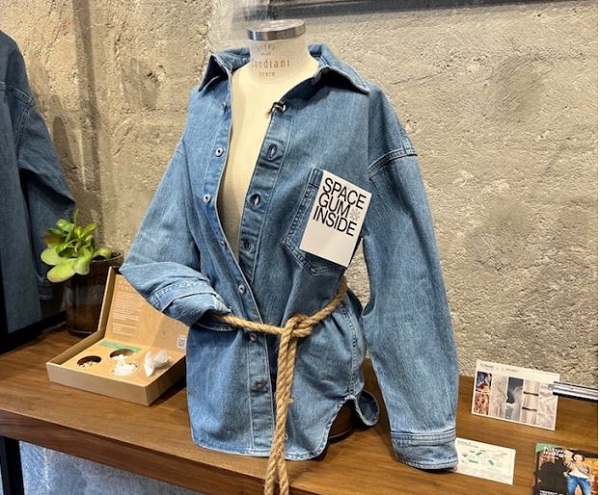
Italian premium denim manufacturer Candiani and specialized manufacturer of cellulosic fibers, the Lenzing Group have collaborated to sensitize consumers and industry leaders on the growing need to be sustainable and adopt fabrics made from alternative fibers like hemp. As per a Spin Off report, the collaboration has taken off with the launch of a limited edition collection of 50 shirts made with Coreva stretch denim fabric containing an innovative variant of Tencel made from hemp fibers. The collection was launched inside the Candiani store in Corso di Porta Ticinese in Milan.
The project enables Lenzing to develop new sustainable fibers, says Carlo Covini, Project Manager-Marketing Textiles The brand has been launching different fiber solutions to boost sustainability in the apparel market and embrace a circular business model. Few years ago, it launched the Tencel X Refibra technology to upcycle cotton and wood scraps and convert them into a new material.
Meeting production standards
A year ago, Lenzing also launched the Orange Fiber & Tencel Limited Edition initiative that involves recycling orange peel to produce new Tencel fibers. Looking to produce these fibers at industrial scale, the brand purifies each raw material and prepares to meet production standards, adds Covini. Candiani has also been involved in similar initiatives. Winner of the ITMA Sustainable Innovation Award in 2019, the company developed Coreva, a plant-based yarn made from natural rubber for making stretch biodegradable denims.
Made with about 20 per cent limited edition Tencel Hemp fibers, the new denim shirts contain 68 per cent organic cotton and 2 per cent Coreva fibers. They are sold at €185 a piece at the same price of a Candiani Coreva denim shirt. Covini says, the new range of shirts helps them measure the reactions of customers and explain the characteristics of their products.
Though hemp can be grown easily and requires little water and no chemicals and pesticides, it is not a completely sustainable material. To make the fiber more sustainable, Candiani added a supernatural stretch to make the fiber super soft.