FW
Columbia Sportswear bans alpaca wool from future collections
Encouraged by the campaigning efforts of animal rights organization PETA, outdoor apparel brand Columbia Sportswear has banned the use of alpaca wool in its future collections. The ban covers Columbia’s entire portfolio, and will compel its group brands PrAna, Mountain Hardwear and Sorel to rethink their approach towards alpaca wool and adopt alternative materials. This will help it to prevent vulnerable alpacas from being abused and shorn bloody for their fleece, says Tracy Reiman, Executive Vice President, PETA.
PETA routinely purchases minimum shares in fashion industry firms as to gain a seat at their annual meetings. The organization is able to influence leading executives to follow the growing list of companies choosing to shun animal-based product of all kinds.
Looking ahead though, PETA is asking kind consumers to do their part to end this cruelty by leaving alpaca items on the rack.
Fast fashion dies a slow death as consumers focus on ethical shopping
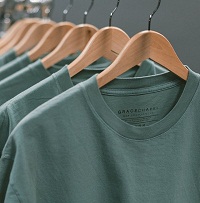 Alessandro Bru, Politecnico Di Milano School of Management believes, COVID-19 has had a big impact on the global retail industry. The pandemic has not only sparked conversations on shoppers’ consumption patterns but also made them realize their responsibility towards ensuring a sustainable future.
Growing preference for durable, sustainable clothes
The pandemic has compelled consumers to review their buying habits and choose products carefully. It has made Generation Z consumers aware of ethical issues surrounding fashion, including sustainability. And they are threatening the existence of fast fashion by seeking apparels that are more durable, sustainable, and ethically produced. The fast fashion industry is also suffering due to lack of consumers from low to middle income families. Hit by loss of jobs and incomes, these consumers are shifting their focus from clothes and accessories to daily essentials.
No effect on consumption of wealthy consumers
On the contrary, consumption patterns of wealthy consumers remained largely unaffected. Hence, luxury retailers are not likely to suffer the same way as fast fashion retailers. The luxury industry might survive the pandemic as it offers a variety of products including apparel, footwear and accessories. Besides supercars and yachts, it also offers watches and jewelry that are often passed down from generation to generation.
People have been consuming luxury products including champagne, chocolates, home décor and home wear items throughout the lockdown. Inspired by social media platforms, they have been dressing up in luxury loungewear despite having nowhere to go.
Process over product
Earlier too, the fast fashion industry showed slowdown signs multiple times. However, this year, the pandemic has accelerated the demise of fast fashion by hitting lower-income group hardest. Low-income consumers are prioritizing spending on essentials, eroding the market for fast fashion retailers.
Consumers are also focusing on the entire process of garment manufacturing rather than just the end product. This is helping them make informed decisions about apparel purchases. As millennials focus shifts to ethical shopping, fast fashion continues to suffer.
India gears up for commercial release of colored cotton in 2021
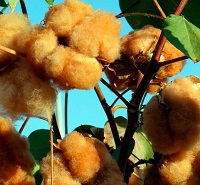 Although colored cotton is not new to India, the Indian Council for Agricultural Research (ICAR) through its All India Coordinated Research Project (AICRP) on Cotton plans to commercially release colored cotton by 2021.
Five colored cotton lines on the anvil
Under AICRP, ICAR will release four to five colored cotton lines. These have been evaluated for abiotic/biotic stress, diseases, water requirement, stability, color and yield. On an average, they will yield 10 to 15 quintals of colored cotton a hectare. The fiber strength of this cotton has been tested by the Central Institute for Research on Cotton Technology (CIRCOT), Mumbai.
AIRCP will cultivate colored cotton in areas having independent ginning and processing facilities. Each universities engaged in this project will collaborate with farmers or processing units for cultivation, weaving and manufacturing.
No stranger to colored cotton
India currently has about 40 colored genotypes of upland cotton (G hirsutum), mostly of various shades of brown and green colour in the National Gene Bank of Cotton maintained at the Central Institute for Cotton Research (CICR) Nagpur. The country is not a stranger to colored cotton and grows naturally-colored dark brown cotton in Bengal, yellow-green in the Garo Hills, and light pink in peninsular India. Its local cotton grown in Gollaprolu region of Andhra is light pink in color, and is known as yerra pathi (red cotton).
CICR released three colored cotton varieties – Cocanda and two Red Northerns – for commercial cultivation in Andhra Pradesh in the mid-1900s. However, work was discontinued due to low yield and poor fiber properties. Since 1990s, colored cotton once again regained focus with 10 agricultural universities in south and central India researching it. These universities use materials from ICAR-CICR and grade their colors from green to dark brown.
As per Rajesh Patil, Principal Scientist, University of Agricultural Sciences, at the forefront of AICRP trails are brown cotton lines from UAS. AICRP also proposes to release one of its varieties, DDCC in 2021.
New wild cotton species launched
The nine other color genotypes from UAS Dharwad are also performing well, adds Patil. He credits Manjula Maralappanavar, Senior Breeder, UAS for this success. Maralappanavar has not only published papers on her research but also developed DMB-225, a medium brown variety in 2013, along with three other varieties and also worked on DDCC-1.
Vinita Gotmare, Principal Scientist, ICAR-CICR Nagpur is currently engaged in the conservation of the hardy and resistant wild species of cotton. She has launched two wild species of cotton, namely; G. raimondii and G.thurberi, were introgressed with G. hirsutum and G.barbadense.
Brown cotton more stable than green variety
Brown cotton is known to be more stable than green genotypes which fade away on being exposed to the sun, says Gotmare. Vaidehi 95 has good yield levels and strong fiber properties and is pest-resistant. Lint obtained from Vaidehi 95 has been sent to Gopuri ashram at Wardha to handspin and weave cloth. The testing of machine spinning of this cotton is done by CIRCOT Mumbai.
Of late, scientists have been stalling attempts to go ahead with this project on fear of colored cotton being contaminated. However, scientists like KR Kranthi, Former Director, CICR terms this theory baseless as production of cotton seed in India is regulated. Also, the physical contamination of white cotton with colored cotton can easily be prevented. Over 90 per cent seeds are produced by private companies in isolated farms while the remaining are grown in seed farms that stringently follow government guidelines.
Government boosts colored cotton cultivation
To prevent this, the Central government is finalizing a pilot-project on colored cotton involving agricultural universities, cotton research and textile bodies, farmers and the Khadi and Village Industries Commission (KVIC), National Textile Corporation (NTC) and the Federations of Textile Industry and Farmers’ Co-operative Societies. The project may boost the cultivation and release of colored cotton in India.
Tokyo Fashion Week kicks off with live events
A major event to showcase the latest fashions for the 2021 spring and summer seasons, Tokyo Fashion Week kicked off with the majority of shows going online to prevent the spread of the new coronavirus.
About 70 percent of some 40 participating brands refrained from holding catwalk displays during Rakuten Fashion Week Tokyo. These brands will instead livestream their collections featuring the latest designs on their smartphones and computers through the organizer's official YouTube channel and the labels' own websites.
‘tac:tac,’ a Tokyo-based casual brand launched in 2013 by Japanese designer Takaaki Shimase, released a video online to lead off the six-day event. For the latest event through Saturday, foreign brands from countries including China and South Korea are taking part.
The event will also hold special programs to feature collections from "doublet" by Paris-based designer Masayuki Ino, and "Facetasm" by Hiromichi Ochiai. The biannual Tokyo event is among those in Paris, Milan, London and New York known for their influence in the fashion world, according to the organizer.
Shoppers at British retail outlets fall marginally
According to market researcher Springboard, the number of shoppers at British retail outlets fell only marginally last week as people got used to new measures to curb COVID-19 including a 10 p.m. closure of bars and restaurants. It said shopper numbers, or footfall, fell 0.3 per cent in the week to October 10 from the week before. That compared with a fall of 3.5 per cent in the previous week - the first complete week of the new curbs imposed by the government on hospitality outlets.
Springboard said footfall rose 0.1 per cent in high streets and 0.4 per cent in shopping centres last week but declined 1.6 per cent in retail parks. The year-on-year decline was 30.9 per cent. .However, the government is expected to announce further restrictions on the hospitality industry, hitting the north of England hardest, following a spike in COVID-19 infections.
Britain's retail and hospitality sectors, already struggling with high rents and business taxes, have been hammered by the coronavirus pandemic. Hundreds of closures and thousands of job losses have already been announced.
Pierre Mantoux launches luxury stockings range
Premium Italian legwear brand Pierre Mantoux recently launched a line of everyday luxury stockings, featuring ‘leading-edge’ Lycra fibre technology innovations. The Premium Fit collection’s five hosiery offerings fuse essential and elegant lines with unparalleled comfort, fit, breathability and freedom of movement, The Lycra Company reports.
The collection offers a 20-denier line with tights and knee-highs as well as a 40-denier line with tights, knee-highs and leggings. A diverse array of season-spanning variations balance avant-garde and classic aesthetics with modern technology touches like hidden sea. It includes three-dimensional Lycra 3D technology, premium fit knee-highs with Lycra Made To Fit You technology prevent constriction and slipping construction ensures a uniform appearance and 360-degree comfort and freedom of movement and innovative silver antibacterial gusset:
Lycra Freef!T technology keeps pantyhose and legging lines and waistbands invisible under clothing thanks to controlled elasticity and reduced thicknesses. It allows the Premium Fit collection to adapt perfectly to all body shapes without slipping, stress or marks on the skin – delivering a natural feel, lightness and uniform appearance from the tops to the tips
Fulgar, Rhodia-Solvay collaborate for antibacterial Q-Skin yarn
Fulgar, an Italian manufacturer and distributor of elastic and covered spandex yarns, and the Rhodia-Solvay Group have collaborated to develop Q-Skin powered by Amni Virus-Bac Off yarn with antiviral and antibacterial properties.
Developed in record time by the Rhodia-Solvay research laboratories in Paulínia and Santo Andre, Brazil, this extraordinary polyamide yarn acts against bacterial growth and virus transmission. These properties are the result of antiviral and anti-bacterial agent permanently incorporated into the polymer matrix.
Electrical affinity with the proteins present in the external structure of the virus enables this agent to prevent the fabric from becoming a host surface enabling the spread of the harmful viruses and bacteria and reducing the risk and speed of contamination. The yarn’s antiviral properties have been tested by an independent laboratory in line with the international textile protocols set out by ISO 18184 standards regarding the determination of the anitiviral activity of textiles.
The lingering threat posed by COVID-19, alongwith the return to offices and schools has created an exponentially rising demand for garments given anti-bacterial and antiviral protection treatments. Many manufacturing companies in Italy and the rest of Europe are prioritizing such products.
FPM to take virtual booth at WTIN trade fair
Freudenberg Performance Materials (FPM) Apparel will be taking a virtual booth at the first international online trade fair of the World Textile Information Network (WTIN) industry platform. The event is called the “Innovate Textile & Apparel Virtual Trade Show” (ITAVTS) and runs from October 15 to 30, 2020.
From October 15 to 30, the world’s leading manufacturer of technical textiles will be presenting its products and innovations on a virtual booth at the online trade fair “Innovate Textile & Apparel Virtual Trade Show”. At the heart of FPM’s presentation will be the company’s comfortemp® thermal insulation – a broad portfolio of sophisticated materials that combine perfect comfort with high thermal insulation and are particularly suitable for sports and outdoor clothing.
Visitors will be able to explore a wealth of information and find relevant contacts via the virtual trade fair presentation. For example, a video and brochure carousel will feature a variety of films and flyers on the topics of sustainability, global solutions and comfortemp®. FPM experts will also be on hand to answer questions from visitors via live chat and to participate in a virtual panel discussion on the subject of “Progress in biodegradable textiles”.
Egypt’s RMG factories cut production by 50%
Due to a projected decline in demand for the fall season, several local ready-made garment factories in Egypt have reduced their production by 50 percent, while other factories have halted production altogether.
According to Mohammed Abdel Salem, CEO, Egypt’s Ready-made Garments Chamber, demand for clothing is not expected to exceed half of the normal rate this fall, amid expectations that a “second wave” of coronavirus will force the country into another lockdown, keeping people home and killing in-person shopping.
Several manufacturers suffered a major loss after a countrywide lockdown was mandated in mid-March to combat the spread of the virus. The lockdown led to a drastic decline in demand for ready-made clothes.
A massive overstock of summer clothing sat for months in the factories, according to Salam. The factories failed to distribute their production in both local and foreign markets. Factories have hardly sold 30 percent of their summer season stock over the past three months.
Many Egyptians turned to online shopping amid the pandemic, with the country’s e-commerce sector already steadily rising pre-pandemic.
Eastman launches sustainable cellulosic fiber Naia Renew
As per Sportswear International, Eastman, the producer of sustainably sourced Naia cellulosic fiber, has launched its new Naia Renew portfolio. The new cellulosic fiber is sourced from 60 per cent wood pulp and 40 per cent recycled waste plastics. It is traceable with certified biodegradability as it uses hard-to-recycle materials that would otherwise be destined for landfills.
The filament features a silky hand, rich luster and fluid drape and is used to create fashionable womenswear garments. The fiber is inherently soft and quick drying, with reduced pilling properties, and can also be used for everyday casualwear.
Naia Renew is produced with a low carbon footprint in a closed-loop process as solvents are recycled back into the system for reuse. The fiber is made from wood pulp sourced from certified forests, and the recycled plastics feedstock is generated via Eastman’s patented carbon renewal technology (CRT). CRT is an integrated, molecular recycling technology that breaks down waste plastics, such as postconsumer carpet fiber and plastic packaging materials, into basic molecular building blocks for the manufacture of new products.