FW
Yarn duty alarms Pakistan exporters
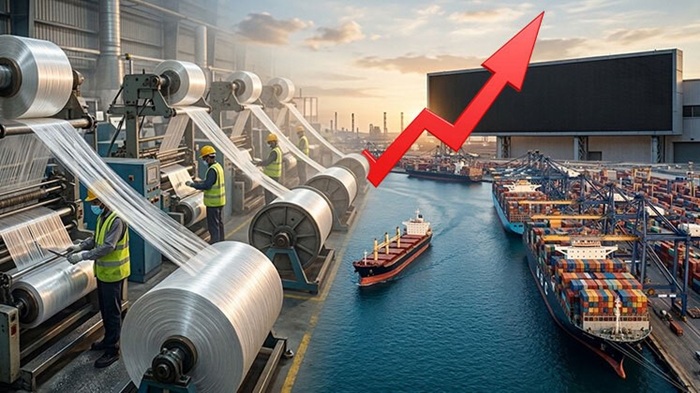
Traders in Pakistan are against the imposition of regulatory duty on yarn and thread. They say, yarn and thread are the raw materials of the textile sector and duty on them is not acceptable as the imposition of duty will adversely affect textile exports and throw people in the textile sector out of employment.
Since the textile sector is the backbone of the country’s exports, and most of the export earnings come from this sector, the imposition of duty on this sector would cause the sector to suffer from a severe financial crisis which will directly harm the economy.
Pakistan is an importer of polyester filament yarn which is the main raw material in textiles because yarn is not a finished product. Cotton has been replaced by yarn and the textile industry in Pakistan is largely dependent on imported yarn. Pakistan has a 17 per cent general sales tax on textile exports. To improve the liquidity position of exporters and competitiveness in the global market, and to prevent fraud and smuggling, the textile industry wants zero rating to be brought back. Due to the ongoing economic crisis in Pakistan, a shortage of gas and expensive electricity, the cost of production is already at high levels and due to the financial crisis most of the textile mills have closed down and more are on the verge of closing down.
Victoria’s Secret drops cashmere from its products
Victoria’s Secret will not use cashmere any more in its products. The brand joins dozens of other companies that have banned cashmere. China and Mongolia are responsible for 90 per cent of the world’s cashmere but the goats in cashmere farms are subject to unethical treatment. Terrified goats are pinned to the ground while workers rip out their hair with sharp metal combs so violently that the animals scream in pain and sustain bloody cuts. The negative environmental impact of cashmere production is greater than that of any other animal-derived material.
The industry is a significant contributor to soil degradation, which turns grasslands into deserts, including in Mongolia, where 90 per cent of the land is in danger of desertification. Alternatives to animal-derived materials exist in the form of vegan fabrics including soy cashmere, recycled polyester, organic and sustainably farmed hemp, bamboo as well as modal, Tencel and viscose made from sustainably harvested wood.
Victoria’s Secret owns the brands Victoria’s Secret and Pink. After nearly a year and a half as an independent, publicly-traded company, the company continues to make significant progress in its transformation and mission to celebrate and champion all women. It has created a solid financial platform with a new, more agile operating structure.
Andrea Guerra is Prada’s new CEO
Andrea Guerra will be the next CEO of fashion house Prada. Guerra, 57, is one of Italy’s high profile executives, serving as the long-time CEO of Luxottica, the world’s largest eyewear company, followed by a stint at the Eataly global chain of eateries and marketplace for Italian-produced specialties.
Most recently, he was in executive positions at the French conglomerate LVMH. Prada is aiming at a 40 per cent revenue growth. The Italian luxury group will do this by boosting its online business and the profitability of physical stores. The family-owned group targets an operating profit of 20 per cent of total sales, more than twice the 2019 level. It also aims to double the proportion of online sales to 15 per cent of retail revenues over that timeframe.
The group's strategy focuses on direct distribution to increase store productivity and online penetration. Last year, due to store closures and lack of tourism, Prada’s sales fell to €2.4 billion. The global health emergency interrupted two years of sales recovery at Prada, the result of a revamp plan focused on boosting e-commerce and sticking to full-price sales. Like the rest of the luxury sector, the group started to see the first signs of a rebound last summer. Besides the Prada and Miu Miu fashion houses, the Prada group also includes the footwear companies Church's and Car Shoe, as well as the pastry shop Marchese with 627 stores in 70 countries.
Tiruppur exporters against export credit rate hike
Exporters in Tiruppur are against an increase in the export credit rate. As per Tiruppur Exporter’s Association (TEA), if banks resort to increase the export credit rate at this juncture, competitiveness of Tiruppur’s knitwear export sector will be reduced and this will happen at a time when India’s competing countries have reduced the rate of interest and have gone in for a deep depreciation of their currencies.
Tiruppur wants an increase of the interest subvention provided under the Interest Equalization Scheme from three per cent to five per cent across the board as existing in the pre-Covid period. Exporters also want the export refinance scheme to be extended to banks to augment export credit. Under such a mechanism, banks would be encouraged to provide export credit in rupee to exporters and the same amount could be refinanced by the RBI at the repo rate.
This is expected to bring down the interest cost for export credit and provide the much needed competitiveness to Indian exports. Tiruppur’s knitwear exports have been falling for the last four months due to the challenging unusual business scenario in the global market and the twin impact of the Ukraine war and Covid pandemic. Tiruppur’s apparel exports fell 21 per cent in October 2022 from October 2021.
Shein appoints brand head
Shein’s global brand operations will be headed by Jessica Liu.
She comes to the role from southeast Asian e-commerce giant Lazada, where she served as president from 2020 to 2021. Prior to that, Liu has also been with Alibaba and Amazon. So she brings rich experience in the e-commerce sector across global markets. Shein founded in 2008 is a Chinese fastfashion company. In 2021, Shein managed to break into the US and European markets and achieved a gross merchandise value of $20 billion. Shein is upgrading hundreds of factories in its supply chain. Shein is the most searched fashion brand globally, topping searches across 113 countries, and is the largest online-only retailer in the world, producing between 35,000 and 1,00,000 new garments a day. The Chinese e-commerce store has exploded in popularity, and its fast-rate production has made rivals unable to keep up. While the clothing retailer has steadily fed the appetite for super trendy, budget-friendly threads, the true cost of the fast-fashion giant has led activists to criticize its business model and call for change. Shein is known for extremely low-priced and trendy apparel and accessories but is trying to sell more higher-price products with fatter profit margins. Shein currently ships its merchandise from China to more than 150 countries.
Vietnam to host Global Sourcing Fair in April 2023
Global Sourcing Fair will take place in Vietnam, April 26 to 28, 2023.
The fair, the first of its kind in Vietnam, is expected to bring together more than 500 booths and attract more than 6,000 buyers from the US, Europe, Asia and other parts of the world. Global Sourcing Fair is expected to give visitors an opportunity to discover new and popular products of key industries in Vietnam, including household appliances, furniture, gifts, handicrafts, fashion, accessories, textiles and fashion accessories. Suppliers participating in the fair are mainly those who are qualified for exporting goods. From now on Global Sourcing Fair is scheduled to be organized every year in the country.
Vietnam is one of the important and strategic destinations for supplies, and is becoming a manufacturing center of the world thanks to its advantages in terms of geographic location, import-export taxes and improved infrastructure. Businesses and buyers have started looking for supplies of goods from Vietnam. The country’s textile and garment exports rose by 21 per cent during January 2022 to October 2022. The US had a 46 per cent share in these exports. Other major destinations for Vietnam’s textile and garment exports are Japan and South Korea.
Fibre52 cotton rivals synthetics with its eco-friendly dye technology
Fibre52 may change the way cotton is prepared and dyed. The technology will minimize the use of water and energy and eliminate harsh chemicals while also offering a more durable and vastly improved natural-performance cotton fiber to rival synthetics. Traditional cotton treatment method, used for nearly 80 years, has involved hazardous chemicals and high heat that weaken the cotton fibers.
Fibre52’s process replaces harmful chemicals with bio-active products and uses lower levels of heat in the pretreatment process, saving up to 50 per cent in water, energy use and process cycle time. By including Fibre52’s dye technology, the cotton retains its natural properties and allows moisture to be transferred away from the skin, as opposed to the normal clingy feel of cotton. Fibre52’s technology combines the comfort of cotton with strength properties and moisture-management performance.
This inexpensive, eco-friendly alternative technology is easily transferable, allowing textile manufacturers to utilize current machinery with no additional capital investments and repeatable in resultant coloration and shade of material with no need to change dye recipes. Fibre52 cotton provides a steady heat flux and a short drying time, proving the wearer would feel more comfortable in hot and cold temperatures due to the slow change of the micro-climate.
Bangladesh looking for zero tariffs on apparels in the US
Bangladesh wants zero tariffs on exports of finished apparel products — made with American cotton — to the US. This means Bangladesh is hoping for preferential market access of its readymade garment exports to the US. Compared to other countries, Bangladesh now pays the highest tariff on its apparel products exported to the US, which seriously reduces Bangladesh’s competitiveness in the US market.
Bangladesh will also request the US Food and Drug Administration to facilitate the registration process for Bangladeshi drug products and for US technical assistance in building quality certification infrastructure. On the other hand, the US wants to discuss the provisions of the SEED Act to reduce import duties on tree nuts (walnuts, almonds) in Bangladesh, opportunities for the export of agricultural biotechnology and seeds to Bangladesh, draft data protection law, draft regulations on digital, social media, OTT platforms and other digital systems and intellectual property rights. Other issues, the US wants to discuss relate to labor rights, such as freedom of association and collective bargaining, safe and healthy working environment, labor rights in EPZs, child labor and forced labor.
Bangladesh cannot access US Development Finance Corporation (DFC) funding for private sector energy, healthcare, critical infrastructure and technology projects after the suspension of GSP (Generalized System of Preferences) benefits in the US market since June 2013.
Heimtextil 2023 in January to showcase a range of fibers and yarns
Heimtextil will be held in Frankfurt am Main, from January 10 to 13, 2023. Manufacturers and weavers will be offered a global range of fibers and yarns for decorative and upholstery fabrics, from the preliminary stage to textile finishing. Trevira will show the wide range of possibilities CS fabrics offer in the textile design of interiors. The focus will be on the functions and properties that Trevira CS fabrics offer in addition to their flame retardancy.
Other leading suppliers include Korteks and Reliance, Turkish manufacturer Bulut Tekstil. Architects, hotel decision-makers and designers will find a high quality range of outdoor fabrics, technical textiles for the contract sector, and imitation leather, including a large number of Spanish outdoor and contract specialists.
Italian manufacturer Tendaggi Paradiso as well as leather and imitation leather suppliers such as Turkish brand Flokser and German companies mah-ATN and Vowalon will also showcase their new products. The range will be rounded off by exhibitors Ambienta, Futura Leathers, Gebruder Munzert, Gruppo Mastrotto, and Indetex, who will present their high-quality fabrics for contract business directly on the boulevard in the form of selected complete stands. Citel has completely changed the finishing of its fabrics to reduce the environmental impact and will present new designs with thicker textures that the market is demanding.
Global baby clothing market to be worth over $30 bn from 2022-27: Study
As per latest Technavio study the baby clothing market is expected to grow $30.62 billion from 2022 to 2027 at a CAGR of 7.86 per cent during the forecast period. The market is fragmented due to the presence of a large number of players. Some key vendors are dominating, with their wide range of product lines and popular fashion brands.
Vendors operating in the global baby clothing market compete on different factors such as price, quality, brand, and variety. Companies incorporate different strategies to increase their share in the global market. The expansion of product lines provides an opportunity for leading players to maintain their dominance.
The outerwear segment accounts for the highest share of the market's growth. Outerwear baby clothing is further segmented into dresses, pyjamas, bodysuits, socks, cardigans, sweatshirts, and others. Among these, bottom wear products such as trousers and leggings hold a higher share, as they are available as unisex products, which has increased their demand.
The Asia Pacific and China account for 38 per cent of the market's growth. China, India, Japan, and Australia are the key markets for baby clothing in this region. The growth of the market in these countries is driven by factors such as the rising birth rate and changing lifestyles of the population. In addition, the rising disposable incomes of consumers in these economies are influencing consumers to purchase premium baby clothing products.