FW
Canopy's Report: 54% MMCF production earns green shirt, marking rapid shift to sustainability

Canopy’s recently unveiled 2023 ‘Hot Button Report’ has become a focal point in the fashion sector, shedding light on a definitive shift toward Next Gen production in MMCF (Man-Made Cellulosic Fiber). The report stands as the foremost fiber sourcing analysis tool, specifically addressing the nexus between fashion and forests. The Hot Button Report meticulously assesses the risk associated with MMCF producers tapping into high-carbon forests while highlighting advancements in Next Gen production. It incorporates crucial insights into chemical processing through its coverage of the Zero Discharge of Hazardous Chemicals (ZDHC) initiative.
Good progress in 2023
One of the standout revelations is the notable progress made in 2023, with 54 per cent of global viscose supply earning the coveted ‘green shirt’ status. This signifies MMCF producers' commitment to utilizing the CanopyStyle Audit, a robust mechanism for verifying their sourcing practices and evaluating associated risks. The CanopyStyle initiative has 550 global brands as participants, collectively boasting of an annual revenue $1 trillion.
An encouraging trend highlighted in the report is the increased engagement of MMCF producers with Canopy, with an additional 29 per cent joining forces in 2023. Canopy says 89 per cent of MMCF producers globally have embraced the CanopyStyle Audit, marking a significant milestone in ensuring responsible and sustainable sourcing practices. Impressively, the top 20 MMCF producers, comprising 71 per cent of global production, are actively involved in this transformative initiative.
Since its inception in 2016, the Hot Button Report has served as an annual catalyst for driving continual improvement in sustainability within the fashion industry. It operates as a vital instrument for navigating and influencing a supply chain that was previously shrouded in ambiguity, offering a roadmap for positive change in the realms of environmental responsibility and ethical sourcing.
Green shirt rating
Producers receiving a green shirt rating are recognized for their proactive measures to eliminate the risk of sourcing rayon and viscose from endangered and ancient forests. This signifies the producer has undergone a thorough audit, confirming their low-risk status. The rating is determined by the number of buttons allocated to producers in the Hot Button Report, each button reflecting the producer's efforts to eradicate the use of ancient and endangered forests in their supply chain. The rating considers the producer's preference for textiles crafted from innovative fibers.
The rating’s primary goal is to spotlight producers who surpass basic requirements, demonstrating a commitment to eliminating materials derived from ancient and endangered forests. The rating is significant as more MMCF productions attain green shirt status, providing producers with a broader array of Next Gen options. This shift aligns with their efforts to achieve Scope 3 goals and adhere to the recently enacted EU Deforestation Regulations.
India’s Aditya Birla Group ranks No. 1
In this year's Hot Button Report, Aditya Birla Group took the top spot, followed by Lenzing AG, and Tangshan Sanyou/Xinxiang Chemical Fiber (Bailu) in third. Three more MMCF producers—Formosa, Nanjing Chemical Fibers, and Shandong Hongtaiding—earned a green shirt rating in 2023. Additionally, Yibin Grace and Acegreen achieved the prestigious dark green shirt status. The report foresees more producers reaching this level next year, highlighting their commitment to sustainability.
MMCF production is shifting, with most Canopy-engaged producers investing in Next Gen R&D. Commercial-scale projects are underway, showing promise in replacing millions of tons of forest fiber. Leading fashion companies like Inditex, Mara Hoffman, PVH, and H&M are championing Next Gen textiles, integrating them into their lines. Producers with commercial-scale Next Gen products receive recognition with a circular icon, symbolizing their contribution to a sustainable fashion economy.
Global Fashion Agenda unveils 2023 GFA Monitor at COP28
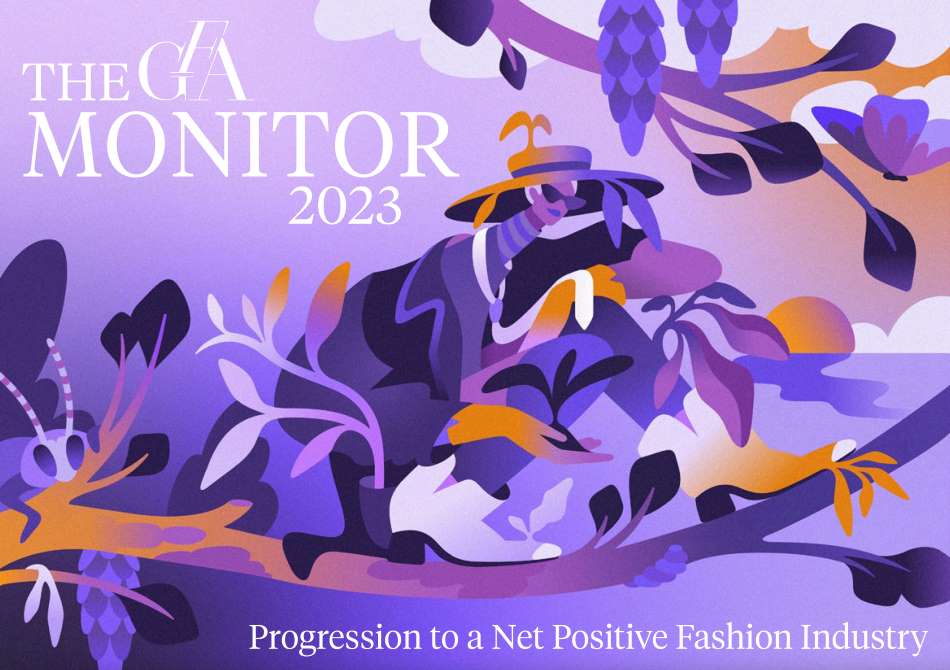
In a significant move during COP28, Global Fashion Agenda (GFA) has launched the 2023 edition of The GFA Monitor, a comprehensive guide for fashion leaders steering towards a net-positive industry. The report integrates insights from over 25 industry organizations, presenting a unified approach to sustainable practices.
Data-Driven insights
For the first time, the report incorporates insights from the Fashion Industry Target Consultation (FITC), drawing data from 900 participants across 90 countries. This inclusion provides a nuanced understanding of the industry's current status and challenges.
Sustainability framework
Aligned with the Fashion CEO Agenda, The GFA Monitor centers on five sustainability priorities: Respectful and Secure Work Environments, Better Wage Systems, Circular Systems, Resource Stewardship, and Smart Materials Choices. It acts as a practical tool offering clear actions and proven best practices.
Industry alignment and ambitions
The FITC reveals positive sentiments from participants regarding industry alignment on 27 proposed action areas. However, the report highlights the need for measured action and positive impact. It illuminates the industry's ambitions per priority, identifying areas requiring more aligned action.
Addressing global climate targets
With the 2030 deadline for UN Sustainable Development Goals approaching, The GFA Monitor emphasizes the urgency to peak greenhouse gas emissions by 2025. Despite commitments made in Paris eight years ago, the current temperature projections exceed expectations. COP28 serves as a critical moment for the fashion sector to assess progress and accelerate actions.
GFA's role at COP28
GFA, in alliance with UN Climate Change, will host a dedicated session at COP28, ensuring the fashion sector contributes to crucial climate discussions. The Global Fashion Agenda Assembly on December 5 will reflect on progress, financing best practices, and guide policymakers towards a net-positive future.
Quotes from industry leaders
Federica Marchionni, CEO of Global Fashion Agenda, emphasizes the power of alliances to accelerate sustainability measures. Scott Raskin, CEO of Worldly, GFA's data partner, highlights the need for primary supply chain data to address climate change.
Towards annual industry accountability
Building on previous editions, GFA envisions The GFA Monitor as an annual gauge of the fashion industry's progress, fostering accountability, presenting insights, and identifying critical actions. The report welcomes collaboration with other industry organizations.
Impact partners' perspectives
Leaders from Apparel Impact Institute, Ellen MacArthur Foundation, Fair Labor Association, Social & Labor Convergence Program, and Textile Exchange express their commitment to collective efforts for a positive impact on people and the planet.
In a world grappling with crises, The GFA Monitor stands as a beacon, providing a roadmap for the fashion industry towards a sustainable and net-positive future.
TMAS: ACG Nyström's global success amidst Ukrainian resilience
In a surprising turn of success, ACG Nyström, a member of the Swedish Textile Machinery Association (TMAS), is reporting robust sales of Tajima TMEZ embroidery machines in Denmark, Norway, Sweden, and notably, Ukraine.
The TMEZ range introduces intelligent thread management (I-TM), making embroidery accessible to all by automatically analyzing designs, detecting fabric thickness, and precisely supplying the required thread. Richard Carlsson, ACG Nyström sales engineer, highlights the elimination of manual thread tension adjustment and the eradication of design pulling issues.
The machines, equipped with Tajima DG by Pulse software, also boast a digitally controlled presser foot for stable fabric positioning, particularly beneficial for varying fabric thicknesses. ACG Nyström, celebrating its 100th anniversary in 2021, positions itself as a complete CAD/CAM solutions provider for garment manufacturing, specializing in adding value throughout the production process.
Despite the challenging circumstances in Ukraine due to Russia's ongoing assault, ACG Nyström Ukraine reports active customers and the installation of new embroidery machines, emphasizing the country's resilience.
The article sheds light on the growth areas in military badges, corporate apparel, and the revival of interest in vyshyvankas, elaborately embroidered traditional shirts and dresses. Vyshyvanka Day, now a national holiday, symbolizes resistance against Russian aggression, with celebrities globally supporting the cause.
ACG Nyström's CEO, Thomas Arvidsson, acknowledges TMAS's support in promoting their services and highlights the pivotal role of the latest Tajima embroidery machines in meeting the evolving demands of the textile industry, both in Sweden and globally.
Ocean Lanka: Pioneering sustainable manufacturing in Sri Lanka
In the heart of Sri Lanka, Ocean Lanka emerges as a beacon of sustainable manufacturing, spearheading environmental initiatives in the textile and apparel industry. Founded in 1996, the company has not only cemented its position as Sri Lanka's largest weft-knitted fabric manufacturer but has also set a precedent by being the first in its sector to partner with Bluesign.
Ocean Lanka's commitment to sustainable practices is palpable, evident in its strategic alliances with certification bodies like the Global Organic Textile Standard, Better Cotton Initiative, and Global Recycled Standard. The company is steadfastly working towards reducing water and energy consumption while simultaneously managing biomass responsibly, with a target to decrease consumption by over 3 percent in the next five years.
Waste management takes center stage in Ocean Lanka's operations, with a meticulous categorization system implemented for efficient disposal. An auction mechanism for fabric waste ensures responsible management, preventing overflow and maintaining a record of disposal. Collaborating with the Open University of Sri Lanka, the company is actively researching eco-friendly technologies to recycle wastewater from dyeing operations, showcasing a commitment to innovative water conservation.
Ocean Lanka's foray into energy conservation and renewable resources is equally commendable. From transitioning to LED lamps to investing in solar power, the company is on a mission to reduce its carbon footprint. Additionally, efforts towards sustainable fuelwood cultivation exemplify a holistic approach, benefiting not only the company but also the community and the environment.
Beyond its factory walls, Ocean Lanka takes bold steps to reduce greenhouse gas emissions. Guided by a comprehensive GHG Policy, the company initiates projects aligned with Sustainable Development Goals, including carbon-neutral agriculture and reforestation programs. Collaborating with NGOs like "Rainforest Trust," Ocean Lanka extends its environmental protection commitment to preserve virgin forests across the island.
In the words of Compliance Manager Anuruddha Weerasekera, "Ocean Lanka is not just weaving fabric; we are weaving a sustainable future." The company's dedication transcends industry norms, establishing a model that emphasizes sustainability as a continuous journey towards a greener, better future. Through collaboration, innovation, and unwavering environmental responsibility, Ocean Lanka sets the stage for a global paradigm shift in manufacturing.
GOTS launches pilot project for certification of small-scale operators
Continuing its efforts Global Organic Textile Standard (GOTS) introduces ongoing pilot for ‘Controlled Supply Chain Scheme’ (CSCS). Initiated in 2022, the CSCS pilot project is designed to aid small-scale operators in surmounting challenges associated with obtaining GOTS certification.
GOTS crafted the scheme to address the administrative and financial hurdles confronted by these operators. The project seeks to enhance supply chain efficiency by simplifying the group certification process, thereby reducing costs and mitigating administrative barriers.
Within the CSCS framework, a supply chain comprises a minimum of eight and a maximum of thirty small-scale facilities, each with twenty or fewer workers. Following a comprehensive risk assessment by their Certification Body (CB), these facilities can collectively attain recognition as a single Certified Entity.
INDA upgrades International Nonwovens Directory
INDA, the Association of the Nonwoven Fabrics Industry, has upgraded its International Nonwovens Directory, enhancing its user-friendly features. The updated version incorporates improved search and navigation functionalities, allowing nonwoven professionals to easily locate suppliers or manufacturers based on their specific product requirements.
Notably, listings of INDA members will receive priority in the Directory search results, accompanied by a distinctive INDA Member badge. Since its establishment in 1968, INDA has played a vital role in facilitating member collaboration, innovation, and business development. The association offers educational courses, business intelligence, market insights, test methods, consultancy services, and issue advocacy to help its members succeed by providing essential information for effective business planning and execution.
Turkey to host ITM 2024 in June’24
Turkey is ready to host the textile technology exhibition ITM 2024 from June 4 to 8, 2024. This global event will bring together hundreds of manufacturers from around the world, attracting global investors and facilitating numerous trade delegations.
ITM 2024 will serve as a platform to showcase the latest innovations in various textile sectors, covering everything from weaving to knitting, yarn to digital printing, and finishing to denim. The exhibition will provide a unique opportunity for visitors to explore eco-friendly technologies and cutting-edge solutions in digitalization, promoting a sustainable future for the industry.
The anticipated visitors to the exhibition include company owners, managers, employees, and sector representatives. They will engage with experts to gain insights into state-of-the-art technologies for their factories, fostering opportunities for new product development and strategic investments.
The 2022 edition of ITM witnessed the participation of 1,280 companies and attracted 64,500 professional visitors from 102 countries.
Bihar's Global Investors' Summit to attract investments in textiles from Bangladesh
The Bihar government is enticing entrepreneurs from Bangladesh to invest in the state's textile sector at the upcoming 'Bihar Business Connect 2023' Global Investors' Summit. Taking place in Patna from December 13-14, 2023, the summit aims to present diverse investment opportunities across sectors such as leather, IT/ITeS and ESDM, food processing and hospitality, and tourism.
In a bid to attract investors, Bihar is offering an expansive 28 lakh sq. mt. of built-up area in these sectors. The government is also proposing a grant of Rs 25,000 per laborer for skill development, coupled with contributing Rs 3,000-5,000 to employers' contributions in EPFO for new textile and leather units. Subsidies in power charges are also on the table.
Bihar government is also extending invitations to investors from Japan, Taiwan, the UAE, and the US for the summit. To bolster this outreach, the state government has organized roadshows in major Indian cities like Delhi, Mumbai, Bengaluru, Tirupur, and Chandigarh, as well as internationally in the USA, UAE, Japan, and Bangladesh.
Bihar's GDP is set for a robust growth of 8.9 percent, reaching Rs 8.59 lakh crore in the fiscal year 2023-24.
Garment recreation experiment achieves remarkable 95.7% success rate
In a groundbreaking experiment with an impressive success rate of 95.7 per cent, the Sewformer project has achieved the recreation of garments from a single image. This initiative involves a two-stage AI system designed to deconstruct clothing, unraveling the origins of its diverse components and patterns. The system is currently deployed on a dataset comprising one million images featuring various garments.
Researchers highlight this innovative system empowers developers to generate digital versions of clothing using state-of-the-art technology. Users gain the ability to replicate real-world clothing seamlessly within the metaverse. Furthermore, developers can capture an image of someone in a specific outfit, reproduce the design, and then leverage it to create new and innovative styles. A comprehensive study detailing this experiment has already been uploaded to the preprint server arXiv.
India proposes changes in Comprehensive Economic Partnership Agreement with Japan
India’s Commerce Ministry is planning to introduce amendments to the rules of origin (ROO) and product-specific rules (PSR) within the framework of the India-Japan Comprehensive Economic Partnership Agreement (CEPA). As per reports, the Ministry's objective is to modify the ROO and PSRs in a way that favors Indian industries, concurrently addressing non-tariff measures. Despite signing the agreement in 2011 with the aim of providing duty-free or low-duty market access for most goods, the CEPA has disproportionately benefited Japan, witnessing nearly doubled exports to India while India's exports have remained stagnant.
To address the challenges faced by India's Micro, Small, and Medium Enterprises (MSMEs) in meeting Japan's stringent non-tariff measures, particularly concerning technical standards, the CEPA is undergoing a thorough review. Japan too will concentrate on reassessing rules of origin. The Indian government intends to work closely with domestic industries to implement these changes to ROOs and PSRs, ultimately aiming to enhance market access in Japan.