


FW
“China’s superiority may remain unchanged even after COVID-19”
Akira Kawashima, Senior Director, Japan Fashion Week Organization/Textile Division
 “Due to the turmoil caused by COVID-19, global apparel and textile industry has been greatly affected. In Japan, many people are forced to work from home and consequently not only individual workers (including freelancers) but also company employees are frightened of large-scale personnel-cuts. Incomes have reduced to 60 per cent of normal. Amid such a situation, people’s desire for ‘dressing’ is low. This tendency will continue for a while even after COVID-19 is over, which will lead to local small-mid-sized textile companies suffering from lack of funds, as they cannot wait for recovery, causing more bankruptcy and/or voluntary closures.”
How will COVID- 19 impact Japan’s apparel & textile industry’s business in the mid to long term? What is the most critical aspect?
Due to the turmoil caused by COVID-19, global apparel and textile industry has been greatly affected. In Japan, many people are forced to work from home and consequently not only individual workers (including freelancers) but also company employees are frightened of large-scale personnel-cuts. Incomes have reduced to 60 per cent of normal. Amid such a situation, people’s desire for ‘dressing’ is low. This tendency will continue for a while even after COVID-19 is over, which will lead to local small-mid-sized textile companies suffering from lack of funds, as they cannot wait for recovery, causing more bankruptcy and/or voluntary closures.
Obviously, industry may not get back to ‘business as usual’, what according to you will be the key changes and in what areas?
In Japan, textile industry is organized through division of labour. Therefore, once some parts/companies of the supply chain disappear, it will be difficult to produce fabrics under the same conditions like before. The textile regions will be greatly affected due to the closure of some small-mid-sized companies in the region. Definitely, the industry will not recover previous state of business.
Emotional and economic backlash on China, how would that change global supply chains?
Due to the outbreak, the risk of China has become clear once again. However, since there are no other countries that possess big market with well-developed production infrastructures like them, it is most likely China’s superiority will remain unchanged even after COVID-19 ends. In terms of products such as uniforms, however, it seems certain that more production will shift to ASEAN countries instead of China via trading firms.
What is the impact on upstream/downstream across the supply chain and on retail and above all what are the changes in consumer behavior?
Working ways of people will be reviewed; working style (work from/at home) will be normalized due to COVID-19, and there will be more tele-working/remote working even after the pandemic ends. Consequently, the occasion to go out will reduce and people will be less conscious of how they look, which will be a tremendous disadvantage for the fashion industry. Consumer activities will increasingly focus on online shopping, which will considerably diminish the need for real stores/shops. There will be clearer products uploaded on websites, which will be an unfavorable situation for Japanese fabrics whose specialty is ‘delicate and nuanced texture’ therefore, demand will fall. After COVID-19, people’s desire will mainly shift to travelling, sports with companions, eating out with friends/acquaintances etc, also equally important will be ‘how to spend a comfortable and pleasant life at home’. In that regard, an interior-field is promising probably some local textile makers/companies might shift from making fashion textile products to interior applications.
What is your advice, how should companies face the future?
In the beginning of 1990’s, the scale of Japanese apparel market was the largest, double the size of the US. It was partly due to the bubble economy, but it was clearly abnormal even in comparison with the US population. At that time, most Japanese apparel/textile companies with big domestic markets used to concentrate only on domestic competition, without aspiring for exports. Although domestic market has slowed down over the years, taking a long time view, the change after this COVID-19 will occur instantly and dramatically. Therefore, only companies that ride the wave with a positive attitude will survive, while the passive ones will not.
Kering issues dual-tranche bond
Kering has issued a dual-tranche bond for a total of EUR 1.2 billion, consisting of a EUR 600 million tranche with a 3 year maturity and a 0.25 per cent coupon and of a EUR 600 million tranche with an 8 year maturity and a 0.75 per cent coupon.
This issue, in line with the Group’s active liquidity management, enables Kering to diversify its sources of financing and to enhance its funding flexibility through refinancing of existing debt and extension of their average maturity.
The great success of this issue with investors confirms the confidence of the market in the creditworthiness of the Group. Kering’s long-term debt is rated “A-” with a stable outlook by Standard & Poor's. The placement is managed Crédit Agricole CIB, HSBC, BNP Paribas, Natixis, Société Générale, UniCredit and Mitsubishi UFG.
Post COVID 19, China’s luxury industry to be more customer-centric
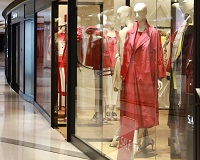 The pandemic has hugely impacted the luxury fashion industry. Brands that produced perfumes and scarves are now making hand sanitizers and masks. Luxury brands like Ralph Lauren & Louis Vuitton are making hospital gowns to be donated to frontline medical workers.
Therefore, luxury fashion sales in the first quarter of 2020, is predicted to decline by around 25 per cent year-on-year basis. Even before the start of the pandemic, China was already witnessing a decline in luxury sales. The outbreak further accelerated this decline in their key operations.
Post COVID 19, the luxury sector in China is likely to witness a seismic transformation. Transforming their business model will be a factor for brands to drive growth. However, prioritising a few key areas of their businesses will help them to mitigate the impact of the virus crisis.
Digital fashion to be the core
Post COVID -19, ecommerce will gain more importance as every brand will put digital at the centre of their operating model. They will shift to an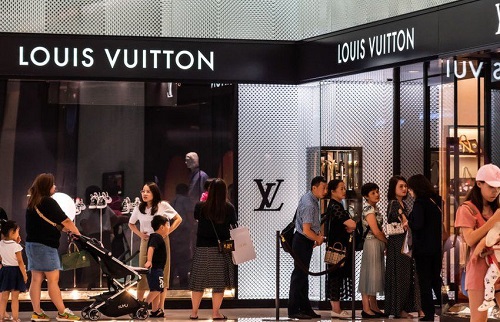 omnichannel strategy by converging in-store and online experiences. These brands will have to create a digital personalised experience online by either investing in ecommerce, partnering luxury e-tailers like Nordstrom & Farfetch, digitising their entire supply chain, automating operations, and adopting rental as a new revenue stream.
Some key drivers of the next industrial revolution in luxury fashion will be: leading edge technologies like augmented reality and artificial intelligence. With countries across the world imposing travel restrictions and social distancing, technologies like prototyping and sampling via 3D printing, augmented reality enabled beauty cams and virtual try on room will be the next-big-thing in digital fashion.
Brands to aim for sustainability
Consumers will look for lasting investment pieces that will force brands to be more conservative, responsible and slow on production, focusing quality over quantity. Responsible consumerism will be the new norm. For such consumers, brands will try to create timeless designs, sustainable materials, local craftsmanship, slow production cycles, fair wage for workers, reducing carbon footprints across the entire supply chain.
Strategies for marketing post pandemic
Some strategies that luxury brands will need to adopt post pandemic include: Being transparent: Post COVID 8819, brands will have to be real and start communicating with their consumers. They will have to bring out their brand’s ethics along with aesthetics.
Providing virtual experiences: Another strategy that brands will have to adopt is to provide consumers with a virtual experience. They will have to partner with streaming/broadcasting services to create interesting content. For instance, H&M partnered Netflix to promote a new collection, inspired by the teenage romantic comedy “To all the boys I’ve loved before”.
Smart discounting: As consumer spending will decrease, brands will have to offer discounts to increase. Adopting smart discounting strategies will help these brands to cut losses.
Creating attractive content: Another way brands can connect with their consumers is by creating attractive content around their niche market. Rent the Runway recently started a newsletter series on poached egg tutorials and inspirational quotes. Similarly Bonobos is sending satirical blog posts about different types of people in Zoom conference calls. So, break the stereotype and connect with your audience.
Overall, Chinese consumers represent 35 per cent of the global personal luxury goods market. Beyond consumption, Post pandemic, the industry is likely to become more customer-centric, digital and sustainable.
Turkish suppliers draw attention to global brands’ actions
In hundreds of messages expressing concerns and complaints directed at "Turkish Clothing Manufacturer Board’s Coronavirus Help Desk" over the past four weeks, suppliers have drawn attention to some of these alarming actions taken by global brands and retailers:
A large number of brands declared to the manufacturers that there will be no future orders until further notice. This will oblige manufacturers to cover labor and overhead costs on their own for an indeterminate period of time. Some brands called for the suspension of production in the pipeline and yet in some rare cases, solicited discounts or cancellations for goods that are in the pipeline. Lastly, some brands have requested for an extension on the payment terms for shipped goods that are on their way to distribution centers or already in the stores. A halt in high-volume production at the beginning of the season means that large quantity orders are creating massive inventories for the factories. Along with the inventory cost, manufacturers bear full liability for materials nominated by brands on their own, which constitutes an existential threat to companies most of which operate within one-digit margins. If brands do not help their suppliers finance the minimum liabilities, suppliers will not be able pay their employees' salaries and secure their livelihood.
COVID 19 accelerates luxury brands’ sustainability efforts: BCG
According to the Bostòn Consulting Group, (BCG), the coronavirus crisis is accelerating brands’ sustainability
Often sustainability efforts are additional costs that are not high on brands’ priority lists. Even brands that have been loud and proud about their sustainable practices have been forced to make cuts, like Reformation and Christy Dawn, which have reportedly both scaled back sustainability initiatives this year due to cost. But for some brands, the coronavirus has instead become an opportunity for creative, more sustainable rethinking around how production is done.
For instance, Lafayette 148 has using on-hand material from previous collections that would normally go to waste to create entirely new products.
More than 75 per cent of the brand’s materials and products come from Italy, which has meant a significant amount of order cancellations and delays in production. But from Lafayette 148’s pre-fall material order, the company still had 3,000 yards to work with. Some of those materials were used for samples that never got a full production order or were unused.
Similarly, luxury brand Mark Cross,is in the middle of a similar project. For the brand’s 175th anniversary this year, Mark Cross will release an updated version of the Grace handbag that will be made entirely from reused fabric. Garde Due said the brand, which does all of its manufacturing in Italy, was able to put in a big order for raw materials just before its suppliers shut down in Italy in mid-March, which Garde Due said he’s planning on trying to stretch as far as possible.
Both Smith and Garde Due acknowledged that brands may be tempted to cut sustainability efforts right now, but that it’s not strictly necessary. Mark Cross, for example, has been working with a company called Positive Luxury, a third-party company that advises luxury brands on how to improve sustainability in the supply chain, to ensure that all of its manufacturing and product choices meet environmental standards. Mark Cross has been consulting with Positive Luxury for at least the last two seasons.
Garde Due said that rather than cancelling this partnership to save money, he has deepened it — Mark Cross is working on getting Positive Luxury’s Butterfly Mark, a butterfly symbol the company awards to brands with production that meets a tier of sustainable standards, by increasing the amount of recycled materials it uses. (A number of other luxury brands have received the Butterfly Mark including Dior and Kenzo.) Other luxury brands that have recently made commitments in the name of sustainability include Giorgio Armani, saying he would limit his brand’s collections to only two per year.
Many of the downsides of this crisis have sustainability-related silver linings, like the reduced carbon footprint from limited travel, the requirement of brands to stretch their materials as far as they can go and, in general, and the training of consumers to get used to a world in which both production and consumption is limited.
Global Cotton Consumption to decline by 11.8%
The May 2020 edition of Cotton This Month states that due to the global economy being paralysed and supply chains shattered, global cotton consumption is projected to decline by 11.8 per cent, reducing global trade to 8.26 million tonnes in 2019/20.
According to the report, while there is hope for a vaccine or cure, or that warmer weather in the Northern Hemisphere will minimise COVID”s impact, there can be no real economic recovery unless there is a health recovery first. Whether or not, we sink into a worldwide depression — a long recession with unemployment reaching as high as 33 per cent — will be determined by the effectiveness of government policies.
In 2020/21, global area is projected to decrease by 4 per cent to 33 million hectares, with India remaining the world leader despite plantings dropping to 12 million hectares. Production will decline by a comparable amount to 25 million tonnes. The Secretariat’s current price projection for the year-end 2019/20 average of the A Index has been revised to 71.4 U.S. cents per pound this month. The price projection for the year-end 2020/21 average of the A Index is 56.9 cents per pound this month.
Netherlands will not cancel orders to Bangladesh RMG manufacturers
In a recent meeting between Sigrid Kaag, Minister for Foreign Trade and Development Cooperation, Netherlands assured AK Abdul Momen, Foreign Minister of Bangladesh, that Dutch buyers will not cancel or suspend their orders from the Bangladeshi readymade garment (RMG) factories. He also assured the Dutch government will ensure that the RMG value chain is not disrupted.
Kaag further informed the Dutch government had set up a fund of €100 million to help countries that need support because of the COVID-19 pandemic. And countries that are interested to use the fund would need to appeal for provision. On the issue of FDI, Bangladesh foreign minister mentioned that FDI would be negatively affected by the COVID-19 pandemic, and demanded Dutch technical assistance in FDI in the areas of agriculture and fisheries.
The Netherlands has been supporting Bangladesh through providing financial and technical aid to water resources and coastal management projects in Bangladesh. It is also assisting Bangladesh in enhancing its business enabling environment. Almost 85 per cent of the exports to the Netherlands are apparel products.
Punjab-based startup Nufab develops new non-woven fabric
Nudab Technical Textiles, an Ambala-based start- has developed a unique nonwoven fabric, which will significantly reduce infection risk to frontline medical workers, who are facing heightened risk amid the Covid-19 pandemic.
The newly developed fabric is soft, comfortable, light weight, impregnable, permeable and above all breathable, which will help frontline medical workers immensely by reducing the infection risk up to 90 per cent. The value-added fabric is certified and approved by DRDO and is extremely useful in making coveralls gowns – personal protect equipment . Made without warp and weft weaving and knitting, the fabric is commonly used for making surgical mask, gowns, sanitary pads, diapers, etc. Apart from being used in hygiene products, nonwoven fabric is also used in automotive, agriculture, packaging applications, etc.
Founded by Salil along with directors Rishabh Bansal and Sanjay Modi, Nufab specialises in producing technical textiles and is rapidly augmenting its product portfolio. With joint ventures in place and gunning four foreign investments, the company leads India on the world map for technical textiles and nonwovens.
COVID 19 to alter consumer behavior: Accenture
A survey by Accenture reveals COVID-19 is likely to alter consumer behaviours permanently and cause lasting structural changes to the consumer goods and retail industries. Accenture surveyed more than 3,000 consumers in 15 countries across five continents. It spoke to consumers in Australia, Brazil, China, Canada, France, Germany, India, Italy, Japan, Mexico, South Korea, Spain, the UAE, UK and US in early April.
It found consumers have already begun shifting their purchasing priorities. For instance, overall they said they were buying more personal hygiene and cleaning products, as well as canned and fresh foods than they had been two weeks prior. But they were buying purchasing fewer fashion, beauty and consumer electronics
More importantly, the findings indicate that many of the changes in consumer behaviour are likely to continue long after the pandemic. In addition, the crisis is also causing consumers to more seriously consider the health and environmental impacts of their shopping choices”.
It found 60 per cent of respondents are spending more time on self-care and mental well-being. And 64 per cent said they’re focusing more on limiting food waste and will likely continue to do so after the crisis eases. Exactly half are shopping more health-consciously and will likely to continue to do so and 45 per cent said they’re making more sustainable choices when shopping, behaviour that should carry on as before.
The survey also found the pandemic is causing more people to shop online. It said that 32 per cent of consumers’ current purchases of all products and services have been one by necessity, but that figure is expected to rise to 37per cent going forward.
The shift is very noticeable in the area of groceries as this was one segment that had a lower rate of online penetration than other consumer goods. But the pandemic has forced people to overcome that reluctance and this should have a much wider impact on e-shopping generally.
Micro orders, supply chain consolidation to help brands reduce China dependence
 As countries across the world battle with the ongoing COVID-19 pandemic, the idea of a relying on a single market far from home is being seen by many as an untenable risk. Though the global fashion industry spent most of the past decade trying to break away from its dependence on Chinese manufacturing, little progress was made and China remains the most enticing manufacturing destination with an equally attractive supply chain.
China dominance continues
Even though garment manufacturing has shifted to many other countries around the world, fashion hasn’t been able to divert its raw material sourcing, trims, zippers and more from China, even as labour prices in the country continue to rise and US-China tariff war continue to bite. A recent report by the Business of Fashion estimates approximately 60 per cent of the world’s fashion is still produced in China as most countries still depend on components from China. India too imports its silk from China.
Disrupted supply chains a bug bear
This over dependence on China was particularly highlighted when the country first experienced the outbreak of the virus. The pandemic caused many of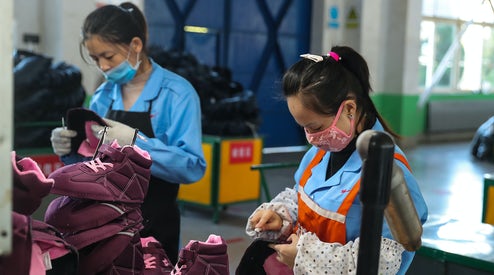 its factories to close besides causing crucial cogs in the fashion supply chain to grind to a halt.
Today, as no one is shielded from the pandemic, many fashion brands moved to lucrative markets such as Bangladesh and Vietnam. However, they soon realised that the supply in these countries was also disrupted. As BGMEA points out, though in many cases, supply-side disruption matters less than the demand disruption caused by retail closures which led to many major fashion brands cancelling orders amounting to around $6 billion in Bangladesh alone.
Even as production is halted in most places around the world, China is open for business and producing the orders that have not been cancelled. However, manufacturers here face an uncertain future as business from overseas becomes scarcer, mitigated only somewhat by demand from growing domestic fashion brands looking to move their way up the value chain.
COVID-19 pandemic highlighted the world’s dependence on China for vital supply chain links, especially for medicines and personal protective equipment, as dozens of countries concurrently grapple for both. As a result, there is growing pressure for the pharma industry in Europe and North America.
Shifting sourcing to other countries
Like the pharmaceutical, fashion companies, especially those in America are likely to feel the pressure to “decouple” from China in a year which promises to be heavy on anti-China rhetoric. Hence, fashion brands need to start planning for the post-pandemic phase of business now. As Gerhard Flatz, Managing Director, KTC, a high-end performance wear specialist says brands need to create a micro-environment by shifting their sourcing to Southeast Asia and other countries.
Yossi Nasser, Chief Executive of leading intimates manufacturing supplier, advises brands to have a diversified supply chain as this would enable them to scale up one production source and decentralise the other.
Another way for brands could be to focus on rebuilding their business, says Melanie DiSalvo, Founder of Virtue + Vice, sustainable supply chain consultancy, previously product developer for companies including Walmart, Target and Levi's. Supply chain diversification is a long-term goal that brands shouldn’t venture into right now.
Instead, they should focus on consolidating supply chain by partnering with vertical operations across different materials or product categories, opines the president of Bombyx, a manufacturer of silk fabrics. According to him, this will provide brands with an opportunity to be more flexible in their own set up because they control more of their supply chain, and have more room to spread out their production and finances.
Focus on micro orders
However, Anson Zhou, a freelance consultant in sourcing and supply chain management for clients including Macy’s, JC Penney believes the best strategy for brands could be to take up small orders first and see the reaction and make a quick decision on a re-order. For this, they need quicker speed in their supply chain management like China.











