


FW
Demand recovery to lead Indian textile, apparel market growth in Q2FY21
 Recovery in the textile and apparel sector in Q2 FY 21 is likely to be led by increasing demand in the domestic and overseas market, says India Ratings and Research (Ind-Ra) report. It estimates volumes in both segments will reach 80 per cent over September 2020. Both man-made fibers and cotton segments will benefit from low raw material prices in the third quarter. Ind-Ra will continue to monitor demand recovery in domestic as well as export markets of the US, Europe and China.
Topline to decline by 15 per cent
As per Ind-Ra, in Q1 FY21, cash flows in the textile sector were impacted by weak profitability and supply chain disruptions. Though the moratorium announced by the Reserve Bank of India (RBI) under COVID-19 relief package provided adequate liquidity support, the agency expects topline of textile players to decline 15 to 35 per cent year-on-year(Y-O-Y) and operating profits to decline 20 to 50 per cent Y-O-Y.
In August 2020, textile prices across the globe staged a broad recovery from the lows of April-May 2020. International cotton prices (US) recovered by 4 per cent month-on-month (M-O-M) in August 2020 while Indian cotton prices increased by 5 per cent M-O-M. Plant utilization of pure man-made fiber and yarn manufacturers was badly impacted. Prices of fiber and yarn remained steady though discounts were offered to boost sales. Cotton yarn and blended yarn prices largely remained flat, despite demand recovery. Moreover, cotton season procurement was at about 10 per cent higher prices with operating utilizations still remaining below optimum levels.
Discounts, loans bring relief
Quick supply restoration led to a decline in fabric and apparel prices in August 2020. From July-August 2020, industry players not only offered discounts to boost sales but also generated internal liquidity. They were relieved by the disbursement of COVID-19 bank loans, promoter-led infusions and the ability of apparel prices to remain modest in 2HFY21.
From June-July 2020, readymade garment exports recovered significantly, says Ind-Ra. Supported by restocking at global retailers and global sector consolidation, order book buildup remained strong in August 2020 Large apparel and readymade garment manufacturers were able to resolve labor mobility and availability concerns as they benefitted from the shift in market share to India, it adds.
Though COVID-19 has moderately impacted the global demand for home textiles , the US-China trade war has provided a strong impetus to home textiles exports from India. This demand for home textile exports is likely to sustain in 2HFY21 at healthy levels, says Ind-Ra. The agency also expects Indian players to increase their market share in terry towels and bed linens.
South Africa unveils masterplan for clothing and textiles industry
The South African Department of Trade, Industry and Competition(DTIC) has unveiled four masterplans, including one for the clothing and textiles industry, said Minister Ebrahim Patel at the recent Budget Veto Session. These masterplans aim to increase the country’s production and jobs.
Patel informed that from July 2019, the South African Revenue Services (SARS) has seized 550 shipping containers of illegally-imported and undervalued clothing and footwear, to protect local industries and entrepreneurs. The department has signed an agreement with the UK to maintain access for South African products in its market after Brexit.
South Africa is well-positioned to become a major supplier of industrial goods and value-added services to the continent. It has built the African Continental Free Trade Area as the foundation for a long-term growth.
To prepare for the post-COVID world, the South African government will strengthen efforts around reconstruction and recovery, including broader pacts with workers and businesses, focused on saving as many firms and jobs; identifying new opportunities; embracing digital technologies to recover and change; addressing economic inclusion with greater urgency, said Patel.
Morocco to increase import tax on Turkish textile products
Morocco plans to increase taxes on import of Turkish textile and clothing to 36 per cent instead of 27 per cent. The tax is a part of the amended 2020 Finance Bill approved by the Moroccan government and Parliament earlier this month. With this decision, Morocco aims to promote local production, especially during the COVID-19 pandemic. The country also hopes to limit imports of textile products, which have strongly competed with domestic products.
The new tax will support the domestic Turkish textile industry. Some of the Turkish companies that the new tax rate will directly affect include clothing brands LC Waikiki, Koton, and DeFacto.
Morocco and Turkey signed a Free Trade Agreement in 2004. The agreement took effect two years later, in 2006. Since then, Morocco’s trade balance with Turkey has been largely in deficit as the country loses $2 billion annually in its trade deal with Turkey. The Turkish textile industry also caused Morocco a loss of around 44,000 jobs in 2017 alone.
At the start of 2020, Morocco and Turkey had decided to review their Free Trade Agreement. However, the countries suspended the negotiations due to the COVID-19 pandemic.
CAI raises 2019-20 cotton estimate by 5 lakh bales
The Cotton Association of India (CAI) has increased its cotton crop estimate for 2019-20 season beginning October 1, 2019, by 5.5 lakh bales to 335.50 lakh bales of 170 kg each, in its June estimate. For crop year 2018-19, CAI finalised total crop at 312 lakh bales. The Crop Committee of the association estimates total cotton supply up to September 30, 2020 to be 382.50 lakh bales, which consists of the opening stock of 32.00 lakh bales at the beginning of the cotton season on October 1, 2019, crop for the season estimated at 335.50 lakh bales, and imports estimated by the CAI at 15.00 lakh bales.
Imports are estimated to decline by 17.00 lakh bales compared to the previous year’s estimate of 32.00 lakh bales. Domestic consumption up to September 30, 2020 has been estimated at 280.00 lakh bales i.e. at the same level as estimated in the last month's estimate. The CAI has also retained its export estimate for the season at the same level as estimated in the previous month i.e. at 47 lakh bales against 42.00 lakh bales estimated earlier. The increase of 5.00 lakh bales in the export estimate than estimated in the previous year was made in view of the favorable conditions existing for exports of cotton from India.
Salvatore Ferragamo’s H1 sales decline by 46 per cent
The preliminary sales of Florence-based luxury group Salvatore Ferragamo declined by 46.6 percent to €377 million in the first six months ended June 30 compared to €705 million in the same period last year. Impacted by the pandemic, the lockdown of commercial activities and lack of international traffic, the group’s sales fell by 60.1 percent in the second quarter. As of June 30, the company had 643 points of sales, including 389 directly operated stores and 254 third-party-operated stores in the wholesale and travel retail channels.
In the first half of the year, the retail distribution channel reported a 41 percent drop to €260.6 million, representing 69.2 percent of the total. In the second quarter, retail revenues decreased 51.2 percent. Sales in the wholesale channel tumbled by 56.4 per cent to €110.8 million accounting for 29.4 per cent of the total. In the second quarter, wholesale revenues declined by 75.7 per cent. The company’s revenues from the Asia Pacific region declined 39.9 per cent to €166.7 million during the second quarter. Sales declined 35.3 per cent at constant exchange rates, benefiting from the positive performance of the retail channel in China, which recorded growth of 11.6 per cent at constant exchange rates.
Sustainability focus to help Kering tide over retail upheaval
Fresh off its worst quarter on record, Kering believes that a focus on sustainability and diversity will serve it well amid the current retail sector upheaval. The pandemic has accelerated the brand’s efforts to reduce waste. It is working at all levels of the value chain, lowering the number of prototypes, reducing production waste and live streaming fashion shows, etc. Finally, Kering has intensified use of artificial intelligence to power everything from product recommendations to supply chain forecasting.
Kering is betting on millennial and Gen Z customers to help it bounce back from the Coronavirus crisis in the second half, led by a recovery in the key Asia-Pacific region. The brand’s net profit by fell 63.4 per cent in the first six months of the year after COVID-19 forced the French luxury group to close stores and factories worldwide, and brought tourism to a halt. The group’s revenues in the three months upto June 30 fell 43.5 per cent to €2.17 billion, representing a decline of 43.7 per cent in comparable terms. This came on the heels of a 15.4 per cent drop in the first quarter.
However, the group flagged an encouraging recovery from COVID-19 with sales in mainland China rising more than 40 percent in the second quarter, and positive trends emerging in Europe and the US from mid-June. But organic sales at its cash cow brand Gucci fell by 44.7 per cent in the second quarter, compared with a 23.2 per cent drop in the prior three months.
COVID-19 leads to 90 per cent decline in Iran’s exports to Turkey
Mehrdad Sa’adat, Chairman, Iran-Turkey Joint Chamber of Commerce says COVID-19 pandemic has led to a 90 per cent decline in Iran’s exports to Turkey though trade between the two countries has been increasing after reopening of the borders. Sa’adat said Iran has continued to export to Turkey via road and railway. In early June, land borders between Iran and Turkey reopened after more than three months.
On the first day of border reopening, 150 Iranian trucks entered Turkey, according to Rouhallah Latifi, Spokesperson, Islamic Republic of Iran Customs Administration (IRICA). The trucks entered Turkey via three land borders of Bazargan, Sero, and Razi. Turkey relies on Iran as a major market for its manufacturing goods, including industrial machinery and garment, while it also sends to Iran some sizable shipments of crops and fruits that are not cultivated in the country.
As announced by Latifi, Iran and Turkey exchanged 6,300 wagons of commodities via railway during a 70-day period from the beginning of the current Iranian calendar year. Iran’s exports to Turkey via railway stood at 3,072 wagons of goods and its imports from the neighboring country reached 3,228 wagons during the mentioned period of time.
American Eagle Outfitters launches new sub-brand
American Eagle Outfitters (AEO) has added a new sub-brand Offline to its activewear brand Aerie. The new sub-brand will offer complete collection of activewear and accessories for easy movement and comfort. An evolution and expansion of the brand’s popular ‘Chill, Play, Move’ collection, the new label will offer soft, cozy and comfortable activewear. It will give Aerie another powerful platform to grow its community while complementing its lifestyle collection of bras, undies, lounge and soft apparel. The subbrand will be available online at aerie.com with two retail stores planned to open by the end of the year.
The sub-brand will also carry the Real Good badge to identify products made from sustainable raw materials including recycled fabrics.
Better quality, transparency to boost Vietnam’s apparel & textile exports post-EVFTA
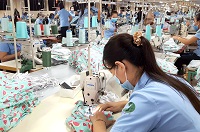 Despite Europe being a huge market, Vietnam’s textile and apparel exports to the continent is worth merely $8 billion. The country exported over $2 billion worth garments and textiles to Europe in past six months while exports to the continent in the past year exceeded $8 billion. Currently, European Union is the third-largest importer of garments and textiles from Vietnam after the US and Japan.
High tariffs weakening Vietnam’s competitive edge
One reason for modest exports is the high tariffs on textile and apparel imports from Vietnam which have weakened the country’s competitive edge in the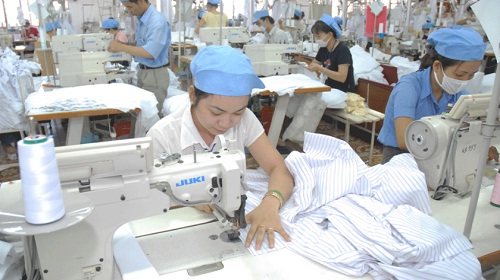 global textile and garment industry. To regain lost share, domestic enterprises are manufacturing branded products and those that require higher skills. However, COVID-19 has changed consumption patterns in the country with the textile market witnessing demand for products of low or average value.
Meeting export standards
To boost its textile exports, Vietnamese National Assembly recently ratified the Vietnam-EU Free Trade Agreement (EVFTA) that will become effective on August 1. The new agreement states, Vietnam’s key exports to the EU, garment and textiles, will no longer be taxed at 77.3 per cent of export turnover for five years while its import tariffs on remaining 22.7 per cent exports will also be eliminated after seven years. The agreement provides Vietnamese textile and apparel enterprises an opportunity to import high-quality machinery and access raw materials under the European standards.
To explore the benefits of this new agreement, Vietnamese textile and garment enterprises are investing in upgrading infrastructure in factories to meet the technical standards of importers. Tran Nhu Tung, Member-Board of Directors, Thanh Cong Textile Garment Investment Trading Joint Stock Company (TCM), expects the reformed agreement to fuel the company’s exports to the EU by 50 per cent.
Similarly, EVFTA has enabled Viet Thang Jean Company to sign long-term procurement agreements with its raw materials partners in South Korea and Turkey.
Focus turns to local materials
However, only a few enterprises have been able to exploit the benefits of this agreement as the Vietnamese garment and textile industry still largely depends on raw materials and supplies imported from China. To overcome this, the non-processing enterprises in the country need to either produce fabric locally or buy domestic raw materials. They can also import raw materials from countries with bilateral trade agreements with the EU such as South Korea and Turkey.
Another hindrance is the size of these companies. Many of these enterprises are small and medium-sized with limited resources and sub-standard production processes. Their investments in research and development of products are also inadequate and do not exploit the intellectual property assets and trademarks effectively. Hence, Vietnamese companies need to focus on meeting the standards and the management process prescribed by the EU, adhere to social responsibility rules and adopt transparency in labor and production management.
Italy’s ready-to-wear sales decline by 33%
According to research conducted by Confimprese, an association representing Italian retailers, in collaboration with consulting firm EY, ready-to-wear sales across the country declined by 33 percent compared to the same period last here. In total, during the first half of the year, they decreased 45 percent compared to the same period in 2019.
In June, the retail performances in Italy’s primary trade areas saw a double-digit decrease compared to the same period last year. For example, sales on Milan s central Corso Buenos Aires were down 40 percent last month, compared to June 2019.
Last month, the most affected segment was travel retail, which decreased by 72 percent compared to the same period last year. The business of malls, outlets and high-street stores located in big and small Italian cities decreased 30 and 20 percent, respectively.
On a positive note, during the lockdown, from April to June, online sales in Italy surged 135 percent compared to the same period last year and in June, even if physical stores reopened, they grew 54 percent compared to the same month in 2019.











