


FW
COVID-19 leads to 90 per cent decline in Iran’s exports to Turkey
Mehrdad Sa’adat, Chairman, Iran-Turkey Joint Chamber of Commerce says COVID-19 pandemic has led to a 90 per cent decline in Iran’s exports to Turkey though trade between the two countries has been increasing after reopening of the borders. Sa’adat said Iran has continued to export to Turkey via road and railway. In early June, land borders between Iran and Turkey reopened after more than three months.
On the first day of border reopening, 150 Iranian trucks entered Turkey, according to Rouhallah Latifi, Spokesperson, Islamic Republic of Iran Customs Administration (IRICA). The trucks entered Turkey via three land borders of Bazargan, Sero, and Razi. Turkey relies on Iran as a major market for its manufacturing goods, including industrial machinery and garment, while it also sends to Iran some sizable shipments of crops and fruits that are not cultivated in the country.
As announced by Latifi, Iran and Turkey exchanged 6,300 wagons of commodities via railway during a 70-day period from the beginning of the current Iranian calendar year. Iran’s exports to Turkey via railway stood at 3,072 wagons of goods and its imports from the neighboring country reached 3,228 wagons during the mentioned period of time.
American Eagle Outfitters launches new sub-brand
American Eagle Outfitters (AEO) has added a new sub-brand Offline to its activewear brand Aerie. The new sub-brand will offer complete collection of activewear and accessories for easy movement and comfort. An evolution and expansion of the brand’s popular ‘Chill, Play, Move’ collection, the new label will offer soft, cozy and comfortable activewear. It will give Aerie another powerful platform to grow its community while complementing its lifestyle collection of bras, undies, lounge and soft apparel. The subbrand will be available online at aerie.com with two retail stores planned to open by the end of the year.
The sub-brand will also carry the Real Good badge to identify products made from sustainable raw materials including recycled fabrics.
Better quality, transparency to boost Vietnam’s apparel & textile exports post-EVFTA
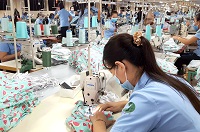 Despite Europe being a huge market, Vietnam’s textile and apparel exports to the continent is worth merely $8 billion. The country exported over $2 billion worth garments and textiles to Europe in past six months while exports to the continent in the past year exceeded $8 billion. Currently, European Union is the third-largest importer of garments and textiles from Vietnam after the US and Japan.
High tariffs weakening Vietnam’s competitive edge
One reason for modest exports is the high tariffs on textile and apparel imports from Vietnam which have weakened the country’s competitive edge in the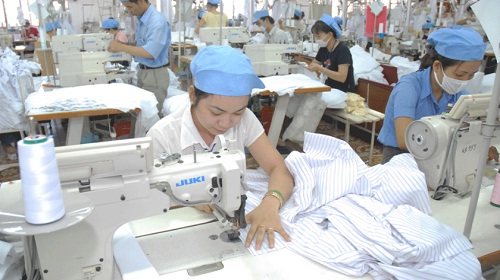 global textile and garment industry. To regain lost share, domestic enterprises are manufacturing branded products and those that require higher skills. However, COVID-19 has changed consumption patterns in the country with the textile market witnessing demand for products of low or average value.
Meeting export standards
To boost its textile exports, Vietnamese National Assembly recently ratified the Vietnam-EU Free Trade Agreement (EVFTA) that will become effective on August 1. The new agreement states, Vietnam’s key exports to the EU, garment and textiles, will no longer be taxed at 77.3 per cent of export turnover for five years while its import tariffs on remaining 22.7 per cent exports will also be eliminated after seven years. The agreement provides Vietnamese textile and apparel enterprises an opportunity to import high-quality machinery and access raw materials under the European standards.
To explore the benefits of this new agreement, Vietnamese textile and garment enterprises are investing in upgrading infrastructure in factories to meet the technical standards of importers. Tran Nhu Tung, Member-Board of Directors, Thanh Cong Textile Garment Investment Trading Joint Stock Company (TCM), expects the reformed agreement to fuel the company’s exports to the EU by 50 per cent.
Similarly, EVFTA has enabled Viet Thang Jean Company to sign long-term procurement agreements with its raw materials partners in South Korea and Turkey.
Focus turns to local materials
However, only a few enterprises have been able to exploit the benefits of this agreement as the Vietnamese garment and textile industry still largely depends on raw materials and supplies imported from China. To overcome this, the non-processing enterprises in the country need to either produce fabric locally or buy domestic raw materials. They can also import raw materials from countries with bilateral trade agreements with the EU such as South Korea and Turkey.
Another hindrance is the size of these companies. Many of these enterprises are small and medium-sized with limited resources and sub-standard production processes. Their investments in research and development of products are also inadequate and do not exploit the intellectual property assets and trademarks effectively. Hence, Vietnamese companies need to focus on meeting the standards and the management process prescribed by the EU, adhere to social responsibility rules and adopt transparency in labor and production management.
Italy’s ready-to-wear sales decline by 33%
According to research conducted by Confimprese, an association representing Italian retailers, in collaboration with consulting firm EY, ready-to-wear sales across the country declined by 33 percent compared to the same period last here. In total, during the first half of the year, they decreased 45 percent compared to the same period in 2019.
In June, the retail performances in Italy’s primary trade areas saw a double-digit decrease compared to the same period last year. For example, sales on Milan s central Corso Buenos Aires were down 40 percent last month, compared to June 2019.
Last month, the most affected segment was travel retail, which decreased by 72 percent compared to the same period last year. The business of malls, outlets and high-street stores located in big and small Italian cities decreased 30 and 20 percent, respectively.
On a positive note, during the lockdown, from April to June, online sales in Italy surged 135 percent compared to the same period last year and in June, even if physical stores reopened, they grew 54 percent compared to the same month in 2019.
Sri Lanka: USAID, JAAF, EDB webinars focus on improving exports
The United States Agency for International Development (USAID) organized two webinars in partnership with the Joint Apparel Association Forum (JAAF) and the Sri Lanka Export Development Board (EDB), to help participants break into the US market. The project is being implemented by Deloitte Consulting.
The first webinar explained participants on the ways to comply with the US Food and Drug Administration’s (FDA) regulations. Experts on the classifications applicable to PPE exports and the FDA’s Emergency Use Authorization engaged with participants and walked them through the process.
The second webinar featured in-depth discussions with US experts on market demand for PPE, including federal demand, distribution chains, and how to sell to the US federal government. Participants learned about the government’s acquisition rules and examined criteria to consider feasibility of PPE manufacturing.
USFIA elects new chairperson
The United States Fashion Industry Association (USFIA) has elected Anna Walker, Vice President- Public Affairs, Levi Strauss & Co its new Chairperson. Walker has been a member of the USFIA Board of Directors since 2014 and served as Vice Chair of the Board of Directors since 2017.Since joining Levi Strauss & Co 2004, she has supported the company’s business strategy and strengthened its reputation by anticipating and shaping external public policy and stakeholder initiatives. Walkar also leads LS & Co’s community affairs program, developing strategy for community grants and employee giving and volunteerism programs globally.
A member of the Levi Strauss Foundation Board, Walkar has a masters’ degree from Johns Hopkins University School of Advanced International Studies and Bachelors of Arts degree from the University of California, Davis.
World footwear consumption declines by 22%: Survey
World footwear COVID-19 survey conducted by the Portuguese Footwear, Components, Leather Goods Manufacturers’ Association (APICCAPS) in April found that the virus had already sent global footwear consumption down more than 22 percent. In Europe, consumption tumbled 27 percent year over year by April. In North America, it’s down 21 percent, and in Asia, footwear consumption had fallen 20 percent.
The same survey also found 42 percent of footwear manufacturers ramping up supply-chain diversification efforts while 39 percent are trying to shorten their supply chains. Footwear production and consumption is picking up in China, where recovery started sooner than it did in the West. Total footwear production in the country has returned to about 70 percent of the normal level now, said Li Yuzhong, President, China Leather Industry Association (CLIA).
Though in India exporters are optimistic about recovery in demand, they are aware there’s still a long way to go. The Indian Council for Leather Exports saw 60 per cent production in May and July and expects this to improve to 85 per cent in August and September.
Brazil manufacturers are similarly optimistic as production is starting to pick up after a painful March that saw production plunge around 30 percent, according to Letícia Sperb Masselli, Manager, Abicalçados-a Brazilian footwear program.
Manufacturers in Brazil are banding together to capitalize on their opportunity. The supply chain there has started to work more as a union to collectively appeal to buyers keen on minimizing their risk and reliance on Asia for sourcing.
With shoppers at home instead of in stores during prime buying time for spring and summer shoes, many companies are in the same over-inventoried boat. Valleverde, an Italian shoe brand managed to deliver more than 80 percent of its shoes to the clients and has only 20 percent of the Spring/Summer 2020 shoes in its warehouse.
Make maximum use of technology, urges CITI conference
Organized by Confederation of Indian Textile Industry (CITI) and GartexTexprocess India, virtual conference on ‘Rebooting the Textile & Apparel Industry’ urged the textile and apparel industry to make maximum use of technology besides focusing on sustainability. The conference was inaugurated by Arvind Singhal, Chairman, Technopak Advisors, who presented a vision for the industry in next 10 years. K S Sundararaman, Chairman, Indian Technical Textile Association (ITTA), emphasized on the dominance of electronic clothing in the next 10 years and the growing demand for products made from biodegradable waste.
Ronak Rughani, Chairman, Synthetic & Rayon Textiles Export Promotion Council (SRTEPC), urged Indian brands to explore overseas markets while A Sakthivel, Chairman, Apparel Export Promotion Council (AEPC), hoped India will lead MMF exports in the next few years.
Technical experts at the conference highlighted the importance of digitization in the fashion industry. Ram Sareen, Chairman & Founder, Tukatech emphasized on shorter supply chains in order to adjust to the new normal. The session on ‘Brand and Retail – Emerging Scenario in Textiles & Apparel’ highlighted o the need for omni-channel retailing and the emergence of other channels apart from e-commerce.
AWI urges wool growers to complete online survey on industry growth
Australian Wool Innovation (AWI) is urging wool growers across the country to complete an online survey detailing their priorities for a prosperous industry in order to boost the organization’s Wool 2030 strategic plan. Closing on August 16, the survey explores opportunities and risks to garner a picture of the stakeholders’ future vision for the industry. The purpose of this survey is to maintain the profitability and sustainability of wool production, says, Stuart McCullough, Chief Executive Officer of the company.
Australian Wool Innovation is working to implement a Wool 2030 strategy that would serve to guide the country’s stakeholders in becoming ever stronger. The organization has urged wool growers to provide feedback on potential growth areas and biggest growth hurdles over the coming years.
AWI’s Wool Consultation Group (WCG) also conducted a series of five webinars exploring the areas to be addressed in the Wool 2030 strategy. These covered issues surrounding wool production as well as downstream activities in which wool growers have a strong stake, such as traceability systems.
LVMH quarterly sales plummet by 27 per cent
Analyst Sanford C Bernstein & Co pointed that like-for-like sales of LVMH Moët Hennessy Louis Vuitton fell by 38 per cent to $9.2 billion from April to June and by 27 per cent to $21.6 billion during the six month period of January-June 2020. The company’s net profit plummeted by 84 percent to $613 million due to the difficulties it faced in cutting costs, said Wall Street Journal. Hit by COVID-19-related store closures across the globe and by significantly decreased travel retail sales, LVMH reported lower revenues in United States and Europe during the quarter and first half.
LVMH’s Fashion & Leather Goods business recorded a 24 per cent decline in revenue in the first half of 2020, while Perfumes & Cosmetics and Watches & Jewelry saw respective drops of 29 and 39 per cent for the half year period. Despite the pandemic, Dior showed remarkable resilience, confirming its exceptional appeal and gaining market share in all regions. Louis Vuitton was also able to very quickly transform and boost its customer relationships with a unique, high-quality and highly effective digital clientele strategy.
LVMH plans to focus on its own e-commerce platform rather than on third party distribution channels.











