


FW
Bangladesh fears setbacks in apparel exports in August
Bangladesh, which reported recorded breaking apparel exports in July, fears set-backs in August that could cost garment worker jobs.
Bangladesh’s native news outlets reported a record-breaking export high of $3.91 billion in July. Brands and retailers, that had shunned payments to suppliers for goods in-production at the height of the pandemic, aim to rebuild bridges by sourcing in vast quantities once more.
On a large part, Bangladesh’s garment manufacturing exports rely on to boost the economy, accounting for 84 per cent in total. Though there’s been a collective sigh of relief over the past month, it’s feared hard times may be yet to come.
Government-support audit system can help fashion abolish labor abuses
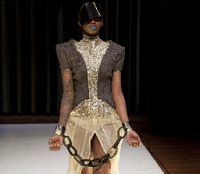 Rooting out workers' rights abuses in the fashion industry is easier said than done. Time and again brands have pledged to guard workers against human rights abuse but failed to deliver on their promise. Last month, the US imposed sanctions on some Chinese companies for violation human rights. Similarly, regulators forced Dov Charney’s Los Angeles Apparel to close after hundreds of workers fell ill with COVID-19.
However, these incidents defy the idea that the fashion industry can stop worker exploitation on its own. Labor abuse is a complex, opaque and multifaceted issue that requires a bigger and bolder commitment to ethical sourcing. The current system fails to weed out the problem as it is based on corporate codes of conduct enforced by private audits and certifications. As per a new research from Cornell University’s School of Industrial and Labor Relation, current audits are based on unreliable or falsified information. There is no evidence of their validity. Hence, the industry needs to introduce a government supported audit system.
Offer better prices
A report by the UK House of Commons’ Environmental Audit Committee says, buying practices of e-commerce players, including Boohoo, compel UK manufacturers to pay illegally low wages. In their search for best prices, brands often shift to geographies that offer fewer worker protections. Hence, brands, governments, manufacturers need to play an equal role in driving change.
The pandemic has increased union busting. However, it has also increased initiatives that give workers a bigger voice. The Action, Collaboration, Transformation (ACT) initiative formed by 20 major brands in collaboration with IndustriALL Global Union aims to form collective bargaining agreements to secure minimum living wages in key manufacturing countries. Brands participating in this agreement have to ensure that they offer sufficient prices to support the pay increases, and their suppliers allow unions and freedom of association.
While such initiatives show promise, not many participate in them. Boohoo has consistently failed to participate in industry efforts to address working practices in Leicester.
Encourage transparency
Fashion Transparency Index’s latest report shows, the industry remains opaque about their social and environmental policies and practices. Though the 250 companies covered in the report are transparent about their policies and commitments, they do not demonstrate any real outcome. Hence critics believe, brands monitor their supply chains only if they are penalized for defaulting. Laws intended to protect workers are often ignored as brands are rarely held accountable for labor abuses in supplier factories.
In UK, allegations around poor working conditions in Leicester have sparked calls to provide authorities with more powers to enforce labor rights. In lieu of this, the European Union plans to introduce mandatory human rights due diligence legislation in 2021.
As COVID-19 strikes, luxury menswear goes back to streetwear
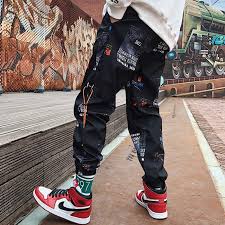 The luxury industry’s shift to sophisticated menswear has been halted by the pandemic and the industry is retreating back to streetwear and casual wardrobes. Though small luxury menswear brands are sticking to menswear, large brands like Dior and Louis Vuitton are balancing customized garments alongside streetwear.
COVID-19 has led to casualization of fashion, says Sarah Willersdorf, Global Head-Luxury, Boston Consulting Group. Ayako Homma, Beauty and Fashion Consultant, Euromonitor International points out, decline in sale of customized menswear will be more pronounced post pandemic as people will continue to work from home.
In 2020, sale of menswear declined 16 per cent from $438 billion in 2019 to $369 billion in 2020, while sales of sportswear-inspired apparel declined 6 per cent to $77 billion. From April to May, demand for hoodies increased 33 per cent, as per global fashion search platform Lyst. Similarly, demand for baseball caps increased by 49 per cent quarter-on-quarter, while that for trainers by 267 per cent quarter-on-quarter.
Since February, men’s fashion is polarized with luxury and streetwear styles outperforming mid-range items, says Willersdorf. This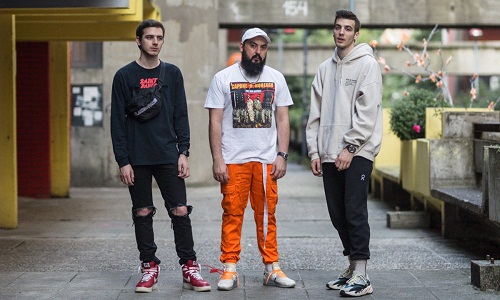 bifurcation of sales will continue in future, as high and low-end items are more protected during economic recessions.
Timing category expansion with care
The pandemic warns menswear brands against chasing trends. These brands can expand into categories like tailored suits. However, they need to be careful about the timing of this expansion. CFDA/Vogue Fashion Fund runner-up Reese Cooper focuses on core styles, including T-shirts and outerwear, to drive growth. His brand hits categories that it knows will work. It launched its own e-commerce store in March.
Currently, designers are focusing on collaborations to make the most of the challenging moment. Chinese designer Feng Cheng Wang has reduced her inventory volume and focuses more on popular styles. During the lockdown, she launched a capsule collection of hoodies, T-shirts and caps made from previous season’s deadstock. The collection enables her brand to test consumer appetite for different items. Wang eyes more such collaborations with accessible streetwear labels to reach broader consumer bases during these times of increased price sensitivity.
Meanwhile, Craig Green launched a collection of T-shirts and hoodies with streetwear label Champion. The collection was planned pre-Covid-19 but it’s gone on sale at an opportune moment. Champion, which aims to be a $2 billion brand by 2022, is seeing healthy demand during the pandemic, says CEO Joseph Monahan.
Focus on comfort rules menswear demand
With global trends influencing demand, the evolution of menswear largely depends on the current market situation. As Wang says, the Chinese market is still keen on logos and ostentatious streetwear styles. There is desire for flashy logos in this market, says BCG and Altagamma research
However, amidst the battle between streetwear and tailoring clothing, customers are looking for a compromise. Though menswear is returning to tailored clothing, it now aims to focus on the comfort factor also. To bridge this gap, Ami aims to introduce relaxed tailoring in comfortable fabrics and silhouettes, like its popular carrot-fit pant, made from wool with a lowered crotch.
And as Laura Leeb, Director, PwC Strategy& Austria and author of the company’s ‘Streetwear: The New Exclusivity’ report says, combining tailoring and streetwear allows fans to take a more customized approach to luxury. The future of luxury menswear will be a hybrid of both tailored and streetwear styles, sums up Willersdorf.
US denim imports decline by 35.26% in H12020: OTEXA
Despite a slight uptick in July, US imports of blue denim apparel declined by 35.26 percent to $1.08 billion in the first seven months of 2020 compared to a 37.82 percent decline in the first half, according to new data from the Commerce Department’s Office of Textiles & Apparel (OTEXA).
Importers have spent most of this period in the throes of an economic downturn caused by the coronavirus pandemic. Most denim brands and retailers have said they have focused on working off inventory stuck in warehouses and stores, while curtailing import orders.
Carlos Alberini, CEO, Guess Inc, said in reporting second-quarter results that the company focused on “optimizing inventory management,” ending the period with inventories down 13 percent compared to last year.
PVH Corp, owner of Calvin Klein and Tommy Hilfiger Jeans, said it continues to tightly manage its inventory, which decreased 12 percent as of the end of the second quarter from the prior-year period. As of the end of fiscal 2020, the company is projecting to carry approximately $125 million of basic inventory into Spring 2021, which is a reduction compared to the prior projection of approximately $250 million.
The result has been a major decline in imports from top producing countries, with every Top 10 supplier except Vietnam and Cambodia registering decreases in year-to-date shipments. The United States’ No. 1 supplier, Mexico, saw its jeans imports fall 53.04 percent in the period to a value of $227.09 million.
Pakistan beats India and Bangladesh in MFN rates
Despite following the policy of protectionism, Pakistan fares well in terms of tariff rates compared to India and Bangladesh, said Customs department sources, as the average Most Favoured Nation (MFN) rate of Pakistan was 12.1 percent against 17.1 percent and 14 percent for India and Bangladesh respectively, said sources from Pakistan Customs.
However, they added, the MFN rates of China (9.8 percent), Sri Lanka (9.3 percent), Indonesia (8.1 percent), and Malaysia (5.6 percent) are much below than Pakistan. Similarly, according to the sources, Pakistan looks better than India and Bangladesh in terms of average MFN rates with respect to product groups in the region.
The textile sector enjoys more protection in India (20.7 percent) and Bangladesh (19.5 percent) compared to Pakistan (15.3 percent), they said, adding that the MFN rate for machinery upon which entire edifice of industrial development is built is lower in Pakistan compared to Bangladesh and India.
It may be noted that Pakistan has liberalized comparatively faster than India and Bangladesh since 2000 taking the average MFN rate as the proxy variable for liberalization, as the average MFN rates for Pakistan, India and Bangladesh were respectively 25.16 percent, 35.56 percent, and 21.64 percent in the year 2000, which in the year 2018 respectively stand at 12.1 percent, 17.1 percent and 14 percent. It simply suggests that Pakistan has liberalized more compared to India and Bangladesh in the last two decades.
Spencer’s Retail reports 27% fall in standalone revenues
Spencer’s Retail reported a 27 per cent fall in standalone revenue from operations at Rs 439 crore for the first quarter ended June 30 as compared to the same period last year, while it posted a net loss of Rs 47 crore as compared to a net profit of Rs one crore in the year ago period.
The food and grocery retailer’s result reflects the impact of lockdown, limited operational hours, and restrictions on selling of higher margin non-essential items such apparel, general merchandise and other non-food items.
Spencer’s said the loss of business hours was partly offset by the e-commerce business which grew five-fold in the quarter under review, while the out-of-store business such as e-commerce, sales in resident apartments and delivery business constituted double digit share of sales.
The gourmet format, Natures Basket reported standalone turnover of Rs 108 crore for the quarter ending June which grew by 25 per cent sequentially and reported its first ever positive EBITDA within one year of acquisition of the business by Spencer’s Retail from the Godrej Group. Since the business was acquired last July, Spencer’s said quarterly comparisons of financials were not done.
Natures Basket reported positive EBITDA within one year of acquisition due to successful integration efforts and has witnessed significant growth despite the challenging conditions.
Active clothing accounts for 28% of total apparel spending in 12 months: NPD Group
Research firm The NPD Group estimates that active clothing accounted for 28 per cent of total apparel dollars spent in the 12 months ending May 2020, up 4 percentage points from 24 per cent of the apparel market in the 12 months ending May 2018.
And many of these athleisure sales are happening online. Within the Digital Commerce 360 Top 1000, 250 merchants sell apparel. Within this group, 23 retailers primarily sell athleisure.
The 23 merchants collectively grew online sales 19.1 per cent year over year in 2019, which is faster than the Top 1000 apparel retailers’ online collective growth of 13.7%. The 23 merchants that focus on athletic apparel include some of the largest online merchants such as Nike Inc., TheNorthFace.com (part of VF Corp.), lululemon Athletica Inc. and Under Armour, all ranked among North America’s 100 leading retailers in online sales.
Digital Commerce 360 estimates that for the 23 merchants that focus on athleisure apparel, their total web sales in 2019 generated 19.5 per cent of the online apparel sales of the Top 1000. This means that even though these retailers only represent 9 per cent of Top 1000 apparel merchants, they generated one-fifth of apparel sales.
In total, Digital Commerce 360 counts 93 more Top 1000 apparel merchants that sell apparel in some way. This means, of the Top 250 online apparel merchants, 46.4 per cent of them sell athletic clothing in some way. And that 20 per cent of apparel sales just from athleisure-focused merchants is likely even higher when factoring in athleisure sales from these 93 apparel merchants.
New report urges brands to include suppliers in industry’s move to circularity
In a recent report, Forum for the Future and leading fashion manufacturers Cobalt Fashion, Ramatex Group and Yee Chain International have called on brands, retailers and other stakeholders to include suppliers in the industry’s drive to transform the design, marketing and use of apparel.
Making the leap to circular fashion highlights that mass apparel and footwear manufacturers representing the core of today’s high-production, low-cost fast-fashion system are uniquely placed to develop and implement innovative circular solutions at scale. Through their position in the industry — guiding sourcing and supply decisions, and creating products sold in retail — manufacturers have enormous potential to shape the fashion sector up and down the supply chain.
However, the report argues that, while significant progress has been made on the fashion industry’s environmental and social sustainability performance, initiatives continue to be driven by individual actors and a growing number of collective efforts — such as the Ellen MacArthur Foundation's Make Fashion Circular initiative, which has attracted dozens of major brands and industry players; startup accelerators such as H&M’s Global Change Award and the Fashion for Good-Plug and Play Accelerator; and the 110 small and medium-sized apparel brands that signed on to the 2020 Circular Fashion Pledge earlier this year — and a compliance-focused approach to manufacturing innovation; rather than broad adoption of game-changing textile-recycling technologies; exploring and scaling the circular potential of supply chains for materials such as man-made cellulosic fibers — the second-biggest cellulosic fiber group in use, after cotton; and re-examining design processes to eliminate waste.
LVMH names Martin Brok new President and CEO of Sephora
Luxury powerhouse LVMH has named Martin Brok as the new president and chief executive officer of Sephora, succeeding Chris de Lapuente.
Brok, who recently served as the president of Europe, the Middle East and Africa for Starbucks, will begin his new role with Sephora on September 14 and will report to de Lapuente.
Lapuente will remain as a member of the LVMH Comex and will take on additional responsibilities within the group that will be announced at a later date.
Prior to the beginning of his time with Starbucks in 2016, Brok has served as an account executive at The Coca-Cola Company, has held a number of leadership positions at Burger King Corporation over the course of a 7-year stint, and has served in a number of management roles with Nike, including global COO of direct to consumer and vice president of global product and merchandise operations and analytics. He will be responsible for creating the next breakthrough chapter at Sephora
Lockdown impacts manufacturing and exports in CLMV
Sian Fenner, lead Asia economist at Oxford Economics, noted in a recent report that lockdowns adopted to contain the spread of the virus have had a severe impact on manufacturing and exports in Cambodia, Laos, Myanmar and Vietnam (CLMV).
The textile industry was singled out as a casualty, as more than 55 per cent of the materials that go to clothes manufacturing in Cambodia, Myanmar and Vietnam come from their Chinese neighbour where factories were shuttered in early 2020.
Cambodia is expected to bear the brunt of the CMLV slowdown, since 66 per cent of its exports are generated by the clothing industry, which has historically reaped the benefits from foreign direct investment (FDI).
After reaching record levels in 2019, Cambodia expects FDI inflows to fall sharply this year and the recovery into 2021 to be muted amid weak global demand for apparel and the partial withdrawal from the ‘Everything But Arms’ scheme with the EU.
Cambodia was partially dropped from the scheme in mid-August over human rights concerns, which affects signature products such as clothes, shoes and travel goods.
This partial withdrawal of trade privileges will stymie Cambodia’s post-pandemic export recovery, even as its high dependence on tourism and exports means that it will likely be the worst-hit CMLV economy during the downturn.
Still, the CMLV bloc is still tipped to turn in stronger growth than the Asean-5 economies of Indonesia, Malaysia, the Philippines, Singapore, and Thailand.
CMLV economic growth is likely to average 5.1 per cent from 2020 to 2028, outpacing the Asean-5 estimated average of 4 per cent, according to Oxford Economics’ forecast.











