


FW
Adidas joins Fur Free Retailer to keep off fur
Adidas has joined the Fur Free Retailer (FFR) program, a coalition of more than 50 animal protection organisations scattered around the world, which encourages brands and retailers to ban the use of fur throughout their operations. Four Paws represents the FFR program in Germany, Austria, Bulgaria, South Africa and Australia.
Adidas is driving sustainability in across all its product range and business operations. Adidas has made vegan materials a focus of its work over recent years and is developing a new vegan leather shoe made from fungi. These trainers are to be produced from mycelium, the thread-like structures of mushrooms, and will inform the brand’s continued shift from conventional leather. The number of vegan products with three stripes is growing; since last year, for example, the popular sneaker classics Stan Smith and Superstar have been available as vegan versions.
The company has made the decision to underline its position on the controversial use of animal-derived materials within apparel, and by doing so becomes the 1,500th company to join the FFR initiative, following the likes of H&M, Zara, Gucci and Prada. Today’s consumers support fashion brands that care about animals and the environment.
Brands beat COVID-19 blues with new eco-friendly collections at Milano Unica
 As was evident from the digital Milano Unica show held recently, COVID-19 failed to dampen the spirits of the Italian textile sector as brands continued to launch new eco-friendly collections. As per a Womens Wear Daily report, around 192 companies participated in the show held on the e-Milano Connect info-commerce platform. The show enables textile companies to enhance their product portfolios. Ensuring product boost and markets expansion.
To run for the next six months, the show allows textile companies to boost their product basket across the season. It helps smaller market players expand into newer territories besides assisting exhibitors like Reda, the Marzotto Wool Manufacturing company and Bonotto manage their sales campaigns by launching proprietary online platforms.
However, Alessandro Barberis Canonico, President, Milano Unica does not expect sales to rebound during the Spring 2022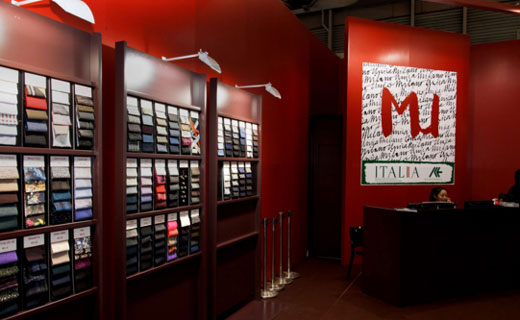 season as brands and retailers are still grappling with unsold inventories from the Spring 2021 season. He expects comfortable, lightweight luxury fabrics and silhouettes to rise in demand due to their sustainability factor. He also expects performance and sustainable fabrics for womenswear to gain more popularity.
Hybrid textiles in focus
Many brands are tapping hybrid textiles at the show. These textiles blur the lines between leisurewear with formalwear. ZQ-certified mulesing-free and fully traceable pure merino wool developed by Italian Woolen mill Reda is a prime example of this. Exploring the natural qualities of merino wool and having thermoregulatory features, this fabric is perfect for breezy and lightweight woolen shirts.
Sustainable and comfortable suiting fabrics are also the focus of Marzotto Wool Manufacturing Company’s spring 2022 collection. The company launched wrinkle-free and naturally elastic B Dyanmic+ range of woolen textiles for making lightweight and summery suits.
Investing in GOTS-approved linen and hemp, Shirt specialist Tessetura Monti launched a fabric range dyed using inorganic compounds from ferrous oxides. These fabrics are complimented by striped Leicester Bio cotton poplin in pastel tones such as baby pink and ochre. Tessetura Monti also introduced a range of printed cotton poplins bearing graphic motifs in neon and saturated hues. Based in the outskirts of Como, Lombardy Canclini 1925, offers James Bond inspired striped shirts with oversize stripes in pastel hues, and super thin replicates combining popsicle-inspired shades. In future, the company aims to launch indigo fabrics for casual chino pants and lightweight overshirts with camp collars featuring innovative designs.
Nature-inspired performance fabrics
High-end textile company Bonotto has launched nature inspired range of bio-based and biodegradable fabrics. Featuring smooth and fluid textures, these fabrics are developed from seaweed and crab shells. Bonotto also launched lyocell, a cellulose fiber made from dissolving pulp and then reconstituting it by dry jet-wet spinning.
The show focuses on technical performance by introducing rubber-coated tailoring wool, heat-sensitive cotton and fluorine-free, water-repellent outerwear fabrics. For instance, Como-based Ratti launched silk and cotton fabrics with a ripstop finishing, as well as coated, jacquard and quilted ripstop textiles. The company experimented with patters like kaleidoscopic tartans and nocturnal scenes that combine dark tones and vibrant shades on silk and viscose twill, silk chiffon and Lurex.
Offline stores to herald a new era in retail with technology integration
 With consumer behavior undergoing mass transformation, the Indian retail sector has been most affected by COVID-19. But like a silver lining in dark clouds, the sector is likely to benefit from this development in the long run, says a report by the Economic Times.
Rising safety concerns amid the pandemic has led to more consumers preferring online transactions, increasing digital penetration and mobile usage across India. As per Bain & Co, India’s online shoppers are likely to reach about 300 million by 2025. A Redseer report also estimates online shoppers will rise by 85 per cent in 2020.
The use of social commerce and m-commerce will also accelerate in future. Paypal expects the value of social commerce to rise to $100 billion while increasing penetration of mobile-commerce will push retailers to launch special mobile apps for add-on services.
New opportunities for brick and mortar stores
The post pandemic world also offers new opportunities to brick and mortar stores. As per the report, these stores can provide an experiential shopping environment by partnering online players. They can also expand their business by taking the omni-channel route.
The second strategy is already being adopted by large e-retailers offering digital services to offline stores. The ‘Local Shops’ platform of Amazon has onboarded 5,000 offline retailers across various categories. These stores fulfill local orders by using Amazon’s technology based on area pin codes. Reliance’s JioMart platform also connects three crore offline retailers with over 20 crore customers.
Amazon, Starbucks and Shoppers Stops are also setting up data warehouses to facilitate their consumers online and offline transactions. This helps them provide a ‘phygital’ experience to their consumers.
New business models for better margins and prices
E-commerce also enhances product deliveries of FMCG retailers including Hindustan Unilever, ITC, Modelez, Procter and Gamble, Dabur and Colgate. Besides launching new apps and websites, these retailers are partnering with Dunzo and Swiggy for products delivery. Through their apps, these companies hope to generate better margins and products prices, and also enhance their consumers’ shopping experiences. To avoid overcrowding in metros and Tier-I cities, brands and retailers are expanding into smaller Tier-II, III cities as they offer huge growth opportunities to offline as well as online retailers
Agile firms to shape future market growth
As the year 2021 promises to be a year of technology-driven innovations, many brands’ are likely to reshape their business models and operations. Agile firms will capture majority of the market share by integrating digital strategies into their daily operations. Neighborhood stores will continue to flourish and makeup over 95 per cent of India’s grocery market. Firmly entrenched the Indian consumers’ psyche, offline stores will herald a new era in India retail by integrating new technologies in their operations.
Fast Retailing’s value reaches $103 billion
Topping Zara’s parent company Inditex, the value of Fast Retailing, the Japanese parent of casual clothing chain Uniqlo, reached 10.87 trillion yen ($103 billion) recently. As per Asia Nikkei reports, the casual wear specialist is well positioned to capitalize on the changing habits of consumers. The company operated 2,298 Uniqlo stores around the world in November. Sixty percent of these stores were located in Asia with China being the company’s second biggest market after Japan.
The company’s operating margin in Greater China during the last fiscal year ended August stood at 14.4 per cent. The company adopted the "digital consumer retailing" concept in 2016, which involves analyzing data from online and store purchases from IC tags attached to all merchandise. It has partnered with Google and other outside companies to develop a manufacturing infrastructure powered by artificial intelligence.
In terms of revenue, Fast Retailing remains in third place at roughly 2 trillion yen ($18.9 billion) for the previous fiscal year. Inditex leads the way at €28.2 billion ($34.1 billion dollar) for the year ended January 2020, while Sweden's H&M is runner-up with 187 billion kronor ($22.5 billion) for the financial year through last November.
Trident bags FICCI award for efficiency in water use
Leading home textiles player, Trident has jointly bagged the first prize at FICCI Water Awards 2020 in the ‘Industrial Water Use Efficiency’ category. The awards promote awareness, policy advocacy, sharing of best practices and thought leadership in the area of water use efficiency.
As per Deepak Nanda, Managing Director, Trident, the award recognizes the company’s efforts towards sustainable manufacturing practices especially water conservation and motivates it to do better every day. The award is instituted by the Federation of Indian Chambers of Commerce & Industry, (FICCI), a professionally run apex business organization in India.
Trident was selected for this award for the measures it undertook to establish water efficient machineries, zero liquid discharge system, kaizen implementation, rainwater harvesting, etc. Trident is one of the top five manufacturers of terry towels in the world.
STAR Network adds four new members
The Platform on Sustainable Textiles of the Asian Region, or STAR Network, has added four new members: Indonesian Textile Association, the Turkish Clothing Manufacturers Association, the Istanbul Ready-Made Garments Exporters’ Association and the Moroccan Association of Textile & Clothing Industries. As per Fashion Network, these members are from Bangladesh, Cambodia, China, Myanmar, Pakistan and Vietnam. They are banding together to agree on common positions regarding payment and delivery terms and reset the buyer-supplier relationship.
Suppliers represent two-thirds of the global market for apparel and footwear factory exports. They were being squeezed with falling demand worsened by the pandemic. As per a survey of 75 factories in 15 countries, published in October by the Worker Rights Consortium and the Center for Global Workers’ Rights at Penn State University, suppliers have to wait an average 77 days after they complete and ship new orders before to receive payment, compared to 43 days in pre-pandemic days. In addition, 40 per cent of buyers demanded an extension of payment period to 120 days.
In collaboration with stakeholders and partners such as GIZ (Deutsche Gesellschaft für Internationale Zusammenarbeit), the International Apparel Federation and the Better Buying Institute, the STAR Network seeks to enable manufacturers jointly draft a set of minimum expectations related to payment and delivery, including establishing fair and legitimate business principles.
Huge potential for India-Mexico apparel trade
Rising bilateral trade between India and Mexico offers huge potential for growth of apparel between the two countries, says Manpreet Vohra, Indian Ambassador. Vohra was addressing the 'India-Mexico Synergies in Apparel and Textiles' virtual meeting, organized by Apparel Export Promotion Council (AEPC) and Embassy of India, Mexico City, Mexico.
He said, one of the most important products in India-Mexico bilateral trade is garments and textiles. From January to November 2020, India exported garments and textiles worth $7.9 billion to Mexico and can further increase these exports, he added. A leading exporter of high quality and competitively priced garments and textiles, India has a market size of $100 billion. Both this market size and India’s share in global apparel trade are likely to triple by 2024-25, he added.
A Sakthivel, Chairman, AEPC added, India has successfully enhanced production of medical textiles from zero in March 2020 to world's second-largest manufacturer in June. Sudhir Sekhri, Chairman (Export Promotion), AEPC said, India currently exports only one MMF product to Mexico. This needs to be addressed and MMF exports need to be increased.
Australia announces $350,000 investment in Circular Textile Association
Australia is investing $350,000 in Australian Circular Textile Association to tackle 800,000 tons of clothing and textiles waste generated by citizens every year. As per reports, the government will host a national roundtable on the issue, bringing together representatives of retail, fashion, charity, production, research and waste management to curb the dumping of textiles. According to the Association, parents who have just been purchasing school uniforms and trades getting ready for the year ahead will contribute 12,000 tons of branded uniforms alone to landfill in the next 12 months. ACTA announced a new initiative, Circular Threads to investigate new technologies to separate and repurpose fabrics from used clothes, and create remanufacturing opportunities.
Camille Reed, Founder, CEO, ACTA believes, the problem needs an industry led approach to find the ways to break down clothing elements and re-use individual components and the fabrics themselves.
Itochu, Aquafil collaborate to develop Econyl nylon products
Japanese textile firms, Itochu and Aquafil have collaborated to expand their circular nylon production business. Both companies will work towards recovery of nylon waste and development, production, and sale of Econyl nylon products. Econyl Regeneration System was created by Aquafil In 2011. The system turns recovered nylon waste such as fishing nets, carpets and post-industrial waste back to caprolactam (CPL), a crude raw material. Through its proprietary chemical recycling technology, Aquafil eliminates impurities completely, to achieve regenerated nylon product having the same features of the virgin quality materials.
Econyl nylon has been adopted as an environmentally friendly material by more than 2,000 brands around the world. In the fashion industry, it has received strong support from major fashion brands including Burberry, Gucci, and Prada, Itochu said in a media statement.
Itochu is a dealer of CPL and nylon chips, the raw materials of nylon. The utilization of Itochu’s nylon value chain corresponded the direction of Aquafil’s Econyl business, resulting in the purpose of this partnership. Moving forward, Itochu will leverage on its group’s diverse network and expand sales for applications in fashion, carpeting, automobiles, and packaging materials. Itochu also plans to enforce Aquafil’s nylon waste recovery scheme using its existing sales chain and will also implement the partnership from the perspective of the stable supply of raw materials to Aquafil.
Hong Kong Denim Festival to connect new designers with industry leaders
Themed ‘Denim Tomorrow,’ this year’s Hong Kong Denim Festival focuses on connecting industry’s next generation of designers and creators with established denim producers. Scheduled from February to March, the event will host exhibitions, workshops, forums, shopping and more.
As per Carved in Blue, the fair will kick off on February 19 at PMQ with a live-streamed opening ceremony. An exhibit titled ‘Denim Tomorrow’ exhibit will be held on the same day with 12 companies showcasing innovative materials to Hong Kong’s local denim designers. The display will include TENCEL™ branded fibers as well as manufacturers and machinery firms Advance Denim, Panther Denim, Jeanologia, Levi Strauss, Brother and more. The exhibition will also feature the ‘International Denim Design Exchange Project,’ with work from seven students from around the globe.
The event will also include a “Denim Tomorrow” bazaar featuring displays from 20 local denim designers and artists and five international creators. Keeping safety concerns in view, vendors will host live-streams and leverage online showroom capabilities to reach those who cannot travel to see them in-person.
There will also workshops featuring projects such as making a denim headband, origami handbag or bow tie. Other classes will allow participants to upcycle jeans with paint or turn jeans into an apron.
The festival will host a forum to discuss innovations in denim on February 22. Lenzing’s own Tricia Carey will be among the speakers, along with other denim names like Genius Group founder Adriano Goldschmied, Jordi Juaní Moragas from Jeanologia and The Denim Window founder Silvia Rancani. The festival will continue in March with ‘Downtown Denim’ at Shamshuipo, with more shopping, workshops and exhibitions.
Since 2019, the festival has attracted more than 60,000 attendees, including retailers, manufacturers, brands, students and the public. The event aims to support Hong Kong’s position as the ‘Denim City of Asia.’











